


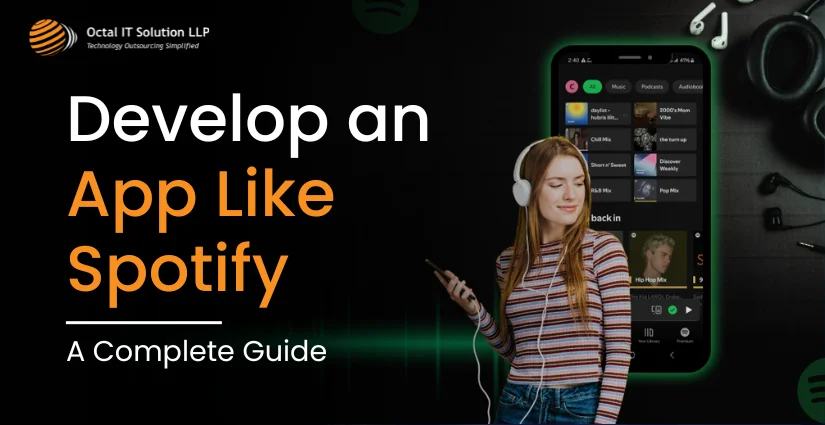
In the age of digital transformation, music streaming has reshaped how audiences access and enjoy their favourite tunes. Among all platforms, Spotify stands out as a global leader with millions of active users. Its seamless user experience, vast song library, personalized playlists, and cross-platform compatibility have made it a benchmark in audio streaming.
If you’re looking to develop a music app like Spotify, you’re entering a thriving market filled with opportunities. Whether it’s ad-supported streaming, subscription models, or curated content, the Spotify model offers flexibility and monetization power.
As demand grows for personalized, on-the-go entertainment, businesses can capitalize on this trend by offering unique and tailored streaming experiences.
This blog explores why building a Spotify-like app is a smart move, outlines key features and benefits, details development steps, cost factors, and ends with practical FAQs to guide your journey in launching a successful music streaming platform.
Audio Streaming App: Global Market Size
The global music streaming market was valued at USD 46.66 billion in 2024 and is expected to reach USD 108.39 billion by 2030, expanding at a CAGR of 14.9% between 2025 and 2030. This surge is primarily fueled by the growing adoption of digital music across a wide range of devices.
As smartphones become more widespread and internet connectivity improves, an increasing number of users are turning to apps like Spotify, Apple Music, and Amazon Music instead of traditional media. The ability to instantly access millions of tracks and create customized playlists continues to boost the popularity and growth of the music streaming sector.
Why develop a music app like Spotify?
With rising user demand for on-the-go audio content, many businesses are investing in Music Streaming App Development. Building a music streaming app like Spotify helps tap into this growing market and meet evolving listener preferences through innovation and convenience.
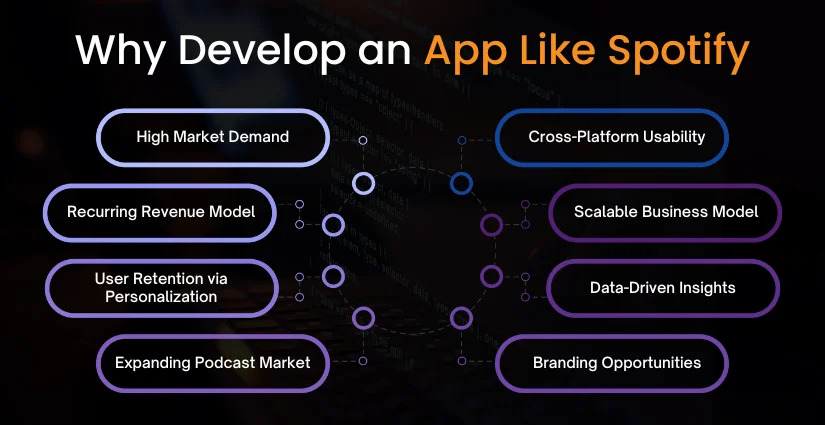
- High Market Demand
Music streaming is booming globally, with millions of users seeking convenience and personalization. Music apps like Spotify cater to this demand by offering vast libraries, instant access, and curated playlists, making them highly attractive to investors and startups.
- Recurring Revenue Model
Spotify’s subscription model generates stable, recurring revenue through monthly fees. This approach offers predictable income streams, especially when combined with premium features, freemium models, or tier-based pricing.
- User Retention via Personalization
Personalized playlists and recommendations powered by AI and algorithms help retain users. The better the recommendations, the longer users stay engaged with the music streaming app like Spotify.
- Expanding Podcast Market
With the surge in podcast popularity, Spotify’s expansion into audio shows has opened a lucrative content niche. Launching a similar app lets you tap into this growing user base.
- Cross-Platform Usability
Spotify works seamlessly across smartphones, desktops, smartwatches, and speakers. Developing such cross-platform compatibility enhances your app’s user accessibility and reach.
- Scalable Business Model
From individual users to enterprise partnerships and advertisements, the model scales efficiently. A music app like Spotify can grow with market demand without major architectural overhauls.
- Data-Driven Insights
Spotify collects valuable user data, helping businesses understand preferences, refine marketing strategies, and enhance experiences. Your app can do the same, offering targeted insights and analytics.
- Branding Opportunities
A music app offers branding possibilities through UI themes, artist collaborations, and exclusive content. This makes your platform more memorable and competitive.

Key Features to Develop a Music App Like Spotify
Modern music apps thrive on personalization, smart search, and seamless playback. These key features shape the foundation of innovative Music Learning App Development, enhancing user engagement and promoting interactive, AI-powered learning through music content.
1. User Registration and Profiles
Enable users to sign up using email, social logins, or phone numbers. Profiles should store their playlists, favorites, and listening history to personalize the app experience.
Add multi-factor authentication for extra security to the music app like Spotify. Let users customize avatars, bios, and preferences. Allow syncing across multiple devices for consistent access. Push notifications can also remind users about new tracks or playlist updates based on their profile history.
2. Music Library Management
A vast and well-organized music database is crucial. Classify songs by genre, artist, album, language, and mood for smooth user navigation and discovery.
Implement dynamic metadata tagging for efficient content sorting while developing music streaming apps like Spotify. Add curated collections, editor’s picks, and daily/weekly playlists. Real-time content updates and automatic classification based on trending data enhance discoverability and user engagement.
3. Search and Filter Options
An advanced search bar with smart filters lets users quickly find songs, albums, or podcasts. Incorporating voice search enhances usability further.
Include NLP-based search to understand complex queries like “90s romantic Hindi songs.” Add filters like duration, tempo, and release year. Voice command integration makes hands-free browsing easier for smart device users.
4. AI-Powered Recommendations
Use machine learning to analyze user behavior and suggest songs, playlists, or podcasts they’re likely to enjoy, increasing engagement and satisfaction.
Leverage deep learning to track playtime, skip rates, and listening patterns. Use collaborative filtering and content-based filtering for smarter suggestions. Personalized daily mixes, genre radios, and mood-based playlists improve retention.
5. Offline Mode
Allow premium users to download songs or playlists and listen offline. This feature enhances convenience and user loyalty, especially in low-network regions.
Provide flexible download quality settings to save storage. Add auto-download of favourite playlists or recently played content. Offline usage tracking helps enhance future recommendations even when users aren’t connected.
6. Podcast Integration
Include a dedicated section for podcasts with categories, trending shows, and subscription features. Podcasts boost content diversity and audience reach.
Enable episode bookmarking, playback resume, and custom playback speed. Add transcript view, comments, and recommendations based on podcast history. Offer creators analytics and monetization tools for better platform engagement.
7. Social Sharing and Collaboration
Allow users to share songs or playlists on social platforms or with friends directly within the app. Collaborative playlists promote user interaction and app stickiness.
Let users create group playlists where multiple users can add tracks. Integrate in-app messaging and activity feeds. Sharing achievements like “Top Artist of the Month” increases engagement and virality.
8. Admin Dashboard
A backend panel for managing users, content uploads, subscriptions, analytics, and advertising. This is vital for performance monitoring and platform scalability.
Offer real-time usage metrics, user segmentation, and revenue dashboards. Include moderation tools for flagging content and user behaviour. Schedule promotions, push notifications, and manage licensing or royalties efficiently.
Also Read: Develop an AI Voice Assistant App like Siri
Advantages to Develop a music app like Spotify
Developing a music app like Spotify brings vast business opportunities in entertainment software development. From global reach to multiple monetization models, this platform boosts user loyalty and positions your brand at the forefront of the digital entertainment space.
1. Global Reach and Accessibility
A streaming app breaks geographical barriers, reaching global audiences instantly. Language filters and localized content enhance regional adoption.
By offering multilingual interfaces, regional playlists, and locally popular content, you cater to diverse demographics. Integration with global payment gateways also facilitates international subscriptions. This expanded accessibility builds a loyal worldwide user base and boosts revenue opportunities.
2. Flexible Monetization Models
Offer multiple income streams, ads, freemium tiers, subscriptions, and artist promotions, providing sustainable and scalable business opportunities.
You can also introduce tiered pricing plans, exclusive content for premium users, and in-app purchases. Artist promotion tools, such as paid placement in playlists, generate additional revenue while supporting independent creators.
3. Strong User Engagement
Through features like daily mixes, mood playlists, and new release alerts, users are constantly engaged, increasing app usage time and brand loyalty.
Gamification, achievements, and personalized insights like “Your Year in Music” make users emotionally invested. Push notifications about artist tours or song drops keep them coming back frequently.
4. Content Ownership and Partnerships
Build partnerships with record labels or independent artists. Exclusive rights and content deals enhance user attraction and market differentiation.
Exclusive content, early releases, or artist-hosted shows create a unique identity for your app. Partnering with creators can also help you build a loyal community and promote app downloads through artist endorsements.
5. Brand Visibility and Promotion
A unique music streaming app can evolve into a recognizable brand. Branded playlists, artist collaborations, and marketing campaigns help boost visibility.
Co-branding opportunities with events, festivals, or merchandise can extend your brand beyond digital platforms. User-generated content and social sharing also act as organic marketing tools.
6. Enhanced User Analytics
Track listening habits, skip rates, peak hours, and more. This data helps refine content offerings, UI updates, and user acquisition strategies.
Real-time analytics also enable A/B testing for features, segmentation-based promotions, and personalized recommendations. These insights help drive data-backed business decisions and improve app efficiency.
7. Advertising Revenue Opportunities
Free-tier users can be monetized with audio, video, or banner ads. Targeted advertising based on user data provides high ROI for brands.
Partner with ad networks or run your ad server for higher margins. Contextual and behaviour-based ads can be placed between songs or on idle screens for non-intrusive monetization.
8. Customizable Experience
Offer UI customization options, dark/light themes, or curated playlists for a more engaging and personalized app environment.
Users can tailor their home screen layout, choose streaming quality, and set autoplay or shuffle preferences. Personalized dashboards and interactive elements make the app more enjoyable and intuitive.
Read More: Develop an App like DeepL: A Complete Guide
Steps to Develop a Music App Like Spotify
Following the right development steps ensures your app meets current trends like AI in Entertainment. Starting from research to post-launch, each phase should focus on creating smarter user experiences and improving recommendation engines for higher retention.
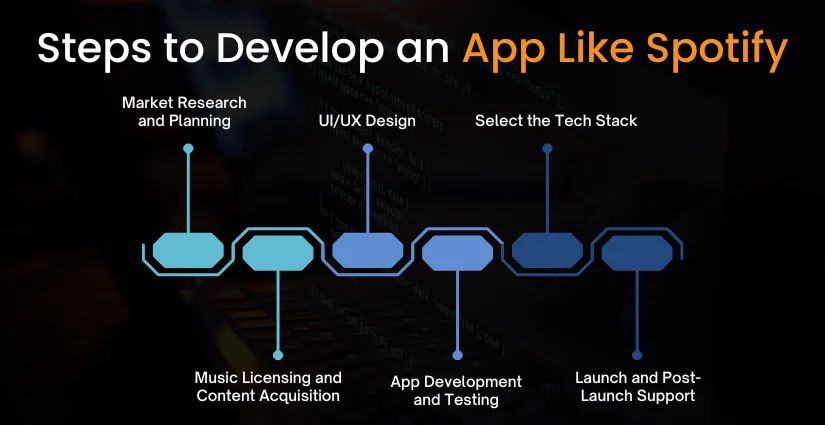
1. Market Research and Planning
Begin with thorough research on audience demographics, competitors, and feature gaps. Use insights to build a clear roadmap and differentiate your offering.
Identify trends in user preferences, licensing models, and content types. Analyze competitor reviews to uncover pain points. Define your unique value proposition and align it with business goals. A well-researched plan reduces risks and ensures faster market penetration.
2. UI/UX Design
Design wireframes and prototypes focusing on simplicity and user-centric layouts. Ensure smooth navigation, aesthetic appeal, and responsive design across devices.
Create interactive mockups for early user testing. Prioritize accessibility with scalable fonts and high-contrast visuals. Mobile-first design is essential, and animations can enhance micro-interactions. The UI must evoke an emotional connection with the brand.
3. Select the Tech Stack
Choose backend and frontend technologies like Node.js, React Native, AWS, MongoDB, and third-party APIs for audio streaming, search, and analytics.
Consider using GraphQL for efficient data fetching and Firebase for real-time sync. Choose scalable cloud infrastructure to handle millions of concurrent users. Ensure the stack supports future integrations like AI recommendations or blockchain rights management.
4. Music Licensing and Content Acquisition
Partner with music distributors, labels, or content aggregators. Acquire streaming rights and licenses to legally offer songs and podcasts.
Secure Public Performance, Mechanical, and Synchronization licenses depending on your market. Build partnerships with indie artists for exclusive content. Use digital rights management (DRM) to protect content and stay compliant with copyright laws globally.
5. App Development and Testing
Develop core modules: user profiles, music player, search, playlist creation, and recommendations. Conduct rigorous testing for bugs, performance, and usability.
Adopt Agile methodology for iterative releases and faster feedback. Implement automated testing, performance benchmarking, and security validation. Test across device types and network conditions to ensure consistent performance and minimal crashes.
6. Launch and Post-Launch Support
Deploy the app on iOS, Android, and web. Promote using digital marketing. Offer maintenance, user support, and periodic updates to keep the app competitive.
Use ASO (App Store Optimization) techniques and pre-launch email lists for better visibility. Gather post-launch feedback to prioritize features. Maintain version control, server uptime, and user data privacy with timely patches and upgrades.
Cost to Develop a music app like Spotify.
App development costs vary based on complexity, region, and platform. Leveraging reliable Android app development services helps balance quality and affordability while ensuring native performance and compatibility across a wider audience base.
1. App Complexity and Features
Additional features, such as offline mode, AI, and social sharing, can increase development time and cost. Core features like streaming and playlist creation are essential, but advanced functionalities real-time lyrics, mood-based curation, voice control, and collaborative playlists, add layers of complexity.
Each feature increases coding hours, backend scalability, and testing requirements, impacting timelines and budgets.
2. UI/UX Design Quality
High-end, custom designs cost more than basic templates but enhance user retention. Engaging designs with animations, intuitive navigation, and custom interactions demand professional designers and extensive user testing.
Investing in quality UI/UX improves usability, reduces bounce rates, and significantly enhances brand recall among users in a competitive market.
3. Platform Choice
Developing for both Android and iOS costs more than a single platform but broadens reach. Native development offers the best performance but requires separate teams for each platform.
Alternatively, cross-platform tools like React Native reduce costs but may limit access to platform-specific features. Supporting both increases audience size and user base diversity.
4. Third-Party Integrations
APIs for music streaming, payments, or analytics add licensing and development costs. Integration with services like Stripe (for payments), Spotify SDK (for music control), Firebase (for analytics), or AWS (for cloud hosting) often includes setup, licensing, and recurring fees. Every external service must be secured and updated regularly.
5. Development Team Location
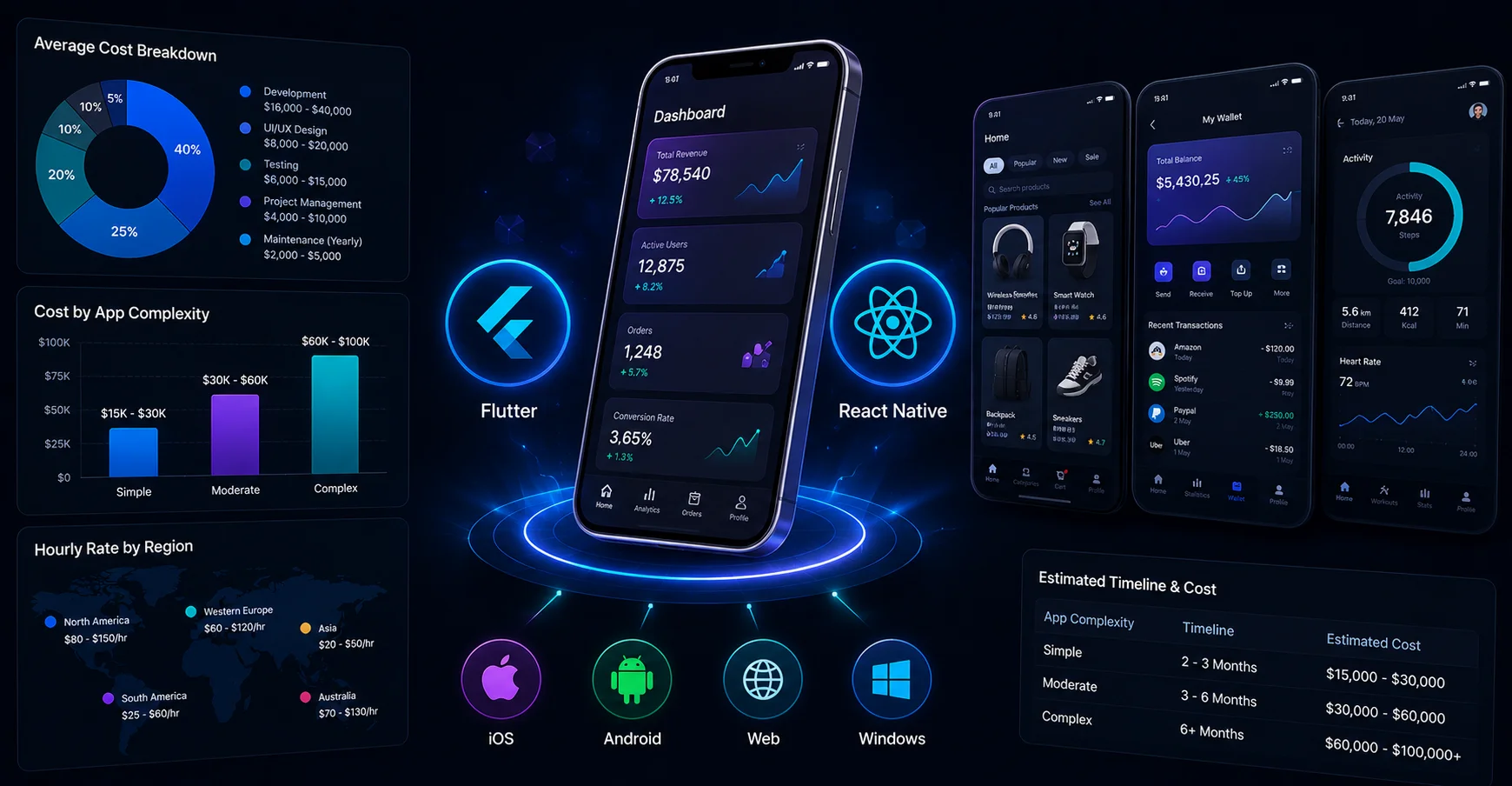
Rates vary by region: North America is expensive, while Asia offers more affordable rates. Hiring developers in the US or UK can cost $100–$200/hour, whereas teams in India or Eastern Europe charge $20–$50/hour. While cheaper regions reduce costs, ensure quality and communication are not compromised during long-term collaboration.
6. Post-Launch Services
Ongoing maintenance, bug fixes, and feature updates require continuous investment. After release, you’ll need to monitor app performance, push security updates, handle OS version changes, and support user feedback.
Monthly maintenance contracts, server hosting, and analytics tools are recurring costs that ensure long-term success and user satisfaction.
Cost Breakdown Table
| Development Phase | Estimated Cost (USD) |
| Market Research & Planning | $3,000 – $5,000 |
| UI/UX Design | $5,000 – $8,000 |
| Backend & API Development | $15,000 – $25,000 |
| Frontend Development | $10,000 – $20,000 |
| Licensing & Content Deals | $10,000 – $50,000+ |
| QA Testing & Deployment | $5,000 – $10,000 |
| Post-Launch Maintenance | $2,000 – $5,000/month |
| Total Cost Estimate | $50,000 – $120,000+ |
Conclusion
Developing a music app like Spotify is a strategic move in a digitally connected, music-hungry world. From dynamic playlists and AI-driven suggestions to podcast integration and offline listening, these features create a rich, immersive user experience.
By focusing on user-centric design, reliable streaming infrastructure, and engaging monetization models, your app can stand out in a competitive market. The music streaming industry is set for continued growth, driven by evolving user preferences and technological advancements.
While initial costs can be substantial, the long-term returns from subscriptions, advertising, and user data insights are significant. With the right planning, team, and licensing strategies, building your own Spotify-like app can be a rewarding digital venture.
Start today, ride the wave of digital audio transformation, and create an app that resonates with users worldwide.

FAQs
Depending on complexity and region, the cost ranges from $50,000 to $120,000+, including development, design, licensing, and post-launch support.
Yes, you must acquire legal licenses from record labels, artists, or music rights organizations to stream music on your platform.
Common stacks include Node.js, React Native, AWS, and MongoDB, along with third-party APIs for search, streaming, and analytics.
Yes, you can use ads, in-app purchases, and sponsored content to generate revenue, especially with a freemium user base.
Typically, it takes 4 to 8 months, depending on feature complexity, development team size, and required integrations.
Yes, it’s legal to develop a similar app. However, you must avoid copyrighted UI elements and acquire proper content licenses.


 Get in Touch
 By
By September 30, 2026