


Do you know the healthcare app market is valued at USD 45.14 billion in 2026? The report published by Fortune Business Insights has predicted that it will reach USD 113.2 billion by 2034 with a CAGR of 11.80% between 2025-2034.
The healthcare mobile apps are changing the way patient data are being stored, shared, and accessed. But in case of sensitive medical information, ensuring privacy and security will be crucial.
Here, the role of HIPAA-compliant app development for mobile platforms is critical. The Health Insurance Portability and Accountability Act (HIPAA) implemented by the US legislature imposes a high level of security regarding patient health information in the digital system.
Healthcare app developers should adhere to these regulations in order to prevent data breaches, legal penalties, and reputational losses.
This guide is a HIPAA-compliant mobile app development checklist where we will discuss important rules, features, development procedures, challenges, cost, technologies and future trends to understand them better.
- What is HIPAA and Why It Matters in Mobile Apps?
- Must-Know Rules For all Developers During HIPAA-Compliant App Development
- Core Features of a HIPAA-Compliant Mobile App Development
- What are the Steps For HIPPA-Compliant App Development?
- Best Practices for HIPAA-Compliant Custom App Development
- What are the Challenges in Developing an HIPAA-Compliant App?
- How Much Does it Cost to Develop a HIPAA-Compliant Mobile App?
- What are the Top Technologies Used in HIPAA-Compliant App Development?
- What are the Penalties for Non-Compliance with HIPAA?
- Future Trends in Healthcare Mobile App Development
- How to Choose the Right HIPAA-Compliant App Development Company in the USA?
- Conclusion
- FAQs
What is HIPAA and Why It Matters in Mobile Apps?
The HIPAA is a federal law in the United States that aims to ensure that sensitive health information of patients is not released without their consent.
It is relevant to health professionals, health insurance companies and any business that processes medical information. HIPAA-compliant mobile app development services ensure that electronic Protected Health Information (ePHI) should be secure when storing, transmitting, and processing.
It requires the use of stringent security measures such as encryption, access control and audit trails. Mobile apps often deal with sensitive medical information such as a patient’s health history.
Custom app development for healthcare is hence significant in building safe and dependable healthcare mobile applications.
Must-Know Rules For all Developers During HIPAA-Compliant App Development
The compliance with HIPAA is developed around a few main rules that define the way healthcare data should be processed in mobile applications to guarantee privacy, integrity, and controlled access throughout the process.
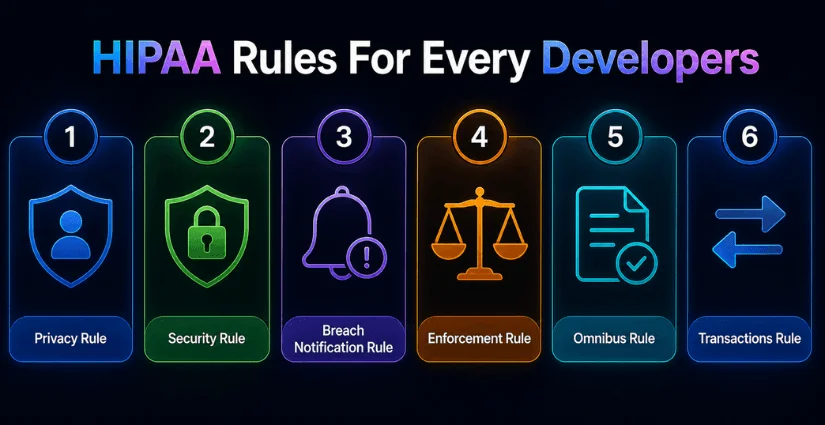
Privacy Rule
The Privacy Rule governs the use and sharing of the protected health information (PHI). Protected health information includes health status, patient’s billing information etc. The developers need to make sure that patient data is accessed by authorized persons only and the consent is obtained prior to any data sharing or processing.
Security Rule
This rule is aimed at protecting the electronic PHI by means of technical, physical, and administrative protections. It involves the encryption, secure authentication, and monitoring of the system to help in preventing unauthorized access, data breaches or misuse of sensitive healthcare information.
Breach Notification Rule
This regulation urges companies to inform victims and the government in the event of a data breach. To make sure that any breaches are reported in proper time, mobile apps should incorporate monitoring systems that help to detect them and report accordingly as required by the law.
Enforcement Rule
The Enforcement Rule provides the penalties and procedures of violations of the HIPAA. Professionals need to make sure they are compliant throughout the entire process of creating an app to prevent fines, audits, or lawsuits as a result of their mishandling of patient information.
Omnibus Rule
When we talk about Omnibus rule, it reinforces the liability of HIPAA to business partners such as application developers. It will make certain that all the third-party vendors working with PHI adhere to the HIPAA regulations and provide appropriate levels of security and privacy.
Transactions Rule
This rule formalizes electronic healthcare transactions like billing and claims. When processing financial or administrative healthcare information online, businesses should make sure that apps are in similar forms and that data exchange protocols are safe.
Core Features of a HIPAA-Compliant Mobile App Development
A mobile application that is in compliance with HIPAA should possess excellent security and privacy controls. For this, it is necessary to include certain features that are compliant with the healthcare regulations. Below is the must-included list of features that should not be missed.
Data Encryption
Transmission and storage of all sensitive health data should be encrypted. With encryption, data is not readable even when the message is captured. It ensures that data is safe against hacking and cybercrimes.
Secure Authentication
The apps should have multi-factor authentication (MFA) and strong password policies. This will make sure that patient data is only accessed by verified users, eliminating the chance of unauthorized logins and safeguarding sensitive medical data.
Access Control
Role based access control means that users can only view the data that is related to their role. There are various permission features between doctors, patients, and admins, which avoid unnecessary exposures of sensitive health records in the mobile application.
Audit Logs
Auditing is a record of user actions in the app. These logs are useful in detecting unauthorized access, tracking changes, or for compliance audits, as they create a clearer view of how a system is interacted with and what data is being used.
Secure Messaging
HIPAA applications should have a secure messaging feature that patients and medical professionals can use to communicate. This guarantees that medical talks and data transfer will be confidential ensuring free of interception banning unauthorized access.
Data Backup & Recovery
Frequent backups guarantee that the data of patients is not lost in case of system downtimes or cyberattacks. The use of recovery systems enables the rapid restoration of the data, preservation of its integrity, and adherence to the healthcare provisions.
Session Timeout
Session timeouts automatically log out users. This will eliminate unauthorized access when the devices are not in use and the sensitive medical information will be secured at all times in the mobile settings.
Cloud Security Integration
Healthcare data is securely stored in scalable cloud solutions. It should provide encryption, firewalls, and certifications to securely store and transmit large amounts of patient data.
What are the Steps For HIPPA-Compliant App Development?
Developing a HIPAA-compliant mobile app involves various steps during the development process to protect data privacy and security. Some of those phases are enumerated as follows:
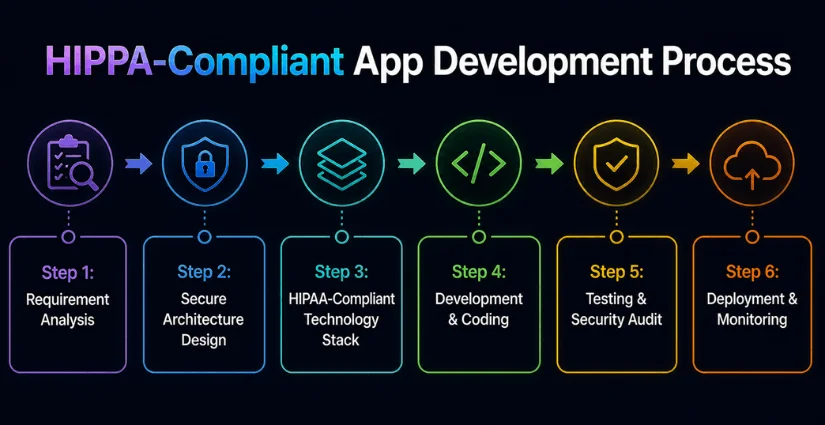
Requirement Analysis
The first step would be to know what health data will be gathered by the app. Here, it would also be discussed what HIPAA compliances need to follow. This assists the developers to be conscious of regulatory requirements and integrate security features.
Secure Architecture Design
Use security concepts to architectural applications, e.g. encryption, secure APIs and authentication. This ensures that the health data in the app system is secured.
HIPAA-Compliant Technology Stack
Choose HIPAA-compliant frameworks such as Firebase Auth , databases and cloud solution platforms like Microsoft Azure Platform. The technologies must assist in encryption as well as audit trails.
Development & Coding
Securely code the application as programmers must avoid vulnerabilities, establish authentication, and make all data processing operations in line with HIPAA-compliant software development standards.
Testing & Security Audit
Carry out security testing and auditing. A test is conducted to ensure that the app meets the HIPAA requirements and is not prone to cyber attacks, data breaches and unauthorized entry attempts.
Deployment & Monitoring
Deploy and track the application in a safe setting. The need to have regular audits and updates once deployed ensures compliance assurance. Through this the security vulnerabilities can be discovered in real-time and any required update to the app can be implemented.
Best Practices for HIPAA-Compliant Custom App Development
Best practices ensure HIPAA-compliant app development that enhance security and increase the reliability of mobile apps designed to store sensitive medical data of patients.
Encrypt Everything
Encrypt stored data through transit during HIPAA-compliant software development. Even when there are breaches and interception of communications, health data is safely guarded against unauthorized access.
Regular Security Audits
Conduct routine security audits to identify and deal with anomalies in a timely manner. This can ensure adherence and avoid data breaches in mobile app development services that are HIPAA compliant.
Least Privilege Access
Give users access to only what they require. This assists in limiting confidential information exposure and accidental data breaches that can lead to misuse.
Secure APIs
Make sure all APIs are secure, encrypted and monitored. APIs are often targeted, and must be secured to prevent patient data breaches on mobile healthcare apps.
Employee Training
The healthcare app development company should educate developers about HIPAA regulations and secure coding techniques. This helps in preventing errors leading to breaches or violations.
Data Minimization
Only gather patient data essential for app operations. Limiting data storage reduces risk and makes developing a HIPAA-compliant app easier.
What are the Challenges in Developing an HIPAA-Compliant App?
HIPAA compliant mobile app development poses technical, regulatory and operational challenges that need to be carefully considered to facilitate secure and compliant medical apps.
Here is the list of those challenges along with their feasible solutions.
Complex Regulations
HIPAA rules are intricate and must be well understood. Rules are difficult to interpret but lawyers and compliance specialists help developers to follow the regulations.
High Development Cost
Security measures such as encryption and audits add to development expenses. But compliance of healthcare related regulations decreases long-term risks of fines and breaches.
Integration Issues
Security of third-party health care system integration can be difficult. Secure API and validation measures are needed.
Data Security Risks
Healthcare apps are prime targets for cyberattacks as they possess confidential information of patients. Incorporating robust security measures and monitoring minimize these threats.
Scalability Concerns
With more users, compliance is complex. Dedicated, scalable architecture with cloud services guarantees performance and security.
Continuous Updates
HIPAA guidelines and security risks are ever-changing. To overcome this issue, frequent updates are needed to maintain compliance and security.
How Much Does it Cost to Develop a HIPAA-Compliant Mobile App?
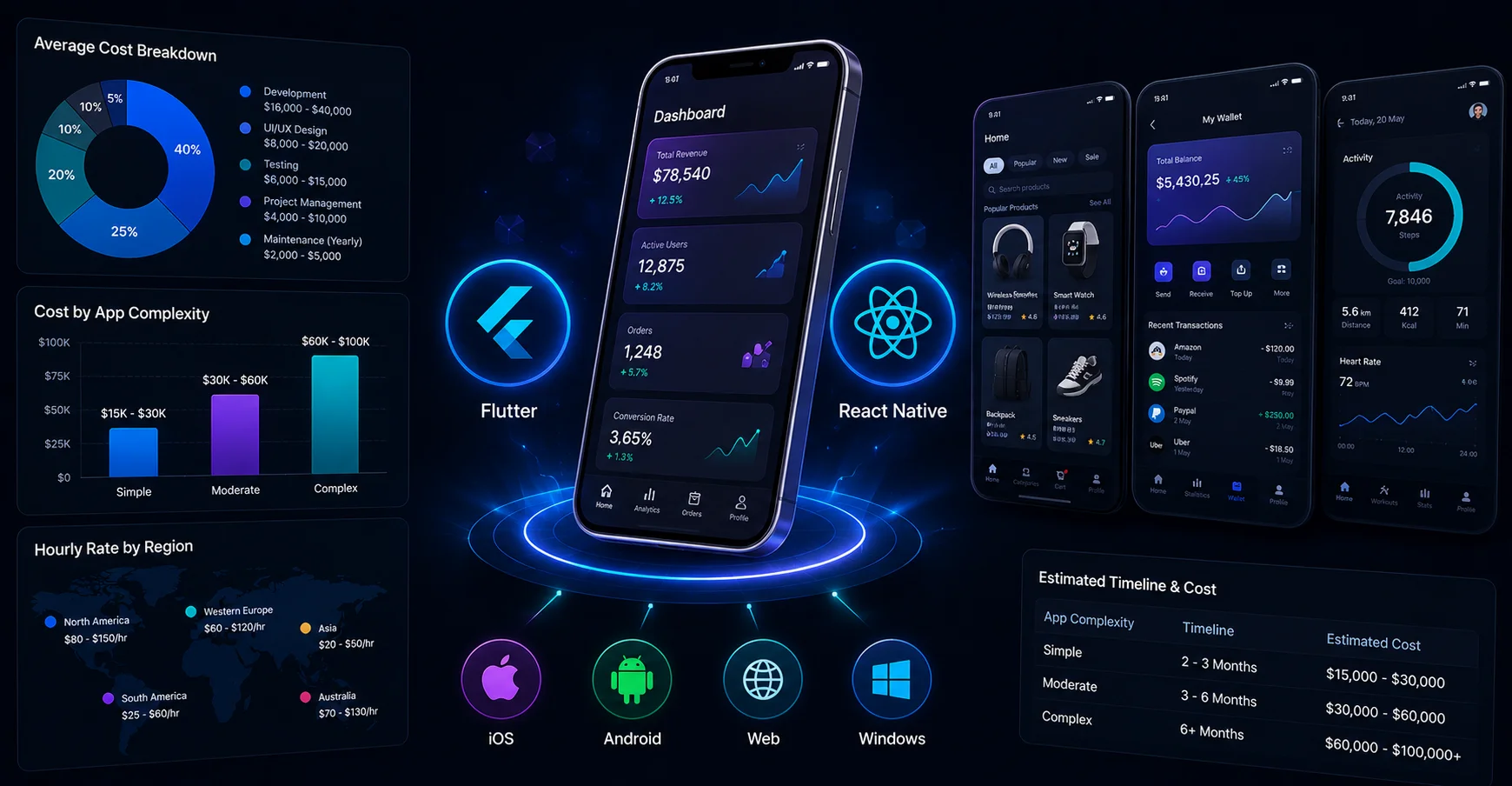
| App Type | Cost Range (USD) |
| Simple Healthcare App Development | $40,000 – $80,000 |
| Medium-Complexity Healthcare App Development | $80,000 – $150,000 |
| Advanced HIPAA Compliant Healthcare App | $150,000 – $300,000+ |
What are the Top Technologies Used in HIPAA-Compliant App Development?
HIPAA-compliant mobile app development companies focus to provide secure, scalable and efficient healthcare data management solutions across digital platforms with the latest technologies as listed below.
Cloud Platforms
Cloud service providers such as AWS and Microsoft Azure offer HIPAA-compliant app development services encryption, monitoring, and secure storage features for healthcare data applications.
Blockchain
Blockchain offers secure storage of patient records for enhanced transparency. It also enhanced the integrity of health data.
AI & Machine Learning
Artificial intelligence facilitates predictive diagnosis, fraud prevention and offers healthcare recommendations, while maintaining data security.
Encryption Technologies
Strong encryption (AES-256) ensures secure storage and sharing of sensitive medical data.
APIs & FHIR Standards
Fast healthcare interoperability resources compliant APIs support secure data sharing.
Mobile Frameworks
Frameworks like Flutter and React Native help develop a HIPAA-compliant mobile app that is secure and scalable across platforms.
Frameworks such as Flutter and React Native help to develop a HIPAA compliant mobile app enabling a secure and scalable digital platform for the healthcare sector.
What are the Penalties for Non-Compliance with HIPAA?
Not following the regulations for healthcare IT solutions can incur various forms of penalties. Below is the list of fines or punishments that a business can face.
Financial Penalties
HIPAA breaches are expensive because lack of compliance may result in massive fines. This ranges from $100 to $50,000 per violation.
Known or repeated violations may increase fines to millions of dollars per year. It is a significant financial risk to health data businesses and software developers.
Criminal Charges
There are criminal repercussions, which may be imposed in cases where HIPAA provisions are knowingly violated. It includes intentionally using patient health information for personal gain. The major actions may be imprisonment for 1-10 years. The specific punishment is determined by the crime and it is important to note that legal obligations of all parties are critical.
Loss of Trust
Patient and client-relationships can cause harm by non-compliance and breaches. It may result in a decrease in trust in the ability of apps to guarantee the privacy and safety of health data. It may lead to negative reviews and a bad brand image of the business in the healthcare industry.
Operational Shutdown
Non-compliant healthcare practices can be shut down by the government regulators. This can disrupt the operations of the apps, disturb the business and lose revenues. It has highlighted the importance of following the HIPAA rules strictly all through the process of developing and deploying the app.
Regulatory Audits
Any business that does not adhere to the provisions of HIPAA is audited by the authorities. These reviews may be long term and comprehensive. It deals with documentation, reporting and system reviews which increase the workload. It can uncover more compliance issues that need immediate response.
Future Trends in Healthcare Mobile App Development
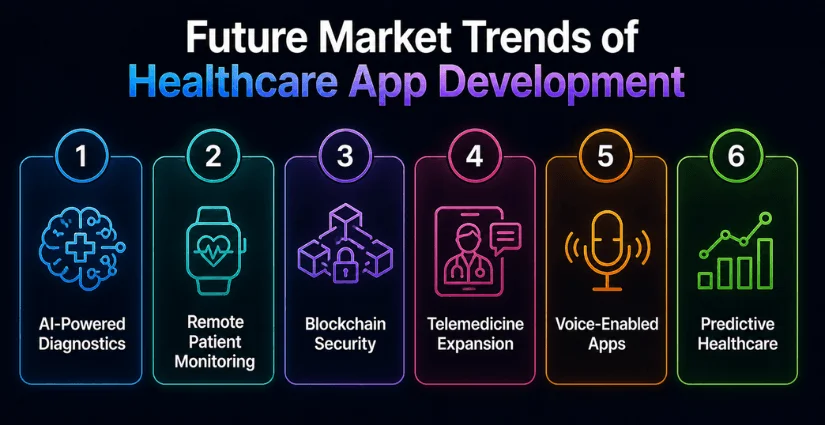
In this tech-first world, the trends in the market are changing rapidly. Let us look at the major technological trends in healthcare software development services.
AI-Powered Diagnostics
Artificial Intelligence is transforming the healthcare system by assisting in accelerating the process of diagnosis. Medical applications may be used to process data, identify trends and deliver predictive analytics to accelerate the diagnostics, decrease errors and enhance the patient care.
Remote Patient Monitoring
Wearable devices can be connected with mobile applications to track vital signs. These apps can also provide clinicians with information that can be used to detect and manage chronic conditions without having to visit the clinic regularly.
Blockchain Security
Blockchain provides a system of secure, immutable storage and sharing of electronic medical records. This is a decentralized and encrypted technology which enhances transparency and ensures security. It is impossible to modify or even access patient data without authorization.
Telemedicine Expansion
Virtual consultations and remote diagnosis is the normal norm now, including virtual checkups. Advanced telemedicine software development platforms with HIPAA-compliant mobile app development services can be used to facilitate greater access, convenience and efficiency in healthcare, particularly in rural or marginalized settings.
Voice-Enabled Apps
Voice assistant-powered healthcare apps make navigation easier, allow the entry of patient data and appointment booking. It enables the users to interact with the system without the need to use their hands, which adds convenience and makes it easy to use, particularly by the elderly or those with mobility problems.
Predictive Healthcare
Applications that use predictive analytics can analyze the health trends of users based on their lifestyle, medical history, and data collected by wearable devices. They can then proactively detect potential risks and implement proactive health practices and tailored health advice to promote better health outcomes.
How to Choose the Right HIPAA-Compliant App Development Company in the USA?
Hiring an IT consulting services provider for the healthcare sector requires a thorough analysis. Have a brief look at the major aspects you should consider while hiring an HIPAA-compliant app development agency.
HIPAA Expertise
Choose app developers with experience in HIPAA-compliant custom app development. They are well-experienced and understand the healthcare laws, rules/regulations and data security standards better which allows integrating compliance measures into the app development with ease.
Security Expertise
Search for knowledge in secure coding, encryption, secure API control and cybersecurity Securing health data about patients against a breach and continual HIPAA compliance relies on solid security skills.
Portfolio Review
Request past healthcare projects of the company to examine quality and security. A shortlisted firm must showcase an outstanding portfolio demonstrating its proven history of providing HIPAA-compliant app development for different healthcare applications.
Technology Stack
Confirm the development team uses up-to-date, scalable and secure technologies. An appropriate technology stack facilitates faster development, performance, and security for your healthcare app, allowing it to securely manage sensitive data and support future enhancements and integrations.
Compliance Support
The company should provide comprehensive HIPAA compliance support, from risk analysis and audits to documentation and advice during and after app development. Ongoing support ensures the app remains compliant with current and future regulations, minimising risk.
Octal IT Solution is a leading mobile app development agency offering services in healthcare and other sectors. Our team of developers are experts in providing customized solutions. We offer services in compliance with HIPAA regulations while developing health management apps.
Client Reviews
Read reviews and ratings to evaluate the company’s trustworthiness, responsiveness, and ongoing support. Feedback from previous clients shows reputation, project management skill, and successful HIPAA-compliant mobile app development.
Conclusion
HIPAA-compliant mobile app development is critical for the confidentiality, privacy, and security of protected health information in the digital age.
With the growing trend of mobile-based healthcare services, app developers need to balance innovation with compliance. Adhering to HIPAA regulations, security measures and best practices safeguards against data breaches, fines and reputational damage.
Encryption, secure authentication, cloud services and AI technologies are just some of the components that contribute to secure healthcare apps.
While development may be challenging and expensive, the rewards of compliance are significant. Through the selection of appropriate technologies and development partners, businesses can build safe, scalable, and sustainable mobile solutions for healthcare.
If you are looking for a medical software development company, we recommend you to hire Octal IT Solution. We are having a team of experienced development professionals who can build HIPAA compliant apps according to your business needs.
So, connect with our developers today and become a market leader in your business domain.

 By
By September 10, 2026



 Latest Stories
 Get in Touch