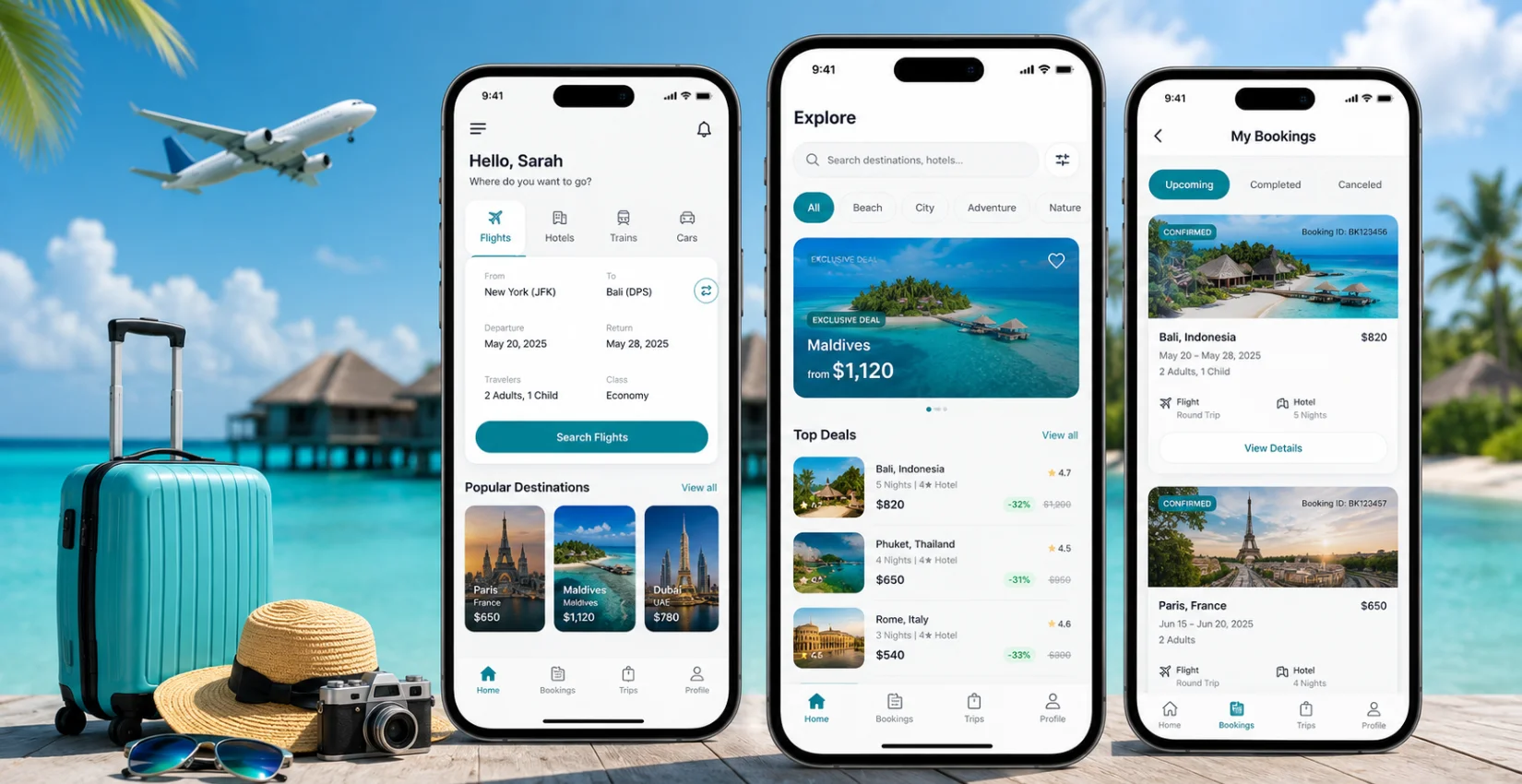



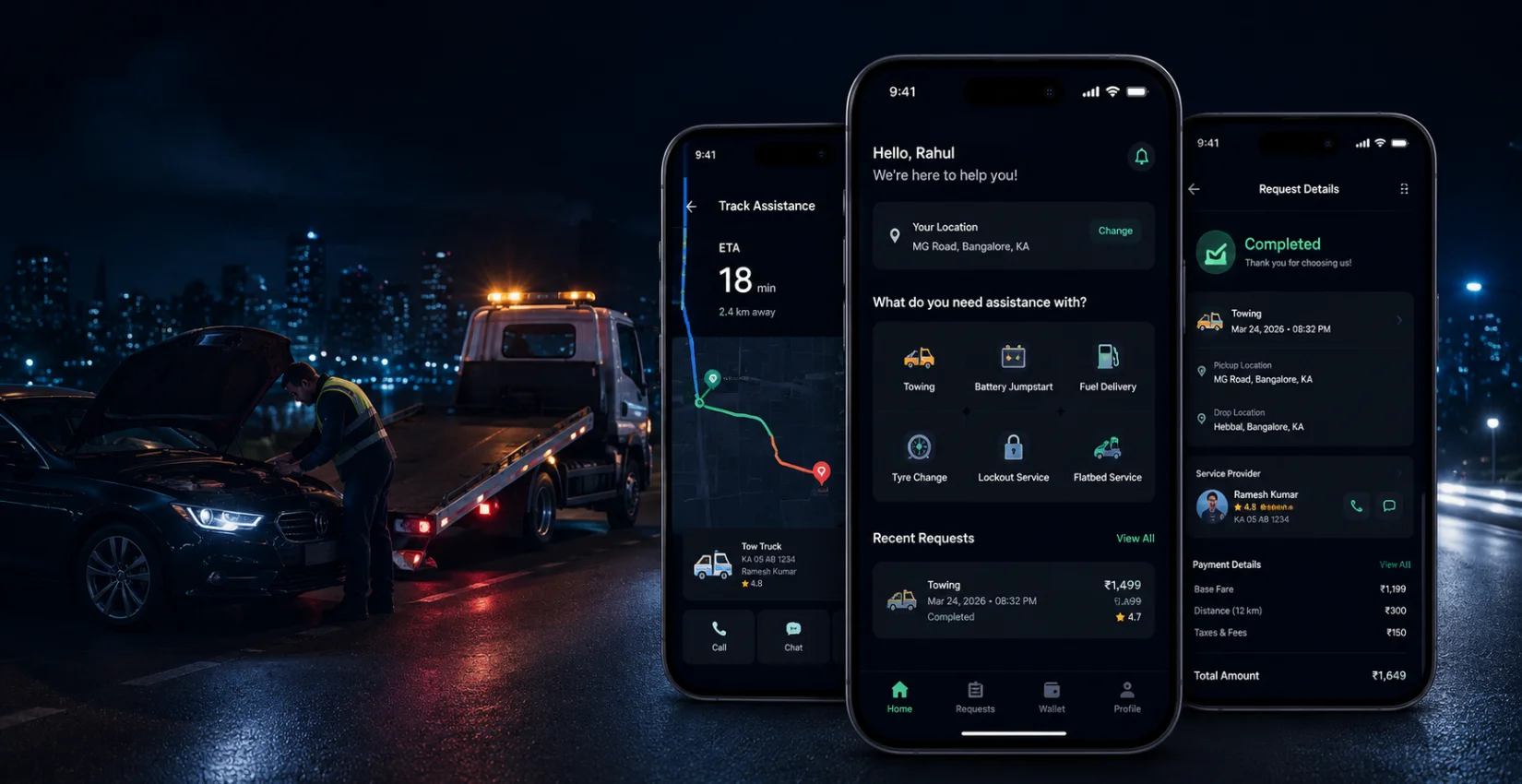
Ever found yourself stranded on a deserted highway with a flat tire and just thinking, Why does help feel like it’s a light-year away? In 2026, that kind of frustration is starting to become an old story. The roadside assistance app development market is seeing a major shake-up because digital-first platforms are rethinking automotive support via fast connectivity and very accurate dispatching.
From fresh industry findings, the global vehicle roadside assistance market is expected to reach $28.67 billion in 2026 and then grow at a CAGR of 5.6% all the way to $44.32 billion by 2034 (Fortune Business Insights). This rise is being pushed by the rapid on-demand roadside assistance app development movement, which connects stranded drivers and service providers with just one tap, like a kind of instant rescue link.
Overview of Roadside Assistance App Development
In a world where speed is basically the top currency, the traditional phone-call towing routine is kind of failing. People now want transparency, real-time visibility, and that instant “Yeah, it’s handled” feeling. And honestly, only a strong digital platform can deliver all that in one place, without all the guesswork.
What is an On-Demand Roadside Assistance App?
An on-demand roadside assistance app is a mobile-first platform that links drivers who are stuck with nearby mechanics, tow truck operators, or even fuel delivery services. It’s like a digital rescue rope, replacing the uncertainty of waiting around with data-led accuracy and better timing.
How it Works: The Seamless Connection
- Request: The user picks a service (tow, jumpstart, or lockout) and then shares their live location.
- Matching: The algorithm identifies the closest available provider quickly.
- Tracking: Drivers can watch the tow truck approach in real time using GPS.
- Resolution: Service is completed, then payment is handled securely right inside the app.
Types of Business Models
- Roadside Assistance Independent Contractor App: This marketplace-style model connects freelance tow truck drivers with users. The platform takes a small commission per transaction. It’s a good option for starting a roadside assistance business with minimal equipment or asset costs.
- Fleet-Owned Platforms: Bigger, established towing businesses use this approach to run their own vehicles and staff. That way, they maintain steady service quality, and they keep tighter control of the brand, from start to finish.
Must-Have Features of a Modern Roadside Assistance App
To stand out in the 2026 landscape, your app shouldn’t just do basic towing. It kind of needs to be this full roadside assistance app solution with a real focus on user safety and operator efficiency, not that boring “figure it out later” energy.
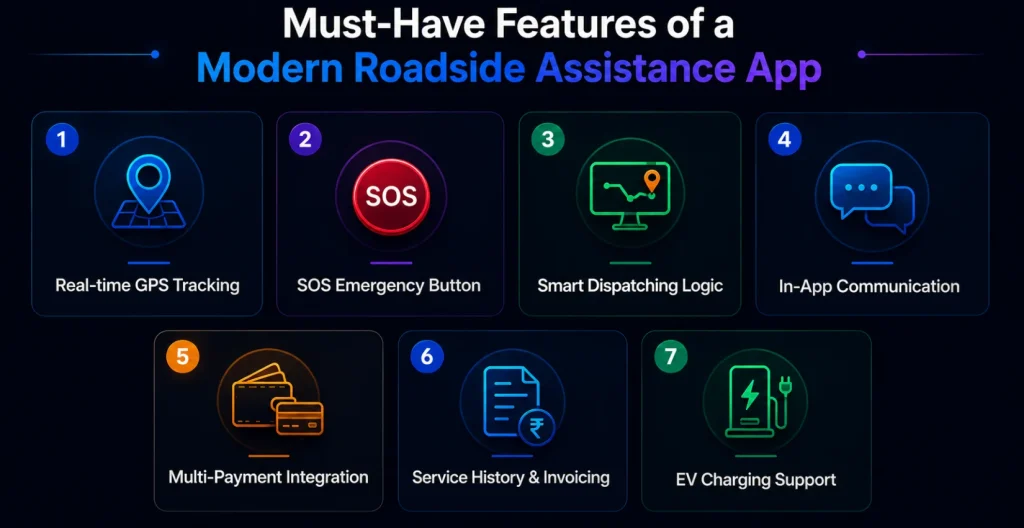
1. Real-time GPS Tracking
This feature helps stranded users to know the exact location of their service provider. It eases worry a lot because it gives live ETA updates plus a clear visual confirmation of the route, like “Oh, ok, they’re coming.”
2. SOS Emergency Button
This is a must-have safety feature; it alerts service providers and emergency contacts instantly. In those high-risk moments, help gets sent right away to the exact coordinates, so users can calm down a bit more.
3. Smart Dispatching Logic
This is a big deal for roadside assistance dispatch software development. With AI, it assigns tasks based on proximity and what’s happening with traffic. The whole point is faster response times and, honestly, also better provider performance overall.
4. In-App Communication
A secure space for chat, or even VoIP calls, between drivers and users. It helps both sides coordinate about the vehicle’s whereabouts without anyone needing to drop personal phone numbers or other private contact details.
5. Multi-Payment Integration
Gives customers the option of credit cards, digital wallets, and mobile payments through on-demand app development services. When you provide multiple ways to pay, you keep the checkout pretty quick and frictionless for people who do not have physical cash on hand, or at least not right now, at all. It’s kind of the “safe bet” path for a smooth transaction.
6. Service History & Invoicing
Comes with a dedicated digital vault where users can sort older service records alongside receipts. This section is a big deal later, especially if someone needs insurance claims. It also helps a logistics app development company keep maintenance logs tidier, more or less like a streamlined paper trail, honestly.
7. EV Charging Support
In 2026, it’s basically a requirement for mapping and dispatching mobile EV charging units. As electric vehicle adoption keeps moving upward, offering tailored support for stranded EV owners becomes a real competitive advantage in the market.
Top 5 Towing and Roadside Assistance Apps
This niche is crowded, with a few major players leading the charge. If you want to know how to build an on-demand roadside assistance app that feels different, you should start by studying the benchmarks properly.
| App Name | Launched Year | App Ratings | Platform | Features |
| AAA Mobile | 2010 | 4.8 / 5.0 | iOS/Android | Battery replacement, fuel delivery, member discounts. |
| Honk | 2014 | 4.6 / 5.0 | iOS/Android | No membership required, 24/7 nationwide coverage. |
| Urgent.ly | 2013 | 4.5 / 5.0 | iOS/Android | AI-driven dispatch, partnership with major insurers. |
| BLINK | 2016 | 4.4 / 5.0 | iOS/Android | Digital roadside platform for fleets and individuals. |
| TowMe | 2019 | 4.2 / 5.0 | iOS/Android | Localized towing specialist with high speed-to-market. |
How to Develop an On-Demand Roadside Assistance App: Step-by-Step
The roadside assistance app development process normally slides through five strategic phases, kind of easing from a rough idea into a really high-performing digital product.
1. Discovery & Strategy
With the help of roadside assistance app consulting services, you can consult not only with your target audience but also to articulate a distinct value proposition. In real life, this stage maps the direction, sets the budget, and gathers the must-have features you’ll need to compete in the 2026 world.
2. Emergency-Centric UI/UX
When you design for high-stress situations, you really want a clean interface, high contrast, and almost no extra steps. A strong mobile app development strategy ensures users can request help fast, even when they’re panicked or kind of half-distracted and not thinking clearly.
3. Backend Architecture Engineering
Here you set up a dependable server-side foundation, one that can deal with real-time data. The aim is for GPS coordinates and service requests to be handled immediately, without noticeable delay, even when roads are busy, and everyone is moving all at once.
4. Service Provider Integration
Focuses on the roadside assistance independent contractor app experience, but it’s done by making onboarding and verification less of a hassle. The upshot is that only vetted drivers are active, so each user gets a dependable experience across the whole platform.
5. Rigorous Quality Assurance
Testing across different network conditions matters a ton, especially for reliability in remote places. Excellent QA efforts keep the platform steady, secure, and fully operational during those critical roadside emergencies, when downtime just isn’t acceptable.
Choosing Your Path: Custom vs. White Label Roadside Assistance App
When you’re deciding between a custom build and a pre-made solution, it really comes down to what you see for the long run in your on-demand roadside assistance app development.
1. Custom Development Advantage
Going custom means you get full brand control, and you can scale it without running into annoying limits later. For teams offering digital transformation services, this is often the go-to option, especially when you need unique features that aren’t really available in standard off-the-shelf products.
2. White Label Roadside Assistance App Solution
A white label framework lets you launch much faster. It’s also a pretty cost-effective pick for startups who just want to validate demand, with a dependable, ready-to-use platform that still works under their own brand.
3. Rapid Speed to Market
If you choose a white-label roadside assistance app, you can reduce development time from months into weeks. That means you can start operating and bring in revenue while competitors are still stuck in layouts, planning, and approvals.
4. Initial Cost Efficiency
A lot of startups lean toward pre-made solutions because they keep early spending lower. When you cut down engineering hours, you can shift more budget toward marketing, and also toward growing the service provider network, which is usually where things get real.
5. Scalability and Flexibility
Custom builds make it easier to plug in proprietary AI algorithms or more niche, tailored features. White labels are quick and sure, but custom software tends to give you the long-term flexibility you need as automotive technology keeps shifting and evolving.
Technology Used in Roadside Assistance App Development
Choosing the right “engine” for your app is crucial for performance and security. We recommend a stack that prioritizes real-time connectivity and data safety.
| Category | Technology Recommendation |
| Mobile Platforms | Flutter, React Native (Cross-platform) |
| Backend | Node.js, Python (Django) |
| Database | MongoDB, PostgreSQL |
| Real-time Map | Google Maps API, MapBox |
| Cloud Hosting | AWS, Google Cloud, Azure |
| Push Notifications | Firebase Cloud Messaging (FCM) |
| Payment Gateway | Stripe, Braintree (PCI DSS Compliant) |
How Much Does Roadside Assistance App Development Cost in 2026?
Navigating the financial environment of emergency roadside assistance app development requires a clear understanding of current market dynamics. In 2026, the cost to develop roadside assistance app solutions is influenced by advanced tech integrations like AI dispatching and real-time telematics.
Successfully launching your on-demand roadside assistance app development project depends on how well you balance feature depth with what you can afford. Whether you’re a newer startup or an established enterprise, the next breakdown is meant to give a clearer view of where the money usually goes.
Cost Breakdown by Team Roles
To build a reliable roadside assistance app, you usually need a multidisciplinary team. The hourly rates change, depending on the skill set plus the exact role duties.
| Role | Responsibility | Hourly Rate (Avg.) |
| Project Manager | Planning, milestones, and client communication. | $40 – $110 |
| UI/UX Designer | Creating intuitive, emergency-ready interfaces. | $30 – $90 |
| Mobile App Developer | Frontend and backend coding for iOS/Android. | $40 – $150 |
| QA Engineer | Ensuring app stability and security compliance. | $25 – $75 |
Cost Breakdown by Development Phase
The roadside assistance app development process is divided into several stages. Each strategic step adds its own slice to the total budget, so it’s worth seeing it early.
| Development Phase | Description | Estimated Cost |
| Discovery & Planning | Market research and feature roadmap. | $3,000 – $8,000 |
| UI/UX Design | Wireframing and high-fidelity prototyping. | $5,000 – $12,000 |
| Development | Frontend, backend, and API integrations. | $25,000 – $70,000 |
| Testing & QA | Security audits and performance optimization. | $4,000 – $10,000 |
Cost Breakdown by Complexity Level
Your decision between a basic MVP and a more elaborate roadside assistance independent contractor app will pretty much decide the final price.
| Complexity Level | Key Features Included | Total Estimated Cost |
| Basic (MVP) | Simple booking, GPS, and cash payments. | $20,000 – $40,000 |
| Mid-Level | Real-time tracking, wallet, and push alerts. | $45,000 – $95,000 |
| Enterprise / AI-Powered | AI dispatch, EV support, and ERP integration. | $100,000 – $250,000+ |
Cost Breakdown by Development Region
Geography is still the biggest factor in the cost of roadside assistance app development. A lot of businesses hire on-demand app developer teams across different regions, so they can optimize spending without sacrificing delivery pace.
| Region | Avg. Hourly Rate | Quality/Value Ratio |
| North America | $120 – $200 | Premium / Highest Cost |
| Western Europe | $80 – $160 | High Quality / Compliance |
| Eastern Europe | $45 – $90 | Excellent Technical Talent |
| India / SE Asia | $25 – $65 | Most Cost-Effective |
- Simple MVP: Costs between $15,000 and $35,000. It comes with basic towing requests and cash payments, nothing too fancy, you know.
- Mid-Range App: Costs $40,000 – $90,000. Usually it offers real-time tracking, multiple service options, and some kind of wallet integration so users can pay a bit easier.
- Enterprise Solution: Costs $100,000 – $250,000+. This level includes AI dispatch, support for multiple languages, and hiring on-demand app developer teams, especially for long-term maintenance and updates.
- Regional Variation: If you develop in India, it’s roughly 40% cheaper than doing it in Western Europe, while still keeping top-tier code quality, mostly.
Factors Affecting the Cost of Roadside Assistance App Development
There are several variables that shape the overall roadside assistance app development cost, starting from technical features all the way to ongoing platform support needs.
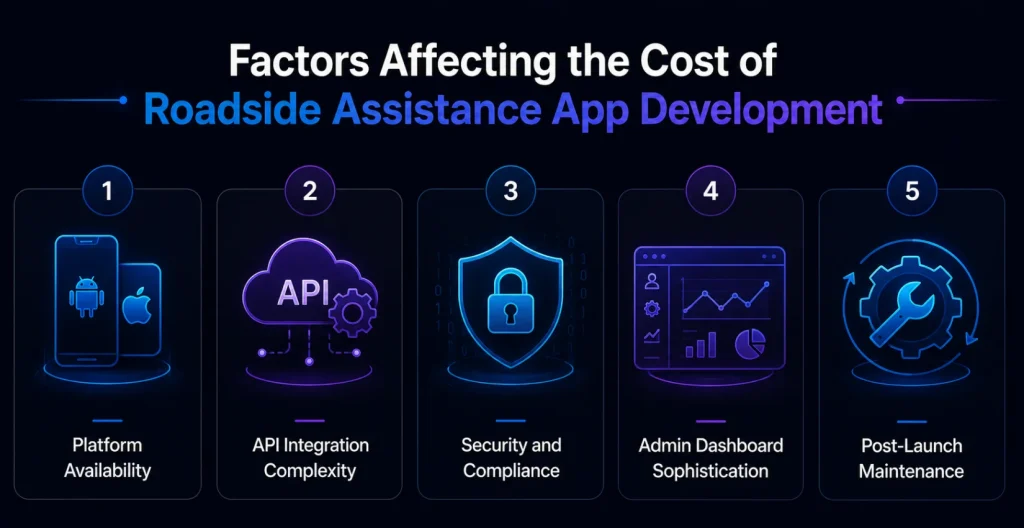
1. Platform Availability
If you build for both iOS and Android at the same time, development and testing hours jump up. Cross-platform frameworks can reduce some of that, yet you still get broad coverage across the smartphone audience.
2. API Integration Complexity
Adding advanced mapping tools, SMS gateways, and secure payment processors creates recurring costs. Those third-party services are essential for a professional tow truck app development company because reliability and high performance really matter all the time.
3. Security and Compliance
Putting strong data encryption in place and also meeting PCI DSS rules for payments adds a bit more work, not to mention time. Broad-level security is basically non-negotiable if you want real user trust, plus you keep sensitive personal data and financial information safer.
4. Admin Dashboard Sophistication
A more complex roadside assistance dispatch software development panel takes extra investment. If you want advanced things like automated driver payouts, deeper analytics, and fleet management tools, you’re looking at more overall project development hours.
5. Post-Launch Maintenance
After launch, regular updates and technical support matter, especially so the app stays compatible with new OS versions. Setting aside a budget for ongoing software development services helps keep your platform less buggy, and it also supports staying competitive in the market.
How to Make Money from a Roadside Assistance App?
To make sure your roadside assistance app solution actually turns into profit, you need a monetization plan that mixes user value with steady business revenue.
1. Service Commission Fees
The app collects a percentage from each successful service transaction when everything is completed end-to-end. This structure makes revenue increase as the number of service requests rises and as the size of the service network grows.
2. Tiered Subscription Models
People pay a monthly or yearly recurring fee to get guaranteed assistance and faster dispatching, so it feels more dependable, like you know what you’re getting. It also brings a predictable and steady income rhythm while slowly building long-term loyalty with a dedicated client base.
3. Featured Provider Listings
Local repair shops plus towing companies can pay for better placement inside the app. This is a pretty usual tactic in logistics app development company setups; it helps bring in extra B2B advertising income on top of the regular user fees.
4. Dynamic Surge Pricing
When demand spikes during busy hours or when extreme weather shows up, charging higher rates helps balance service supply. In practice, it boosts profit margins at those peak windows, and it also encourages more drivers to remain active out there.
5. Strategic Brand Partnerships
Teaming up with car insurance firms or vehicle manufacturers can create steady, high-volume lead flow. These collaborations often enable bundled or integrated service experiences, so your mobile platform gets more clicks and more revenue from a wider audience.
Why Hire a Professional Tow Truck App Development Company?
Partnering up with experts from Octal IT Solution makes sure your roadside assistance app development is handled by people who really get the niche, not just “generic” software talk.
1. Specialized Domain Knowledge
A professional tow truck app development company understands the exact technical headaches of real-time dispatching. Because of that, the app is less likely to trip over usual issues like GPS accuracy quirks and messy syncing when speeds are high.
2. Scalable Tech Infrastructure
Skilled teams design the solution so it can expand from a small local startup into a national service provider. That helps you sidestep future performance dead-ends, and it keeps the app ready for thousands of simultaneous service requests.
3. Industry Standard Compliance
Serious developers make sure your app fits the relevant legal rules and security requirements around data protection. This matters a lot for keeping both service providers and stranded motorists safe and for reducing risk in everyday operations.
4. End-to-End Support
Hiring a full-service team means you get continuous monitoring, plus post-launch fixes and improvements. This ongoing partnership helps your app keep its compatibility with newer mobile hardware and also with the evolving expectations of users, especially throughout 2026.
5. Digital Transformation Expertise
With digital transformation services, you can connect your app with advanced business tools. It’s a broad, almost end-to-end approach that tunes your entire workflow, from customer acquisition to automated driver management and reporting. Basically, it covers the whole loop, not just one piece.
Building a Roadside Assistance App Like AAA
If you want to create a roadside assistance app for startup success, it helps to borrow ideas and also strategies from established industry leaders. For startup success, you should look at industry giants for inspiration and strategy.
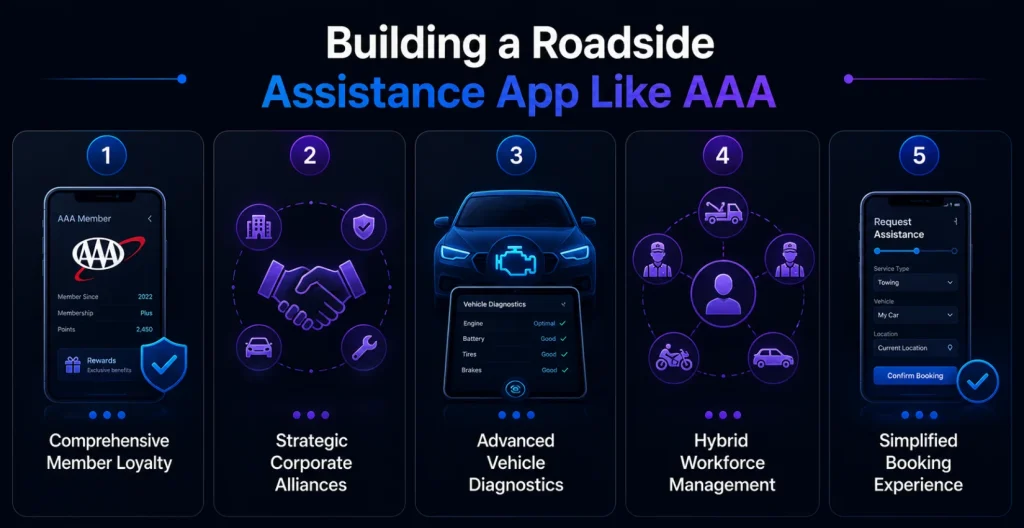
1. Comprehensive Member Loyalty
Apps like AAA tend to win by shaping a strong membership ecosystem. Exclusive discounts, plus tiered benefits, push long-term user retention, and they also create that familiar sense of community, along with trust. People don’t just download, they stick around.
2. Strategic Corporate Alliances
When you partner with car manufacturers and insurers, you can tap into a big initial audience. Those alignments kind of position your app as the default service for new vehicle owners. That means faster market penetration and smoother adoption early on.
3. Advanced Vehicle Diagnostics
Adding OBD-II support lets the app notice mechanical issues sort of earlier, before help shows up. That technical advantage improves the whole user experience, and it also makes the tow truck booking app development process feel more exact in a practical sense.
4. Hybrid Workforce Management
Using a dedicated fleet together with a wider net of independent contractors gives the best kind of coverage. In other words, this ride-sharing app development company’s model brings high adaptability and quick response, especially when demand suddenly spikes.
5. Simplified Booking Experience
The top market players focus on a smoother interface that asks for the bare minimum from the user. Cutting down the minutes from opening the app to confirming a service request is crucial for keeping satisfaction high during those roadside emergency situations.
Final Thoughts
As we move into the 2030s, roadside assistance platform development will likely shift toward autonomous vehicles and remote AR diagnostics. The change from “reactive” assistance to “predictive” help is already starting, even if it’s not fully everywhere yet. When you invest in this kind of app right now, you’re basically putting your business closer to the front of the automotive service revolution.
Whether you’re a startup trying to build a roadside assistance app for success or an established fleet owner seeking a white label roadside assistance app solution, the moment to act is now. With the right technology partner like Octal IT Solution, your platform can become a real benchmark for road safety and driver convenience.


 Get in Touch
 By
By September 10, 2026