


The integration of the IoT in real estate has sparked a digital transformation across residential, commercial, and corporate properties.
With the rising demand for intelligent infrastructure, smart homes and buildings are no longer a luxury but a necessity.
IoT in Real Estate enables automated operations, predictive maintenance, energy efficiency, and enhanced occupant experiences through interconnected devices and data-driven insights.
From asset tracking to smart energy management, this disruptive technology is fundamentally changing how properties are bought, sold, rented, and managed.
As the global urban population continues to grow, the real estate sector must adapt to technological shifts to improve efficiency, sustainability, and tenant satisfaction.
This blog explores the significance of IoT in real estate, the benefits of IoT app development, use cases, future trends, development costs, and its transformative impact on various industries.
What is IoT in Real Estate?
IoT in Real Estate refers to the application of interconnected smart devices and sensors in residential, commercial, and industrial properties to automate and streamline building operations.
These IoT systems collect, process, and analyze real-time data to optimize everything from lighting and HVAC systems to security and space utilization.
The IoT applications in real estate include smart thermostats, motion detectors, occupancy sensors, surveillance systems, and asset tracking tools that create intelligent environments for occupants and managers alike.
With IoT in commercial real estate and corporate facilities, businesses can reduce operational costs and enhance workplace productivity. Additionally, IoT in real estate in India is gaining momentum due to increased urbanization, government smart city initiatives, and tech-savvy consumers.
This synergy between physical infrastructure and digital intelligence is revolutionizing the real estate market.
IoT in Real Estate: Global Market Size

The global IoT smart homes market, valued at USD 99.3 billion in 2023, is projected to expand significantly reaching USD 124.42 billion in 2024 and soaring to USD 755.98 billion by 2032, driven by a robust CAGR of 25.3% during the forecast period.
The market growth is expected to be fueled by increasing internet penetration, rising disposable incomes in emerging economies, the growing need for remote home monitoring, and a surging demand for energy-efficient, low-emission solutions.
How IoT is Transforming the Real Estate Industry?
IoT is revolutionizing real estate by bringing intelligent connectivity and automation to the forefront of property management and development.
With real-time monitoring and data analysis, facility managers can detect issues before they escalate, leading to preventive maintenance and reduced operational downtime.
The use of IoT in real estate enables property owners to offer enhanced services such as automated lighting, climate control, and predictive maintenance.
Moreover, IoT applications in real estate are making smart buildings more energy-efficient and cost-effective. In IoT in corporate real estate, IoT technology helps organizations improve space optimization and workforce productivity through data-driven decision-making.
As real estate developers embrace digital transformation, the role of an IoT development company becomes critical in deploying scalable, secure, and integrated solutions that align with business goals and user needs.
Read More: IOT App Development Companies
Benefits of IoT in Real Estate
IoT brings significant advantages to real estate, including cost savings, energy efficiency, predictive maintenance, and enhanced tenant satisfaction. These benefits modernize property management and boost overall value and operational efficiency.
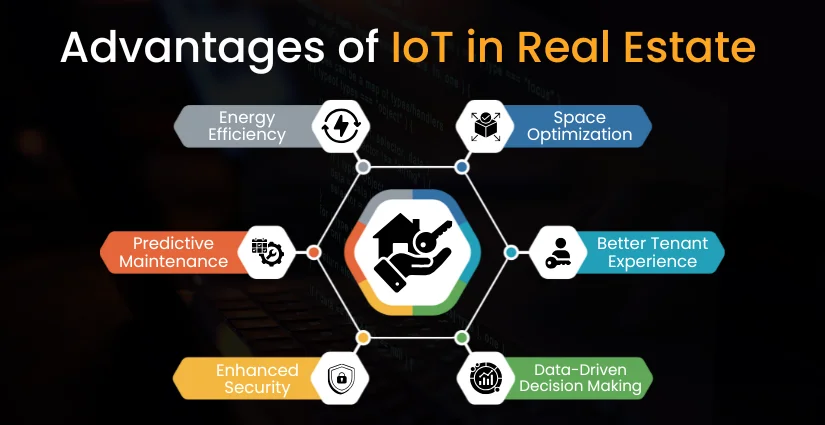
1. Energy Efficiency
Smart thermostats and automated lighting systems help optimize energy consumption by adjusting usage based on occupancy and time of day.
This lowers utility bills and supports sustainability initiatives across both residential and commercial properties.
2. Predictive Maintenance
IoT sensors detect early signs of wear and tear in equipment like elevators, HVACs, or water systems, allowing property managers to address issues before they become costly problems. This proactive approach enhances asset longevity.
3. Enhanced Security
Connected surveillance cameras, motion sensors, and access control systems help monitor properties in real-time.
Automated alerts notify security personnel of suspicious activities, improving the safety of occupants and assets.
4. Space Optimization
In IoT in commercial real estate, occupancy sensors analyze how spaces are used, enabling efficient workspace design, reducing unused areas, and lowering maintenance costs through smarter resource allocation.
5. Better Tenant Experience
From mobile-controlled home systems to instant maintenance requests, IoT applications in real estate improve tenant satisfaction by delivering convenience, comfort, and responsiveness in residential and commercial settings.
6. Data-Driven Decision Making
IoT systems generate actionable data for property managers, enabling informed decisions regarding energy usage, maintenance schedules, security protocols, and more. This improves operational efficiency and return on investment.
Checkout More: Fundamental Principles For IOT Projects

Future Trends in IoT in Real Estate
The future of IoT in real estate includes AI automation, digital twins, and smart leasing. These innovations promise smarter, more connected properties with greater control, transparency, and sustainable infrastructure.
1. AI-Driven Building Automation
The fusion of AI and IoT will enable buildings to self-regulate systems like lighting and temperature, learning from usage patterns and optimizing performance.
2. Digital Twin Technology
Real-time virtual replicas of buildings will be created using IoT sensors to simulate, analyze, and optimize real-world performance and layout.
3. Smart Leasing Solutions
IoT will streamline lease agreements with automated contract tracking, digital verification, and IoT-enabled move-in/move-out monitoring tools.
4. Voice-Controlled Property Interfaces
Integration with voice assistants will offer seamless control of smart devices, improving accessibility and user interaction across IoT-enabled real estate properties.
5. Blockchain Integration
Combining blockchain with IoT enhances transparency and security in real estate transactions, data logging, and smart contracts.
6. Remote Property Monitoring
IoT-based apps will allow property owners to monitor and control multiple properties remotely, optimizing resource allocation and emergency responses.
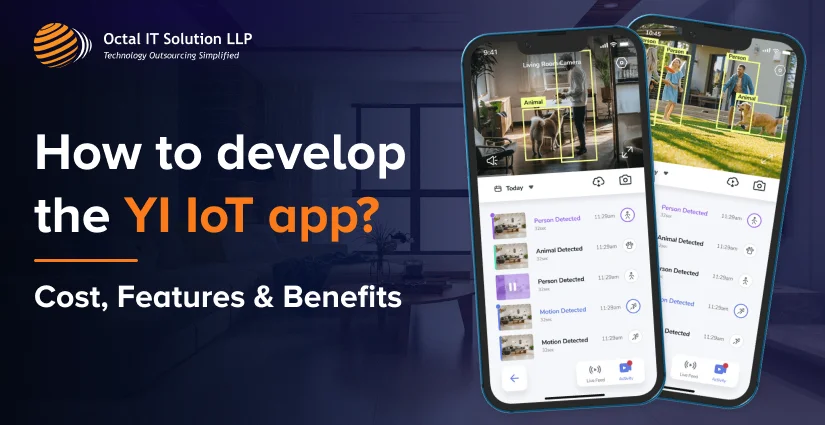
Read Also: How to Develop YI IoT app in 2025
Use Cases of IoT in Real Estate
IoT enables practical applications like smart homes, energy management, and asset tracking. These real-world use cases showcase how connected technologies are transforming building operations and enhancing resident and owner experiences.
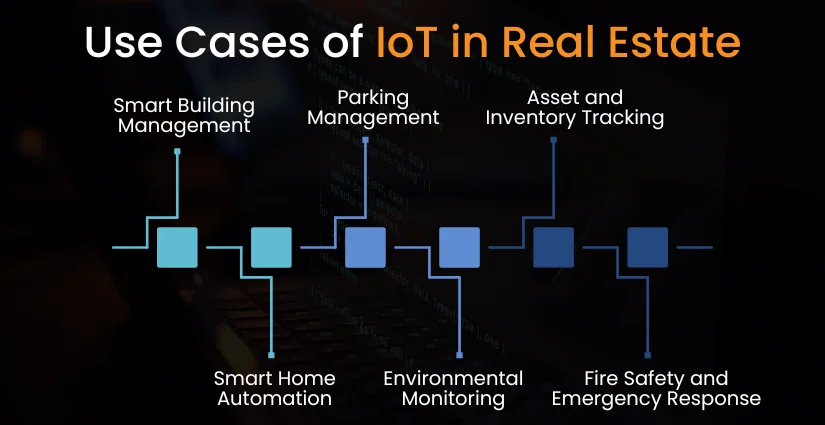
1. Smart Building Management
IoT automates lighting, ventilation, and security systems in buildings, reducing operational costs and improving sustainability efforts.
2. Smart Home Automation
From remote-controlled lights to smart locks and connected appliances, IoT enhances the comfort and security of modern homes.
3. Parking Management
IoT sensors in parking lots detect available spaces and guide drivers via mobile apps, reducing traffic and saving time.
4. Environmental Monitoring
IoT sensors track temperature, humidity, and air quality to maintain a healthy indoor environment, especially important in urban housing.
5. Asset and Inventory Tracking
Commercial properties use IoT tags and RFID technology to monitor equipment and supplies in real-time, minimizing loss and ensuring efficiency.
6. Fire Safety and Emergency Response
IoT-enabled smoke detectors and alarm systems enhance fire detection and support rapid response, reducing damage and increasing occupant safety.
Explore our Real Estate app development casestudy
Cost to Incorporate IoT in Real Estate
Component | Estimated Cost Range (USD) |
IoT Sensors and Devices | $10,000 – $50,000 |
IoT Gateway Installation | $5,000 – $20,000 |
Software & Dashboard Development | $20,000 – $100,000 |
Integration with EHR/CRM/BMS | $15,000 – $60,000 |
Data Security & Compliance Setup | $10,000 – $40,000 |
Ongoing Maintenance & Updates | $5,000 – $30,000 annually |
The total IoT app development cost depends on the scale, infrastructure, and the capabilities provided by the chosen IoT development company.
IoT in Various Industries Other Than Real Estate
IoT is revolutionizing industries beyond real estate from agriculture to healthcare by enabling real-time monitoring, automation, and data analytics, thus driving innovation, efficiency, and smarter decision-making across sectors.
IoT in Retail
IoT in retail uses smart shelves, customer tracking, and connected inventory systems to enhance customer experiences and streamline operations. Real-time data collected from these devices helps retailers adjust stock levels, plan layouts, and personalize offers, driving sales and customer loyalty.
IoT in Manufacturing
Real-time machine monitoring and predictive maintenance reduce downtime and increase efficiency in smart factories using IoT. IoT in manufacturing leads to better production planning, improved equipment lifecycle, and minimized human error across manufacturing lines.
IoT in Banking
IoT improves ATM management, branch security, and personalized customer services through data-driven insights in modern banking. Through IoT in banking, banks can monitor foot traffic, track cash flow, and deliver targeted offers based on customer behavior patterns.
IoT in Healthcare
IoT in healthcare enables remote patient monitoring, smart diagnostics, and asset tracking to improve outcomes and reduce operational costs. It allows continuous health monitoring, early intervention, and optimized use of critical medical resources.
IoT in Transportation
From GPS tracking to smart traffic signals, IoT in transportation enhances route optimization, fuel efficiency, and passenger safety. Transportation companies can reduce delivery times, improve fleet performance, and ensure public safety through predictive analytics.
IoT in Agriculture
Farmers use IoT in agriculture for crop monitoring, irrigation management, and livestock tracking to boost yield and reduce waste. Real-time insights into soil conditions and weather patterns support data-driven farming decisions and sustainable practices.
IoT in Construction
IoT in construction enhances site safety, monitors equipment performance, and improves project management with real-time analytics. It also supports predictive maintenance of machinery, tracks material usage, and ensures regulatory compliance on job sites.
Get Our Services: Real Estate Tokenization Development Services
Final Words
The future of IoT in Real Estate is promising, offering smarter, safer, and more efficient property management solutions.
By leveraging IoT applications in real estate, businesses and homeowners can save costs, improve energy efficiency, and deliver better living experiences.
As IoT in real estate in India continues to grow, demand for custom solutions will surge, requiring the support of reliable IoT app development companies.
The IoT app development impact will go far beyond real estate, reshaping how all industries function. Whether you’re a developer, investor, or property manager, now is the time to embrace IoT to future-proof your assets.



 Get in Touch
 By
By September 15, 2025