

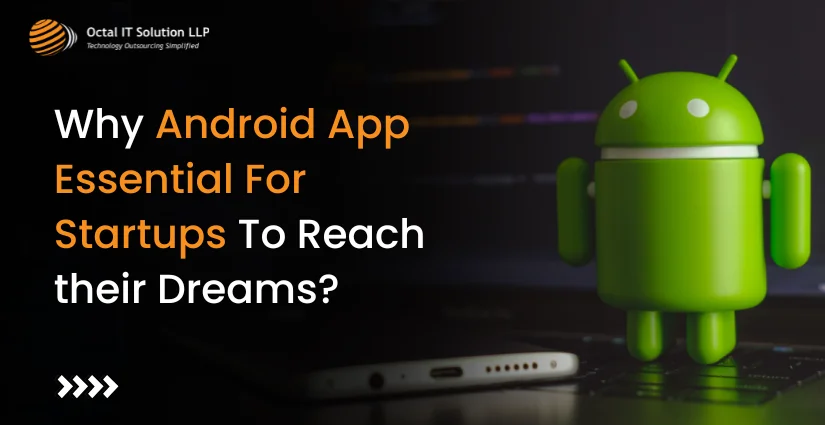
Fast-paced innovation breeds startups from exciting ideas and the urge to challenge the status quo. Yet the process of erecting an enterprise out of an idea is dependent on more factors, like strategy, market presence, and intelligent use of technology.
When it comes to digital tools, the world today has seen mobile apps taking the number one position in between brand and user communication. And in such a competitive setting, with Android, the budding startup can make its style statement.
The Introduction
A fast-evolving startup ecosystem is witnessing digital solutions take center stage in business growth and in acquiring customers. In such keeping up with the times situations, mobile apps have formed into critical assets not just for delivering services but also for forging robust connections with users.
With over 3 billion active Android devices worldwide, Android offers the best options for reach, scalability, and flexibility to emerging businesses. It thus empowers startups to reach out to an extremely huge and diverse user base, roll out a product faster, and implement changes on the fly as the market dictates.
Be it your arena of eCommerce, healthcare, edtech, or on-demand services, an Android app works as a bridge between a startup and its goals. In this blog, we are going to unveil answers to the whys of Android app development being a strategic need for startups in 2025 and how this development can set them on the path toward long-term success.
Android Market Statistics for 2025 & Beyond
Let’s explore the latest statistics that highlight why Android remains the go-to platform in 2025 and beyond.
- As of May 2025, Android holds a dominant 72.36% share of the global mobile operating system market.
- There are estimated to be 3.3 billion active Android users worldwide in 2025.
- As per the latest count, the Google Play Store boasts more than 2.87 million Android applications, hence the largest mobile app marketplace.
- 137.8 billion+ apps and games downloads happened in 2024 globally, and the numbers are expected to burgeon in 2025.
- A whopping $150 billion is expected to be spent on mobile apps by 2025.
- Development of an Android application in 2025 is estimated to cost anywhere between $20,000 to $250,000 based on the complexity and app features.
- Conversely, in-app advertising would deliver conversion rates 150% higher than mobile website ads in 2025.
- As many as 580,876 developers in the Android community have taken the plunge and released apps on the Google Play Store, with approximately 1,205 new apps released each day since then.
Why Startups Should Prioritize Android App Development?
For startups wanting to launch themselves firmly into the digital realm, selecting the right mobile platform becomes the most important thing. With its huge global footprint, Android offers a strategic advantage that almost no one can overlook.
Here are the reasons why focusing on Android app development might make or break startups:
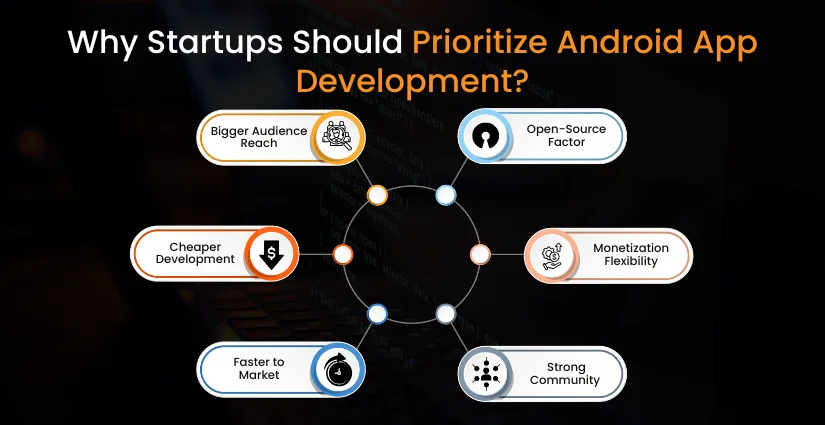
Bigger Audience Reach
Android dominates the international smartphone market with over 70% share. This enables startups to instantly tap into a bigger and widely scattered audience, more so in emerging markets such as India, Southeast Asia, Africa, and Latin America.
Cheaper Development
On several occasions, Android app development company is more affordable than other platforms. There are countless free tools and frameworks, and of course, the number of skilled Android developers is extremely high.
Faster to Market
Android follows the quickest way to test and develop an application, which means that by using these practices, a startup can easily launch an MVP and collect enough user feedback to create and build a subsequent version quickly.
Open-Source Factor
Being open-source, the Android operating system provides plenty of flexibility and customization. Startups can customize their apps based on user needs or business objectives without the restrictions usually imposed by other platforms.
Monetization Flexibility
Various monetization models are supported by Android, such as in-app ads, freemium, subscription, and one-time purchase. This offers a startup the choice to either stick with or experiment based on what works best.
Strong Community and Developer Support
Hire android app developers to substantiate the existence of the Android ecosystem, which gives startups a plethora of knowledge, forums, plug-ins, and ready-made solutions to lessen both time and effort on development.
Key Features of Android Apps for Startups
Explore the essential features that empower startups to build intuitive, scalable, and user-centric Android applications.
User-Friendly Interface
A user-friendly interface is crucial for ensuring seamless navigation and a pleasant user experience. A clean, intuitive design minimizes user confusion and friction during interactions. This not only boosts satisfaction but also encourages longer app usage and retention.
Push Notifications
Push notifications allow startups to maintain continuous engagement with their users. Whether it’s promoting a discount, sending a reminder, or sharing an update, timely alerts help drive user action. They play a key role in improving re-engagement and boosting conversion rates.
Secure User Authentication
Secure user authentication features such as OTP verification, fingerprint scanning, and two-factor authentication help protect sensitive user data. These measures enhance the app’s credibility and reduce the risk of breaches. Startups benefit from increased trust and user confidence.
In-App Chat or Support
Offering in-app chat or support ensures users receive instant help without leaving the app. Whether it’s through a chatbot or a live agent, quick support improves satisfaction. It also reduces dependency on external support channels and builds brand loyalty.
Payment Gateway Integration
Payment gateway integration is essential for any startup looking to monetize its app. By supporting secure and diverse payment methods like UPI, wallets, and cards, startups can cater to user preferences. A seamless transaction process improves user experience and trust.
Offline Functionality
Providing offline functionality allows users to access certain features even without an internet connection. This is especially valuable in regions with poor connectivity. It ensures uninterrupted usage and broadens the app’s usability across geographies.
Feedback and Rating System
A feedback and rating system empowers users to share their thoughts and experiences directly within the app. It offers valuable insights into what’s working and what needs improvement. Transparent feedback channels also enhance credibility and user involvement.
Scalable Backend
A scalable backend is vital for growing startups that expect a rising user base. Using cloud infrastructure and dynamic databases ensures smooth performance even during traffic spikes. It supports growth without compromising speed or stability.
Analytics and Reporting Dashboards
Analytics and reporting dashboards provide startups with actionable insights into user behaviour, feature usage, and performance metrics. These tools help track progress, spot trends, and make data-driven decisions. Over time, this leads to better product refinement and marketing strategies.
Social Media Integration
Finally, social media integration simplifies user onboarding and increases app visibility. By enabling users to log in via platforms like Google or Facebook, startups can streamline access. It also encourages content sharing, helping with organic promotion and user acquisition.

Android vs iOS: What Makes Android Better for Startups?
Choosing between Android app development frameworks and iOS is a critical decision for startups. Here’s why Android often stands out as the more strategic, scalable, and cost-effective choice for emerging businesses.
| Criteria | Android | iOS |
| Market Share | ~72% globally – wider reach | ~27% globally – more limited reach |
| Development Cost | Generally more affordable | Higher due to strict guidelines and tools |
| Device Variety | Supports a wide range of devices across all price points | Limited to Apple devices only |
| App Store Policies | More flexible and faster approval | Strict review process and longer approval times |
| Customization | Highly customizable with open-source flexibility | Restricted customization due to a closed ecosystem |
| Global Reach | Strong presence in emerging markets | Dominant in premium, developed markets |
| Revenue Model Fit | Supports freemium and ad-based models effectively | Better suited for subscription and in-app purchase |
| Developer Community | Larger global community and open tools | Smaller, more controlled developer ecosystem |
Industries Where Android Apps Are Transforming Startups
From just a startup point of view, an Android app has developed into a powerful toolbox, and thus it has become one in a wide range of industries. For instance, in healthcare, education, retail, and finance, these applications aid startups in streamlining their operations, improving the user experience, and scaling faster.
Considering its affordability, flexibility, and global reach, Android has become the platform of choice for startup innovation.
eCommerce
Android is an integral tool for transforming the startup eCommerce arena by providing affordable scalability coupled with a wide target market. A mobile-first buying experience allows the startups to display their product, organize personal promotions, and keep track of the inventory.
HealthTech
Say the startups in the health industry use Android apps to facilitate remote consultation, offer virtual prescriptions, and conduct health monitoring. These apps fill the gap of accessibility in remote areas, wherein users can engage with the doctors and avail the necessary service on their smartphones.
FinTech
Android apps have allowed startups in the finance industry to offer services such as mobile banking, personal finance tracking, digital wallets, and micro-lending. The apps were developed with security in mind and with a simple interface to allow user convenience, especially among those who were not familiar with traditional banking.
EdTech
Android apps are creating a new way of delivering education, especially for startups trying to reach learners in remote or budget-conscious areas. The apps facilitate teaching with video lessons, quizzes, live classes, and certificates, thus promoting flexibility and interactivity in learning.
On-Demand Services
From ordering food to booking cabs, doing repairs, or buying groceries, Android apps are the very lifeblood of on-demand startup businesses. Startups use these apps for request management, integration of payment, GPS location tracking, and provision of real-time updates.
Read More: Top Reasons to Choose Android For Mobile App Development
How Android Apps Help Startups Build Brand and User Loyalty?
For startups, building a recognizable brand and earning user loyalty is vital for long-term success. Android apps serve as a direct and personalized touchpoint between a business and its users, allowing consistent interaction and value delivery. With features like push notifications, personalized content, and seamless support, startups can stay top-of-mind and build trust over time.
Moreover, offering smooth functionality, intuitive design, and fast performance enhances user satisfaction and reduces churn. Loyalty programs, referral incentives, and in-app rewards further encourage users to return and engage regularly. By combining convenience with consistent value, Android apps play a pivotal role in turning first-time users into loyal brand advocates.
Monetization Opportunities with Android Apps
Android applications afford startups boundless possibilities to generate revenues while ensuring smooth customer experiences. The best strategies for monetizing apps for use by startups include the following:
1. In-App Advertising
Banner ads, interstitials, and rewarded videos can all bring launching money for startups on the basis of impressions or clicks. Given Android applications’ huge user base, the advertising-based model works very well with free apps that rely on high download volumes.
2. Freemium Model
This model enables the users to have access to basic features, while premium content or tools lie behind the paywall. This is the best approach to attract users and gradually convert them into paying customers through premium value-added services.
3. In-App Purchases
Digital goods and upgrades, plus extra features, may still constitute their income stream, wherein in-app purchases allow for direct monetization of user interaction. This system applies and works well for games, productivity, and even utility app types.
4. Subscription-Based Model
Such mechanisms offer financial stability through recurrent revenue revolving around a monthly or yearly cycle. Such startups basically fall into EdTech, HealthTech, and content delivery-for-many domains, sharing this model for monetization.
5. Affiliate Marketing & Sponsorships
A passive yet lucrative method can involve integrating third-party products or services and earning commissions upon referring. The idea works well for content-driven or niche-focused apps with solid user engagement.
Read Also: Why Hire Android App Development Agency for Your Project?
Real-World Examples of Successful Startups That Leveraged Android
There have been startups of international repute which, in their inception stages, used to scale their business quickly using the Android platform. A few examples deserve mentioning:
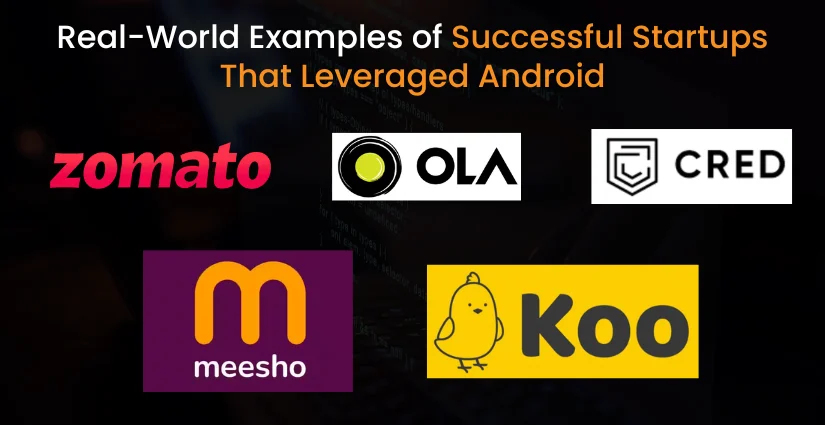
1. Zomato
Zomato was the largest delivery and restaurant discovery player globally, and it started its operations in India by targeting Android users. It enjoyed a fast growth rate for its easy-to-use app and seamless support across Android devices in tier-2 and tier-3 cities.
2. Ola
Using Android as a base, Indian ride-hailing giant Ola was catering to the large number of smartphone users. The billings were affordable, real-time tracking was there; payments happened seamlessly. All these together also helped build a preference for it over regular taxi services.
3. Cred
Cred, a fintech startup incentivizing users for paying credit card bills, is heavily concentrated on Android for app distribution. The elegant Android interface and immediate reward system attracted millions of tech-savvy users.
4. Meesho
Meesho, a social commerce startup, leveraged Android to empower small sellers and home-based entrepreneurs. The app’s simple interface, support for regional languages, and low device requirements helped it grow fast in rural India.
5. Koo
Suddenly, the local-language Twitter alternative, Koo, placed itself into the minds of Android users from India’s heartland. By moving ahead aggressively with Android support and multi-Indian language support, it broke through to a huge and highly underserved audience.
Visit Also: Top Android App Development Companies
Choosing the Right Android App Development Partner
Choosing the right development partner is a critical task for any startup trying to build its Android application. Here’s how you can make that choice:
1. Go Through Their Experience and Portfolio
Research the partner for past experiences and domain expertise. See if any of their assignments were similar to yours; check app downloads, user ratings, or real-life stories of the application working in favour. A solid portfolio would speak of technical ability and creative thinking.
2. Judge Technical Proficiency
They should be skilled in the latest technologies/android tech stacks, for example, Kotlin, Jetpack, and Firebase, among others. They should be able to provide you with apps that are scalable, secure, and performance-optimized based on current trends, new OS updates, etc.
3. Communication and Collaboration
The partner should enable constant, transparent communication till the end of the term. Understand the development workflow, frequency of reports, and how they treat change requests during the process. Preference/extra points for Agile methodology and/or dedicated project managers.
4. Looking for Post-Launch Support
Making an app is just the start. Pick a partner offering post-deployment support with maintenance, bug fixing, performance tuning, and scheduled updates, which will ensure long-term success.
5. Must Understand Startup-Friendliness
A good team must understand that startups are constrained by many things, from a tight budget to evolving ideas and a fast time to market. Being flexible in their engagement models and offering startup consulting means your partner will be more aligned with your vision.
The Final Remarks
In this hyper-digital and mobile-first era, Android apps provide startups with the ultimate platform for reaching consumers, facilitating operations, and scaling fast.
Thus, considering Android enjoys worldwide reach, low development Android app development cost, and ultimate flexibility, a startup should bring its innovative ideas to life to have an advantage early on in its journey. And expanding the market base, creating brand loyalty, or accessing supplemental revenues have now become options for Android app development.

How Octal IT Solution Can Help?
At Octal IT Solution, we take pride in delivering the best high-performance Android apps catered to startup needs.
With years of multi-industry experience and a team comprising expert developers, designers, and strategists, we deliver your vision into a scalable, user-centric mobile product.
Offering Android app development services from idea validation to post-launch support for empowering your startup to grow faster, smarter, and stronger, in the face of competing markets.

 By
By September 18, 2026




 Latest Stories
 Get in Touch