



Key Takeaways
- The guide shows that manufacturing digital transformation has evolved from a luxury option to an essential requirement for companies that will operate until 2026 and later.
- AI-first production systems coupled with generative design technology create a new framework engineers use to develop and produce products through autonomous manufacturing processes.
- The implementation of digital technology enables manufacturers to achieve higher production levels while reducing their operational costs because digital technology delivers precise data to them in real-time.
- Digital manufacturing transformation budgets show wide differences as organizations spend between $150K for basic IoT systems and more than $5 million to build complete smart factory facilities.
- The organizations that want to succeed in 2026 must create a digital roadmap that starts with employee training and moves to the implementation of advanced software systems.
- Key Takeaways
- What is Digital Transformation in Manufacturing?
- Why Digital Transformation for Manufacturing Matters
- Role of AI and Data Analytics in Manufacturing
- Key Technologies Driving Manufacturing Transformation
- Benefits of Digital Transformation in Manufacturing Industry
- Challenges in Implementing Digital Transformation
- Steps to Successfully Adopt Digital Transformation
- Digital Transformation Cost Breakdown for Manufacturing Industry
- Real-World Use Cases of Digital Manufacturing
- Future Trends in Manufacturing Beyond 2026
- Final Words
- FAQs
Do you want to prepare yourself for a future where factories possess thinking and learning abilities allowing them to update their operations in real time? Digital transformation has become a basic requirement for manufacturing companies that want to continue their business operations during 2026 and beyond this point.
Mordor Intelligence forecasts that the digital transformation market for manufacturing will increase from $439.56 billion in 2026 to approximately $499.43 billion by the year 2031. The supply chain needs resilience solutions to operate with maximum efficiency.
In this guide, we will explore how modern technologies are changing the rules of production and why you can no longer afford to delay automation.
What is Digital Transformation in Manufacturing?
The digitalization of manufacturing involves the full implementation of advanced digital technologies throughout the entire production process and creates new methods for delivering value to customers. This now operates through interconnected networks of intelligent systems, enabling data transmission between all parts of the manufacturing process.
1. Connectivity
This process establishes connections between design, production, and distribution networks.
2. Intelligence
The utilization of digital technology in manufacturing to create systems that make independent choices.
3. Agility
The production process now uses flexible systems that allow for multiple assembly configurations instead of fixed assembly lines.
4. Data-Driven Culture
The organization has transitioned from using instinct-based management methods to using real-time analytics for decision-making.
Also Read : Best 15+ Digital Transformation Companies
Why Digital Transformation for Manufacturing Matters
The manufacturing industry in 2026 operates under conditions of business uncertainty. Organizations face two main challenges because they need to adapt to sudden shifts in customer preferences while facing increasing material prices and decreasing availability of skilled workers.
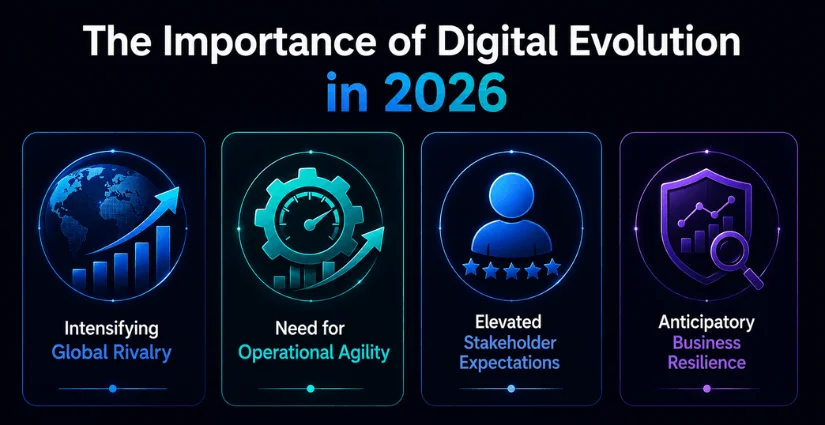
1. Rising Global Competition
The manufacturing industry faces price competition because emerging markets implement digital systems, forcing established companies to adopt digital transformation.
2. Predictive Resilience
Data analytics in manufacturing helps companies foresee supply chain shocks before they happen so that they can have smooth production cycles.
3. Demand for Efficiency
The manufacturing sector’s digital strategies focus primarily on reducing waste while monitoring energy usage through advanced sensor systems.
4. Customer Expectations
Customers expect businesses to provide them with customized products that can be delivered at “Amazon-like” speeds. This requirement demands that companies build a digital production system that can quickly adapt to changes.
Role of AI and Data Analytics in Manufacturing
Well the digital tools for manufacturing sector are the refinery in today’s plants, turning raw data into actionable intelligence.
1. Predictive Maintenance
Using machine learning in manufacturing to predict motor failures three days before they occur permits businesses to avoid expensive unplanned equipment downtime.
2. Demand Forecasting
AI creates precise inventory management systems through its analysis of market trends and historical data, and helps businesses prepare for upcoming seasonal demand.
3. Quality Control
High-speed cameras and digitalization in manufacturing software work together to identify defects that happen within milliseconds, ensuring that only perfect products leave the production facility.
Key Technologies Driving Manufacturing Transformation
The era of Industry 4.0 has matured into Industry 5.0, where human-centric AI and ultra-fast connectivity redefine the shop floor. These tools turn traditional hardware into intelligent, communicative assets.
1. AI & Machine Learning
Digital manufacturing technology uses artificial intelligence to enhance its functions, allowing it to create better production schedules and identify hidden defects that human inspectors fail to detect.
2. Internet of Things (IoT)
IoT in manufacturing helps to create a “nervous system” that monitors equipment health and production levels through sensor installation on each machine.
3. Cloud & Edge Computing
Processing data at the “edge” results in reduced latency that enables robots to make immediate decisions without needing to wait for remote server verification.
4. Digital Twins
The digital manufacturing transformation requires businesses to build virtual models of their physical assets, enabling testing of hypothetical situations that will not interrupt their actual production activities.
Benefits of Digital Transformation in Manufacturing Industry
Implementing a digital manufacturing strategy results in financial benefits operating on multiple levels. The focus of the business model must establish operational capacity that will last for the next ten years.
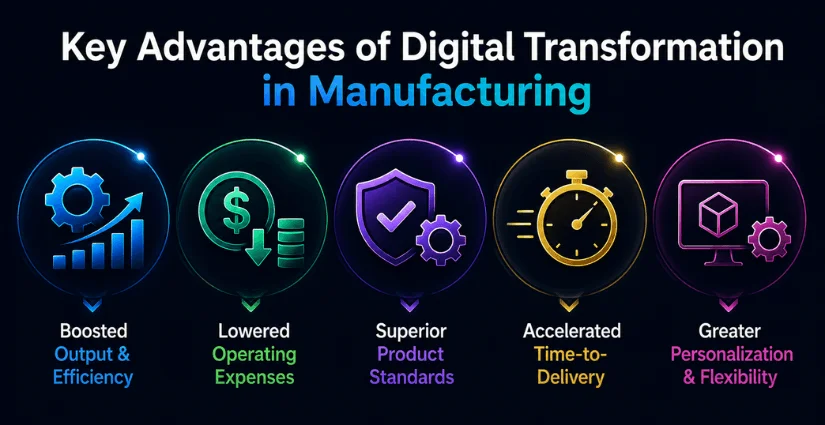
1. Increased Productivity
The combination of automation and AI-based workflows allows an organization to solve its production challenges and results in 15 to 30% higher production capacity without needing additional employees.
2. Reduced Operational Costs
The manufacturing industry achieves its main advantage through digital transformation, enabling manufacturers to decrease energy consumption and waste material production through better control methods.
3. Improved Product Quality
Automated inspection systems check each product to ensure it meets precise requirements, protecting the manufacturer from costly product recalls.
4. Faster Time-to-Market
The combination of digital design and simulation tools permits businesses to create and introduce new products within a timeframe of weeks instead of months.
5. Enhanced Customization
The implementation of manufacturing CRM software development permits companies to convert customer feedback into customized production orders without any delay. One such example is Method CRM, which helps manufacturing businesses manage customer relationships, streamline sales workflows, and integrate customer data with tools like QuickBooks to improve financial tracking and operational efficiency.
Challenges in Implementing Digital Transformation
Despite the clear advantages, the manufacturing digital transformation roadmap encounters obstacles that require strategic solutions to be implemented by organizations that want to achieve its benefits.
1. High Initial Investment
Digital transformation services require financial resources exceeding multiple million dollars because they need both hardware and software investments.
Solution: A gradual approach starts with vital pilot projects that deliver instant financial benefits to fund future development stages.
2. Workforce Skill Gaps
Numerous workers from the past do not possess the necessary technical skills to function in modern digital manufacturing environments.
Solution: Organizations develop ongoing training initiatives that utilize “low-code” platforms to enable non-technical personnel to use technology functions.
3. Cybersecurity Risks
Expanded system connections create additional opportunities for hackers who aim to attack essential production systems through their extended access points.
Solution: Businesses should work with a blockchain app development company that will develop secure permanent records through zero-trust network system implementation.
4. Legacy Systems
Integrating modern AI with three-decade-old equipment presents engineers with complicated technological challenges.
Solution: Organizations can implement “middleware” and IoT gateways to facilitate data extraction from outdated systems without conducting full equipment replacement.
Steps to Successfully Adopt Digital Transformation
A successful outcome requires a complete digital transformation roadmap for manufacturing operations to achieve their future business objectives.
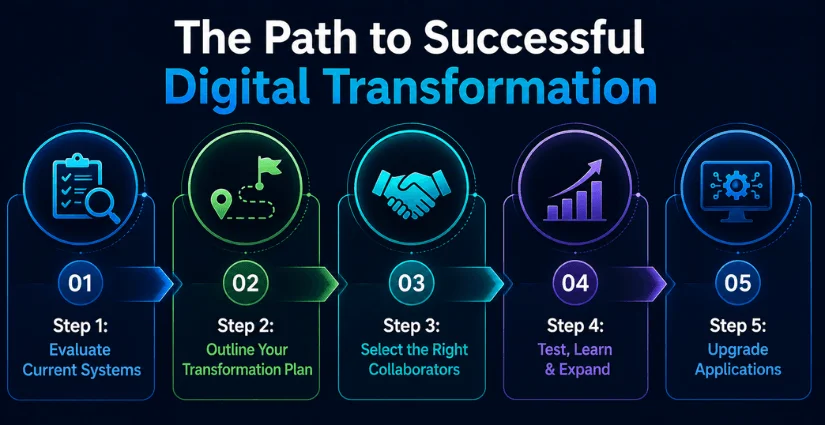
Step 1: System Assessment
You need to examine your existing systems through an assessment that will show you that outdated procedures are hindering your operational performance.
Step 2: Define Your Roadmap
The digital transformation plan for manufacturing needs to establish clear goals and show the progression from initial IoT testing to complete AI system installation.
Step 3: Choose Partners
You need to select a digital transformation consulting services provider that understands the specific operational limitations found in industrial settings.
Step 4: Pilot & Scale
Start your technology test at a single production line to obtain information you will use to expand your operations throughout the entire factory.
Step 5: Modernize Apps
The legacy application modernization service provider will help you modernize your existing software applications so they can connect with your new cloud-based analytics systems.
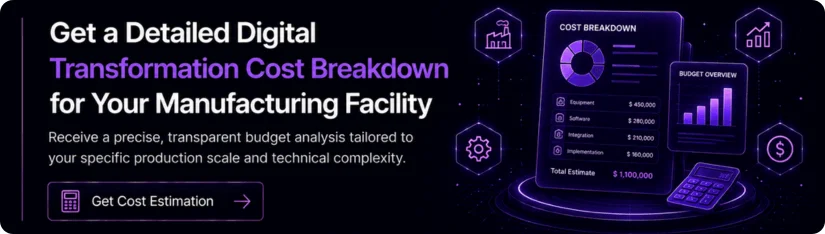
Digital Transformation Cost Breakdown for Manufacturing Industry
Any top company that wants to digitize its manufacturing process must understand the budget. The costs of deployment work are highly dependent on both project complexity and the location of development team members.
Cost As Per Roles
The total investment of a project depends on the specific expertise that it needs to employ project managers, data scientists, and IoT engineers. Each team member works to implement digital transformation for manufacturing companies through their technical skills and strategic management.
| Role | Responsibility | Est. Cost (Annual) |
| Project Manager | Strategy and Oversight | $100k – $160k |
| Data Scientist | AI Model Development | $120k – $180k |
| IoT Engineer | Sensor Integration | $90k – $140k |
Cost Based on Phases
The budgeting process begins with project discovery and audit activities before it reaches the development and deployment stages of the project lifecycle. The digital transformation roadmap for manufacturing uses a phased approach that improves cash flow management throughout the entire process.
| Phase | Focus | Duration |
| Discovery | Goal setting & Audit | 4 – 8 Weeks |
| Development | Building the Core Tech | 6 – 12 Months |
| Deployment | Factory-wide Rollout | 3 – 6 Months |
Cost Based Upon Regional Developer Rates (Hourly)
The hourly development costs of North America, Europe, and Asia display substantial differences because of their different geographic locations. Your development budget increases when you select a digital transformation Consulting company that operates in economically advantageous regions.
| Region | Average Rate | Talent Availability |
| North America | $150 – $250 | High |
| Eastern Europe | $50 – $100 | Moderate |
| Asia (India) | $25 – $60 | Very High |
Cost According to Project Complexity
The cost of a project increases with its technology requirements, ranging from basic cloud ERP systems to sophisticated digital twin systems. Digital manufacturing technology that reaches high complexity requires more hours for system integration and demands bigger costs for its required infrastructure.
| Complexity | Features Included | Est. Budget |
| Basic | Cloud ERP & Basic IoT | $150k – $300k |
| Intermediate | Predictive AI & Dashboards | $300k – $1M |
| Advanced | Full Smart Factory / Twins | $1M – $5M+ |
The selection of a digital transformation services provider in Asia can greatly reduce the overhead for manufacturing software development company projects while maintaining the technical quality.
Real-World Use Cases of Digital Manufacturing
Well, these digital transformation in manufacturing examples show how global leaders use digital transformation services to solve real-world bottlenecks, demonstrating that connectivity equals competitiveness.
1. Automotive Industry
Using digital transformation manufacturing industry tools, carmakers use “cobots” (collaborative robots) to work alongside humans, increasing assembly precision by 40%.
2. Aerospace Sector
Companies use digital manufacturing trends like 3D printing and digital twins to test engine parts in virtual wind tunnels before they are ever built.
3. Electronics
The high-speed surface-mount technology (SMT) lines now use AI in manufacturing to control solder paste application, adjusting itself according to changing temperature and humidity conditions.
Future Trends in Manufacturing Beyond 2026
The digital transformation manufacturing will progress towards the development of “lights-out” factories, operating without any human need for lighting or heated spaces.
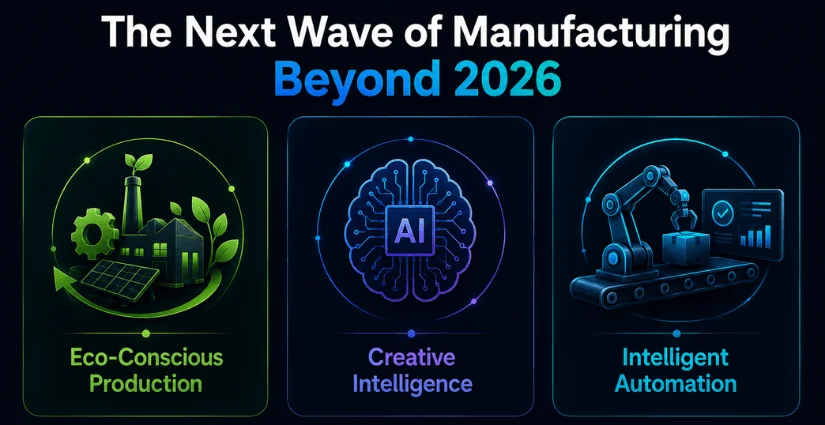
1. Sustainable Manufacturing
Future key industry transformations will focus on “Green Twin” technology to track the exact carbon footprint of every product produced.
2. Generative AI
Integrating generative artificial intelligence development services will allow engineers to simply describe a part’s requirements, and the AI will design the most efficient shape automatically.
3. Hyper-Automation
The next phase implements AI-based production systems that use social media trend monitoring to automatically manage supply chain raw material inventory.
Final Words
The path to achieving a smart factory requires a slow and continuous process that demands more time than traditional methods. The early digital transformation implementation of industrial companies enables them to establish market presence because their flexible operations will bring a competitive advantage.
By partnering with experts who provide digital expertise for the manufacturing industry, companies can navigate the complexities of modern tech with confidence. At Octal IT Solution, we provide digital transformation services that allow businesses to combine traditional craftsmanship with advanced technology solutions that keep them competitive in their industry.

 By
By June 5, 2026




 Latest Stories
 Get in Touch