


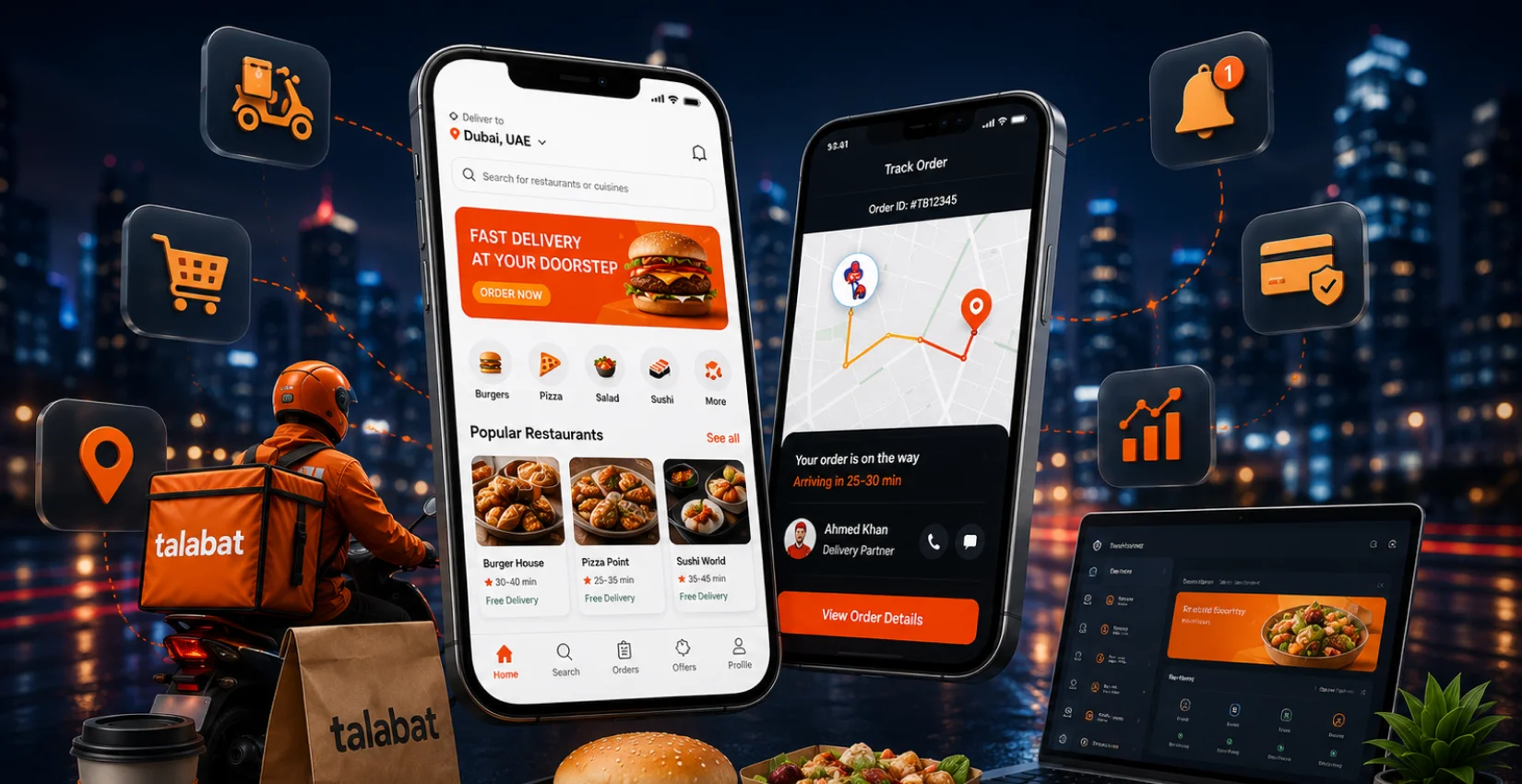
The online food delivery industry is growing pretty fast in 2026, because customers keep leaning more toward convenience, speed, and digital ordering experiences. In practice, platforms like the Talabat food delivery app have kinda changed the whole order process for users, giving them easy restaurant browsing, real-time tracking, secure payments, and quick deliveries all inside one platform, so nothing feels “extra,” you know?
Also, the demand for food delivery app development is going up, mainly because businesses are starting to see the long-term upside of the on-demand delivery market. Customers don’t really want to wait in long queues anymore, or call someone and do the whole traditional phone ordering. Instead, they want instant ordering experiences right from their smartphones, like immediately, no back and forth.
Several factors are driving the popularity of food delivery apps in 2026:
- Growing smartphone and internet penetration
- Rising demand for contactless delivery
- Expansion of cloud kitchens and virtual restaurants
- AI-driven delivery optimization
- Faster delivery expectations
- Personalized user experiences
The integration of AI in food delivery platforms has also turned into a big growth driver. Lately, businesses are using AI-powered suggestion systems, predictive analytics, and route optimization gadgets to make customer experiences feel smoother and day-to-day operations more efficient.
And as the competition keeps growing, companies are more and more partnering with a food delivery app development company to put together scalable applications that are loaded with features, so they can hold their own against top platforms like Talabat.
- What Makes Talabat a Multi-Million Dollar Success Story?
- Food Delivery App Market Trends & Opportunities in 2026
- Must-Have Features for a Talabat-Like Food Delivery App
- Advanced Features That Give Your App a Competitive Edge
- Step-by-Step Process to Build an App Like Talabat
- Tech Stack Required for Talabat-Like App Development
- How AI Is Transforming Food Delivery Apps in 2026-27
- How Much Does It Cost to Develop a Food Delivery App Like Talabat in 2026?
- Factors That Influence Food Delivery App Development Cost
- Estimated Development Timeline for a Talabat Clone App
- Common Challenges in Food Delivery App Development & Their Solutions
- How Food Delivery Apps Make Money: Revenue Models Explained
- Essential Tips to Launch and Scale Your Food Delivery Startup
- Why Choose Octal IT Solution to Develop Food Delivery App Like Talabat?
- Final Thoughts: Is Building a Talabat-Like App Worth It in 2026?
- Frequently Asked Questions
What Makes Talabat a Multi-Million Dollar Success Story?
The Talabat food delivery app basically became one of the most successful online delivery platforms in the Middle East, not just because it’s popular but because it has a strong technology setup, customer-focused services, and business operations that can scale pretty smoothly.
One of the main reasons behind Talabat’s success is that it can connect customers, restaurants, and delivery partners through a smooth digital ecosystem like it just flows. The platform really leans into user convenience, delivery efficiency, and restaurant accessibility, so people don’t feel like they’re jumping through hoops.
The Talabat business model is supported by more than one revenue stream, for example:
- Restaurant commission fees
- Delivery charges
- Featured restaurant listings
- Subscription memberships
- Promotional advertisements
Talabat also puts effort into customer retention by offering tailored recommendations, discount offers, loyalty programs, and even quick delivery services, because apparently speed and relevance matter a lot.
Then there’s another big factor too, the advanced technology in the Talabat app architecture. The platform uses AI-driven systems for delivery allocation, customer personalization, and operational management, so the whole operation stays organized even when things get busy.
Food Delivery App Market Trends & Opportunities in 2026
The online food delivery industry is growing really fast, because customers keep leaning more and more toward mobile ordering, and they want faster drop-off experiences too. Because of that, businesses are pouring budget into Food delivery app development, to satisfy this rising demand and also build scalable on-demand delivery platforms that actually hold up.
Here are some market stats that are kind of shaping everything in 2026:
- The global online food delivery market is expected to touch $505.5 billion by 2030, moving up at a CAGR of 9.4%.
- Also, the online food delivery services market is projected to cross $618.3 billion by 2030, mainly because smartphone usage keeps climbing and consumer lifestyles are changing. (Source)
- Right now, Asia-Pacific is leading the online delivery market, with more than 41% market share, helped along by rapid urbanization, plus wider digital adoption.
- AI-powered automation and hyperlocal delivery models are turning into major growth drivers for today’s food delivery mobile app development platforms.
- Cloud kitchens, along with subscription-based delivery services, are opening fresh opportunities for startups that want to Develop Apps Like Talabat.
So overall, this food delivery app development guide shows why companies are investing in AI-powered food delivery app development service solutions to stay competitive in 2026.
Must-Have Features for a Talabat-Like Food Delivery App
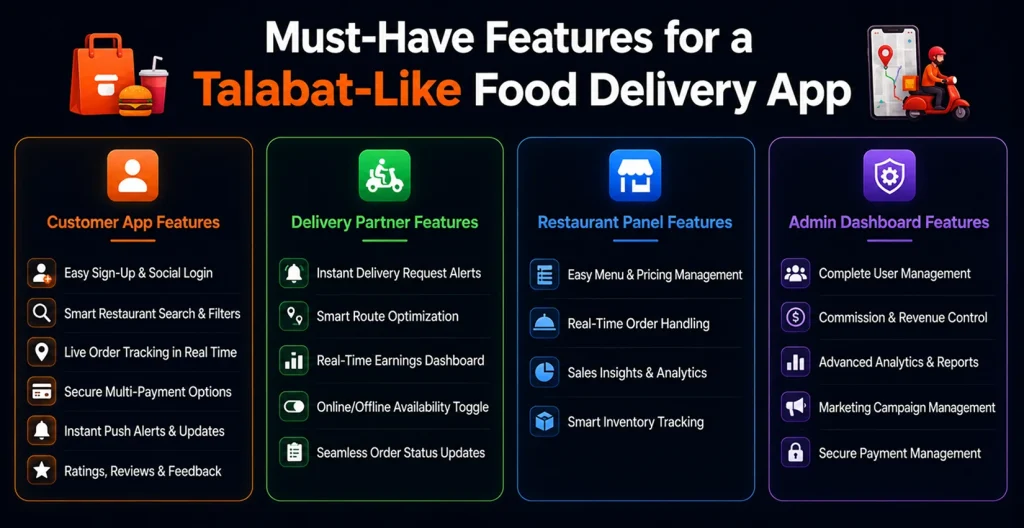
To build a successful delivery platform, businesses have to put together modern, scalable food delivery app components that can improve the customer experience, streamline daily operations, and keep order handling smooth and steady. Here are the key features of a food delivery app like Talabat that every business should consider.
Customer App Features
The customer app should feel smooth, fast, and easy, so people can place orders without friction or weird delays.
- User Registration & Login: Let users sign up using email, phone numbers, or social media accounts, so onboarding feels quick and natural.
- Restaurant Search & Filters: Help customers find restaurants by cuisine, ratings, prices, delivery time, and also their current location.
- Real-Time Order Tracking: Use GPS tracking so users can watch the rider’s progress and get a better estimated arrival window.
- Multiple Payment Options: Offer multiple ways to pay, like UPI, cards, digital wallets, and even cash on delivery when needed.
- Push Notifications: Send timely updates for order confirmations, delivery status, deals, and offers that feel more personal.
- Ratings & Reviews: Let customers leave feedback about restaurants and the delivery experience.
These are some of the most important features inside the Talabat-like app that boost customer engagement and support better retention over time.
Delivery Partner Features
The delivery app kind of helps delivery agents manage orders and deliveries, pretty smoothly, maybe more efficiently too.
- Delivery Request Notifications: Delivery partners get quick alerts, like instant pings, for nearby orders.
- Route Optimization: AI navigation does the heavy lifting, helping cut down delivery time and boosting overall efficiency.
- Earnings Dashboard: Agents can view daily earnings, incentives, and the number of completed orders.
- Availability Toggle: Delivery agents can move between online and offline modes anytime they need.
- Order Status Updates: Real-time status updates make communication clearer and delivery transparency better.
Together, these features kind of streamline delivery operations and make everything run more efficiently
Restaurant Panel Features
The restaurant dashboard helps restaurants handle orders and daily operations in a calmer way.
- Menu Management: Restaurants can add dishes, update prices, upload photos, and manage whatever is available.
- Order Management: Accept, reject, and process customer orders right from the dashboard without extra steps.
- Sales Analytics: Track revenue, popular dishes, order momentum, and customer preferences.
- Offer & Discount Management: Build promotional campaigns and special discounts to pull in more customers.
- Inventory Management: Keep an eye on stock availability and reduce those annoying order cancellations.
These features to develop apps like Talabat can really improve restaurant productivity and raise customer satisfaction, too.
Admin Dashboard Features
The admin panel sort of acts like the main control center for the whole platform, you know. It’s basically where everything gets managed.
- User Management: You can handle customers, restaurants, and delivery partners in one dashboard, without bouncing between screens.
- Commission Management: Stay on top of delivery charges, plus restaurant commissions in a pretty smooth way, day to day.
- Analytics & Reports: Watch revenue growth, delivery performance, and customer tendencies, so you can tell what’s working.
- Marketing & Promotions: Run referral schemes, coupon campaigns, and loyalty incentives, all from the same place.
- Payment Management: Take care of payouts, transactions, and settlement documents securely, so nothing gets messy.
Overall, these admin features are essential to scale a successful Food Delivery App Business by 2026.
Explore Article: Top Mobile App Development Companies in UAE
Advanced Features That Give Your App a Competitive Edge
The food delivery market is getting way more competitive, so companies can’t just stop at basic ordering stuff; they need to do a lot more to stand out. Nowadays, users want experiences that feel smart, fast, and somehow tailored to them, not just “place order, wait, done”. So when you add advanced food delivery app features, you can boost customer engagement as well as operational flow, like smoother work behind the scenes, too.
Here are some advanced features you can build for apps like Talabat, the kind that really help you get a solid competitive edge, even in crowded areas.
AI-based Food Suggestions
AI systems look at what customers do, their previous order patterns, and personal preferences, and then they recommend meals and restaurants that match. This makes people feel understood, and it often leads to more repeat orders, too.
Real-time Delivery Monitoring
Using live GPS tracking, users can see where the rider is and how close the order is, in real time. It adds transparency, and most importantly, people trust the process more.
Voice Search and Voice Ordering
With voice-enabled search, users can find meals faster and place an order without typing much. This is especially useful when you’re on mobile and multitasking.
Smart Delivery Partner Allocation
AI can assign each order to the nearest available delivery partner. That reduces delivery time and helps operations stay efficient instead of chaotic.
In-app Chat & Calling
Let customers, restaurants, and delivery agents communicate using secure messaging plus in-app calling. Less confusion, fewer delays, and fewer “where is my order” situations.
Multi-language and multi-currency Support
If you support multiple languages and currencies, it becomes easier to expand into new regions, and you can serve a wider customer base without friction.
Loyalty Programs and Rewards
Reward schemes encourage customers to come back, and they help improve retention. Simple points, discounts, or special deals can go a long way.
AI Chatbots for Customer Assistance
AI chatbots handle common questions instantly, so support teams don’t get overwhelmed. Faster replies also mean better customer satisfaction and fewer escalations overall.
Step-by-Step Process to Build an App Like Talabat
Step 1: Market Research & Competitor Analysis
First off, you need to get a feel for the audience you actually want, then take a look at competitors and spot market openings. When this is done right, it basically guides the whole plan and helps a business build customer-centric delivery platforms that don’t fall apart.
Step 2: Define App Features & Requirements
Next, businesses should lock in the needed features for the customer app, the delivery partner app, the restaurant panel, and the admin dashboard. If the requirements are laid out properly, the Food delivery app development process tends to flow a lot more easily and faster.
Step 3: Choose the Right Technology Stack
Picking the right tech matters because you’re building something that needs to be scalable, secure, and still high performing with a smooth user experience, without weird slowdowns.
Step 4: UI/UX Design
An intuitive, visually pleasing layout does a lot more than “look nice”. It makes ordering food simpler, supports better navigation, and keeps customer engagement stronger.
Step 5: App Development
This part covers frontend work, backend structure, database handling, and API creation, so the delivery application becomes fully functional and ready.
Step 6: Third-party Integrations
You’ll usually bring in outside services like payment gateways, GPS tracking, push notifications, and analytics tools. These integrations really improve app functionality and also operational efficiency in day-to-day use.
Step 7: Testing & Quality Assurance
Testing thoroughly is how you make sure everything stays steady. You check performance, security, usability, and compatibility across various devices, plus different operating systems.
Step 8: Deployment & Launch
Once testing is passed, the app gets deployed for Android and iOS so people can access it publicly and start using it right away.
Step 9: Maintenance & Updates
After launch, you keep everything healthy with ongoing maintenance, feature improvements, and performance upgrades. That helps maintain long-term stability, security, and customer satisfaction.
Businesses often partner with a Food delivery app development company to streamline the entire development lifecycle and accelerate project delivery.
Tech Stack Required for Talabat-Like App Development
Choosing the right technology stack is essential for building something that can scale, stay secure, and perform well, especially for a delivery platform. The tech choice you make for food delivery apps really affects how fast everything feels, how smoothly it grows, and what the user ends up experiencing day to day, like the whole vibe. If the stack is off, the app can slow down or become brittle, even if the core idea is solid.
| Technology Area | Recommended Technologies |
| Frontend Development | Flutter, React Native, Swift, Kotlin |
| Backend Development | Node.js, Python, Laravel |
| Database | PostgreSQL, MongoDB, MySQL |
| Cloud Hosting | AWS, Google Cloud, Microsoft Azure |
| Real-Time Tracking | Google Maps API, Mapbox |
| Payment Integration | Stripe, PayPal, Razorpay |
| Push Notifications | Firebase Cloud Messaging, OneSignal |
| Authentication & Security | OAuth, JWT, Firebase Auth |
| Analytics & Monitoring | Google Analytics, Mixpanel |
| AI & Automation | OpenAI APIs, TensorFlow, Dialogflow |
The technology in the Talabat app focuses heavily on scalability, security, AI-powered automation, and seamless real-time user experiences.
How AI Is Transforming Food Delivery Apps in 2026-27
Artificial intelligence is moving really fast, and it is basically reshaping the online food delivery industry, mostly by making the customer journey better, delivering faster and easier, and by strengthening how operations are managed. In 2026, more companies will keep adding AI to their Food Delivery platforms to automate everyday tasks, cut down operational costs, and also deliver more tailored experiences for users.
At the same time, integrating AI in food delivery App solutions is letting businesses build a smarter, more scalable delivery ecosystem, sort of like the Talabat food delivery app style.
If you look at it closely, there are a few major ways AI is changing modern food delivery app development, and they are not small changes at all
AI-Powered Personalized Recommendations
AI systems look at customer behavior, order history, and overall food preferences, then they suggest meals or restaurants that match the person. That tends to lift user engagement, encourage repeat orders, and overall boost satisfaction.
Smart Delivery Route Optimization
AI-powered route optimization supports delivery partners by showing the quickest and most efficient routes. As a result, delivery time drops, fuel expenses can be reduced, and operations usually run smoother across the board.
Predictive Analytics & Demand Forecasting
AI also helps businesses interpret demand trends and predict the high traffic ordering windows. Restaurants can then use those insights to plan inventory, staffing, and delivery operations more effectively, instead of guessing.
AI Chatbots & Virtual Assistants
AI chatbots and other virtual assistants offer instant support by dealing with common questions about orders, payments, refunds, and live delivery status. This improves customer experience while also reducing the workload on support teams.
Dynamic Pricing and Smart Offers
AI systems can automatically tune delivery charges, promotional offers, and discounts based on demand signals, customer patterns, and those peak hours to open more revenue chances, sort of quietly.
Fraud Detection & Secure Transactions
AI-powered monitoring setups help spot odd behavior, counterfeit transactions, and payment fraud, which boosts overall platform protection and keeps customer trust steadier.
Voice Search & Smart Ordering
Quite a few modern food delivery apps now include AI voice search and voice ordering too, so people can place orders with less hassle, more naturally.
Automated Delivery Management
AI also supports order allocation in a more hands-off way by linking deliveries to the closest ready delivery partner, considering location, road congestion, and delivery bandwidth.
The growing adoption of AI across Food Delivery technologies is gradually pushing delivery platforms to be quicker, sharper, and more focused on the customer. Companies thinking about developing apps like Talabat are, at the same time, pouring resources into AI automation to remain competitive in this fast-changing on-demand delivery space.
Check Also: JustEat Clone App Development Services
How Much Does It Cost to Develop a Food Delivery App Like Talabat in 2026?
One of the most common questions businesses ask is about the food delivery app development cost in 2026.
| App Type | Estimated Cost |
| Basic MVP Food Delivery App | $15,000 – $30,000 |
| Mid-Level Food Delivery App | $30,000 – $60,000 |
| Advanced AI-Powered App | $60,000 – $150,000+ |
| Enterprise-Level Talabat-Like Platform | $150,000 – $300,000+ |
Factors That Influence Food Delivery App Development Cost
In 2026, there are several factors that directly influence the total cost of building a food delivery app. If you get a grip on these bits early, businesses can shape their budgets a lot better, especially when they want a delivery platform that actually scales.
- App Complexity & Features: More “fancy” capabilities, like AI-based suggestions, real-time location tracking, and an in-app chat system, tend to push development costs upward.
- Platform Selection: If you go the route of building separate Android and iOS apps, the expense usually climbs higher than cross-platform development, even if timelines look similar at first.
- UI/UX Design: Custom user interfaces that feel smooth and interactive, meaning not just templates, can demand extra design work and more engineering time, too.
- AI & Automation Integration: When a Food Delivery system includes AI-powered elements, the technical workload grows, and the project scope often widens as well.
- Third-party integrations: Payment gateways, map services, analytics tools, push notifications providers, they all bring extra development overhead, and that adds up.
- Technology Stack: Picking more advanced technologies, plus the right cloud infrastructure, affects scalability directly, and that will show up in the overall budget.
- Development Team Location: Hourly dev rates change a lot by country, and also by the team’s experience level, so it’s worth comparing options carefully.
- Security & Compliance: Secure payment processing and data protection measures require extra effort, and teams usually have to plan for security work from day one.
- Maintenance & Updates: After launch, there’s ongoing maintenance, bug fixing, and feature upgrades, which keep contributing to the long-term cost of the app.
- Scalability Requirements: Enterprise-style platforms built for heavy traffic and multi-city operations typically need larger investment levels because the infrastructure and architecture have to be stronger.
Estimated Development Timeline for a Talabat Clone App
The timeline for food delivery mobile app development depends on app complexity, features, and customization requirements.
Below is the estimated timeline for the App Like Talabat development process.
| Development Stage | Estimated Timeline |
| Market Research & Planning | 1–2 Weeks |
| UI/UX Design | 2–4 Weeks |
| Frontend & Backend Development | 8–16 Weeks |
| API & Third-Party Integrations | 2–4 Weeks |
| Testing & Quality Assurance | 2–3 Weeks |
| Deployment & Launch | 1 Week |
Total Estimated Timeline
- Basic MVP App: 3–5 Months
- Mid-Level Application: 5–7 Months
- Advanced AI-Powered Platform: 8–12 Months
The process to develop apps like Talabat becomes faster when businesses work with an experienced mobile app development company that follows agile development methodologies.
Common Challenges in Food Delivery App Development & Their Solutions
Putting together a successful delivery platform is never just one thing; it comes with tons of technical plus day to day operational hurdles. Businesses that are thinking about Food delivery app development kind of need a plan ahead of time, because otherwise these issues start stacking up quietly.
Challenge 1: Real-Time Order Management
When you have thousands of orders moving at the same time, you really need a solid backend design underneath everything.
Solution
Go for scalable cloud infrastructure and real-time database tech, so sudden traffic spikes don’t cripple the system.
Challenge 2: Delivery Delays
If a delivery shows up late, customers get annoyed fast, and they stop trusting the brand. That’s where satisfaction and repeat usage start dropping, even if everything else is good.
Solution
Use AI-powered route optimization along with smarter delivery allocation systems so drivers get better paths and the workload gets balanced more evenly.
Challenge 3: User Retention
In the Food Delivery App world, keeping users around is arguably the hardest part. People can try you once, but they often won’t come back unless you make it feel worth it.
Solution
Offer loyalty rewards, personalized recommendations, subscription plans, and well-timed push notification campaigns.
Challenge 4: App Scalability
As the platform grows, supporting more users, more restaurants, and more orders becomes more complex, not just “bigger,” but harder to manage without errors.
Solution
Rely on scalable technologies and cloud setups like AWS or Google Cloud.
Challenge 5: Payment Security
Online fraud, payment scams, and data breaches can ruin customer trust quickly. And the damage is usually not only financial.
Solution
Add secure payment gateways, plus end-to-end encryption protocols, so sensitive data stays protected throughout transactions.
Challenge 6: Restaurant & Delivery Coordination
Restaurant updates and delivery agent actions sometimes don’t line up. When that happens, confusion grows, and the whole workflow slows down, even for small tasks.
Solution
Use automated order management systems and real-time notifications, so everyone sees the same information at the same time.
Working with a trustworthy on-demand app development company can make these technical plus operational challenges easier to handle, and the rollout tends to be smoother overall.
How Food Delivery Apps Make Money: Revenue Models Explained
A solid monetization strategy is kinda essential for building a profitable Food Delivery App Business. Platforms like the Talabat food delivery app make money through several income streams, so businesses can scale faster and still keep long-term profitability.
Below are the most common food delivery business models you’ll see in food delivery app, and they’re usually mixed together, not used alone.
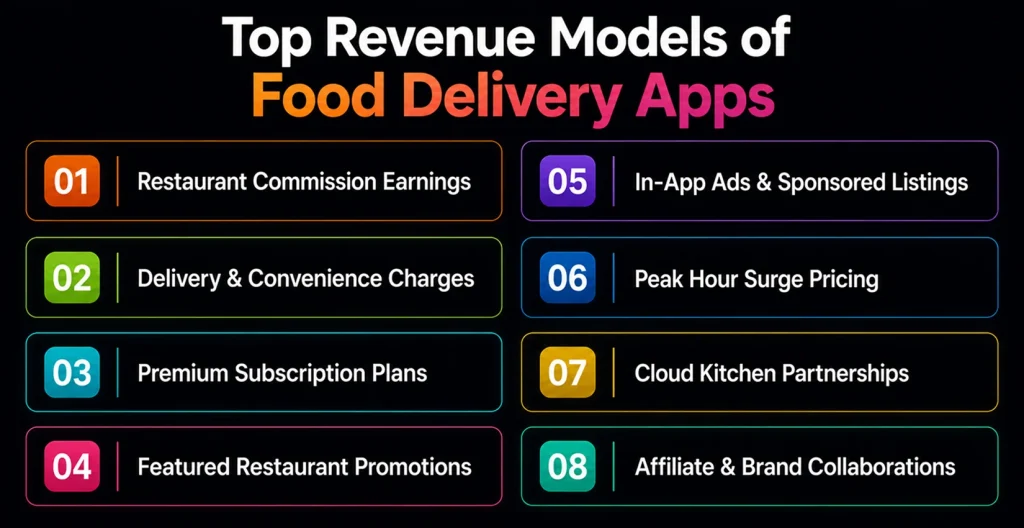
Restaurant Commission Fees
Food delivery platforms take a commission from restaurants on every completed order that comes through the application. For most delivery businesses, this ends up being one of the main revenue sources.
Delivery Charges
Customers pay delivery fees depending on order value, distance, delivery area, and peak demand hours. Companies can also add dynamic pricing when demand spikes or when the streets get busy.
Subscription Plans
Lots of platforms offer monthly or yearly memberships that include perks like:
- Free deliveries
- Exclusive discounts
- Faster deliveries
- Priority customer support
This setup generates recurring revenue and tends to strengthen customer loyalty.
Featured Restaurant Listings
Restaurants may pay for premium placement inside the app so they appear higher in search results, and in the end, they attract more customers.
In-App Advertisements
Food delivery platforms can earn extra revenue by letting restaurants and food brands run promotional ads right within the app experience.
Surge Pricing
During peak periods, weekends, or bad weather situations, platforms sometimes raise delivery charges temporarily to boost margins and manage rider supply demand better.
Cloud Kitchen Partnerships
Many businesses collaborate with cloud kitchens to widen what customers can order, while also earning commissions and increasing overall order volumes.
Affiliate and Brand Collaborations
Food delivery platforms can collaborate with beverage brands, grocery shops, and even local businesses to pull in extra revenue via partnerships and sponsored campaigns.
The Talabat business model really ties together commission-based earnings, subscription plans, ads, and delivery charges, so it becomes one of the more scalable and highly profitable on-demand delivery business models around.
Essential Tips to Launch and Scale Your Food Delivery Startup
Launching a successful Food Delivery App is not just like the app itself. You really need the proper growth path, the correct technology, real customer engagement, and solid day-to-day operational control to scale well in that tough on-demand space, where everyone is moving fast.
Here are a few essential tips to help you launch and then grow your food delivery startup, without losing momentum midway.
Start with an MVP
Kick things off using a minimum viable product (MVP) with only the main features for ordering and delivery. This tends to cut down on initial food delivery app development cost, and it also lets you check whether people actually want your service sooner.
Prioritize the User Experience
Keep the interface simple, quick, and easy to use. When navigation is smooth and checkout feels effortless, customers are more likely to come back again and again. That kind of comfort matters a lot for retention.
Pick the Right Technology Stack
Choosing scalable and secure tools means you can handle rising traffic, manage real-time orders, and support future expansions without major rebuilding.
Use AI and Automation
Adding AI to food delivery systems can help with delivery management, customer personalization, route optimization, and overall operational efficiency. It’s basically an advantage you can measure, not just a buzzword.
Build Restaurant Partnerships
Working with reputable restaurants improves customer trust, expands the menu options, and brings more folks into your ecosystem, which is the whole point in the early stages.
Optimize Delivery Operations
Fast, accurate deliveries drive satisfaction. So, you should use GPS tracking and AI-based route optimization to improve delivery performance, reduce delays, and keep everything calmer.
Invest in Marketing & Promotions
Strategies like social media marketing, referral programs, influencer collaborations, push notifications, and loyalty rewards help increase app visibility, user engagement, and long-term customer retention.
Offer Multiple Payment Options
Using solid, secure payment options like UPI, digital wallets, debit or credit cards, and yes, even cash on delivery, does make the whole shopping path feel smoother, and it upgrades the checkout experience overall.
Analytics & Customer Reactions
When you watch how users behave, how deliveries are doing, and what customers are saying, you can spot those weak spots sooner and keep tuning the platform again and again.
Seasoned Development Company
If you partner with a trustworthy food delivery app development company, the business can put together scalable, protected, and packed-with-features delivery platforms with quicker build cycles.
If you are planning to Develop Apps Like Talabat, then go heavy on customer experience, operational efficiency, and scalable tech. That combo is what should drive long-term momentum and real success through 2026.
Why Choose Octal IT Solution to Develop Food Delivery App Like Talabat?
Choosing the right development partner is, kinda one of the most important decisions when planning to Develop Apps Like Talabat, and it can feel overwhelming. Octal IT Solution stands out as a trusted Food delivery app development company, and it has extensive experience in building scalable, secure, and feature-rich on-demand delivery platforms.
With its know-how in food delivery mobile app development, the team delivers customized options that fit different business requirements, such as for startups, enterprises, or even restaurant chains. They tend to focus on high-performing applications with modern UI/UX real-time tracking systems, secure payment integrations, and advanced delivery management features, which is where most projects usually get tricky.
By using modern technologies and agile development methodologies, Octal IT Solution helps keep projects moving more quickly, supports transparent communication, and builds a scalable app structure that can handle high user traffic and real-time operations without falling apart.
Businesses can also hire food delivery app developer experts from Octal IT Solution for custom Android, iOS, and cross-platform app development. From project consultation and UI/UX design all the way to deployment, plus post-launch support, the company provides complete food delivery app development service solutions under one roof.
Final Thoughts: Is Building a Talabat-Like App Worth It in 2026?
The online food delivery industry is expected to keep growing fast in 2026 and beyond, which is not really surprising. People want convenience, fast deliveries, and a digital ordering journey, so startups and bigger enterprises are seeing huge chances everywhere.
Creating a platform kinda like the Talabat food delivery app can end up being a really profitable move, but only if it’s backed by the right business plan, scalable tech, and a customer-first mentality.
Sure, the food delivery app development cost may change depending on the features and how far you want to scale, yet the long-term revenue upside and growth prospects tend to make it worth it.
And if you team up with a solid Food delivery app development company, the risks during development usually go down, plus you can launch a scalable, future-ready delivery solution without too much chaos.
 By
By September 22, 2026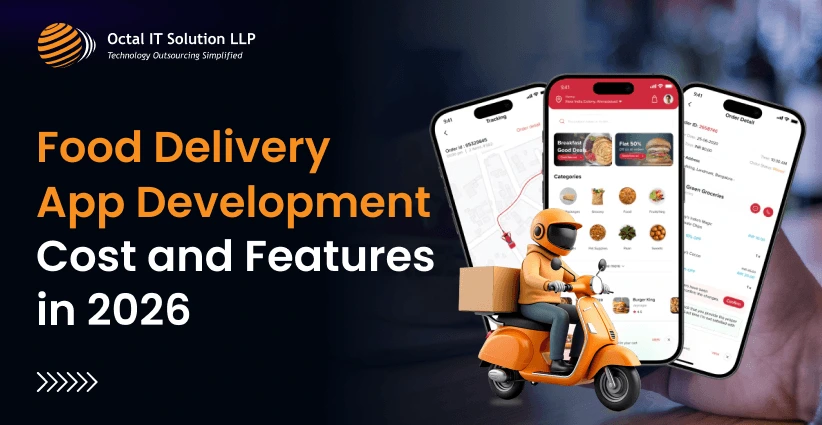


 Get in Touch