


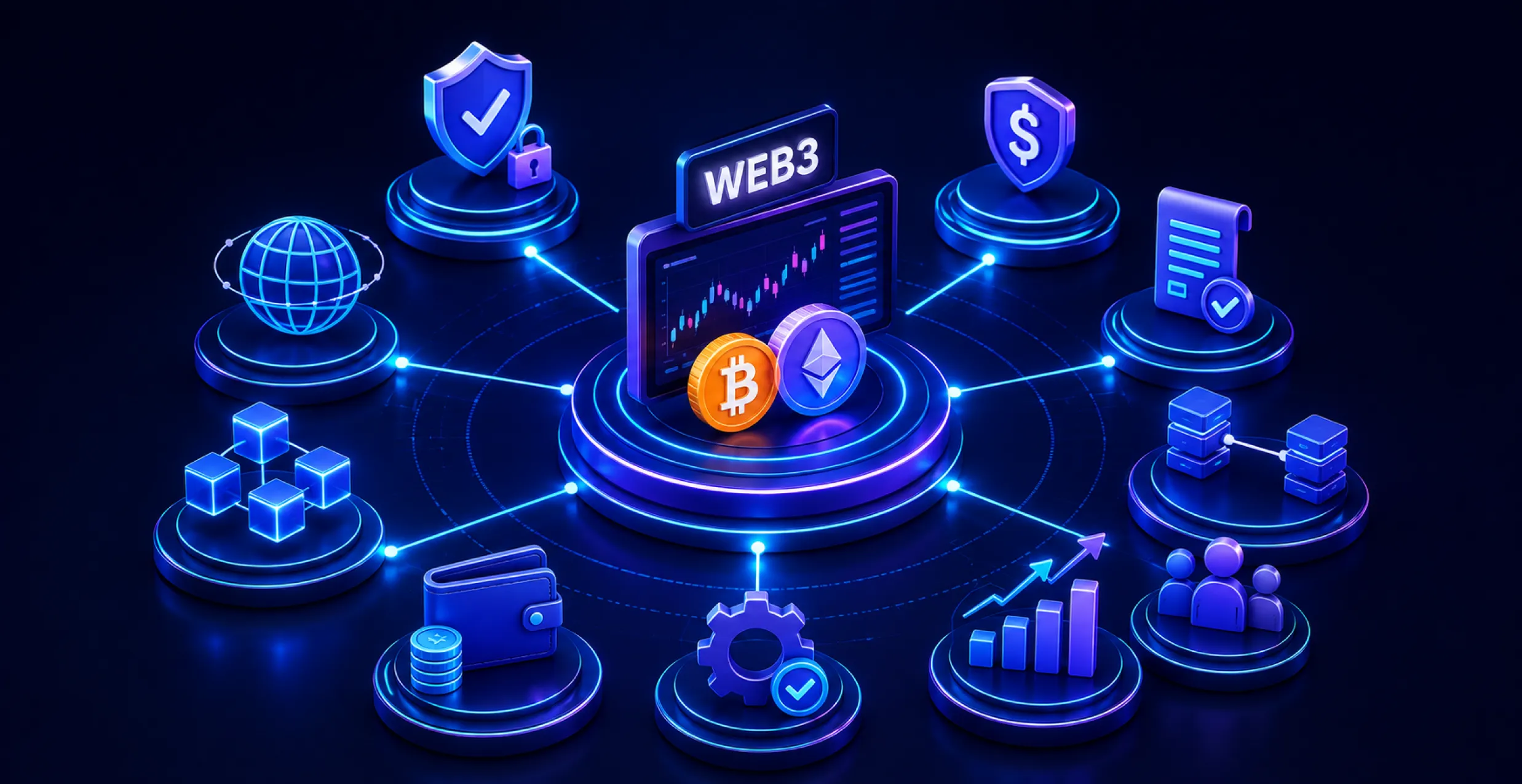
The cryptocurrency market has evolved way beyond just simple digital transactions. Today, users seem to expect exchanges that bring, unmatched security, full transparency, quicker settlements and also more direct control over their own digital assets. Still, a lot of traditional crypto exchanges keep depending on centralized infrastructure, and that setup can get them in trouble with cyberattacks, operational breakdowns, and even compliance headaches.
This is where Web3 is quietly, but really changing the whole landscape.
With decentralized blockchain technology as the base, Web3 offers a different approach to developing cryptocurrency exchanges by cutting out unnecessary middle layers, improving trust via smart contracts, and letting users keep true ownership of their assets. Rather than leaning only on centralized systems, businesses can design secure, scalable, and more user-first platforms that match the rising expectations of modern crypto traders.
And as decentralized technologies keep getting adopted faster than before, companies are partnering more often with Web3 development specialists to produce next-generation trading platforms. These platforms blend fresh ideas with enterprise-grade security. So whether it’s decentralized exchanges (DEXs) or hybrid trading platforms, Web3-powered digital asset exchanges are reshaping how cryptocurrencies get bought, sold, and handled day to day.
If you’re launching a startup exchange, or modernizing something that already exists, it’s worth investing in secure cryptocurrency exchange development supported by end-to-end Web3 development. It helps you stay ahead in a market that’s crowded.
In this blog, we’ll go over why Web3 matters for cryptocurrency exchanges, the key features that make it a real game-changer, where we can see it used in the real world, and how businesses can leverage enterprise Web3 development to build crypto trading platforms that are ready for what’s next.
Understanding Web3 and Its Role in Crypto Exchanges
Web3 basically is the next evolution of the internet in that decentralized technologies replace the old school centralized systems, so users can end up with more ownership, more privacy, and more actual control over how their digital interactions go. It’s all powered by blockchain, smart contracts, decentralized applications (dApps), and these token-based ecosystems too. With that mix, businesses can put together transparent and more or less “trustless” platforms without always leaning on intermediaries, every single time.
Now Web2 apps are a bit different, because there user data and transactions are usually controlled by centralized organizations, which is not always great. With Web3, the data gets spread across blockchain networks instead. That decentralized setup tends to boost security a lot, it lowers the chance of a single point of failure , and it helps make the whole digital ecosystem more resilient, a must-have trait for modern cryptocurrency exchanges.
For crypto trading platforms, Web3 isn’t just some technological upgrade. It becomes the groundwork for building secure, transparent, and highly interoperable exchanges that can handle millions of transactions while still keeping user trust intact.
Some of the core technologies pushing Web3-based cryptocurrency exchanges include :
- Blockchain Networks: Maintain immutable transaction records and ensure complete transparency.
- Smart Contracts: Automate trade execution, settlements, and fund transfers without manual intervention.
- Decentralized Wallets: Allow users to retain full control over their private keys and digital assets.
- Cross-Chain Protocols: Enable seamless asset transfers and trading across multiple blockchain ecosystems.
- Tokenization: Facilitates the creation, management, and trading of digital assets beyond cryptocurrencies.
These technologies are transforming how exchanges run, by boosting efficiency, cutting operational costs a bit, and then also upping platform security.
As businesses compete to roll out more innovative trading experiences, it’s common to see them working alongside a Web3 software development company, so they can tuck decentralized capabilities into their existing platforms. Then again, others who want to launch advanced blockchain powered exchanges often team up with a blockchain app development company, one that focuses on scalable decentralized ecosystems and enterprise grade blockchain solutions, at least that’s the usual approach.
The whole shift toward Web3 isn’t only for crypto native players anymore. Enterprises across finance, gaming, supply chain, and even areas you might not immediately associate with it, like a Healthcare software development company, are using blockchain powered applications to drive more transparency, better security, and improved operational efficiency. That broader adoption makes it obvious there’s real momentum and potential for Web3 technologies in many industries.
With all of that, Web3 has been turning into the cornerstone of next generation cryptocurrency exchanges, helping pave the way for faster transactions, stronger protection, and decentralized ownership, benefits that are quickly shaping what digital asset trading looks like next.
Why Web3 Is Important for Cryptocurrency Exchanges
The fast growth of digital assets has shown some gaps in classic cryptocurrency exchanges, like security weak spots, centralized oversight, not enough transparency, and also expensive day to day operating costs. And as trading activity keeps climbing, user needs shift, these issues make decentralized solutions much more relevant than before.
That’s why Web3 matters a lot for crypto exchanges. With blockchain tech in the middle, smart contracts doing the heavy logic, decentralized identity for verification, and self-custody wallets for holding funds directly, Web3 flips the usual trading model into something that feels more secure, more open, and more built around the user.
Rather than depending purely on centralized servers and outside middlemen, Web3 exchanges spread data, and they also let transaction validation happen across decentralized blockchain networks. In practice this tends to lower the chances of big system failures, curb fraud patterns, and it helps the users trust each other more.
Some of the key reasons businesses are embracing Web3 include:
- Enhanced security through decentralized infrastructure and immutable blockchain records.
- Greater transparency with verifiable on-chain transactions.
- Improved user ownership through non-custodial wallets.
- Faster settlements using smart contract automation.
- Cross-chain interoperability for seamless digital asset trading.
- Better scalability to support growing transaction volumes.
As organizations look to build future ready trading platforms, many end up partnering with experienced Web3 development companies and a trusted crypto currency software development company, to ship decentralized technologies that still somehow match evolving market demands as well as regulatory expectations.
Essential Web3 Features for Crypto Exchange Platforms
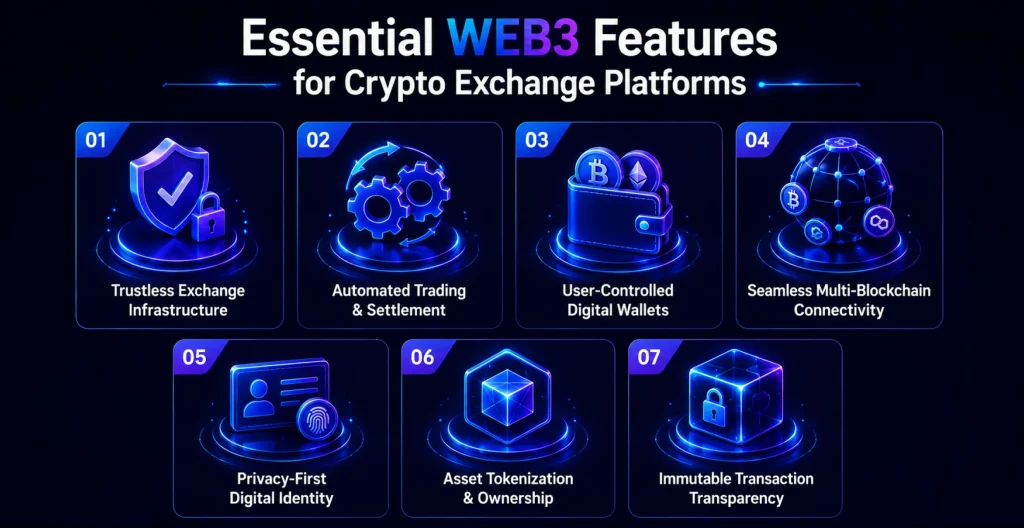
The success of a cryptocurrency exchange hinges on whether it can deliver secure transactions, smooth user experiences, and dependable trading infrastructure. Traditional exchanges, sometimes end up dealing with centralized control issues and security risks, but Web3 brings in decentralized technologies that help to tackle those problems and also make trading ecosystems feel more efficient in practice.
When businesses start integrating advanced blockchain capabilities, they can build Web3 powered digital asset exchanges that bring in more transparency, stronger automation, and a sense of user ownership. Those Web3 features for a crypto exchange platform tend to do more than just bump up platform performance, they also help position companies for longer term growth, even as the digital asset market keeps shifting and evolving.
1. Decentralized Architecture
Unlike centralized exchanges that rely on a single authority to manage user funds and transactions, Web3 distributes data and transaction processing across blockchain networks.
This decentralized approach offers several advantages:
- Eliminates single points of failure
- Reduces the risk of hacking and data breaches
- Improves platform availability and resilience
- Builds greater trust through transparent operations
For businesses investing in secure cryptocurrency exchange development, decentralized architecture serves as the backbone of a reliable and scalable trading platform.
2. Smart Contract Automation
Smart contracts are self-executing programs stored on a blockchain that automatically perform predefined actions when specific conditions are met.
In cryptocurrency exchanges, smart contracts can automate:
- Trade execution
- Token swaps
- Asset settlements
- Fee distribution
- Escrow services
By removing manual intervention, smart contracts reduce operational costs while improving transaction speed and accuracy. They also eliminate the need for multiple intermediaries, making exchanges more efficient and transparent.
3. Self-Custody Wallet Integration
One of the defining characteristics of Web3 is empowering users to control their own digital assets.
Unlike centralized exchanges where assets are stored in platform-controlled wallets, Web3 platforms integrate self-custody wallets such as MetaMask and WalletConnect-compatible solutions, allowing users to manage their private keys independently.
This provides several benefits:
- Greater asset ownership
- Improved fund security
- Reduced custodial risks
- Increased user confidence
Self-custody aligns with the core philosophy of decentralized finance (DeFi) and is becoming an essential feature for modern cryptocurrency exchanges.
4. Cross-Chain Interoperability
The blockchain ecosystem is no longer limited to a single network. Traders increasingly use assets across Ethereum, BNB Chain, Solana, Polygon, Avalanche, and many other blockchain ecosystems.
Cross-chain interoperability enables exchanges to:
- Support multiple cryptocurrencies
- Enable seamless asset transfers
- Improve liquidity
- Expand trading opportunities
- Enhance the overall user experience
This capability makes exchanges more flexible and future-ready as blockchain ecosystems continue to evolve.
5. Decentralized Identity (DID)
Identity verification remains one of the biggest challenges for cryptocurrency exchanges. Traditional KYC processes often require users to repeatedly share sensitive personal information with multiple platforms.
Web3 introduces decentralized identity (DID), allowing users to verify their identity while maintaining control over their personal data.
The benefits include:
- Improved user privacy
- Faster onboarding
- Enhanced compliance support
- Reduced identity fraud
- Better data protection
As regulatory requirements continue to evolve, DID can help exchanges strike the right balance between compliance and user privacy.
6. Tokenization of Digital Assets
Web3 enables businesses to tokenize virtually any asset, including cryptocurrencies, real estate, commodities, intellectual property, and financial instruments.
For cryptocurrency exchanges, tokenization expands business opportunities by enabling:
- Security token trading
- NFT marketplaces
- Fractional ownership
- Real-world asset (RWA) trading
- New investment opportunities
This feature allows exchanges to diversify beyond traditional cryptocurrency trading and attract a broader user base.
7. Transparent On-Chain Transactions
Transparency is one of the biggest competitive advantages of Web3.
Every transaction executed on a blockchain is permanently recorded and can be independently verified by users. This creates an auditable ecosystem where trading activities are visible without exposing confidential user information.
On-chain transparency helps:
- Increase user trust
- Prevent transaction manipulation
- Simplify audits
- Improve regulatory reporting
- Strengthen platform credibility
These capabilities are becoming increasingly valuable for enterprises seeking to build trusted cryptocurrency trading platforms.
Top Benefits of Web3 for Cryptocurrency Exchange Development
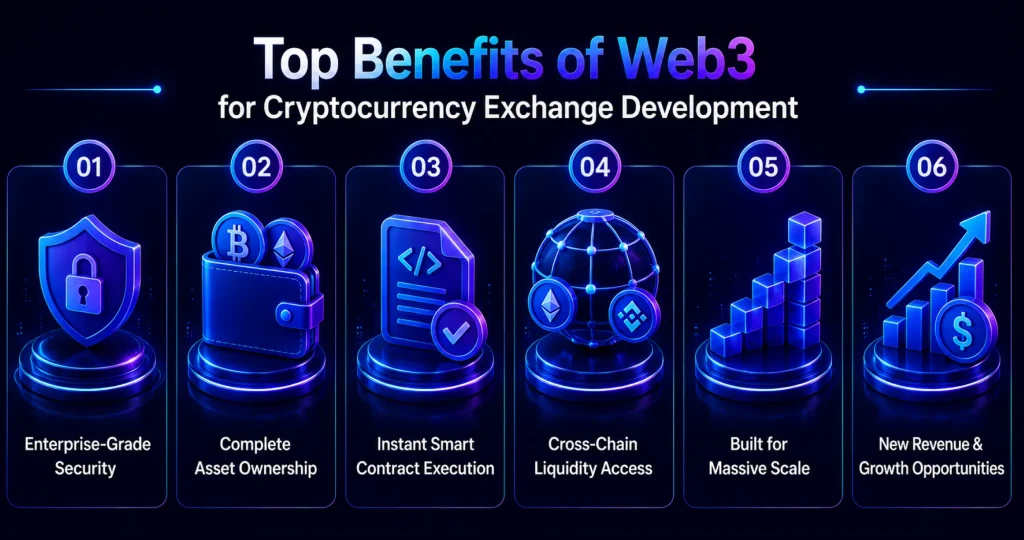
The increasing uptake of blockchain tech has shifted the whole way cryptocurrency exchanges get designed, and even how they run in practice. Rather than leaning on centralized infrastructure, many businesses are starting to use decentralized mechanisms to craft platforms that feel more secure, more see-through, and generally more centered on the people using them.
The advantages of Web3 in crypto trading aren’t only about decentralization. There’s also the extra layer of security, the automated operations, better scalability and interoperability. So Web3 ends up acting like a sturdy base for new exchanges, it can flex when market needs change, and it can do this without too many compromises.
Enhanced Security and Transparency
One major upside with Web3 is how it can fortify security via decentralized architecture plus those immutable blockchain logs. Because transaction data is spread across several nodes, not parked on one single server, it becomes harder to mess with, and cyberattacks have less room to work.
That’s why Web3 can be a great fit for teams doing secure cryptocurrency exchange development, especially when guarding user assets, and keeping trust intact, is the real priority.
Greater User Control Over Digital Assets
Web3 also changes “who owns what” by moving custody responsibilities closer to users. Through self-custody wallets, traders keep full command over their private keys and their funds. This cuts down the dependence on third-party custodians, and it reduces the custodial risks that usually come with centralized holding.
So the whole user-focused setup, it builds confidence faster, and it lines up with the basic ideas behind decentralized finance, or DeFi.
Faster and Automated Transactions
By leveraging smart contracts, Web3 automates key exchange functions like trade execution, settlements and token transfers. it cuts down on manual meddling, minimizes mistakes, and speeds up the processing of transactions.
So the whole thing feels more smooth, a more seamless trading experience, with less operational cost and better efficiency.
Improved Liquidity Across Multiple Networks
Cross-chain interoperability lets exchanges tap liquidity from several blockchain ecosystems instead of being locked to one single network.
That translates into, more chances to trade, less slippage, higher volumes, and broader market participation.
And as multi-chain ecosystems keep expanding, interoperability will likely turn into a real differentiator for cryptocurrency exchanges.
Better Scalability for Future Growth
Modern exchanges should be ready to deal with rising user activity, and still keep their performance steady not drop, you know. With a modular blockchain setup, plus Layer 2 approaches, and decentralized networks, enterprise Web3 development helps companies assemble trading platforms that are pretty much highly scalable. They can handle more transactions over time while the system stays fast, and reliable, at the same time.
Increased Innovation and Business Opportunities
Also, Web3 is not only about crypto trading. It can unlock other kinds of income by tokenized assets, decentralized finance or DeFi, staking services, NFT integration, DAO decision-making, and cross chain applications.
All these changes let businesses broaden their services and stay competitive in a fast moving digital asset landscape.
When organizations start adopting these capabilities, working with seasoned Web3 development partners makes implementation smoother for decentralized tech. It also helps make sure the whole platform is aligned with business goals , compliance duties, and upcoming market shifts.

How Web3 Improves Cryptocurrency Exchange Security
Security is still one of the most big concerns for cryptocurrency exchanges, you know. There have been high-profile cyberattacks, wallet breaches , phishing scams, and even centralized database vulnerabilities that ended up causing billions of dollars in losses over the years. And as the crypto ecosystem keeps growing, users sort of expect exchanges to deliver enterprise-class security, but also without slowing things down or making access harder.
This is where Web3 really changes the whole security map. Instead of relying only on one controlled system, Web3 uses blockchain technology, decentralized infrastructure, and smart contracts, which can reduce a lot of the usual attack surfaces . At the same time, it gives users more control over their assets. If businesses understand how Web3 improves cryptocurrency exchange security, they can build platforms that feel more trustworthy, and then also keep supporting long-term growth.
Decentralized Infrastructure Reduces Single Points of Failure
Traditional exchanges usually lean on centralized servers, and those setups can be target for hackers. When one central server gets compromised, attackers can end up obtaining access to sensitive user data or other platform resources, not only that but also internal controls in some cases.
Web3, on the other hand, spreads data handling and transaction validation across decentralized blockchain networks, so it becomes a lot harder for malicious actors to mess with or fully compromise the whole system. That distributed design tends to boost overall resilience for the platform, while also shrinking the operational exposure that comes with a single point of failure.
Smart Contracts Eliminate Manual Errors
Smart contracts automate the essential exchange steps, like trade execution, settlements, and even fund transfers. Because they follow predefined rules and don’t really need people “pushing buttons,” they cut down the likelihood of manual mistakes plus unauthorized alterations.
Still, smart contracts should get thorough security audits before they go live, so vulnerabilities can be spotted early and the behavior stays dependable during normal use.
Self-Custody Wallets Enhance Asset Protection
A big reason crypto gets stolen is centralized custody , like when exchanges end up holding people’s private keys. In Web3, the idea pushes toward self-custody, so users can link decentralized wallets and basically keep full control of their funds.
Because the user holds the private keys, the exchange stops acting like a centralized storage place for customers, and that in turn makes big, large-scale breach damage way smaller.
Immutable Blockchain Records Improve Transparency
Every transaction that’s carried out on a blockchain is permanently logged , and it cant really be changed later unless the rest of the network agrees, by consensus, or whatever the mechanism decides.
That immutability bring s a kind of full record visibility, so the transaction transparency is essentially complete. Also it makes auditing and compliance easier, and it helps shrink fraud exposure. In addition you get better dispute resolution, and users end up trusting the system more.
For companies that are building secure cryptocurrency exchange development , immutable ledgers end up supporting both day to day operational integrity, and regulatory preparedness too.
Multi-Signature Authentication Adds an Extra Layer of Security
Web3 exchanges often use multi signature, multi-sig wallets, meaning basically there are multiple approved parties, and high-value transactions can’t really go through until there are the right confirmations. This extra check, or verification step helps to avoid the usual headaches like unauthorized withdrawals, insider threats too , and also limits what happens when a single user account gets compromised. it also reduces accidental asset transfers, where people send things by mistake.
Decentralized Identity (DID) Strengthens User Authentication
Traditional authentication setups keep sensitive user data in centralized databases, which get targeted and are kinda more exposed to breaches. And then Decentralized Identity (DID) lets people validate who they are in a more secure way while still retaining control over personal information. In practice, it cuts down identity theft, it boosts privacy, and it also helps meet regulatory compliance requirements without dumping extra details where they do not need to go.
When companies put these kinds of security capabilities together, they can build cryptocurrency exchanges that guard both customers and digital assets, all while keeping transparency and operational efficiency.
Popular Web3 Use Cases in Cryptocurrency Exchanges
The practical uses of Web3 keep growing as the blockchain thing matures over time. Now, businesses are using decentralized tools and, kind of sorta, building fresh trading platforms that promise more transparency, better efficiency, and stronger user control, in general.
These Web3 use cases within crypto exchanges show you how companies are basically reshaping classic trading routines into decentralized ecosystems.
Decentralized Exchanges (DEXs)
Decentralized exchanges allow users to trade cryptocurrencies directly from their wallets without relying on centralized intermediaries.
Key advantages include:
- Full user custody of assets
- Lower counterparty risk
- Increased transparency
- Automated trading through smart contracts
- Global accessibility
DEXs have become one of the strongest examples of successful Web3 implementation.
Hybrid Cryptocurrency Exchanges
Hybrid exchanges combine the speed and liquidity of centralized exchanges with the transparency and security of decentralized platforms.
Businesses increasingly adopt hybrid models because they provide:
- Better user experience
- Faster order matching
- Enhanced asset security
- Regulatory flexibility
- Improved scalability
This balanced approach is becoming increasingly popular among enterprise crypto platforms.
Cross-Chain Trading Platforms
Modern investors usually end up holding assets across various blockchain networks, kind of all over the place. Web3 makes it easier for exchanges to do cross chain trading, so people can move and trade assets between different ecosystems like Ethereum, Solana, Polygon, Avalanche, and BNB Chain without having to depend on centralized bridges.
With these cross chain features, liquidity can get a boost while market opportunities get wider, in a smoother sort of way.
Tokenized Asset Exchanges
Web3 extends beyond cryptocurrencies by enabling tokenization of real-world assets.
Exchanges can facilitate trading for:
- Real estate tokens
- Precious metals
- Company shares
- Commodities
- Intellectual property
- Carbon credits
This diversification opens new revenue opportunities while attracting institutional investors.
DeFi-Powered Trading Platforms
Many cryptocurrency exchanges are integrating decentralized finance (DeFi) services to enhance user engagement.
These include:
- Crypto staking
- Yield farming
- Liquidity pools
- Lending and borrowing
- Decentralized derivatives
Such services create additional earning opportunities while increasing platform activity and liquidity.
Web3 Innovations Transforming Digital Asset Trading
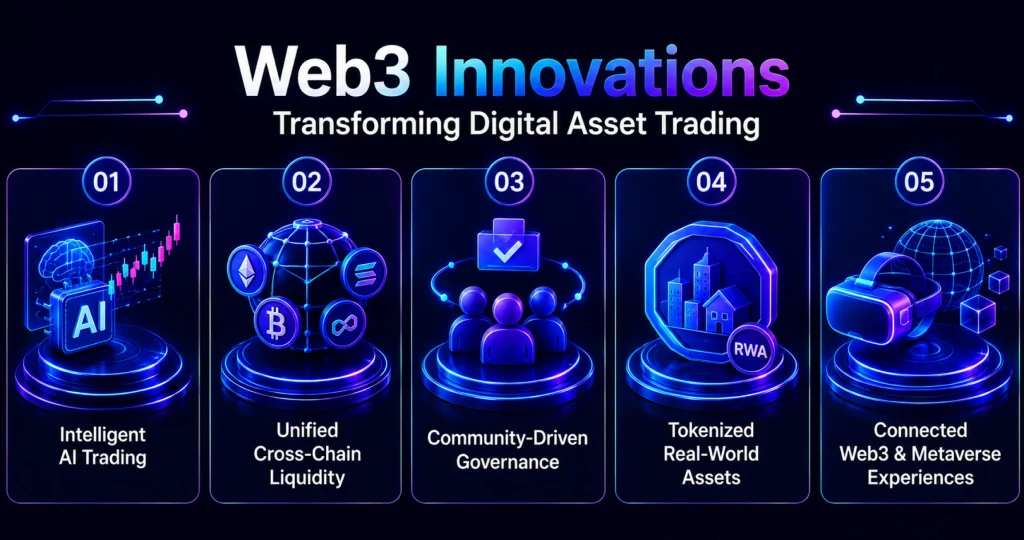
The cryptocurrency industry keeps moving really fast, and Web3 seems to be pushing the next wave of change. Lately businesses are competing to offer trading experiences that are quicker, smarter and more hardened for security, and at the same time they are reworking how digital assets are traded and handled.
These Web3 innovations are shaping digital asset trading in a way that sets fresh expectations for efficiency, visibility, and even user involvement, and it feels like a new baseline is appearing.
AI-Powered Trading Automation
Artificial intelligence is getting plugged into Web3 ecosystems more and more, kind of to automate market analysis, spot fraud, handle risks better, and then even dish out personalized trading tips.
With AI features, traders can, for example: look at market trends, find potential trading chances, catch suspicious activities, fine tune portfolio management, and also automate the boring daily trading strategies. And when you mix those tools with blockchain, you end up with smarter , more secure trading spaces, that feel a bit more locked down overall.
Cross-Chain Liquidity Protocols
One of the tougher issues in crypto trading is that liquidity gets split up across different blockchain networks. Cross-chain liquidity protocols try to fix that, by letting assets and liquidity move smoothly between several chains, so trading becomes more efficient and slippage gets reduced.
DAO-Based Governance
Decentralized Autonomous Organizations, DAOs, are also giving exchange communities more say in how platforms are run. With DAO governance, token holders can vote on things like platform upgrades, trading fee arrangements, new token listings, treasury management, and community initiatives. That more participatory setup tends to boost transparency and strengthens user involvement too.
Real-World Asset (RWA) Tokenization
Tokenizing physical assets is sort of quickly becoming one of the faster growing blockchain trends these days. When exchanges bring more traditional assets onto blockchain networks, they can open up new investment pathways while also boosting accessibility and liquidity, not just for local users but also for global investors.
Integration with the Metaverse and Web3 Ecosystems
As virtual economies keep expanding, cryptocurrency exchanges are getting more and more connected with metaverse platforms, blockchain game worlds, and NFT marketplaces. Through these connections, it gets easier to trade digital assets back and forth across related Web3 spaces , which basically creates fresh commercial chances for exchange teams and operators.
What’s coming next for Web3 inside crypto exchanges will likely be propelled by these kinds of upgrades, letting organizations design smarter, decentralized and very protected trading environments. Companies that start early with these technologies will probably be in a better spot to match shifting user expectations and stay competitive in this rapidly changing digital asset environment.
The Future of Web3 in Cryptocurrency Exchanges
Web3 isn’t really “emerging” anymore , it’s starting to feel like the base layer for what comes next in cryptocurrency exchanges. As the blockchain networks keep maturing, and people keep asking for more decentralized financial services, the exchanges themselves are changing. They aren’t just swap rooms for tokens now they’re turning into broader digital asset ecosystems, kind of all-in-one and more dynamic.
What Web3 will look like in crypto exchanges moving forward will depend on upgrades that focus on decentralization, safety, interoperability, and user control. The companies that start adopting these tools sooner rather than later will be in a stronger place to handle shifting market needs, and still stay ahead of competitors who move slower.
Here are some key trends expected to define the future of Web3-powered exchanges:
AI and Web3 Integration
Artificial intelligence is increasingly complementing Web3 technologies by enhancing trading experiences and platform security.
Future exchanges will leverage AI to:
- Deliver personalized trading recommendations
- Detect fraudulent activities in real time
- Automate risk management
- Improve customer support through AI-powered assistants
- Optimize liquidity management
The combination of AI and blockchain will enable more intelligent, efficient, and secure trading environments.
Multi-Chain and Cross-Chain Ecosystems
Users are done with being stuck on only one blockchain. In the near future exchanges will feel more like a multi-chain place, where trades happen seamlessly across several network backbones, so users can move and swap digital assets with out that constant friction or all those awkward transfers. Cross chain interoperability should also do the heavy lifting for liquidity, keep transaction steps less complicated, and let traders reach a wider basket of assets, not just one narrow set.
Institutional Adoption of Web3
Institutional investors seem to be leaning in more and more toward blockchain based financial infrastructure. As regulations get less vague, and as enterprise level security standards keep leveling up, more financial institutions will likely roll out Web3 enabled trading platforms.
And yeah, this momentum should boost the need for enterprise Web3 development solutions that bring scalability, compliance, plus solid security measures, all together.
Expansion of Tokenized Real-World Assets
Turning real things into tokens, like property, commodities, bonds, and even intellectual property, is expected to reshape how digital asset trading works. Tomorrow’s crypto exchanges shouldn’t stay limited to only cryptocurrencies, they’ll probably broaden into more diversified investment avenues. That shift can pull in both retail buyers and larger institutional participants, which is sort of the point.
Stronger Regulatory and Compliance Frameworks
Across the world, governments and regulators are moving toward clearer rules for digital assets. Future Web3 exchanges will likely embed compliance tooling, including automated KYC, AML surveillance, decentralized identity (DID), and on chain auditing, so they can satisfy requirements while still protecting user privacy.
Companies that build exchanges that are compliance ready now, will probably end up in a better long term position.
What Makes a Reliable Crypto Exchange Development Company?
Choosing the right technology partner is just as important as selecting the right technology stack. Developing a modern cryptocurrency exchange requires expertise in blockchain architecture, smart contracts, cybersecurity, regulatory compliance, and scalable infrastructure.
So, what makes a reliable crypto exchange development company? Here are the qualities businesses should look for before making a decision.
Proven Blockchain and Web3 Expertise
A reliable development partner should have extensive experience in blockchain technologies, decentralized applications (dApps), smart contracts, tokenization, and cryptocurrency exchange development.
Working with experienced Web3 development experts ensures that your platform is built using industry best practices and the latest decentralized technologies.
End-to-End Development Capabilities
Launching a successful exchange involves much more than coding. From strategy and UI/UX design to blockchain integration, testing, deployment, and ongoing maintenance, businesses benefit from end-to-end Web3 development services that cover the entire product lifecycle.
This approach minimizes development risks while ensuring faster time-to-market.
Security-First Development Approach
Since cryptocurrency exchanges manage valuable digital assets, security must remain a top priority.
A trusted development partner should implement:
- Smart contract audits
- Multi-signature wallet integration
- Secure API architecture
- Encryption protocols
- Multi-factor authentication
- Continuous security monitoring
These measures help businesses build resilient platforms capable of protecting users and their assets.
Experience with Enterprise-Scale Projects
As user bases grow, cryptocurrency exchanges must handle increasing transaction volumes without compromising performance.
An experienced Web3 software development company should be capable of building scalable solutions that support enterprise-level operations while maintaining high availability and security.
Regulatory Compliance Expertise
Compliance is becoming increasingly important in the cryptocurrency industry. A reliable development company should understand global regulatory standards and integrate features such as KYC, AML, transaction monitoring, and audit trails into the platform.
This proactive approach reduces legal risks and supports long-term business growth.
Ongoing Support and Platform Optimization
Cryptocurrency exchanges require continuous updates to remain competitive and secure. Post-launch support, feature enhancements, performance optimization, and security upgrades are essential for maintaining a successful trading platform.
Partnering with an experienced cryptocurrency software development company ensures that your exchange continues to evolve alongside technological advancements and market expectations.
The Wrapping Words
Web3 is transforming cryptocurrency exchange development by introducing decentralized infrastructure, smart contract automation, cross-chain interoperability, and user-controlled digital asset management. These advancements enable businesses to create trading platforms that are more secure, transparent, scalable, and efficient than traditional centralized exchanges.
From enhancing security and improving operational efficiency to enabling innovative trading models, the advantages of Web3 in crypto trading continue to reshape the future of digital asset exchanges. As blockchain adoption accelerates, businesses that invest in Web3-powered digital asset exchanges will be better positioned to meet evolving customer expectations, strengthen trust, and gain a competitive advantage in the digital economy.
Whether you’re launching a decentralized exchange, upgrading an existing trading platform, or exploring enterprise blockchain solutions, partnering with experienced Web3 development experts can help turn your vision into a secure and future-ready solution.
If you’re looking for a trusted blockchain app development company with expertise in enterprise Web3 development, secure exchange architecture, and end-to-end blockchain solutions, Octal IT Solution can help you build a next-generation cryptocurrency exchange tailored to your business goals. Our team combines technical expertise, industry knowledge, and innovation to deliver scalable Web3 solutions that drive long-term success.

Frequently Asked Questions
1. Why is Web3 important for cryptocurrency exchanges?
Web3 is important for cryptocurrency exchanges because it enables decentralized trading, improves transparency, enhances security, and gives users greater control over their digital assets. By leveraging blockchain technology, smart contracts, and self-custody wallets, Web3 helps businesses build secure, scalable, and user-centric crypto exchange platforms.
2. How does Web3 improve cryptocurrency exchange security?
Web3 improves cryptocurrency exchange security through decentralized infrastructure, immutable blockchain records, smart contract automation, multi-signature authentication, and self-custody wallets. These features reduce single points of failure, minimize fraud risks, and protect user funds from centralized vulnerabilities.
3. What are the key Web3 features for crypto exchange platforms?
Some of the most important Web3 features for crypto exchange platforms include decentralized architecture, smart contracts, cross-chain interoperability, decentralized identity (DID), self-custody wallets, tokenization, and transparent on-chain transactions. Together, these features create faster, more secure, and highly efficient trading environments.
4. What are the advantages of Web3 in crypto trading?
The key advantages of Web3 in crypto trading include enhanced security, greater transparency, lower transaction costs, faster trade execution, improved interoperability, better scalability, and increased user ownership of digital assets. These benefits help businesses deliver more reliable and future-ready cryptocurrency exchange solutions.
5. How do I choose among crypto exchange development companies?
Choosing between crypto exchange development companies depends on your exchange model, supported assets, security requirements, compliance needs, and budget. See if the business enterprise has experience with blockchain networks, wallets, smart contracts, trading capabilities, and the integrations the platform needs. Also, evaluate past projects, development process, post-launch support, and security practices before making a decision.

 By
By July 20, 2026





 Latest Stories
 Get in Touch