



What if your business’s next competitive edge isn’t a new feature but a whole new internet? The current development of Web 3.0 Web Applications stems from this promise, which drives the industry forward. The global Web 3.0 market, which showed a value of USD 5,957.93 million in 2024, will expand to reach USD 128,639.81 million by 2032 while maintaining a 55.10% CAGR between 2026 and 2032, according to Verified Market Research.
The path shows more than just excitement because it demonstrates how software development evolves through decentralization and tokenization and user data ownership. Organizations that operate Web2 systems need to understand Web3.0 applications because this knowledge will determine if they lead the market during the following 10 years or if they will need to catch up with their competitors.
Web 2.0 vs Web 3.0: Key Differences Every Business Should Know
The decision between Web 2.0 and Web 3.0 architecture determines how data will be handled and how users will perceive trustworthiness. The Web 2.0 vs Web 3.0 comparison explains all technical and business distinctions, which help you choose your future path with complete understanding.
| Aspect | Web 2.0 | Web 3.0 |
| Data Ownership | Centralized platforms store and control user data | Users own and manage data through wallets |
| Control & Governance | Corporations set the rules and can change them anytime. | Distributed across users, DAOs, and protocols |
| Architecture | Client-server model | Peer-to-peer, blockchain-based network |
| Trust Model | Trust placed in the platform or company | Trust placed in code, cryptography, and consensus |
| Monetization | Ads and data resale | Tokens, NFTs, and micro-transactions |
| Identity & Login | Username, password, or social logins | Wallet-based, self-sovereign identity |
| Intermediaries | Required for most transactions | Reduced or removed through smart contracts |
| Data Storage | Centralized servers and cloud databases | Distributed nodes, IPFS, and blockchain ledgers |
What Are Web 3.0 Web Applications? Core Features & Architecture
At first, Web 3.0 apps can look like regular web apps. Still, the build is very different. If you can see the design choices, it gets easier to size up the developers’ team. It also lowers risk in the plan. The aim is to deliver things that lead to true decentralized results.
A. Core Features
1. Decentralized storage: This system distributes data across multiple nodes, which operate independently from a singular central server.
2. Token-based ownership: It allows users to keep and exchange real value through native tokens, which operate within the application environment.
3. Smart contract automation: The feature activates business logic through automatic execution when blockchain-based conditions satisfy their requirements.
4. Self-sovereign identity: This system uses wallet-based authentication, which eliminates the need for centralized databases that store usernames and passwords.
5. Interoperability: It allows applications to exchange information between different blockchains and protocols and platforms without requiring any intermediary service.
B. Architecture Layers
1. Blockchain Layer: This layer keeps Web 3.0 systems grounded. It stores transactions on a shared ledger. Because it is spread out, one firm cannot change past records or act as a single gatekeeper.
2. Protocol Layer: Next come the protocols. Smart contracts are a common case. Decentralized storage fits here too. These pieces follow set rules. They let calls move across networks without extra hands doing each step.
3. Application Layer: This is where real use happens. People access the system through DApps. They also use wallets and other screens. The aim is to keep the feel near what users already know from Web2.
4. Interface Layer: The interface layer ties the frontend to wallets and smart contracts. It often uses APIs to make that link. Through these tools, users can approve actions. They can send, keep, or run assets. They do not have to touch the deeper code.
Why Web Application Modernization Now Runs Through Web3 Technology for Businesses?
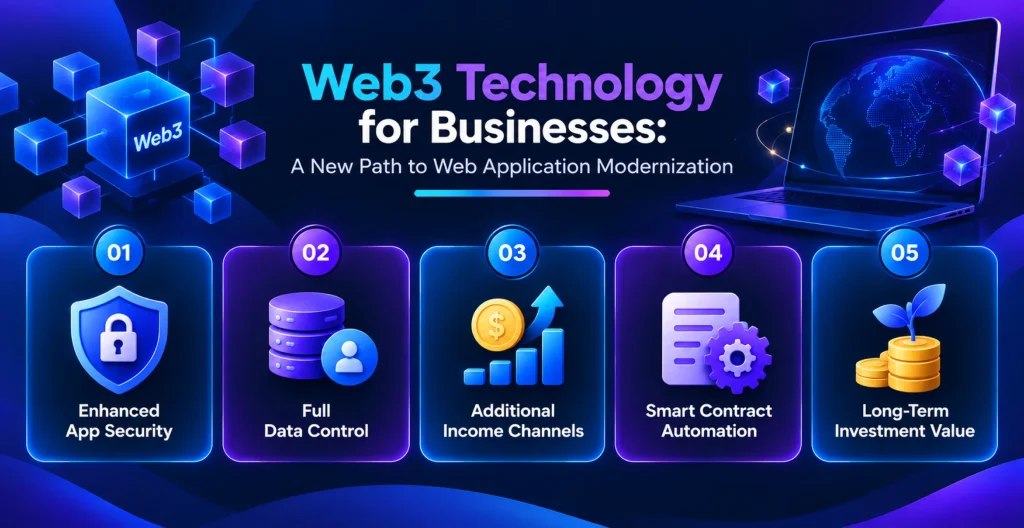
Legacy web platforms often end up with data in separate places. Teams lose context, and users do not always trust what the platform does. Updating these apps now often points to Web3. The idea is to address the same basics like control of data, safety, and proof of actions.
1. Stronger Data Security
With a decentralized setup, there is no single main target. That means one major breach is less likely to take the whole service down.
2. Real Data Ownership
Data stays with users via wallets. Instead of giving it to one site, users can keep control. That can lower trust issues and reduce compliance headaches.
3. New Revenue Models
Tokens, NFTs, and small pay-per-use features can support new options. These are harder for older Web2 apps to run well at a large scale.
4. Automated Trust via Smart Contracts
Smart contracts can carry out terms when the set rules are met. Less handwork means less delay. It also helps reduce fights over payments and in supply chains.
5. Future-proofed Investment
Hire Web3 developers can help firms avoid repeated rebuilds later. Modernization that is delayed tends to grow costs and adds technical debt.
Understanding Web3 Decentralized Applications (DApps)
DApps are the real-world part of Web3. They use blockchain networks instead of regular servers. This setup helps people stay in charge of their own data and value exchange.
1. No Central Server
They do not depend on one place to work. The software runs across many blockchain nodes. Because of that, no single group can easily stop it or change the code on its own.
2. Open-source Code
Many projects also share their smart contract code. When the code is public, others can review it. That makes it easier to judge whether the rules are sound before anyone sends money or sensitive data.
3. Token-based Incentives
A lot of DApps use native tokens. These tokens are used for participation and decision-making. They also tie into platform usage. The idea is to push user actions toward keeping the system healthy over time.
4. Wallet-based Login
Login is often handled by wallets. People sign in with their crypto wallet, not a username and password. This avoids the central sign-in databases that attackers usually focus on.
5. Specialist-built Logic
DApp logic is often built with specialists. Companies commonly work with a blockchain app development company. The reason is simple. Once code is on-chain, mistakes are hard to undo. Fixing them can be expensive.
Industry Spotlight: Building Web3 Apps for Specific Sectors
Web3 app ideas are not only about finances. People are also trying them in dating, health care, and insurance. The goal is the same across these areas: better trust, more privacy, and clearer ownership that fits each industry.
1. Finance & DeFi
With decentralized finance apps, users can lend, borrow, and swap using their own wallet. The process can skip banks for daily moves.
2. Dating & Social
When identity checks live on the chain, dating apps can lower catfishing. It also reduces fake accounts that show up a lot in older platforms.
3. Healthcare
Some teams store a patient’s health files on a blockchain. Then a person can share them with a new clinic in a safe way. It helps avoid redoing forms at every visit.
4. Insurance
Smart contracts can trigger claim steps after the right facts are confirmed. That can shrink the wait time. In some cases, payouts move from weeks to a few days.
5. Choosing a Partner
Some sectors need careful Web3 work. One of the reliable Web3 development companies must be used to compliance rules. This matters a lot in health care and insurance, where the requirements are strict.
Web3 Dating App Development: Features, Tokens & Trust Layers
Fake accounts and catfishing can ruin trust on dating apps. New Web3 dating builds can respond by adding identity checks and reputation tracking in a way that is hard to change.
1. On-chain Identity Verification
Profiles tied to a wallet can make it much harder to pretend to be someone else or to spin up many scam accounts.
2. Reputation Tokens
Soulbound-style tokens can log verified actions over time. That can turn into a trust score a person can carry to other places. It is meant to be hard to edit.
3. Token-gated Matching
Some added perks and event access can open only after a user holds the right native tokens. This can replace nonstop monthly fees.
4. Decentralized Data Storage
Photos, chat content, and user settings can be kept encrypted and spread out. Instead of sitting in a single database that one breach could expose.
5. Secure Payments
Paid features can be set up with smart contracts so transfers and rules are visible. That also makes it easier to review what happened in an in-app transaction.
Web3 Healthcare App Development: Use Cases & Data Ownership Benefits
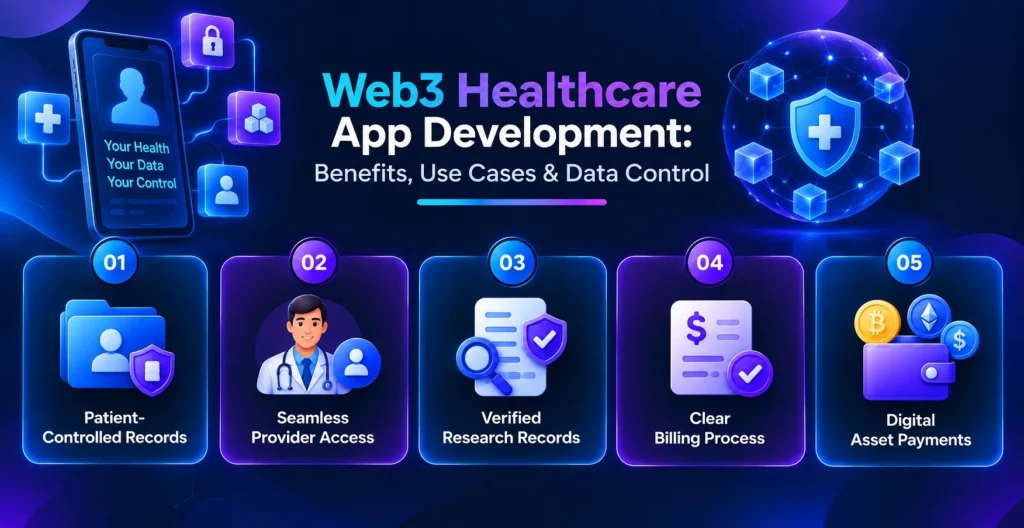
Right now, patient records are split across different systems, and they do not connect smoothly. A Web3 health app could help by giving patients control of their own records while keeping every access request fully traceable.
1. Patient-owned Records
If the records live on a blockchain, a patient could let a clinician look at them, then turn access off when needed. That can reduce the slow back-and-forth that comes with paperwork.
2. Interoperability Across Providers
If everyone uses shared standards, records can move between sites. One copy could be used by hospitals, clinics, and insurers without rewriting the same information again.
3. Secure Clinical Trials
Since the record history is hard to change, trial data can stay steady. That can make it easier for teams to review and compare findings.
4. Transparent Billing
Smart contracts can run parts of a claim and payment process. This may lead to fewer repeated arguments between patients, insurers, and providers.
5. Token-based Payments
Some platforms tie a payment option to a crypto exchange system. In those cases, people may pay for care or online visits using digital assets.
Web3 Insurance App Development: Smart Contracts for Claims & Underwriting
Manual claims today move slowly, and mistakes in disputes can drag them out. A Web3 insurance app can use smart contracts so the work from review to payout runs on its own.
1. Automated Claims Processing
When the set checks are met, the contract pays out. This can happen for things like a late flight or a weather event.
2. Fraud Reduction
Records on-chain are hard to change. That makes it tougher to file the same claim more than once or to send fake details to different insurers.
3. Parametric Insurance Models
Some policies can pay when specific numbers show up. This uses data feeds, so there is less need for long back-and-forth reviews and paperwork.
4. Transparent Underwriting
Since risk details are stored on-chain, both sides can look at the same facts. The insurer and the customer can confirm what the terms mean.
5. Budgeting for the Build
Teams should set aside a budget for Oracle work and compliance checks. These parts add more steps than you would see in a normal app.
How to Build a Web3 App: Step-by-Step Development Process
Start from a different plan than you would use for a normal app. A Web3 app has its own steps from the first idea to the day you deliver.
1. Define the Use Case
Be clear about what decentralization will change. This could mean who owns something, how payments work, or how records are kept.
2. Choose a Blockchain
Choose a chain by looking at speed, costs, and how easy it is to build with the tools that already exist.
3. Build and Audit Smart Contracts
Write the rules that live on-chain. After that, get an outside security review before any money or private data is involved.
4. Design the Frontend and Wallet Integration
Make a front end that feels normal to users. Then link it to wallet actions so people can send transactions without needing deep technical knowledge.
5. Test, Deploy, and Iterate
Most teams hire Web3 developers to set up testnet runs. They also do load checks before they move the release to mainnet. After that, they keep tuning it based on what they see.
Web3 Android App Development: Tools, SDKs & Best Practices
Mobile is where most Web3 adoption happens. Web3 Android app development brings wallet connectivity and on-chain features to the platform most users already carry in their pocket.
1. Wallet SDKs
WalletConnect and Web3j can help the app talk to a user wallet. The app does not need to keep private keys on the device.
2. Lightweight Blockchain Calls
The app should use small node setups or public APIs. It should not try to run a full node on a phone.
3. Biometric-secured Signing
When a user approves a send with face or fingerprint, it adds a safety step. It should still feel fast and normal.
4. Offline-first Design
Some data can be saved on the device. That way the app still works when the chain is slow or briefly offline.
5. Right Development Partner
Choosing an experienced Web3 development company for Android can prevent common errors. This includes wallet setup issues and gas fee handling mistakes.
Tech Stack Businesses Need for Web 3.0 Applications
Making solid Web 3.0 apps takes more than picking a chain. It also means using the tools developers already know, from the UI side down to the blockchain layer.
| Layer | Technologies |
| Blockchain Networks | Ethereum, Polygon, Solana, BNB Chain, Avalanche |
| Smart Contract Languages | Solidity, Rust, Vyper |
| Decentralized Storage | IPFS, Filecoin, Arweave |
| Wallet Integration | MetaMask, WalletConnect, Coinbase Wallet SDK |
| Frontend Frameworks | React, Next.js, Vue.js |
| Backend & APIs | Node.js, Web3.js, Ethers.js, GraphQL |
| Oracles | Chainlink, Band Protocol |
| Testing & Security | Hardhat, Truffle, OpenZeppelin, Slither |
Web3 Development Cost: What Businesses Should Budget For
The Web3 development cost can swing a lot. It depends on which blockchain is used, how complex the smart contracts get, and what rules must be followed. The 2026 estimates below are meant to help you set a practical budget for a build.
| App Type | Estimated Cost Range (USD) |
| Basic DApp (single smart contract) | $15,000 – $40,000 |
| Web3 Dating / Social App | $40,000 – $90,000 |
| Web3 Healthcare Platform | $60,000 – $150,000 |
| Web3 Insurance Platform | $70,000 – $180,000 |
| Enterprise-grade Web3 Application | $150,000 – $300,000+ |
| Post-launch Maintenance (annual) | 10% – 20% of build cost |
Why Partner with Octal IT Solution for Web 3.0 Application Development?
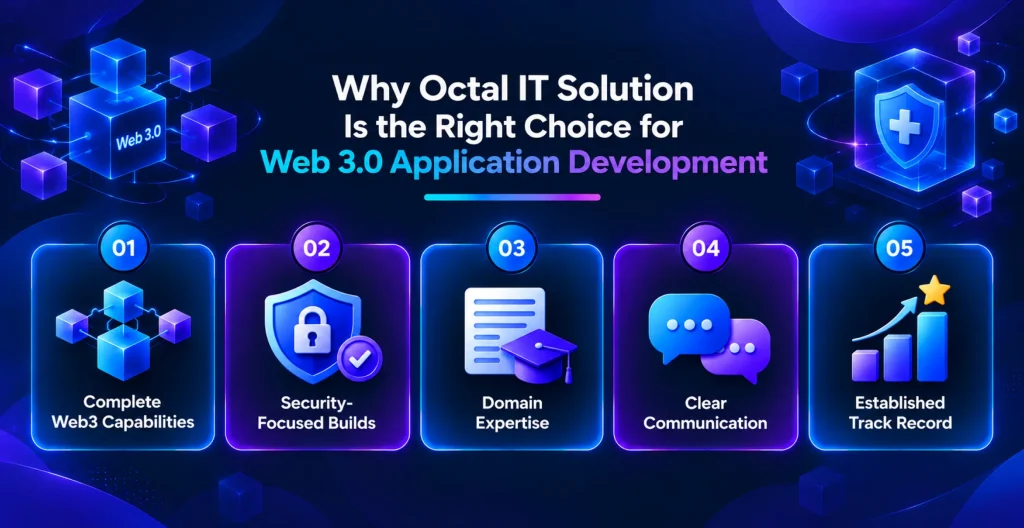
Choosing the right Web 3.0 development company can decide if your product goes live on time or ends up in endless edits. Here is what it looks like when you work with Octal IT Solution.
1. Full-stack Web3 Expertise
Our team handles smart contracts, wallet setup, and the front end in one team. This cuts down on delays that happen when work gets passed between vendors.
2. Security-first Development
We run an internal check on each contract before it is released. That reduces the chance of expensive issues that can show up on chain.
3. Industry-specific Experience
We have delivered projects in healthcare, dating, and insurance. So there are fewer surprises when you deal with rules that fit each sector.
4. Transparent Engagement
You get set milestones and a plain cost plan. That way the budget does not jump later in the timeline.
5. Proven Delivery Track Record
Octal IT Solution has production deployments across different industries. They use proven steps instead of starting from zero each time.
Final Thoughts
Web 3.0 application development is not just a future topic. It is a choice you can make today. Companies that update now with Web3 tools can keep better control of their data. They can also set up trust rules with smart contracts. They may even find new ways to make money that Web2 does not offer.
If you are looking at a dating app, a health product, or an insurance service, start by naming the job the system must do. Then match that goal with the right team.
Partnering with experienced Web3 development companies turns the idea into a real product that runs. It also helps keep the build more secure, not just stuck in tests. The next generation of the web is already in motion. Your business still has to decide if it joins now.
FAQs
1. Is Web3 the same thing as blockchain?
No. Blockchain is the log system that sits underneath. Web3 is a broader internet model for a new style of internet use. It often includes wallets and tokens.
2. Can small businesses realistically adopt Web3 technology, or is it only for enterprises?
Small companies can adopt Web3 a bit at a time. Pick one clear use case first. For instance, loyalty perks tied to tokens. There is no need to rebuild the full Web 3.0 application development at once.
3. How long does it typically take to build a Web3 app?
A basic DApp can take about 8 to 12 weeks. If the scope is more complex, it may take longer. A health- or insurance-related Web3 build might take around 4 to 8 months from start to end.
4. Do all Web3 applications require users to hold cryptocurrency?
No, not in every case. Some Web3 apps let people take part without buying crypto first. They might support gasless actions. They can also include ways to fund with fiat.
5. Are Web3 applications legal and regulated?
Yes, there are rules, but they vary by where you operate and what the app does. A business should look up the local requirements. It can also help to work with a Web3 team that knows the compliance steps.
6. What’s the real difference between a DApp and a regular mobile app?
In a DApp, the main steps run on-chain. Smart contracts carry most of the core logic. A typical mobile app usually runs its logic on a server that the business owns.


 Get in Touch
 By
By September 24, 2026