



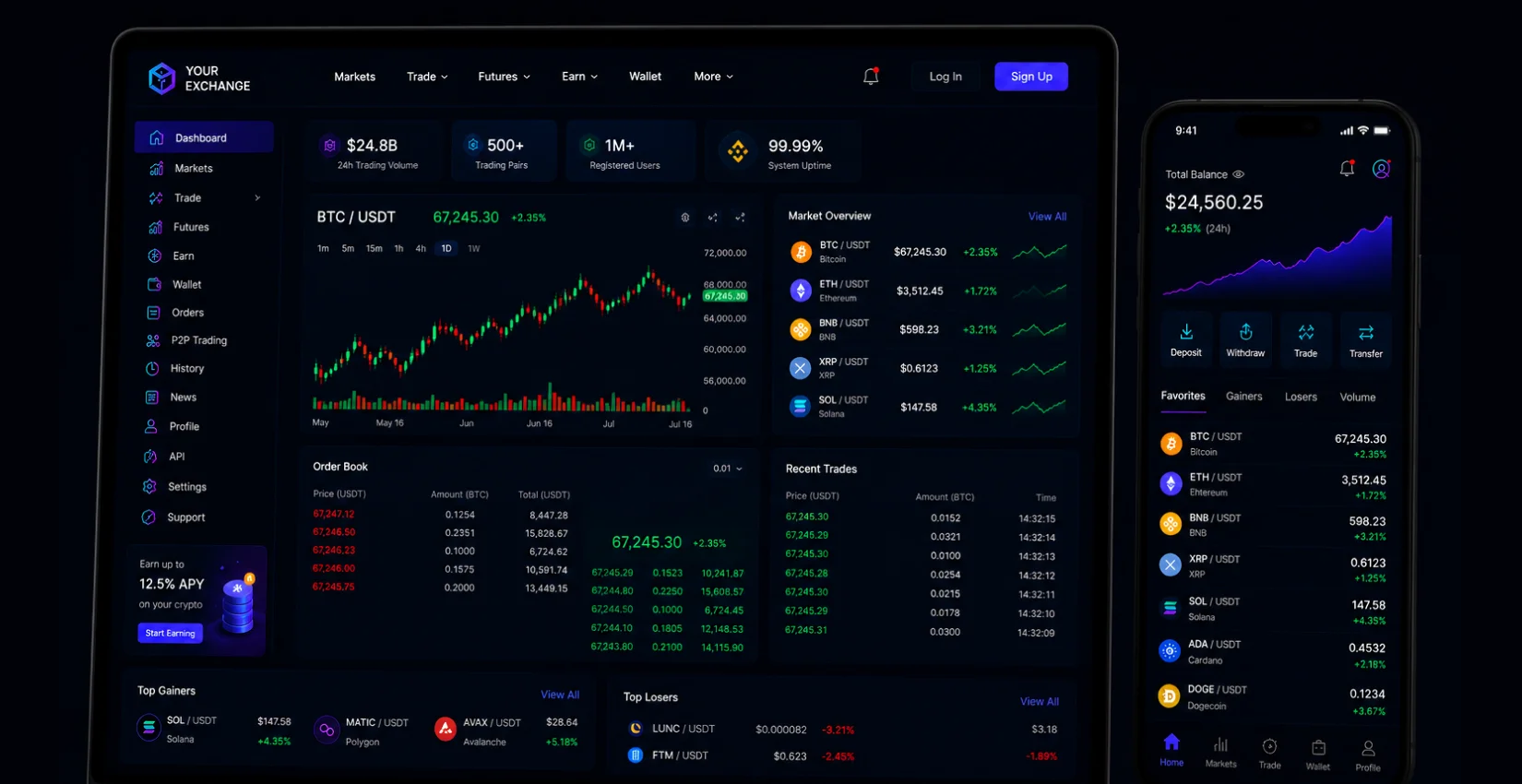
Want to launch a crypto exchange platform fast, without spending years developing and building heavy infrastructure from scratch? Here comes the concept of white label crypto exchange development as a wise choice for startups and enterprises. A lot of companies are leaning toward ready-made exchange solutions quickly, so they can enter the expanding crypto market faster and more securely.
According to Grand View Research, the global cryptocurrency exchange platform market size was estimated at USD 45,896.1 million in 2023, and it’s expected to climb as high as USD 264,318.3 million by 2030, with a CAGR of 28.4% throughout 2024 to 2030.
A trustworthy white-label crypto exchange software development company can assist organizations in rolling out trading platforms that stay scalable and secure and are also packed with features, while also reducing the development risks and enabling a faster time to market.
What is a White Label Crypto Exchange Platform?
A white label crypto exchange platform is basically a ready-made cryptocurrency trading setup that businesses can customize and put their own branding on, plus it lets them tweak particular features and trading modules as well. So instead of building everything from scratch, white-label cryptocurrency exchange development is often faster; it can be less expensive. Also it typically includes built-in security, and it’s built on a scalable architecture, which makes launching a modern crypto trading business feel more practical and more efficient overall.
Why Do Businesses Choose White Label Crypto Exchange Development?
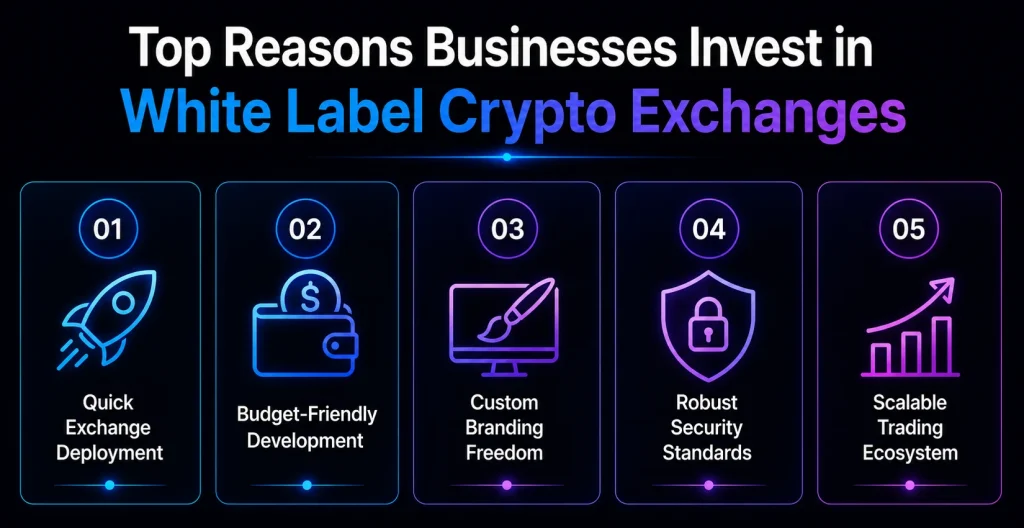
With a ready-made exchange solution, companies can get a trading platform live faster, without having to build every piece from scratch. That’s why white label crypto exchange software development fits startups that want a quicker market entrance and also want faster user attraction at the same time.
1. Faster Time-to-Market
With a ready-made exchange solution, companies can get a trading platform live faster, without having to build every piece from scratch. That’s why white-label crypto exchange software development fits startups that want a quicker market entrance and also want faster user attraction at the same time.
2. Lower Development and Operational Costs
Using pre-built exchange infrastructure really helps; it cuts down on development costs, testing costs, and that day-to-day operational overhead as well. Businesses can conserve resources while still getting enterprise-grade trading features and the blockchain app development company, so the deployment stays smooth with less hassle.
3. Easy Customization and Branding
Theme customization and modifications that satisfy branding requirements are made possible by the white label system. It also enables you to customize other elements, such as dashboards and payment options, according to your company’s requirements.
4. Advanced Security and Compliance Features
Cryptocurrency exchanges today provide features like KYC/AML compliance, encrypted payments, and multi-level user verification processes. Such solutions not only provide an additional level of security for user assets but also enhance credibility in the competitive cryptocurrency market.
5. Scalable Business Infrastructure
A scalable architecture supports the growth in terms of both the number of active users and the volume of trading operations. Moreover, you may easily integrate some new types of cryptocurrencies into the system without changing its core infrastructure completely.
Key Features of White Label Crypto Exchange Software
Modern exchange platforms bring advanced trading tools along with wallet management, plus a bunch of security capabilities, so businesses can deliver smoother user experiences using reliable white label cryptocurrency exchange software solutions.
1. User Registration and KYC Verification
With combined user registration along with KYC verification, one can safely verify their users while adhering to all legal standards. Both these factors mitigate risks of any fraud, and simultaneously, they create confidence in crypto exchange platforms.
2. Secure Cryptocurrency Wallet Integration
Cryptocurrency wallet integration allows users to store, send, and even receive cryptocurrencies without any difficulty or security concern. This is why many companies use this solution along with cryptocurrency wallet development services.
3. Trading Engine and Order Matching System
A strong trading engine will execute buy and sell orders quickly, with low latency. That keeps a smooth flow of transactions, and it provides real-time market execution for traders, without the annoying delays.
4. AI-Based Fraud Detection and Risk Management
AI-enabled monitoring tools can help identify questionable trading behavior, contain fraud attempts, and generally sharpen risk management. This ultimately helps keep crypto trading spaces secure and pretty transparent as well.
5. Multi-Factor Authentication and Security
Additional layers of protection include two-factor authentication, biometric sign-on, and encrypted user access. They work together to improve the platform’s defenses against unauthorized entry as well as the usual cyber threats
Types of White Label Cryptocurrency Exchange Platforms
Businesses can choose any exchange model that fits their trading goals and also what users expect, plus the way they run operations while they invest in white label cryptocurrency exchange software development.
1. Centralized Crypto Exchange (CEX)
These centralized platforms usually move fast, they handle liquidity quite well, and they let admins control the trading flow. They tend to fit businesses that want to serve both beginner traders and more professional crypto traders.
2. Decentralized Crypto Exchange (DEX)
DEX setups allow for peer-to-peer trading without a central authority establishing the rules. That, in turn, leads them to provide more transparency, more user control, and transactions based on blockchain security.
3. Hybrid Crypto Exchange Platform
The goal of hybrid platforms is to combine the security benefits of decentralization with the speed of centralized systems. In this manner, a company that chooses to develop a white label cryptocurrency exchange platform will have greater flexibility and a more seamless overall trading experience.
4. P2P Cryptocurrency Exchange Development
With P2P exchanges, buyers and sellers trade directly, with no middle layer in between. They usually offer flexible payment methods, and that helps with a broader global trading reach.
5. Margin Trading and Derivatives Exchange Platforms
Sophisticated trading exchanges allow you to trade in a leveraged style and enter into futures contracts and other derivative instruments. This is a feature that often attracts experienced traders who are looking for more profitable and more professional trading tools.
Security Measures in White Label Crypto Exchange Software
Strong security measures guard user funds and trading data, plus the platform’s core infrastructure. At the same time, they increase trust in white-label crypto exchange software and in the wider cryptocurrency trading ecosystem because people tend to care about reliability.
1. End-to-End Encryption
Advanced encryption helps keep sensitive user data, transaction records, and wallet credentials out of reach from cyber threats and unauthorized access during daily platform operations.
2. Cold Wallet and Hot Wallet Security
Cold wallets keep assets offline for stronger defense, while hot wallets allow fast transactions when you need them. It supports both security and operational efficiency for crypto exchanges, without slowing everything down too much.
3. DDoS Protection
DDoS protection helps block malicious traffic floods, those attacks that can pretty much interrupt exchange operations. With these tools running, the platform stays available and responsive even when high-volume trading happens, and the demand goes up.
4. Anti-Money Laundering (AML) Compliance
AML compliance systems watch suspicious activity, they help reduce illegal transactions, and they ensure exchanges follow the right financial rules. That way, cryptocurrency trading stays secure and also transparent for everyday operations.
5. Smart Contract Audits
Regular audits of smart contracts spot vulnerabilities before anything goes live. Companies that partner with DeFi development services end up boosting blockchain security and lowering operational risks effectively.
White Label Crypto Exchange Development Process
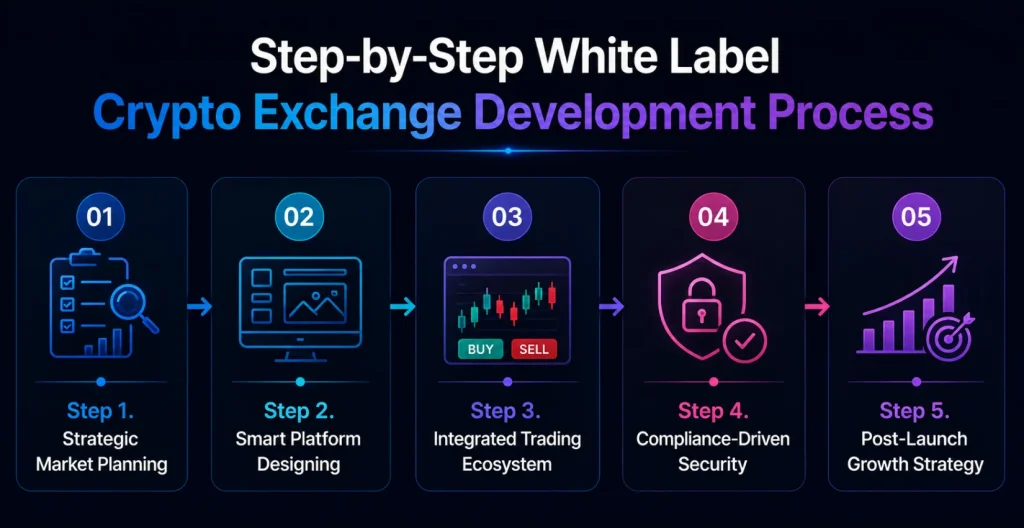
Building such an exchange really brings a few extra topics, like correct planning, security, user experience, and yes, scalability of the technology. A white-label cryptocurrency exchange development service can help companies launch their own platforms successfully and more quickly, with far fewer “headaches” on the technical side.
Step 1. Understand the Market and Business Goals
By studying target audiences, likely competitors, desired cryptocurrencies, and the regional legislation that applies, businesses can set up a proper strategy and also sort out how revenue will be generated, plus what feature set should be included.
Step 2. Design a Simple and Engaging Trading Platform
The platform should be shaped around usability, convenient navigation, branding solutions that can be customized, and responsive design elements that support better customer engagement.
Step 3. Integrate Wallets, Payments, and Trading Features
Creating cryptocurrency wallets, adding payment options, setting up liquidity management, and using smart contracts can boost exchange performance and also help keep transactions secure.
Step 4. Focus on Security and Compliance
Implement KYC verification, AML compliance, data encryption, and security testing to protect user information and reduce fraud risks before launch.
Step 5. Launch, Monitor, and Upgrade the Platform
After launch, you will need monitoring, ongoing technical help, rolling out improvements, and tuning performance. This is what typically keeps the exchange stable and supports further growth.

Technology Stack Used in White Label Crypto Exchange Software Development
A reliable tech stack matters a lot; it helps a business reach scalable, secure, and high-speed trading platforms. In many cases, a modern white-label crypto exchange software development company uses solid frontend, backend, blockchain, and cloud technologies for better performance and also for security reasons. A lot of companies also tack on Web3 development services so the whole setup works nicely with a decentralized ecosystem.
| Technology Area | Common Technologies |
| Frontend Technologies | React.js, Angular, Vue.js |
| Backend Technologies | Node.js, Python, Java, Golang |
| Blockchain Networks | Ethereum, Binance Smart Chain, Solana, Polygon |
| Database Solutions | MongoDB, PostgreSQL, MySQL |
| Cloud Infrastructure | AWS, Microsoft Azure, Google Cloud |
| API Integrations | CoinGecko API, Binance API, Payment APIs |
| Security Technologies | SSL Encryption, MFA, Firewalls |
| AI & Automation | AI Trading Bots, Fraud Detection Systems |
| DevOps Tools | Docker, Kubernetes, Jenkins |
| Smart Contracts | Solidity, Rust |
White Label Crypto Exchange Software Use Cases
A lot of businesses across different industries use white label cryptocurrency exchange software to quickly roll out trading platforms that feel safe; they also broaden blockchain services and improve digital asset accessibility for users globally in a seamless manner.
1. Crypto Trading Startups
Startups often choose white label exchanges because they can launch a trading business faster. This usually means lower investment and quicker deployment than a fully custom approach to cryptocurrency exchange development, even when timelines get difficult.
2. Financial Institutions
Banks and fintech firms integrate cryptocurrency trading services in order to expand their digital asset offerings. They can also attract modern investors, people who are interested in blockchain-based financial solutions.
3. NFT Trading Platforms
Some businesses combine exchange platforms with NFT marketplace development solutions so users can buy, sell, and trade NFTs inside one unified blockchain ecosystem.
4. Enterprise Blockchain Businesses
Large enterprises often tap into crypto exchanges for tokenized asset handling, secure cross-border transfers, and also decentralized payment-style flows inside blockchain-enabled operations.
5. Global P2P Trading Platforms
P2P marketplaces let users from different countries trade cryptocurrencies directly, head-to-head, using escrow protections and flexible pay methods too, so it stays more accessible and also more transparent.
Read More : Hire Crypto Exchange Developer
How to Choose the Best White-Label Cryptocurrency Exchange Software Development Services
Choosing the right development partner matters because it helps a company launch a secure, scalable, future-ready crypto exchange, with advanced trading options and technical support.
1. Check Industry Experience
Look for a company with real blockchain experience and a track record of completed crypto exchange deployments. Past work usually means better build quality and quicker delivery in a more predictable way.
2. Analyze Security Standards
Before you choose a white label cryptocurrency exchange development company, examine the security layers carefully. Such as encryption, KYC, AML compliance, and wallet protection matter a lot.
3. Evaluate Blockchain Expertise
Experienced blockchain developers can link smart contracts and integrate wallets, plus decentralized functions, in a smoother way, so you end up with crypto exchange solutions that are scalable.
4. Review Portfolio and Client Testimonials
Go through earlier projects and client feedback. That helps you determine the development ability, how support actually behaves, and the technical know-how before finalizing partnerships.
5. Assess Scalability and Customization Options
Make sure the platform can handle future upgrades, new features, and branding changes over time. If a business wants growth, then a flexible and scalable exchange infrastructure should be non-negotiable, and it helps a lot when you have a dependable dApp development company.
White Label Crypto Exchange Development Services You Should Consider
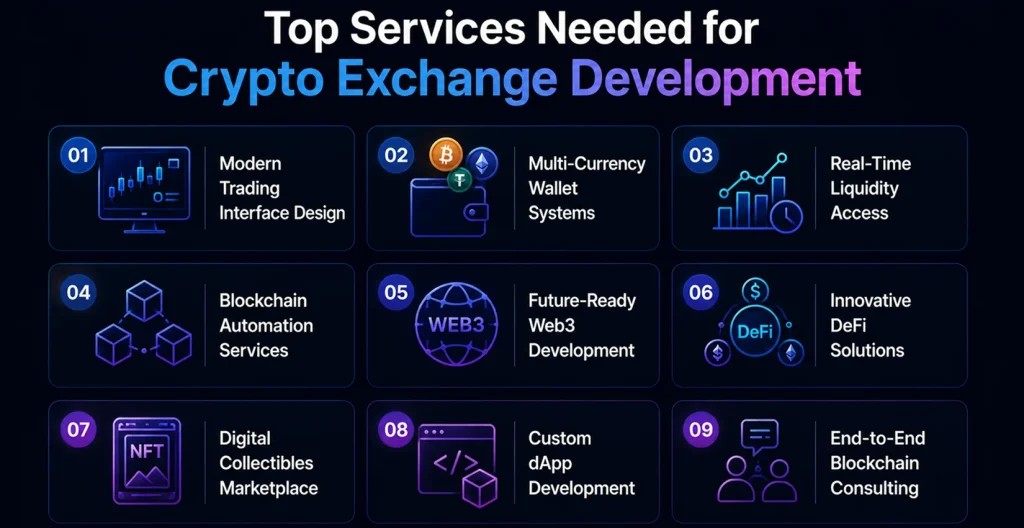
If you’re launching a crypto exchange, you’ll usually need several blockchain services to form secure, scalable, and feature-rich trading ecosystems. These should also support later expansion and digital asset innovation.
1. Exchange UI/UX Design Services
Easy-to-use design facilitates navigation within the platform, makes trading operations more efficient, and provides users with a high level of satisfaction due to performing several activities using mobile and web applications.
2. Cryptocurrency Wallet Development
Safe digital currency wallets help store the money, work with various coins, and provide encryption, authentication, and other useful features.
3. Liquidity Integration Services
Liquidity integration provides traders with faster and more reliable trades, and it also guarantees smooth functioning of the platform with respect to different digital currencies.
4. Smart Contract Development Services
The use of smart contracts can make your business more effective because it allows automating processes, reducing manual intervention, which improves safety and effectiveness.
5. Web3 Development Services
Web3 integration helps connect your business with blockchain systems, providing you with decentralized exchange development, tokenization, and integration with other exchanges.
6. DeFi Development Services
DeFi integration allows making additional actions, like lending, staking, and liquidity provision, among others.
7. NFT Marketplace Development
NFT marketplace integration functions make it possible to conduct NFT trading alongside cryptocurrency exchanges.
8. dApp Development Company Solutions
Decentralized application development companies help grow the blockchain ecosystem by weaving in secure, transparent, and scalable trading functionalities.
9. Blockchain Consulting and Support
Professional blockchain consulting supports teams in picking the right technologies, plus the compliance frameworks and the development roadmap. This is usually what makes a crypto exchange deployment go more easily.
White Label Cryptocurrency Exchange Software Development Company vs Custom Development
Businesses opting for off-the-shelf solutions against custom-built options need to weigh their advantages in terms of speed of development, scalability, flexibility, and long-term cost of operations before making any investment decisions.
A reliable white label cryptocurrency exchange software development firm will help businesses minimize launch risks and increase their chances of scaling. These businesses integrate such platforms using strategies related to crypto payment gateway app development cost reduction.
| Comparison Factor | White Label Exchange | Custom Exchange |
| Development Time | Faster deployment | Longer development cycle |
| Development Cost | Lower initial investment | Higher development expenses |
| Customization | Moderate customization | Full customization |
| Security Features | Pre-built security modules | Custom-built security |
| Scalability | Easily scalable | Depends on architecture |
| Maintenance | Vendor-supported | Self-managed |
| Market Launch | Quick market entry | Delayed launch |
| Compliance Integration | Ready-made compliance tools | Requires separate implementation |
| Technical Expertise | Lower internal dependency | Requires large development teams |
| Risk Level | Lower operational risk | Higher development risk |
White Label Crypto Exchange Development Cost
The crypto wallet app development cost depends on various factors such as platform complexity, functionalities, security needs, integrations, and others. Businesses looking at the cost of creating a crypto exchange also need to consider the cost of scalability and wallet integrations.
App Development Cost by Project Phase
| Development Phase | Estimated Cost |
| Market Research & Planning | $5,000 – $10,000 |
| UI/UX Design | $8,000 – $15,000 |
| Core Development | $25,000 – $70,000 |
| Security & Compliance | $10,000 – $20,000 |
| Testing & Deployment | $5,000 – $12,000 |
Cost As Per Development Roles
| Development Role | Hourly Cost |
| Blockchain Developer | $40 – $120 |
| Frontend Developer | $25 – $80 |
| Backend Developer | $30 – $100 |
| UI/UX Designer | $20 – $70 |
| QA Engineer | $20 – $60 |
Cost According to Software Complexity
| Exchange Complexity | Estimated Cost |
| Basic Exchange Platform | $30,000 – $50,000 |
| Mid-Level Exchange | $60,000 – $120,000 |
| Advanced Enterprise Exchange | $150,000 – $300,000+ |
Development Cost by Region
| Region | Hourly Development Cost |
| North America | $80 – $200 |
| Europe | $60 – $150 |
| Asia | $25 – $80 |
| Middle East | $40 – $100 |
Challenges in White Label Cryptocurrency Exchange Development
However, while building a crypto exchange platform, certain challenges will appear, including security problems, legal challenges, liquidity risks, and others that require appropriate technical planning and strong blockchain technology usage.
1. Regulatory and Legal Challenges
Due to the changeability of the legislation, there appear to be compliance problems. To prevent such things, businesses must install compliance controls and monitoring, KYC, and AML tools.
2. Security Risks and Cyber Threats
Exchange platforms are common targets for hackers and criminals. Businesses are advised to use powerful security tools like encryption techniques and MFA.
3. Liquidity Management Issues
Poor liquidity management decreases the platform’s efficiency. Integration of third-party LP services and implementation of AMM solutions are necessary.
4. User Trust and Adoption
New exchanges often find it a bit hard to get people to trust them. In other words, transparency, security, and customer support that actually responds in a timely way slowly earn credibility and better user engagement.
5. Scalability and Performance Challenges
When trading volumes jump high, platform performance can quietly drop. That’s why cloud-based infrastructure matters and why exchange architecture that’s optimized helps companies handle sudden traffic spikes and keep operations steady. This is where p2p cryptocurrency exchange development strategies tend to be useful.
Future Trends in White Label Crypto Exchange Software Development
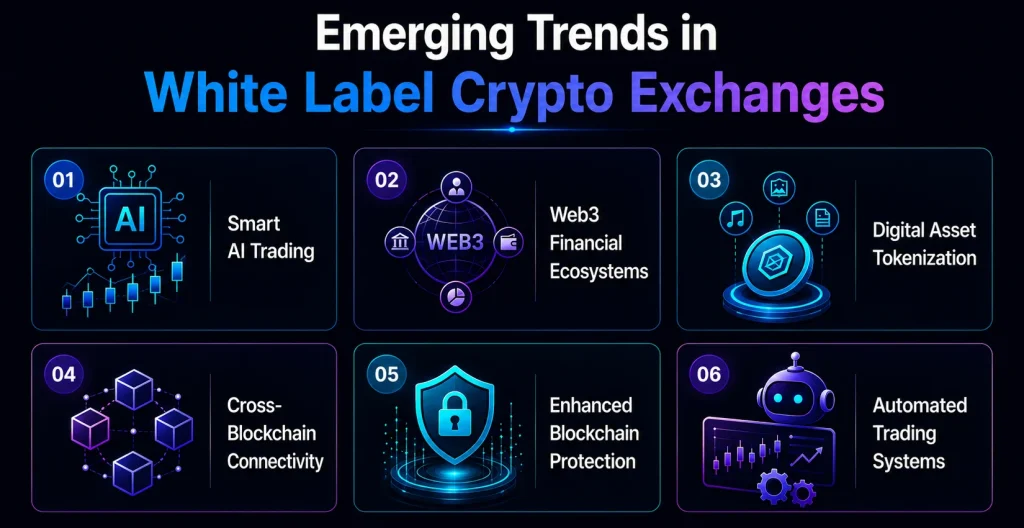
Emerging blockchain innovations, AI integration, and decentralized technologies are changing how crypto exchanges work, with trading systems that feel smarter, protections that are stronger, and digital asset access that becomes more practical.
1. AI-Powered Crypto Trading Platforms
AI tools can scan market trends, automate trading decisions, and also strengthen fraud detection capabilities. So for modern cryptocurrency exchange platforms and investors, the whole workflow can become more consistent.
2. Web3 and Decentralized Finance Integration
With Web3 and DeFi, it’s easier to boost transparency, enable decentralized ownership, and improve blockchain interoperability across today’s cryptocurrency trading ecosystems.
3. Growth of Tokenized Assets
Businesses are turning real-world holdings like real estate and even digital collectibles into token form so they can support secure blockchain-based trading and investment opportunities.
4. Cross-Chain Trading Solutions
Cross-chain technologies make the process of transferring cryptocurrency possible on several blockchain networks, enhancing trade opportunities and optimizing the process of conducting a transaction.
5. Advanced Blockchain Security Technologies
Sophisticated security measures provide better safety of wallets, smart contract validation, and encryption of the entire trading process in cryptocurrency exchanges.
6. Rise of Automated Trading Bots
Automated bots make automatic transactions according to preset strategies and trends of the crypto market; therefore, using white-label exchange platform software becomes easier.

How to Start a Cryptocurrency Exchange Business Successfully?
Launching a profitable business venture in cryptocurrency exchange requires thorough planning, adequate technology, and compliance with all regulatory requirements.
1. Define Your Target Market
A business needs to determine its target audience and decide which cryptocurrencies will be traded, along with the trading methods and preferences.
2. Choose the Right Revenue Model
Revenue models may include trading fees, withdrawal fees, listing charges, and premium subscription services, all geared toward sustainable business growth.
3. Obtain Necessary Licenses
Legal licenses and regulatory approvals matter because they help a business operate securely while keeping trust and compliance within the cryptocurrency trading ecosystems.
4. Partner with a White Label Cryptocurrency Exchange Development Company
Partnering with a professional development company makes platform deployment easier and also helps with security implementation and customization without piling up operational risks, significantly.
5. Launch Marketing and User Acquisition Campaigns
Strong digital marketing strategies, referral programs, and community engagement campaigns can help exchanges attract users and lift platform visibility so you can start cryptocurrency exchange business successfully.
Why Choose Octal IT Solution for White Label Crypto Exchange Development Services
Octal provides secure, scalable, and feature-rich blockchain solutions that help businesses launch modern cryptocurrency exchanges with faster deployment and solid long-term operational support.
1. Expertise in Blockchain and Web3 Solutions
Our blockchain specialists develop advanced cryptocurrency exchanges integrated with secure Web3 functionalities and decentralized ecosystem capabilities.
2. End-to-End Crypto Exchange Development
We provide complete exchange development services, including UI/UX design, wallet integration, a trading engine buildout, and testing and deployment support.
3. Advanced Security and Compliance Support
Octal adds encryption, KYC verification, AML compliance, and multi-factor authentication for safer cryptocurrency trading activities, plus regulatory readiness.
4. AI-Integrated Smart Crypto Wallet Solutions
Our AI-driven wallet systems help with fraud detection, transaction monitoring, and digital asset management. This is done through AI-integrated smart crypto wallet capabilities.
5. Scalable and Future-Ready Exchange Platforms
We create scalable infrastructure that can keep up with growing users, heavier trading volumes, and even future blockchain integrations efficiently.
6. Dedicated Post-Launch Maintenance
After you go live, our team keeps watch, providing continuous monitoring, upgrades, technical help, and security maintenance to ensure stable exchange performance after deployment.
Final Words
The increased demand for secure and scalable cryptocurrency platforms is nudging businesses to use white-label crypto exchange development solutions so they can enter the market quicker, with less operational hassle. From protection tools to the whole trading infrastructure, every part of a crypto exchange needs careful planning and dependable development skills.
Partnering with a trusted white label crypto exchange software development company usually allows businesses to ship feature-rich trading platforms that stay scalable in the long run, plus they get compliance support that actually matters.
And when you pair that with advanced blockchain capabilities, through blockchain app development company expertise, the platform tends to run better, users trust it more, and it becomes easier to grow later on in this still-evolving cryptocurrency ecosystem.
Read More : cryptocurrency exchange development companies


 Get in Touch
 By
By August 7, 2026