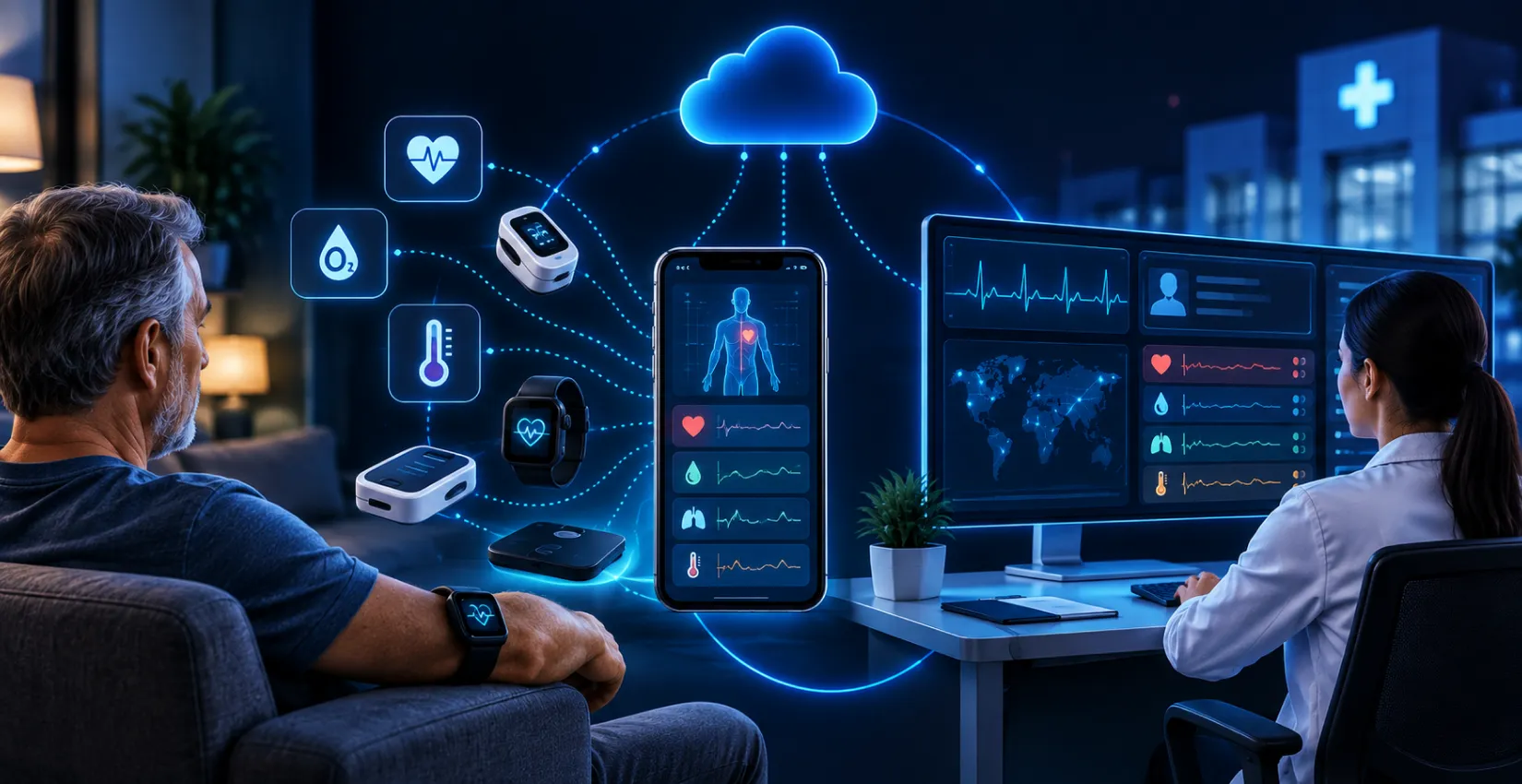



With an estimated market value of 22.14 billion by the year 2032, the health monitoring app market is undoubtedly one of the most promising fields of business. With everything getting digital, the healthcare sector is not going to stay behind. However, the road to crafting a stellar healthcare app is not smooth. Lots of features, current medical updates, and a huge dataset make it quite hard to develop and monitor regularly.
Therefore, if you are thinking about developing a healthcare app, it is better to go through all its technicalities. You must know what features to add, and what futuristic techs to incorporate. Don’t worry, as here is a complete guide on features, tech stacks, costing and market usability of a healthcare app today.
Latest Market Stats
The global market trends of healthcare monitoring apps are promising enough to kindle your interest in stepping foot into it. The global market size for these apps is going to reach to a massive $974.5 billion by the year 2027. The telemedicine market size was at a $87,41 billion in the year 2022. But the growth is estimated to reach sky-high by the year 2030, with a market size of $286.22 billion.
Blockchain development is going to play a major part in maintaining the privacy and data security of these apps. This blockchain market is therefore expected to reach $14.25 billion in revenue by 2033. Going through these latest stats show that the entire healthcare market is going through a massive digital transformation after the advent of the global pandemic.
Key Features of a Health Monitoring App
Healthcare monitoring app development, as you can see, witnessed a sudden impetus after the emergence of the unpredictable pandemic. And now people have become so comfortable with the benefits of it that more and more healthcare institutions are increasingly inclined towards it. The useful features that make the healthcare apps stunning are;
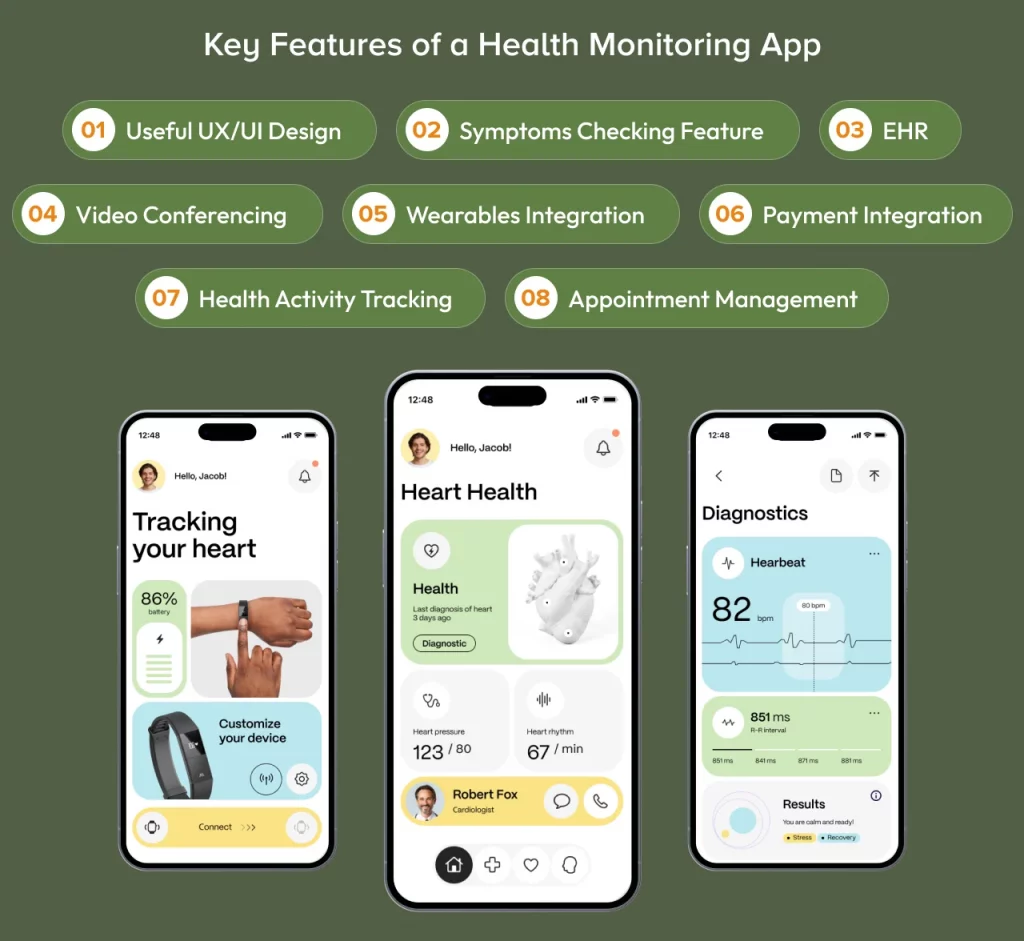
1. Useful UX/UI Design
The interface of your healthcare app needs to be simple and easily navigable. Considering the fact that many of your app visitors will be elderly people with limited tech knowledge, consider Healthcare App Development Services, which can offer the simplest UX/UI designs for you.
2. Symptoms Checking Feature
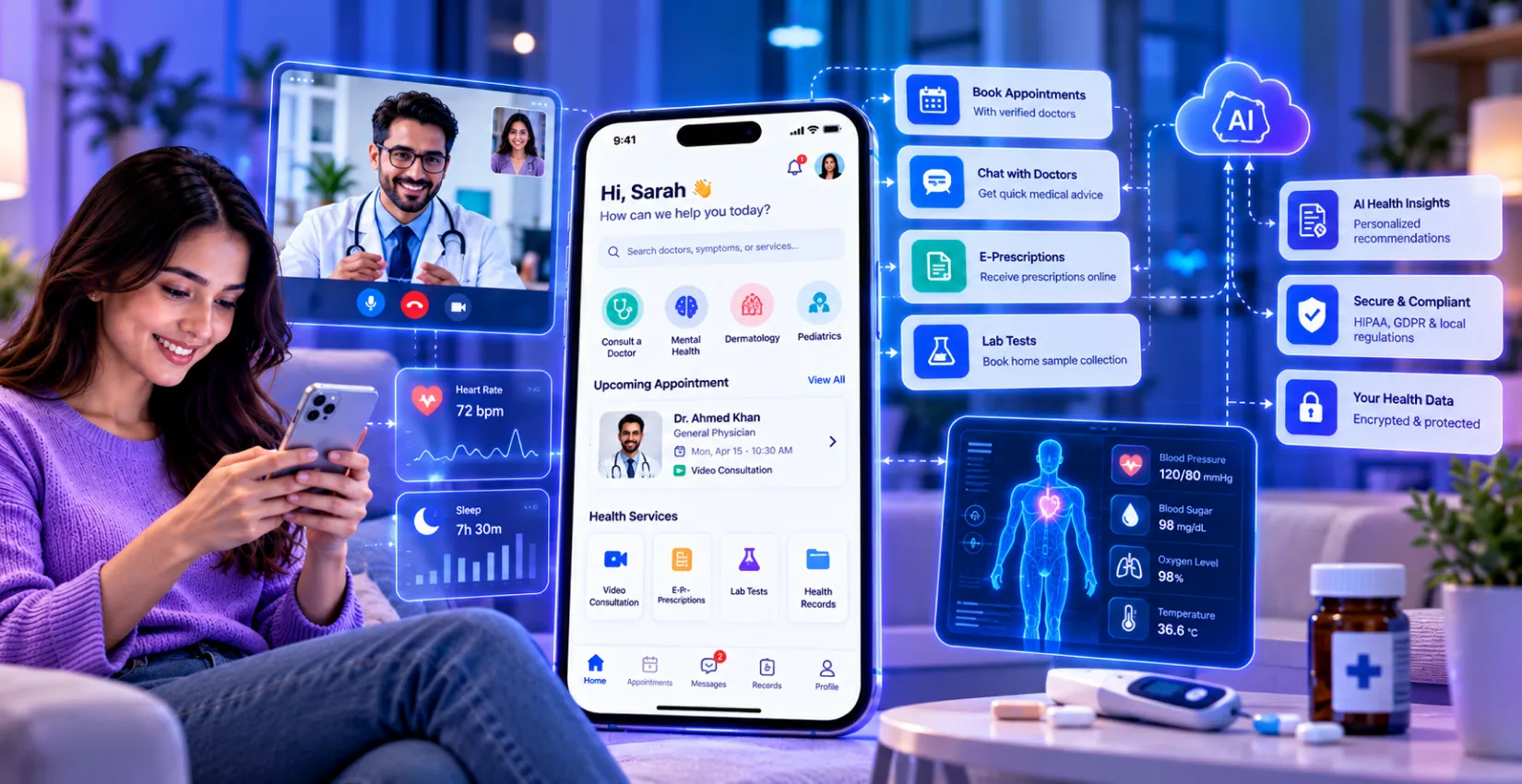
You can only offer a diagnosis through an app if it has a symptoms-checking feature. With it, the patient can tick the symptoms they are having currently. On this basis, your expert physicians will diagnose and treat them with accuracy and care.
3. Health Activity Tracking
Regular health activity tracking, such as blood pressure, heart rate, daily walking or sleep monitoring, etc. will make your app more desirable. In addition to this feature, you can offer healthy lifestyle solutions to your clients based on their regular health updates.
4. Appointment Management
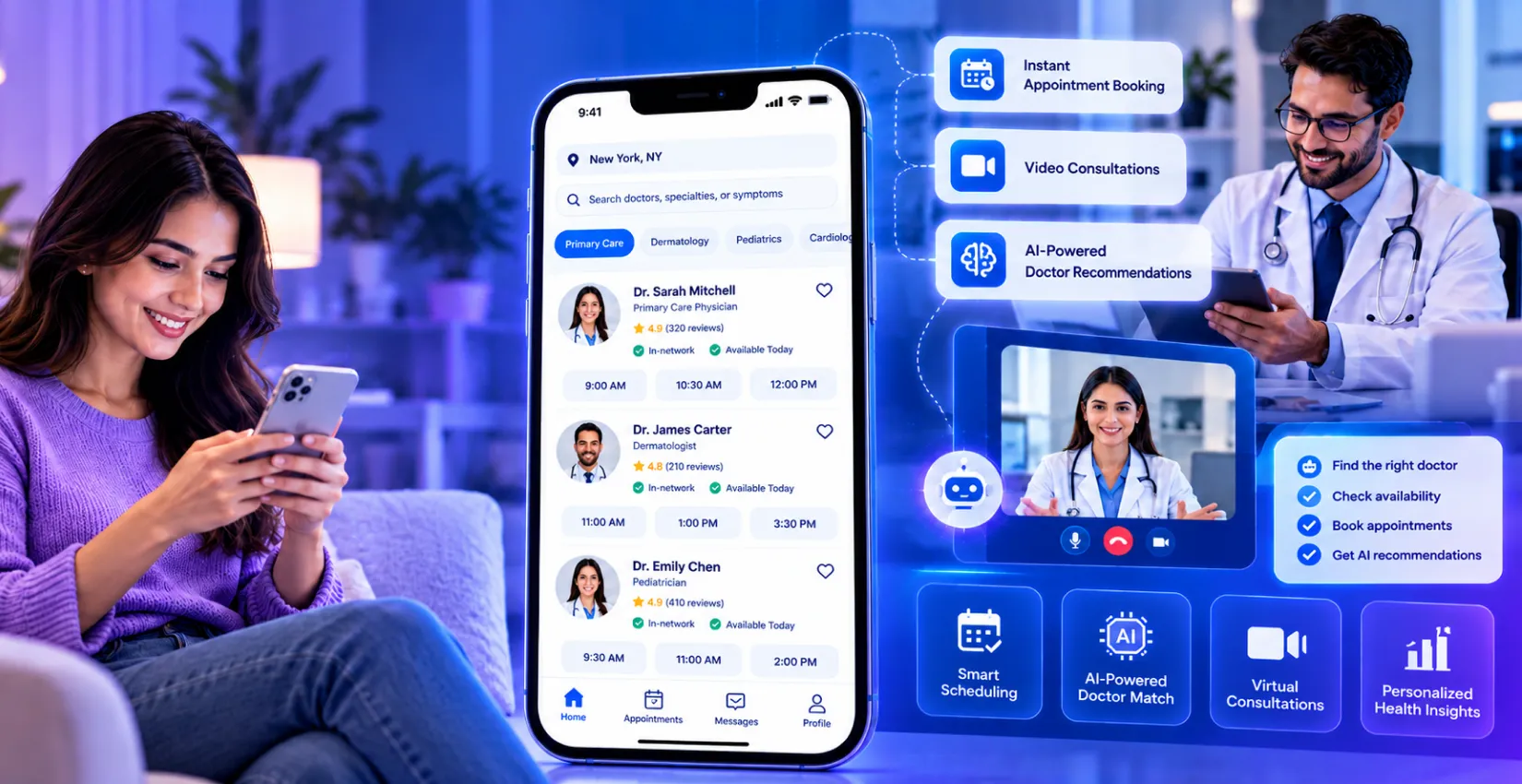
This useful feature enables patients to book an appointment with their concerned physician by checking their availability. Doctors too can use this feature to note and reflect on their upcoming appointments and accept or decline their further appointments.
5. Video Conferencing
This feature minimises the need for a face-to-face appointment to a great extent. Through virtual meet-ups, patients can easily convey their problems to the doctors for a comprehensive health solution.
6. EHR
The electronic health record system in your app will help you keep an internal record of the patient’s health. Both the patient’s health updates and the doctor’s prescribed treatments are recorded here for future use.
7. Wearables Integration
Your health monitoring apps for Android or iPhone need to incorporate wearable integrations. This feature will make your app more popular among Gen Z and Millennials actively wearing smartwatches nowadays.
8. Payment Integration
Payment integration is an undeniable feature to make your healthcare app truly self-reliant. Consider including all sorts of payment options to make the payment process simple and available for the patients. These are the essential features of a healthcare monitoring app. Following this, we will discuss the steps to develop them.
Steps to Develop a Health Monitoring App
Mobile application development services follow a step-by-step approach to developing their apps. These steps include;
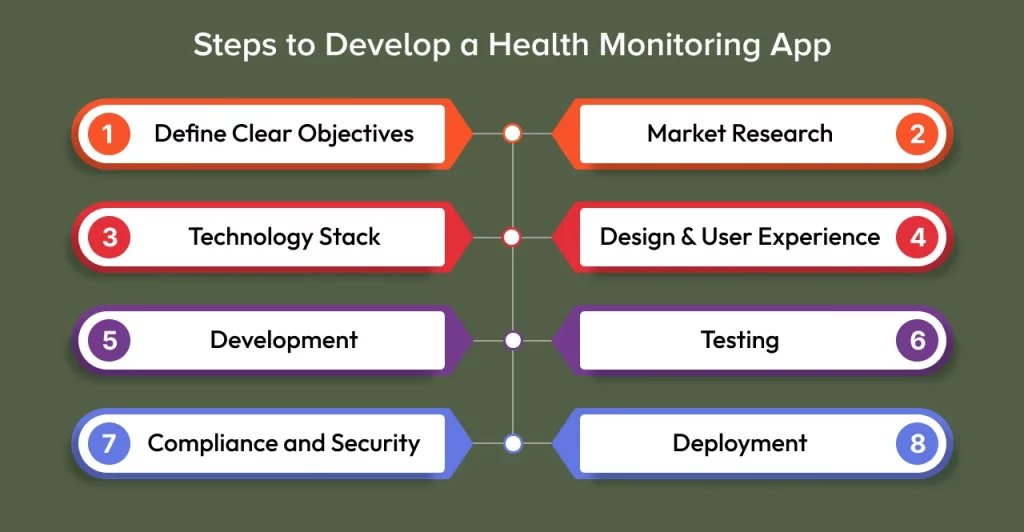
1. Define Clear Objectives
Before anything, you must consider what the main purpose of your healthcare app will be. Whether it will be for online medical conferencing, managing medical reports, or offering a combination of them, contemplate it. Also, consider its target audience.
2. Market Research
Next up, you should conduct thorough market research to understand the strengths or weaknesses of other healthcare apps. You can gather feedback from your existing customers or potential customers to plan what you will need in your app.
3. Technology Stack
Thereafter, select appropriate tech stacks for your mobile application platform. These stacks need to cater to the factors of security, scalability, compatibility, etc.
4. Design and User Experience
This step will involve creating a user-friendly interface that will enhance user experience. After developing the prototype you can refine its design with continuous testing and monitoring.
5. Development
The next step will be to opt for front-end and back-end development. Other things will include the integration of the database, security compliance, and integration of telemedicine services.
6. Testing
After development, testing becomes necessary to identify bugs, usability issues, and vulnerabilities. You can conduct performance testing to check its efficiency in handling high traffic.
7. Compliance and Security
Your app needs to cater to data privacy rules and regulations. Therefore, it should include encryption or access control so that you can protect the sensitive data of your patients.
8. Deployment
Now the final part is to deploy your healthcare monitoring app on popular platforms including Android and iOS. You must also choose a reliable cloud hosting provider to increase its scalability.

Technologies Used in Health Monitoring App Development
With changing times, new technologies are improving the functions of healthcare apps. Some of the essential modern technologies for health monitoring are;
AI integration
AI integration is becoming prime for diagnosing and treating the unique problems of each patient. Its integration reduces the chances of human error in medical prognosis. With AI, one can expect to deliver advanced and personalized healthcare solutions to patients.
Blockchain development
The medical history and present condition of your clients are extremely sensitive to them. Blockchains can offer extreme confidentiality for this sensitive data. With blockchain app development, the data of your patients will be protected from data breaches. This will increase trust and coordination between you and your patients.
IoT technology
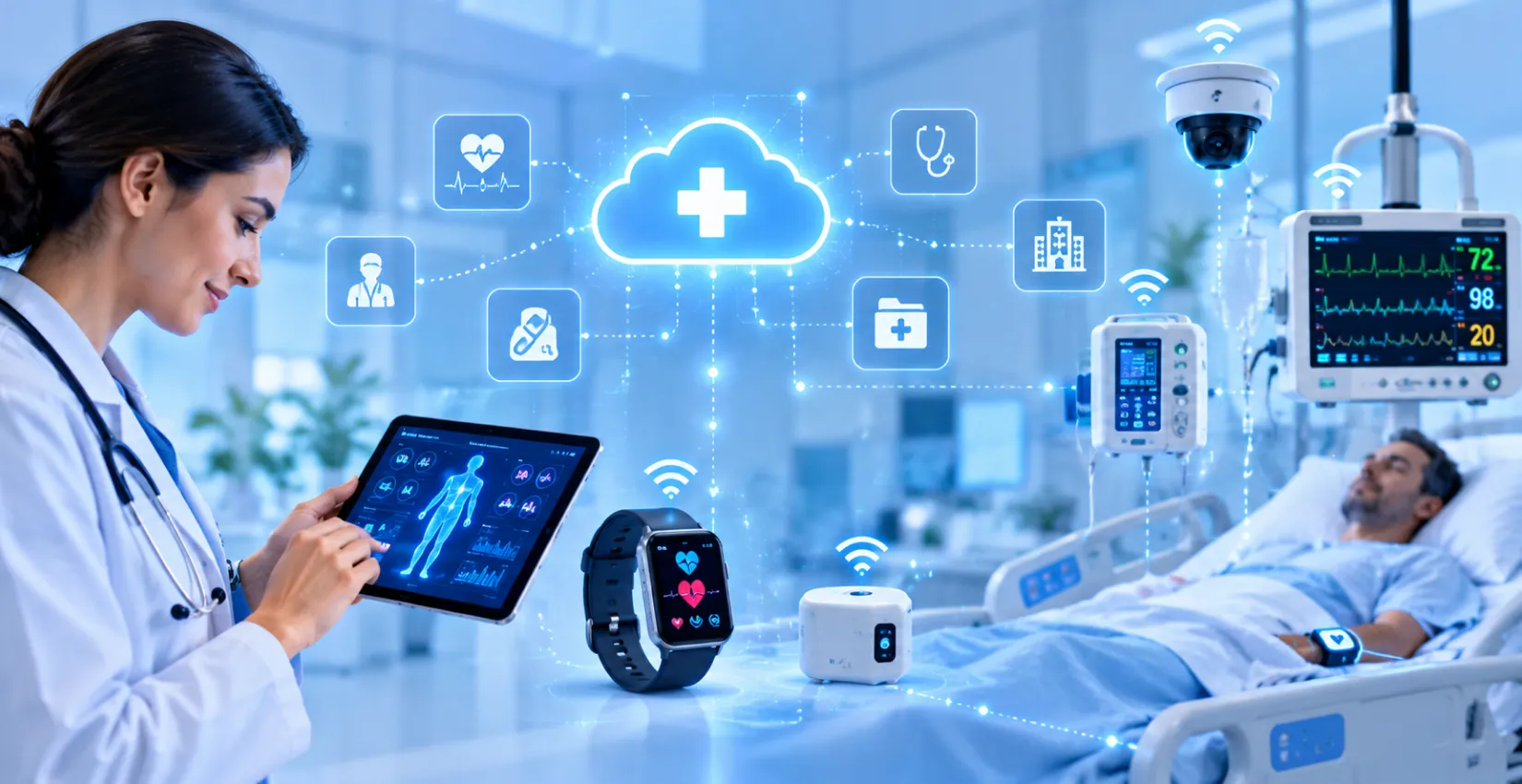
The mental health monitoring app with loT technology offers continuous remote monitoring facilities to you. This provides comfort and comprehensive healthcare services to the patients. This helps in collecting valuable information from the patients and monitoring their health condition cohesively. Integration of loT in healthcare benefits the integration of medical equipment in healthcare apps. Facilities including ECG monitoring, rehabilitation process, body vital measurements, etc. get easier with this technology.
Now that you have an idea of the essential features and technologies of a healthcare app, it is time to check out how much it is going to cost you actually.
Cost of Developing a Health Monitoring App
Your healthcare mobile app development cost will depend on what sort of app you want and what features you want to include in it. Let’s then reflect on its costs by categorising them into segments, including;
Estimated Cost by App Complexity
| Complexity Level | Estimated Cost | Suitable For |
|---|---|---|
| Basic MVP | $25,000–$50,000 | Basic health tracking, wellness content, reminders, and journaling |
| Mid-Level App | $50,000–$100,000 | Appointment booking, messaging, dashboards, and selected integrations |
| Advanced Healthcare Platform | $100,000–$200,000+ | AI-powered insights, wearable integrations, multiple user roles, and advanced analytics |
1. Appointment Scheduling Apps
This can cost around ($50,000 to $150,000) as you include features of automated notifications and calendar integration along with providing appointment history.
2. E-prescription Apps
With the integration of the digital prescription process with utmost security, the E-prescription app development will cost you around ($70,000 to $200,000).
3. Medical Reference Apps
With a robust database for drugs and diseases and personalised libraries, this app development can cost ($60,000 to $150,000).
4. Patient Engagement Apps
With appointment reminders, health education content, and real-time messaging, these sorts of apps will cost you approximately ($80.000 to $250,000).
5. Chronic Disease Management Apps
These long-term health management apps with symptom-tracking and custom care plans can take around ($100,000 to $400,000) to develop entirely.
6. EHR/EMR Systems
These apps, including lab results, patient demographics, and the history of their medical health record, will cost around ($200,000 to $1,000,000) or even more to develop.
Key Factors That Affect Health Monitoring App Development Cost
| Cost Factor | Impact on Development Cost |
| App Complexity | Because of several workflows, user roles, and advanced features, development time will increase. |
| UI/UX Design | Custom dashboards, accessibility elements, and custom UI/UX elements will need more design and testing. |
| Platform Selection | Creating an app for iOS, Android, and Web is typically a more expensive proposition than going with just one platform. |
| Wearable and IoT Integration | If the smartwatch and blood pressure cuff, glucose meter, etc. are connected, it costs to integrate and test. |
| AI and Data Analytics | Further engineering and validation are needed to ensure predictive insights, personalized recommendations, and health trend analysis. |
| Backend and Cloud Infrastructure | Infrastructure costs impact real-time sync, data storage, scalability, backup, and disaster recovery. |
| Security and Compliance | Implementation and validation effort of encryption, audit logs, access controls, and applicable healthcare regulations. |
| Third-Party Integrations | The development and licensing expenses of EHR/EMR systems, pharmacy APIs, payment gateways, and telehealth services can add up. |
| Testing and Quality Assurance | The budget is impacted by device compatibility, performance, security, usability, and clinical workflow testing. |
| Maintenance and Updates | On an ongoing basis, there are extra costs of cloud hosting, bug fixes, operating system updates, security patches, and new features. |
Challenges in Health Monitoring App Development
Planning and building a healthcare monitoring app is not an easy task. You will have to surpass several challenges, including;
Security
Security is a major concern for health monitoring apps with frequent rates of cyber-attacks. Healthcare IT solutions therefore put excessive pressure on addressing user security through encrypting their personal and financial data.
Complexity of Integration and Real-life Implementation
Making people aware of the healthcare apps and using them on a daily basis is a major challenge. Often it becomes difficult for the management to compel a larger section of the audience to use their healthcare apps with regular sincerity.
Engaging patients
The mechanism of healthcare apps is still in its early stages. Many patients acknowledge that these apps fail to enhance their medical experience. They still consider face-to-face appointments to be effective in their health problems.
Maintaining simplicity
Maintaining a user-friendly interface while catering to the different dynamics of medical terms, information, diagnostic, and treatment options is surely a challenge. Failing to maintain simplicity will directly affect the engagement of your app.
Increasing awareness
Another major challenge that healthcare apps often face is the lack of health awareness among people. Often due to a lack of awareness, they fail to effectively use and operate these apps. To overcome this issue, the developers need to understand the medical literacy of their target audience.
Providing data privacy
Often, patients show concern about sharing their private medical information in the app, considering the effectiveness of its data privacy policies. This concern is genuine, and therefore the developers need to navigate through GDPR and HIPAA to ensure maximum security in their apps.
If these challenges are addressed properly, they can enhance the usability of these apps to a great extent. Irrespective of these challenges, healthcare monitoring apps are growing at a rapid rate, showing promising growth in the near future.
Also Read: How much does it cost to develop Healthcare app like myAster
Future Trends in Health Monitoring Apps
The future of health monitoring apps is bright, as it is showing steady, constant growth after the pandemic. The global market size for mHealth apps is estimated to grow at a rapid rate of 14.9% from 2014 to 2030. Medical app development is becoming one of the most lucrative career options with the fastest growth during this timeline. Currently, North America is showing the most promising area for a profitable business in health monitoring app development. The US is going to register the highest CAGR rates from 2024 to 2030.
The market is expected to generate revenue of $86,369,5 million by the year 2030, leading to an increase in the demand to develop more such apps. The number of chronic diseases like cancer is estimated to rise by 12.8% in the year 2025. This directly asks for the demand for patient-centric healthcare apps to monitor and control such chronic diseases regularly. The number of smartphone users is estimated to reach up to 6 billion by the year 2027. This increase in the number of smartphone users directly indicates a significant increase in the usage of medical healthcare apps in the future.

Conclusion
Developing the best health monitoring app for iPhone or Android becomes easier with inherent market knowledge. Understanding the tech stacks, features, and futuristic trends of these apps can help you choose your way in developing a unique healthcare app today.


 Get in Touch
 By
 October 30, 2026