


Are you looking to develop eWallet apps like PayPal in 2026? If you are confused about how to approach digital wallet app development, you have landed on the right page.
With the rise of technology and the use of smartphones, people have become more dependent on payment applications. Mobile apps such as PayPal changed how people managed their money, with ease, and efficiency in making payments.
In this blog, you will get detailed information about the ewallet app like PayPal, including must-have stats, vital features, technologies, and more.
Ewallet App Development: Market Statistics
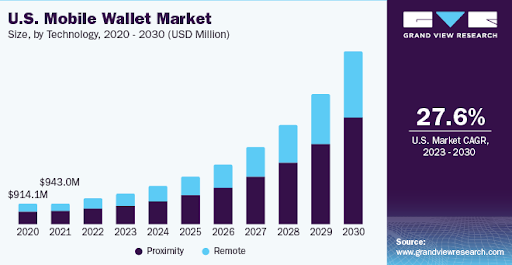
In 2022, the global mobile wallet market was valued at USD 7.42 billion and is projected to grow at a compound annual growth rate (CAGR) of 28.3% from 2023 to 2030. Key factors driving this growth include the increasing adoption of smartphones and internet connectivity, as well as the expanding e-commerce sector.
A mobile wallet, also known as an e-wallet, enables users to make payments easily by utilizing a credit or debit card or a bank account while ensuring data security. Mobile wallets allow for various financial transactions. This includes mobile recharges, bill payments, booking movies or travel, and transferring money between bank accounts.
History of PayPal: Timeline and Key Facts You Should Know
PayPal has transformed the global payments landscape since its inception. According to the ewallet app development company, here’s a quick timeline highlighting its journey:
- In 1998, Confinity was founded by Max Levchin, Peter Thiel, and Luke Nosek, laying the foundation for what would later become PayPal.
- In 2000, the company merged with X.com, an online banking platform established by Elon Musk, accelerating its growth in digital finance.
- By 2001, the company rebranded itself as PayPal and shifted its complete focus toward digital payment solutions.
- In 2002, PayPal went public and was subsequently acquired by eBay for $1.5 billion, marking a major milestone in its expansion.
- In 2015, PayPal separated from eBay and re-established itself as an independent entity to pursue broader growth opportunities.
- Between 2018 and 2022, PayPal expanded its global footprint by acquiring companies like iZettle and strengthening its position in mobile payments.
- From 2023 to 2026, PayPal has been focusing on advanced innovations such as AI-driven fraud detection, cryptocurrency integration, and seamless cross-border payment solutions.
Key Facts:
- Serves 400+ million users globally
- Supports multiple currencies and cross-border transactions
- Offers services like P2P payments, merchant solutions, and digital wallets
- Known for strong security protocols and buyer protection
Must-Have Features of ewallet app Like PayPal
Creating money apps like PayPal requires essential features to ensure functionality, security, and user satisfaction. Let us explore some of the key features that you cannot miss out on pay while developing an e-wallet application.
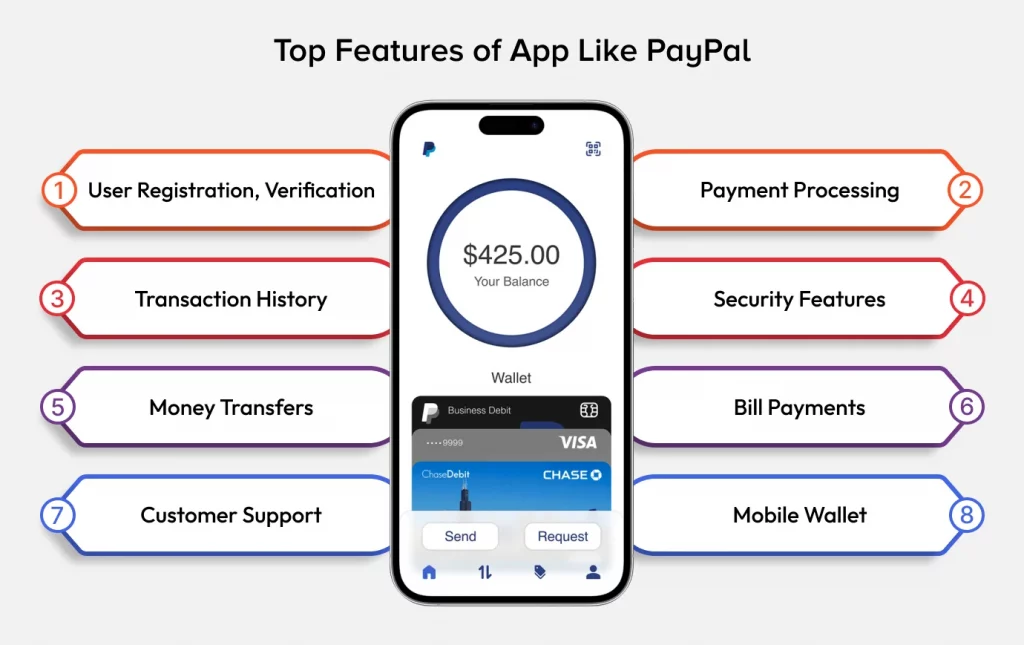
1. User Registration and Verification
To make your app safe from incidents of fraud, KYC verification should be integrated into your app. This includes identification of the users through the use of identity cards, passports, or visas and proof of residence.
You can incorporate features such as fingerprints or facial identification to improve security and reduce the time needed for onboarding users.
2. Payment Processing System
Pay apps like PayPal should easily integrate as many payment options as possible for users’ comfort. Some of them are generic credit and debit cards, bank transfers, and, digital wallets.
Having multiple payment processors will provide a seamless approach to transactions and allow users the flexibility they need.
3. Transaction History Management
Users must be able to obtain full and extensive reports on all their transactions. This feature allows them to monitor the expenses and payments that they have made. It also allows them to control their budgets efficiently.
Transaction records should indicate when the transaction took place, and how much of a transaction occurred. Additionally, it also indicates what kind of transaction it is; this way users can quickly refer to their activity.
4. Advanced Security Features
Security is a sensitive issue in payment apps. The organization should put in place current secure data transfer mechanisms to safeguard the data in the course of transmission. Install anti-fraud tools that will help recognize and block certain operations.
Multi-factor authentication (MFA) provides security by requiring users to offer multiple means of identification, such as codes sent to their phones or other applications.
5. Money Transfer Functionality
The app should allow the users to make money transfers within the country and to other countries when they need to do so. Transfer and receipt of monies should be fast and with as little interference as possible by the book’s processing centre.
Integration with multiple currencies as well as the field of international payments can expand the application’s audience among users from different countries.
6. Bill Payment Integration
You can restrict utility companies and other service providers to enable users to pay their bills using the app. It makes the issue of paying for goods or services easy and assists the users in meeting their payment obligations.
7. Customer Support System
Provide services that include online contact services like chat, email, and a phone support system within the app. This way it assures that the users can fix their problems and seek help from the support providers. Good customer support increases user loyalty and makes the audience trust your site.
8. Mobile Wallet Integration
Include a mobile wallet feature that allows users to securely store and manage their payment methods within the app. This feature should offer a user-friendly interface for adding, removing, and organizing credit cards, debit cards, and other payment options, enhancing overall user convenience.

Technology Stack for Developing digital wallet Apps Like PayPal
Developing apps that are like PayPal requires various technologies and tools to create an advanced platform. Below are some of the technology stacks that can be used.
- Frontend Technologies
React Native or Flutter for cross-platform development, ensuring a smooth user experience on both iOS and Android.
- Backend Technologies
Node.js or Python with Django for handling server-side operations, APIs, and data management.
- Database
SQL databases like PostgreSQL or MySQL for structured data, and NoSQL databases like MongoDB for unstructured data.
- Payment Gateways
Integration with payment processors like Stripe, Braintree, or Adyen to handle transactions securely.
- Security
Implementation of SSL/TLS protocols for data encryption and OAuth 2.0 for secure authorization.
Read more: Best Fintech App Development Ideas for Your Business
Step-by-Step Development Process to Create a Payment App Like PayPal
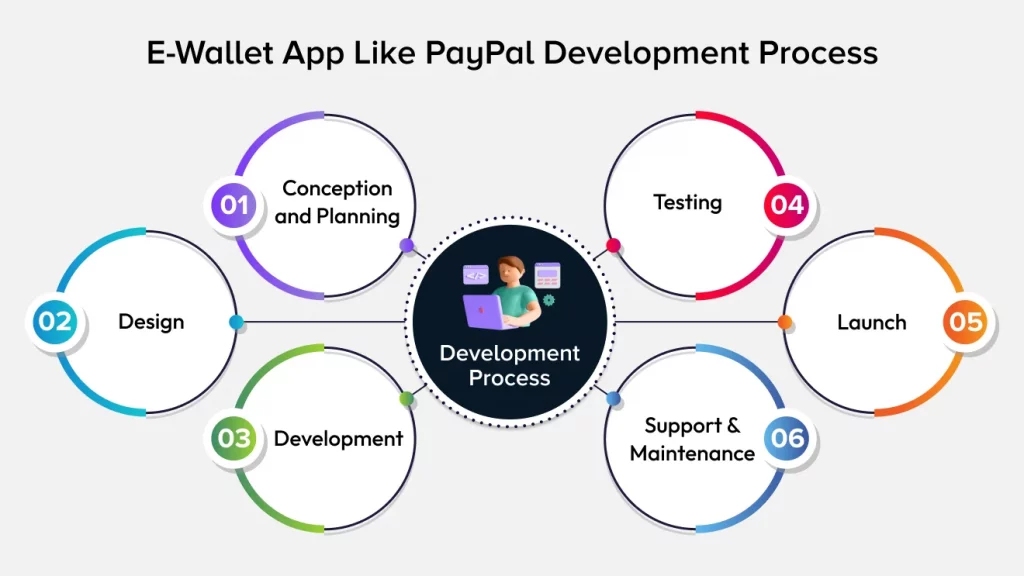
A P2P payment app development requires one to take the key steps for better results. We have listed the major phases that need to be adopted by developing an app like PayPal.
Step 1: Conceptualization and Planning
Before designing an application like PayPal, you should first determine the app’s positioning and the unique aspects that will set it apart from other applications. Starting from the uniqueness of the app in terms of the security level, the convenience of the interface, or the availability of multiple payment options.
Additionally, carry out detailed research to learn all that can be known about your specific market and customers in specific. Studying current rivals can help to establish weak points in their applications and organize your app, and using the information about the trends in the corresponding field can help to avoid the creation of a non-popular application.
Step 2: Design
When you obtain the vision, go to the design stage. Construct prototypes such as wireframes and mockups showing a user interface and the overriding experience of a particular app. Emphasize Navigation and understandability to create an easily navigable design as its sense.
Moreover, a clean outlook should be emphasized to lend itself to easy navigation of the different features that it holds. Make sure there is a clear and coherent symbolical reference to the app’s branding and thus create continuity. This continuity must be across the main stages, from registration to transaction completion.
Step 3: Development
Programming in the development phase is done both in the back end and front end. It involves backend development and setup of server, database, and connections with payment gateways. Make sure all the security precautions are intact such as user authentication, use of SSL encryption and fraud check mechanisms.
The frontend side implements the design mockups of the app’s interface and makes it functional and responsive on all devices. A proper integration of the backend services and the GUI is therefore very essential for the reliability of the application.
Step 4: Testing
Perform all the necessary rounds of testing to find out any defects or performance problems. Also, complete functional testing to verify all software functions and conduct usability testing to gather user feedback.
Also, perform security audits to ensure the protection of the data to be fed into the app is safe from various security threats.
Step 5: Launch
After that, the app should be launched on different app stores and the results should be regularly checked. Monitor users’ activity, collect feedback on the spot and solve any problems that appear after the site launch. Carefully examine user feedback because mistakes can happen, but accurately adjusting the data will help the app improve over time.
Step 6: Support & Maintenance
Maintenance is required to ensure that the app stays useful and relevant to the market it is designed to face. Occasionally release a new version of the app to make corrections and improvements as well as to incorporate suggestions from the users and the latest technology.
Continually enhance the app to maintain constant relevance and functionality for its users.
As all these steps require thorough technical knowledge and expertise, we recommend that you hire a proficient fintech app development company so that you get the best results for your business.
Challenges in Building Services Like PayPal
Developing similar apps like PayPal to send money presents several significant challenges that require careful consideration and strategic planning. Here are some key challenges you may face during development.
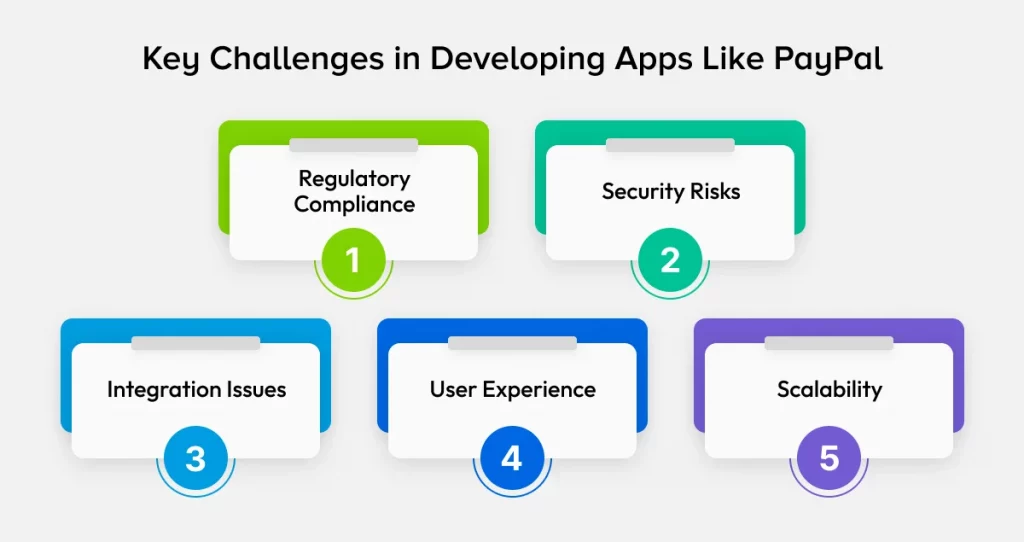
1. Regulatory Compliance
The regulatory environment forms one of the greatest difficulties because the financial environment is laden with numerous regulations as will be subsequently noted in this discussion. Payment apps are subject to many legal rules governing the processing of personal data, identification of money laundering, rules governing payments and other financial transactions.
Receiving licenses and complying with regulatory requirements can be a lengthy and complicated process. Developers must continuously update to newly enacted legal acts.
2. Security Risks
To ensure payment apps meet their primary function of facilitating secure transactions, developers must focus on robust security. Users often share personal and financial data with these apps, making it essential to safeguard this information from cyber threats. Achieving this requires implementing proper encryption and well-protected security measures.
The risks that require implementing a security checklist include impersonation, theft, data loss, and hacking of accounts. Security is again very important and should be strictly implemented to achieve user trust.
3. Integration Issues
Mobile payment applications also have several constraints since they have to be compatible with different payment interfaces, banking procedures, and other organizations’ services. This can incorporate different technical issues like handling the various APIs, combining with different systems, and dealing with many types of transactions.
Ensuring efficient and reliable integration is important to provide users with a better experience of the product.
4. User Experience
Another challenge is being able to develop an interface that is very easy to use by the customer yet it implements complex functionalities. Apps like PayPal have to be easily manageable and deliver and provide a convenient transaction process; however, at the same time, the process cannot be excessively simplified.
You need to offer users an interesting and convenient interface to encourage further interaction with them and the application.
5. Scalability
Developing a platform that can efficiently handle high transaction volumes and rapid user growth is crucial. Scalability challenges involve ensuring that the infrastructure can support increasing loads without compromising performance or speed. Building a scalable architecture is essential for long-term success and reliability.
Also read: Worldwide Mobile Payment Statistics and Facts

How Much Does It Cost to Develop Apps Like PayPal in 2026?
The eWallet app development cost depends on features, complexity, region, and compliance requirements.
Estimated Cost Breakdown
| Development Type | Estimated Cost (USD) | Timeline |
| Basic MVP Payment App | $25,000 – $50,000 | 3–5 months |
| Mid-Level Payment App | $50,000 – $120,000 | 5–8 months |
| Advanced App (Like PayPal) | $120,000 – $300,000+ | 8–14 months |
Feature-wise Cost Estimation
| Feature | Estimated Cost (USD) |
| User Registration & KYC | $5,000 – $10,000 |
| Payment Gateway Integration | $8,000 – $20,000 |
| Wallet System | $10,000 – $25,000 |
| Security & Encryption | $15,000 – $40,000 |
| AI Fraud Detection | $20,000 – $50,000 |
| Multi-Currency Support | $10,000 – $30,000 |
Region-wise Development Cost
| Region | Hourly Rate (USD) |
| India | $20 – $50 |
| Eastern Europe | $40 – $80 |
| USA / UK | $80 – $150 |
Factors Affecting Cost:
- Regulatory compliance (PCI-DSS, GDPR)
- Security infrastructure
- Third-party integrations
- Scalability requirements
- Platform (iOS, Android, Web)
Why Choose Octal IT Solution for Payment App Development?
Octal IT Solution stands out as a trusted partner for building secure, scalable, and high-performance payment applications. Here are six strong reasons businesses choose them:
1. Strong FinTech Expertise
Extensive experience in developing digital wallets, banking apps, and secure transaction systems ensures reliable and industry-ready solutions.
2. Security-Driven Development
Implements advanced security measures such as encryption, tokenization, and AI-based fraud detection to safeguard transactions and user data.
3. Custom & Scalable Solutions
Builds tailored payment apps designed to scale seamlessly with growing users, transactions, and evolving business needs.
4. Advanced Technology Integration
Leverages cutting-edge technologies like AI, blockchain, and cloud computing to enhance performance, automation, and security.
5. End-to-End Development Services
Covers the entire development lifecycle from idea validation and UI/UX design to deployment and ongoing maintenance.
6. Compliance & Agile Approach
Ensures adherence to global standards like PCI-DSS and KYC while following agile methodologies for faster delivery and transparency.
The Final Words
The development process of building an application similar to PayPal in 2026 is far beyond being a simple development activity since creating such an app will be a significant investment in the constantly changing digital payment industry. The ever-growing expectations of customers require creating a highly efficient, reliable, and scalable platform, which will become an important factor in ensuring a business’s success in the FinTech sphere.
When developing such an app, one should consider on demand app development company‘s innovativeness, compliance with all the standards of FinTech products, and performance, along with using technologies like AI and blockchain. Collaboration with Octal IT Solution will provide you not only with a seamless development process but also with an app that will be relevant in the future.
Read more: Cost to create a Retail Mobile App Like Walmart
FAQ
What are the key features of apps like PayPal?
Essential features include user registration, payment processing, transaction history, security measures, money transfers, bill payments, and customer support.
How long does it take to develop an app like PayPal?
Development typically takes 6 to 12 months, depending on the complexity of features and the development team’s expertise.
What technologies are used in developing payment apps?
Common technologies include React Native or Flutter for the front end, Node.js or Python for the back end, and SQL/NoSQL databases for data management.
What are the main challenges in developing a payment app?
Challenges include ensuring regulatory compliance, maintaining security, integrating with payment gateways, and designing a user-friendly interface.
How much does it cost to develop an app like PayPal?
Ewallet app development cost can range from $50,000 to $200,000, depending on the app’s features, functionality and complexity of your digital platform.
 By
By August 24, 2026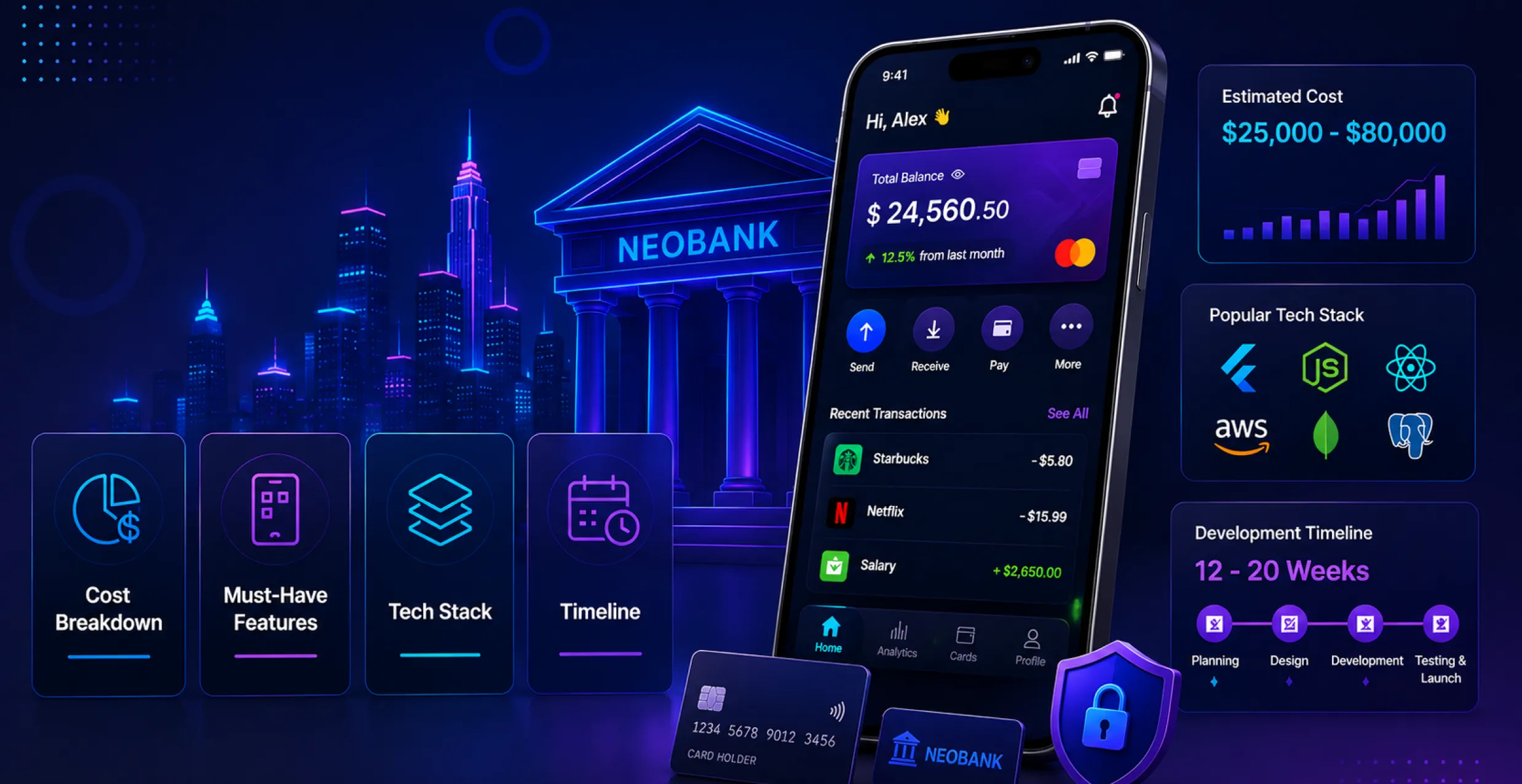


 Latest Stories
 Get in Touch