



Are you planning a mobile app this year? Then, probably the first question that comes to mind is, how long does it take to develop an app? When it comes to developing a mobile app, the journey from conceptualization to developing a full-fledged app has numerous factors that influence the overall timeline of app development. Unfortunately, many entrepreneurs struggle to provide a clear timeline for app development.
As per recent industry guides, the average time to develop a mobile app in 2024–2025 ranges from 3 to 9 months, depending on the overall complexity, platform, and team structure. In this article, we will explore and compare various timelines for app development, assess multiple key factors that influence the development process, and examine the steps involved in bringing an app to life.
Timeline: How Long Does it Take to Develop an App?
The question has become very common: how long does it typically take to develop an app? While we can explain the process by mentioning specific figures, multiple factors can only bring an approximate breakdown:
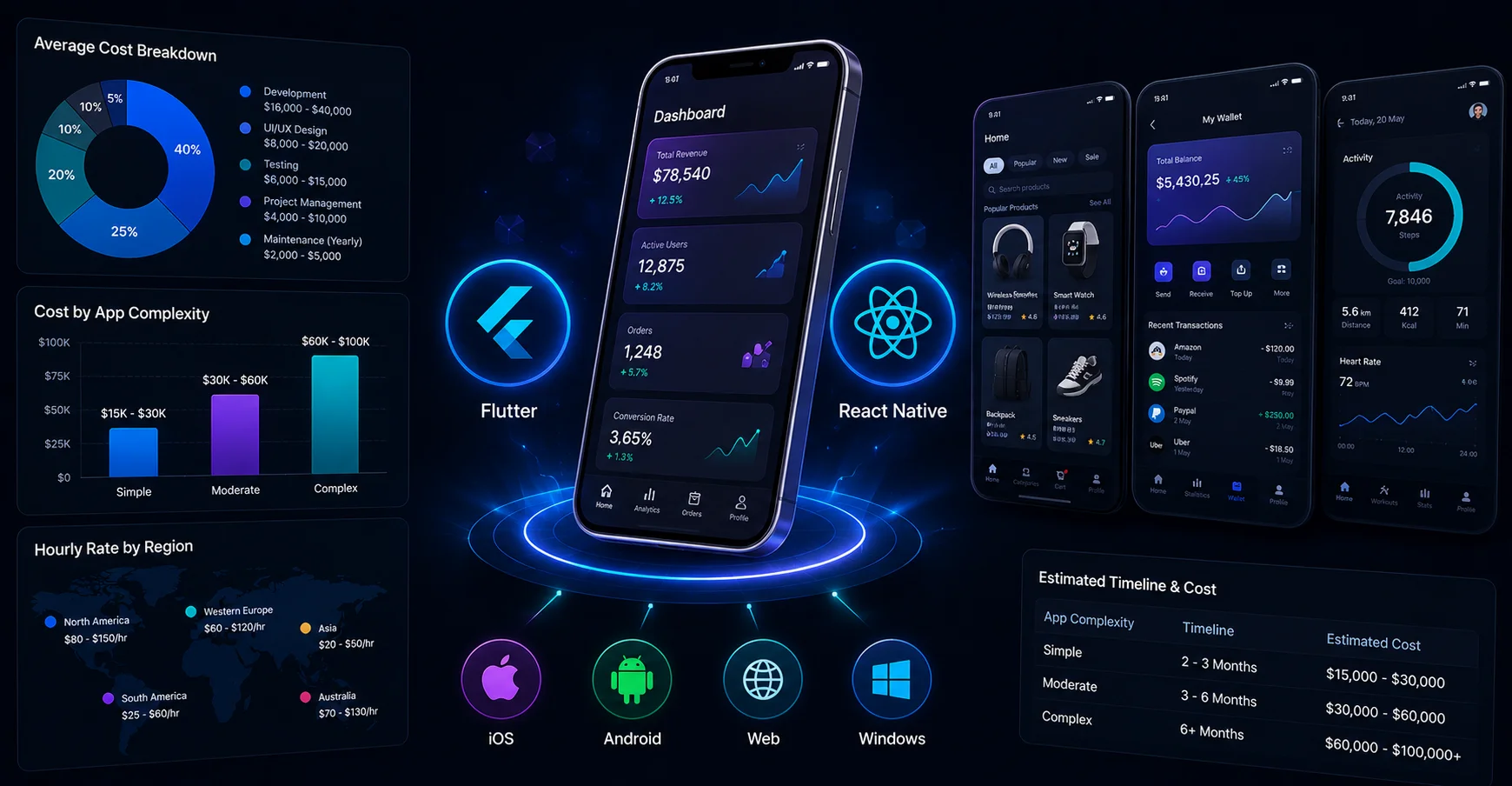
- For simple apps, the timeline typically ranges from 3 to 4 months.
- For the medium-complexity apps, the time varies between 4 and 7 months.
- For complex apps, the time varies between 7 and 12 months.
Simple Apps
When it comes to developing simple apps, they are straightforward in both design and functionality. However, the cost to develop mobile app with basic features typically takes 3-4 months and often involves a limited number of screens. There are generally 4 to 5 screens, along with some basic functions. Such apps don’t need extensive backend support or integration with external services.
A suitable example for this kind of app is a car parking app. It helps users easily find and manage multiple parking spots in urban areas. It also offers a clean interface and some essential functionalities, such as searching for available parking, reserving a parking spot, and receiving proper notifications about parking expiration. This makes the whole thing simple and effective for viewers and users.
Medium-Complexity Apps
A medium-complexity app typically includes at least ten screens and offers additional advanced features. However, the overall development of such apps typically takes 4 to 7 months. An example of this is the AI productivity app. This app functions as an AI chatbot and assistant, assisting users with their daily tasks. Developed for both iOS and macOS, it uses the advancement of ChatGPT and employs a custom algorithm to enhance the user experience.
However, some of the latest key features of these apps include proper task management, voice recognition, and smart integration with Apple’s utilities. This enables the users to efficiently manage their work schedules and priorities. These capabilities also raise some significant AI privacy concerns, particularly when it comes to handling the personal data through voice recognition and smart scheduling. Considering some issues on an early basis also helps build user trust and ensure overall compliance.
Complex Apps
Some advanced functionalities generally characterize complex apps. It requires robust backend systems as well as proper real-time data processing. The development of these apps spans approximately 7-12 months. For instance, consider the latest B2B e-commerce marketplace that connects verified sellers and buyers of small appliances.
As per Apple’s report, the App Store ecosystem facilitated $1.3 trillion in developer billings and sales in 2024. It demonstrates the platform’s large scale and overall competitiveness of iOS apps. This web app features some of the latest innovations, including a comprehensive catalog, and a seamless order system with real-time status updates. This reflects the overall depth and complexity associated with such applications.
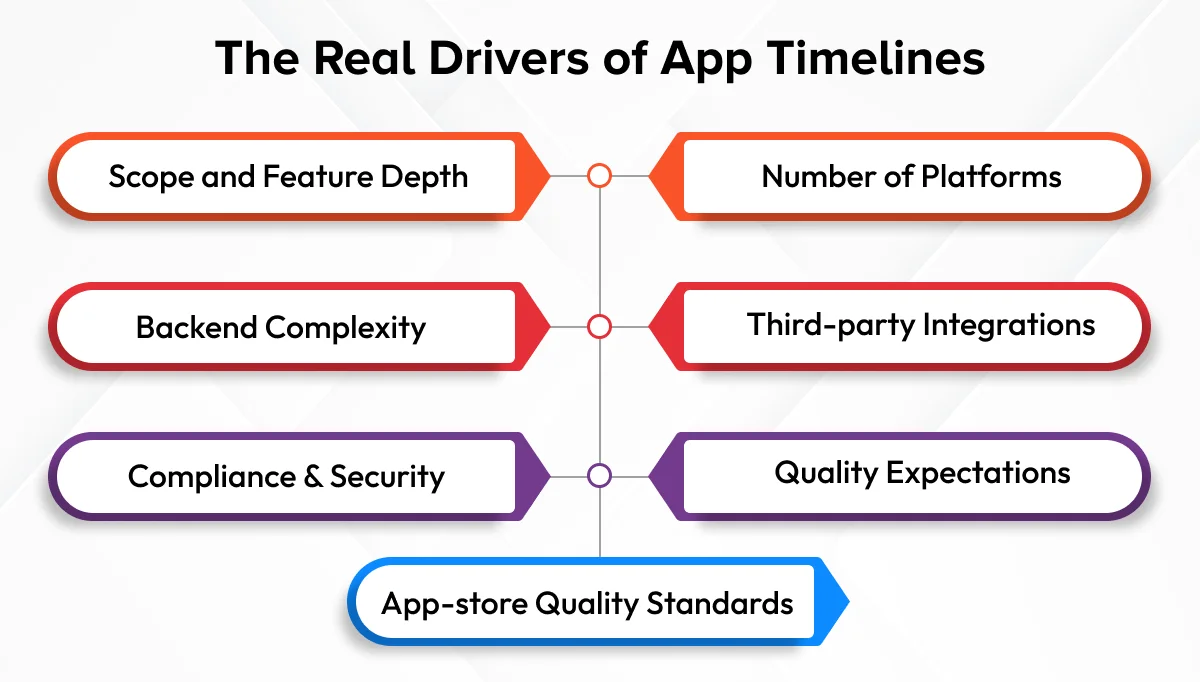
The Real Drivers of App Timelines
Before we discuss the months or timelines, it is necessary to understand the core components that extend the process of app development delivery. App timelines are not fixed formulas; they are shaped by decisions made early on and then adjusted throughout the app development project.
- Scope and Feature Depth
The number and depth of these apps’ features impact the overall development time. Basic authentication generally differs from complex user roles, payments, and real-time chat. There are also maps and admin dashboards that demand some additional planning, testing, and proper iterations.
- Number of Platforms
How long does it take to develop an Android app? Or an iOS app, or both? These significantly affect the overall timeline of app development. A single-platform app moves faster while supporting multiple platforms. However, the process requires proper development, additional testing, and smart coordination. A mobile app development company can help in this case by ensuring consistent functionality and experience.
- Backend Complexity
Apps that rely on some custom APIs, complex databases, real-time data syncing, or some multi-tenant architectures. These require more than just the development time. Backend logic often grows to achieve greater scalability, performance optimization, and readiness for specific features.
- Third-party Integrations
Integrations like payment gateways, CRMs, SMS/OTP services, analytics tools, or logistics systems add the proper time due to easy configuration, edge-case handling, security checks, and greater dependency. For this, it is necessary to rely on external provider documentation and stability.
- Compliance & Security
Industries such as fintech and healthcare often require additional development cycles for security compliance, encryption, and data storage. Audits and proper threat modeling also play crucial roles. In such cases, meeting regulatory standards is also essential and cannot be done without risk.
- Quality Expectations
High expectations for superior app performance, offline functionality, crash-free sessions, and wide device compatibility are must-have demands of modern app users. Such apps usually require extensive testing. When you hire mobile app developers, they dedicate their time to refining, optimizing, and validating the app to achieve the best outcome.
- App-store Quality Standards
App stores generally become much stricter. Between early 2024 and April 2025, Google Play will also remove millions of low-quality apps, pushing the teams to invest more time in rigorous testing, proper security compliance, and policy-aligned development practices.

How to Make an App? Check the Process Breakdown
How long does it take to develop an app? The proper app development journey unfolds in multiple phases. Each phase contributes to the duration of the app or project. However, if you want to understand how long it takes to develop an app, it involves breaking down all these phases:
1. Discovery Phase
The discovery phase serves as the core foundation for planning the app development. It includes some crucial activities like ideation, validation, and proper competitor research. This is where the spark of your app idea successfully transforms into a well-defined concept.
During this phase,some on demand app development services vary in complexity based on your idea. This is because, in this phase, developers typically allocate a few weeks to a couple of months. This initial investment in time pays off by refining your app’s concept and then setting the stage for a smoother and seamless workflow.
2. Design Phase
Designing a mobile app is all about striking the right balance between aesthetics and functionality. To understand how long does it take to develop an iOS app or an Android app, it is necessary to explore the steps that stand behind the overall app design, as outlined by the best UI/UX design agencies:
- Wireframing (UX) Takes 2-4 weeks:
- Outlining an app’s overall layout and proper navigation
- Ensuring a seamless and logical flow that ensures easy user interactions and smooth screen transitions
- Conceptualization (UI) Takes 1 week:
- Brainstorming multiple design concepts
- Creating rough sketches or basic wireframes
- Planning (UI) of 3-6 weeks:
- Implementing the visual design that would be present in the app’s interface
- Fine-tuning multiple elements like buttons, icons, and overall layout. These ensure proper consistency and responsiveness.
- Prototyping (UI/UX) Takes 2-3 days:
- Developing some prototypes to assess user behavior
- Testing and fine-tuning the app prototype based on the usability feedback
3. Development Phase
The development phase includes proper coding, the latest database development, and seamless integration of some of the latest features. However, below, we are mentioning the latest development process for some parts that help you find out how long it take to build a mobile app:
- Project setup (1-2 weeks):
- Setting up certain development environments and the latest tools
- Establishing the accurate team roles and responsibilities
- Front-end development (4-12 weeks):
- Writing code for UI/UX
- Implementing all the design elements while ensuring visual consistency
- Incorporating some interactive features and functionalities
- Backend development (6-12 weeks):
- Building server-side logic and managing the latest databases
- Integrating third-party services and APIs
- Ensuring secure data handling and storage
- Selecting an exclusive and reliable VPS infrastructure that supports your backend architecture
4. Testing Phase
Once your app takes proper shape, the focus shifts to testing. Mobile app testing also ensures that your mobile apps function seamlessly across different devices, the latest operating systems, and multiple scenarios. When you hire dedicated developers, they help identify and address some bugs, glitches, or performance issues. During the testing phase, the developers successfully created some of the latest templates and delivered a reliable app that meets the overall clients’ needs.
As per Zscaler’s report, 239 malicious apps were downloaded over 40 million times from Google Play between June 2024 and May 2025. These highlight the overall need for safer engineering and proper reviews.
Also, remember that launching your app is not the end of the app development journey. Post-launch activities, such as gathering all the latest user feedback, monitoring performance, and implementing the latest updates, collectively help shape the app’s overall functionalities.
Some Typical App Development Timelines Based on Real-World Projects
Every app has its own features depending on the complexity, user demands, and feedback received from users. When you hire dedicated resources, you can expect the best outcome. Below, we have created a table mentioning such aspects.
| App Type | Typical Timeline | What Usually Drives the Time | Real-world App Example |
| Fitness app | 8 – 12 weeks | User profiles, workout libraries, progress tracking, reminders, and wearable integration. | Nike Training Club |
| eCommerce App | 16–24 weeks | Product listings, advanced search, cart and checkout, payment gateways, order tracking, seller dashboards, and admin management systems. | Amazon |
| Social Media App | 20–30 weeks | Real-time feeds, messaging, notifications, media uploads, content moderation | |
| Food Delivery App | 16–22 weeks | Customer, restaurant, and delivery partner workflows, live order tracking, maps, payments, and operational dashboards. | Uber Eats |
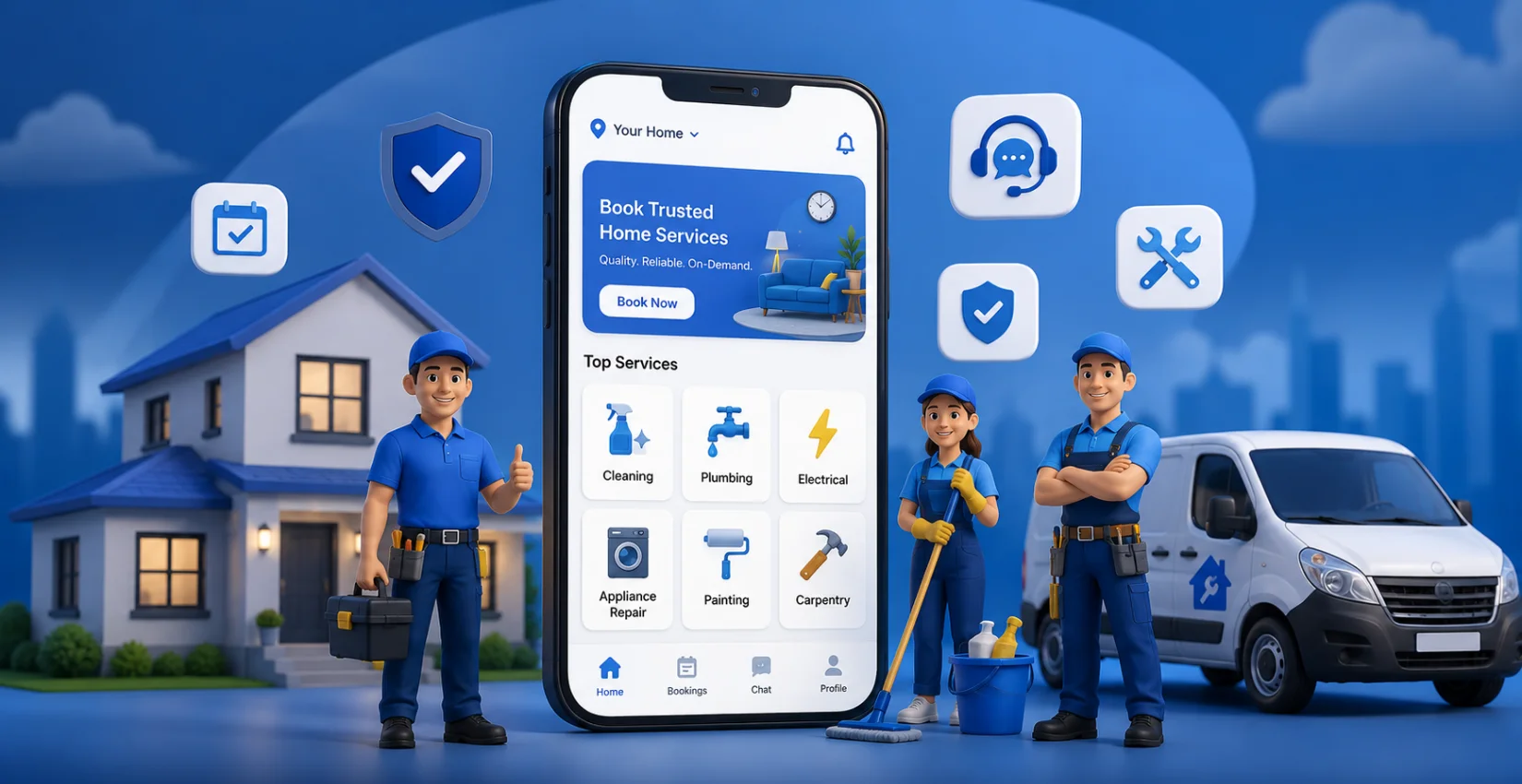
| On-Demand Service App | 18-26 weeks | Booking systems, provider availability, pricing logic, location tracking, reviews, and multi-role admin controls. | Urban Company |
| Fintech / Wallet App | 24–36 weeks | Secure authentication, payment processing, KYC, encryption, compliance checks, fraud detection, and extensive security testing. | Paytm |
| Healthcare App | 20–32 weeks | Appointment scheduling, patient records, secure data storage, teleconsultation features, and healthcare compliance requirements. | Practo |
| SaaS Business App | 14–22 weeks | Role-based access, dashboards, analytics, integrations, subscription billing, and scalable backend architecture. | Slack |
| EdTech / Learning App | 12-20 weeks | Course management, video streaming, quizzes, progress tracking, certifications, and engagement features. | Coursera |
| Marketplace App | 22-34 weeks | Multi-user roles, listings, search, payments, reviews, dispute resolution, and complex admin moderation workflows. | Airbnb |
Conclusion
How long does it typically take to develop an app? The answer to the question is complex and depends on multiple requirements; the features you want within the app, the team you work with, and, of course, the development processes you follow matter here. While a simple app can be developed within a few months, similarly, a feature-rich app could be a multi-year endeavor too. Overall, the timeline for development is more than a number. iOS or Android app development involves overall complexity and certain features that bring the latest digital product to life.



 Get in Touch
 By
By September 30, 2026