



Imagine turning an idea into a digital asset that moves value globally in seconds. That is the real power behind crypto token development today. Entrepreneurs everywhere are racing to launch tokens before competitors do. Most guides skip the practical details founders actually need to know.
This blog breaks down everything, from token types to real costs. By the end, you will know exactly what it takes to build one.
Crypto Token Development: What is it and Global Market Size?
Crypto token development is the creation of digital tokens that are built on an existing blockchain. Unlike coins, tokens can operate without their own blockchain to operate. They are useful or representative of ownership or value in a particular application.
In recent years, the global blockchain market surpassed the billion-dollar mark. Analysts believe the next decade should bring steady growth of around double digits. The growth is driven by trends in DeFi, gaming, and real world asset tokenization.
With the expansion of the business perspective, tokens are now considered an actual revenue generator. This is the reason behind the popularity of crypto token development services.
- In the year 2026, around 12 million new people in USA hold cryptocurrency as per the report published by State of Crypto Holders Report.
- The report published by Markets and Markets predicts that the crypto token market will reach $5.6 billion at the end of 2026.
- The Polaris Market Research has predicted that the CAGR will be at 18.9% (2026-2034).
- The token development market will reach 23.98 billion by the year 2034.
Crypto Token vs. Crypto Coin: The Difference Everyone Gets Wrong
The two terms are often used interchangeably, with very different meanings. A coin works on one of its own separate blockchains such as Bitcoin or Ether. Smart contracts are used to create a token, which sits on an existing blockchain. This is an important distinction to keep in mind when creating your crypto coin development strategy.
| Feature | Crypto Coin | Crypto Token |
| Blockchain | Has its own native blockchain | Runs on an existing blockchain |
| Development effort | Requires building a full network | Uses smart contracts, faster to launch |
| Examples | Bitcoin, Ether, Litecoin | USDT, UNI, ApeCoin |
| Primary use | Store of value, network fees | Utility, governance, rewards, access |
| Cost to build | Higher, needs network security | Lower, depends on chain and features |
Why Independence and Decentralization Make Custom Tokens Worth Building?
Custom tokens are a way for companies to have complete control over the supply, the rules, and the logic for distributing the tokens. This independence means that no third party will be able to freeze funds or throw unexpected amendments at you. The benefits of a custom blockchain platform independence and decentralization go beyond control.
Unlike traditional platforms, decentralized systems eliminate single points of failure. Users are okay with a system that doesn’t let one person run it freehand; truthfully, that’s the only way to get their trust.
This can directly correlate to increased community adoption and loyalty. That translates to improved retention and organic growth for founders down the road. A successful token also allows for new revenue models to be used.
The Different Types of Crypto Tokens You Can Develop
Not all tokens can be used for the same purpose and choosing the right type is important. There are six major categories of the kinds of projects that most founders create today, so let’s go through them.
Utility Tokens
The tokens provide access to a particular product, service or feature of a platform. Users pay for them to get access to the app functions, discounts, or premium functions.
Security Tokens
These are an example of real asset ownership, such as equity, real estate, and bonds. They are under financial regulations and it is crucial that they are legal in here.
Governance Tokens
These tokens are used when voters approve protocol changes and future upgrades. They help communities actualize their control over the evolution of a project over time.
Payment Tokens
These tokens are designed exclusively for transactions and can be used to make transactions. They are used by many businesses to lower the costs associated with using a traditional payment processor.
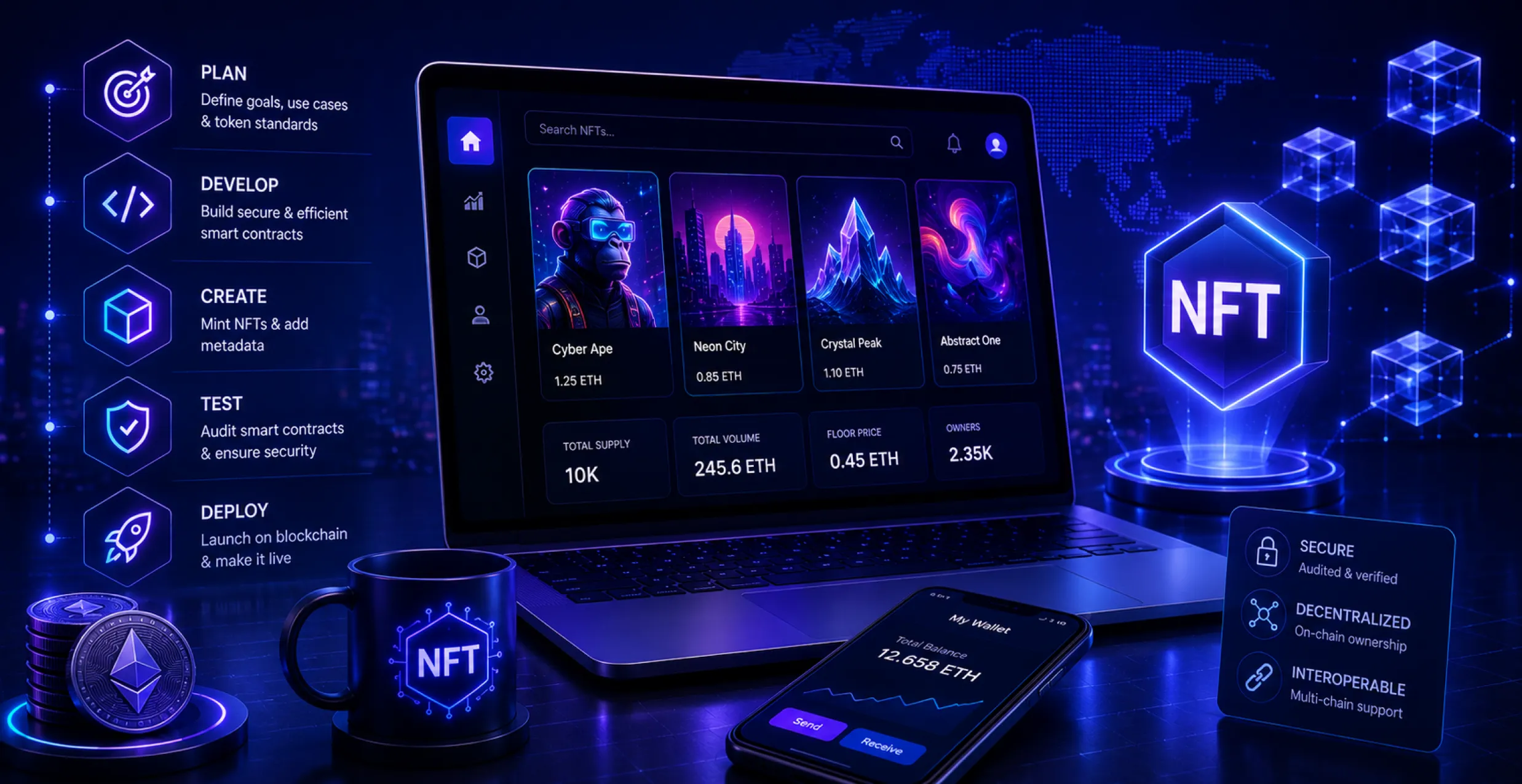
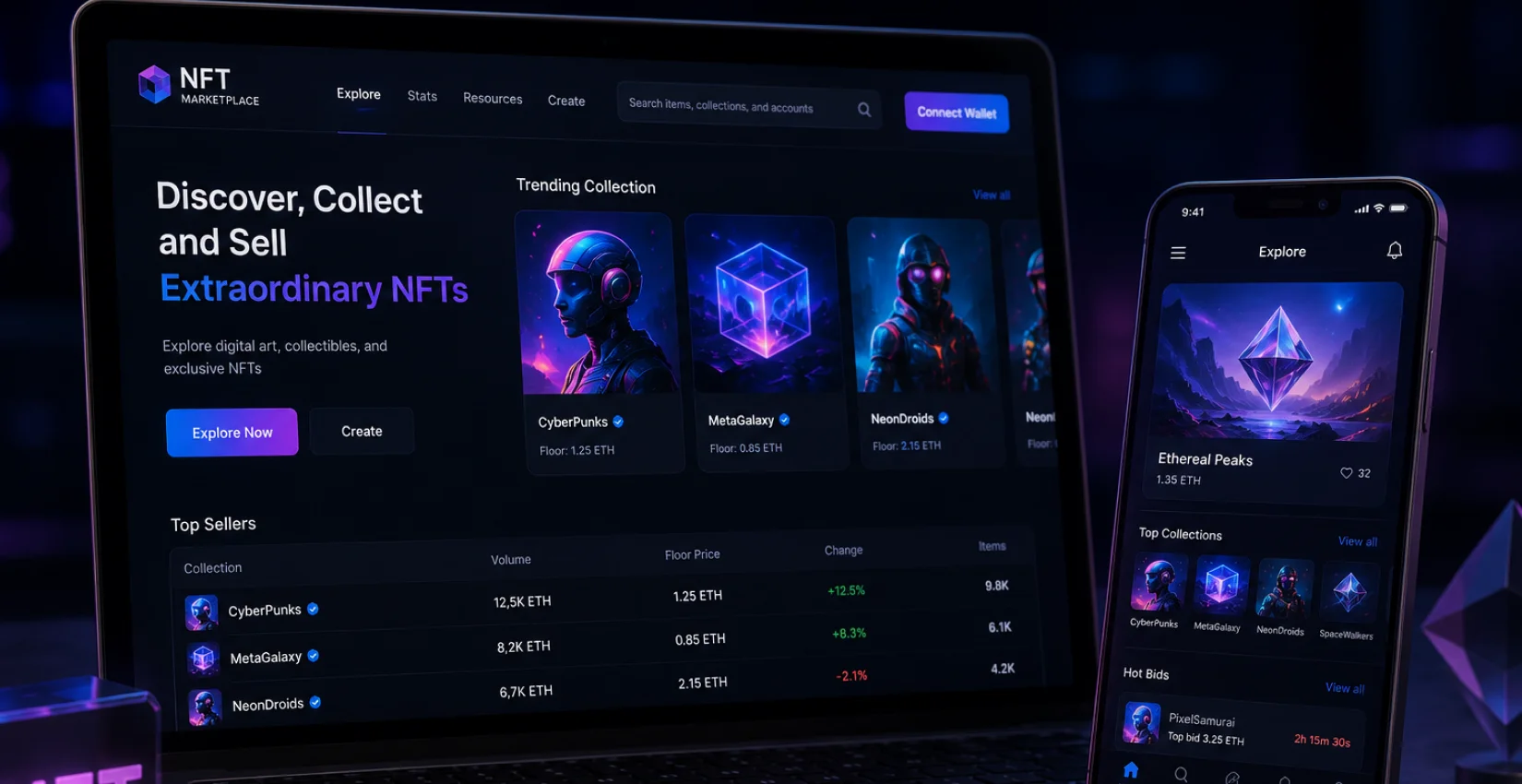
Non-Fungible Tokens
No two NFTs are the same and can’t be swapped for an equal amount of another. Imagine a game such as Axie Infinity where each creature is an NFT that is unique to the game.
Stablecoins
These tokens peg their value to a stable asset, usually a fiat currency. They decrease volatility, so they are beneficial for all sorts of payments and also savings.
Ethereum Token Development: ERC-20, ERC-721, and Where It Fits Today?
Today, Ethereum is the most popular network for the deployment of new digital tokens. It provides known standards, good developer tools and an established user population. But there are 6 things you should know before you start adding on to it.
ERC-20 Standard
This standard establishes rules for fungible tokens (tokens with equal value). This is a widely used format for most utility and payment tokens to this day.
ERC-721 Standard
This standard is used for NFT development, which each have unique properties. It is a standard that is heavily used for digital art, games and collectibles.
ERC-1155 Standard
This is a newer standard that enabled the fungible and non fungible tokens in one contract. Gaming platforms are fond of it since it cuts down the transaction costs greatly.
Smart Contract Security
To avoid exploits, all Ethereum tokens rely on secure and audited smart contracts. Audits are never an option, as one bug can be a drain on funds.
Gas Fees and Scalability
The transaction fees charged for Ethereum transactions constantly change in line with the level of network demand and congestion. Many new projects benefit from the cost savings achieved with layer two solutions.
Ethereum remains the leader of the industry in terms of liquidity, tooling and institutions’ trust. This is a good place to begin for the majority of founders, which is why you can consider ethereum token development services.
Bonus Read: How much does it cost to develop an ICO in 2026?
Comparing Blockchain Networks for Token Development
Below is the comparison table of token development through different blockchain networks.
| Blockchain | Consensus Mechanism | Avg. Gas Fee | Transaction Speed | Smart Contract Language | Best For |
| Ethereum | Proof of Stake | High ($1–$20+, varies with congestion) | ~15-30 TPS (base layer) | Solidity | Institutional trust, highest liquidity, DeFi/NFT ecosystems |
| BNB Chain | Proof of Staked Authority | Low ($0.05–$0.50) | ~100+ TPS | Solidity | Fast, low-cost deployment; retail-focused projects |
| Polygon | Proof of Stake (Ethereum L2) | Very Low (<$0.01–$0.05) | ~65,000 TPS (theoretical) | Solidity | Cost-effective scaling with Ethereum-level security |
| Solana | Proof of History + PoS | Very Low (<$0.01) | ~2,000–4,000 TPS (real-world) | Rust | High-speed gaming, DeFi, high-throughput apps |
| Arbitrum | Optimistic Rollup (Ethereum L2) | Low ($0.10–$1) | ~40,000 TPS (theoretical) | Solidity | Ethereum security with lower fees |
| Avalanche | Avalanche Consensus | Low-Moderate ($0.10–$1) | ~4,500 TPS | Solidity | Enterprise/custom subnets, fast finality |
Gas fees and TPS figures fluctuate with network congestion and are approximate as of mid-2026. Always check live network data before finalizing your blockchain choice.
The Crypto Token Development Process: Step by Step Guide
Creating a token isn’t as simple as writing code and deploying a contract. This is step-by-step and the most reliable process for developing a crypto token followed by the most reliable teams.
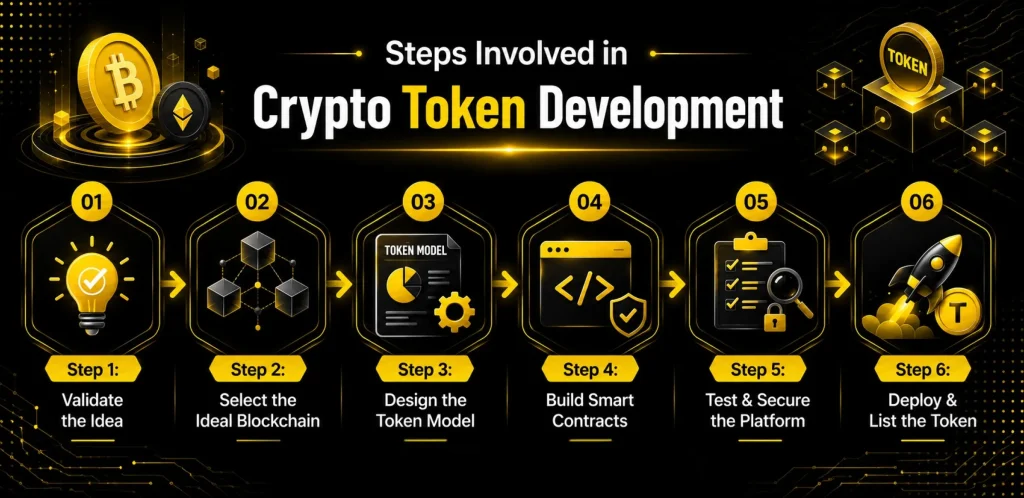
Step 1: Idea Validation and Use Case
All successful tokens have a clear problem that they solve for the user. Before attempting to write any code, teams research demand, competition, and real world use cases.
Step 2: Choosing the Right Blockchain
Founders need to select a chain that’s fast, cost-effective and community accessible. There are several trade-offs to consider among the various options available for Ethereum, BNB Chain, Solana, and Polygon.
Step 3: Tokenomics Design
This step carefully outlines total supply, distribution schedule and incentive structures. One of the main factors that contribute to the failure of token launches is poor tokenomics.
Step 4: Smart Contract Development
The actual code governing the action of the token is written by the developers. Smart Contract Development encompasses minting guidelines, move logic and permissions for managers.
Step 5: Testing and Auditing
Prior to launch, contracts are thoroughly tested on testnets and subjected to security audits. This step will spot weaknesses that might be beneficial to the users in a real-life situation of money loss.
Step 6: Deployment and Listing
After being audited, the token is deployed on the mainnet and listed on exchanges. It’s about this same turning point that marketing and community building start.
Tools and Technologies Powering Modern Token Development
The tools that make up a token secretly decide its speed, security, and over the long haul adaptability. Today, in particular, below are the major technologies that form the basis of serious projects.
Solidity and Smart Contract Languages
Currently, Solidity is the most popular language for developing Ethereum smart contracts. Other chains use languages other than Solidity, such as Rust or their own respective language.
Blockchain Networks and Layer Twos
Such networks as Polygon and Arbitrum offer the ability to lower transaction costs, without compromising the security of Ethereum. This translates to cheaper deployment of tokens without compromising on trust and reliability.
Oracles
Smart contracts are linked to real world data through Oracles. At the moment, the most trusted oracle provider in the industry is Chainlink.
Wallet Integration Tools
You can use tools such as MetaMask SDK and WalletConnect to connect wallets to your app. When the DeFi wallet is seamlessly integrated, it significantly enhances user onboarding and retention.
Decentralized Storage
The token metadata and NFT files are stored on platforms such as IPFS, avoiding the risk of central servers. This ensures that digital assets can be accessed even in the event of a server failure.
Security Auditing Frameworks
Smart contracts can be analyzed for common vulnerabilities at an early stage with tools such as Slither and MythX. Together with manual audits, they provide a robust defense layer.
These are the same technologies used in crypto development at leading firms worldwide.
Beyond the Token: How DApps, DeFi Platforms, DAOs, and P2P Exchanges Connect?
A token isn’t an ecosystem by itself; it’s a larger digital ecosystem. Let’s now look at how these various pieces fit together in practice.
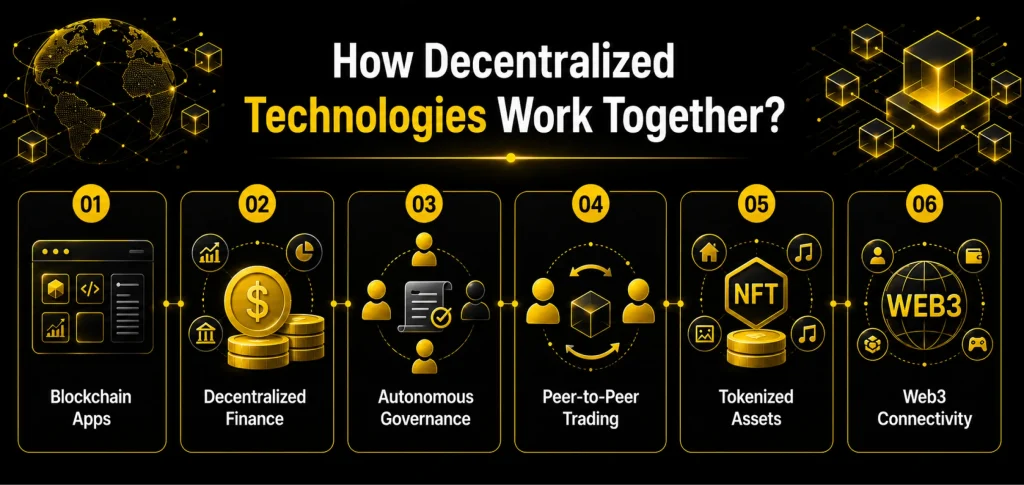
Decentralized Applications
A decentralized application development company often can build tokens from scratch. The following are applications that employ tokens as payment, reward or access control.
DeFi Platforms
DeFi platform development company creates lending, staking, and trading platforms based on your token. This means continuous usage that ensures long-term retention of the holders.
DAOs
Now a lot of founders are looking into DAO development services in USA to include community government. Consider MakerDAO, where token holders actually vote on the treasury decisions.
P2P Exchanges
A p2p crypto exchange development project enables users to exchange tokens without any intermediaries. This lessens fees and provides traders greater control over trades.
Asset Tokenization
An asset tokenization development company is a service that enables the creation of digital tokens representing real assets, which can then be traded. This is an approach that works with real estate, art, and commodities.
Web3 Integration
Now, Web3 development services are crucial for modern projects, as they facilitate seamless integration and communication between wallets, smart contracts, and user interfaces. This makes seamless experience seem like a reality for users, everywhere.
How Much Does Crypto Token Development Cost?
The pricing is heavily dependent on complexity, type of blockchain and features required. Below are realistic ranges and this will help you to budget accordingly.
Cost by Token Type
| Token Type | Estimated Cost Range |
| Basic Utility Token | $2,000 to $8,000 |
| Governance Token | $6,000 to $15,000 |
| Security Token | $15,000 to $40,000 |
| NFT Collection Contract | $3,000 to $10,000 |
Price by Blockchain Network
| Blockchain | Relative Cost Level |
| Ethereum | High, due to gas fees and audits |
| Polygon | Moderate, lower fees, strong tooling |
| BNB Chain | Low to moderate, fast deployment |
| Solana | Moderate, requires Rust expertise |
Cost by Additional Features
| Feature Added | Extra Cost Estimate |
| Staking Mechanism | $3,000 to $7,000 |
| Vesting Schedule Logic | $1,500 to $4,000 |
| Multi chain Bridge Support | $8,000 to $20,000 |
| Security Audit | $2,000 to $10,000 |
The final crypto token development cost always depends on your specific project scope.
How to Choose the Right Crypto Token Development Company?
You can make your project succeed or fail with the right and proper partner. Do these six essential things before you sign the agreement.
Proven Track Record
Review finished projects and request case studies from actual projects. A good portfolio demonstrates the team’s ability to apply itself to the issues in the real world.
Security First Approach
This is the time to inquire how the team will conduct an audit, testing, and vulnerability management prior to launch. Security should never be an after-thought in any proposal.
Transparent Pricing
A trustworthy blockchain development company clearly communicates its costs, and there are no hidden fees. Transparency at the beginning helps to avoid the budget shock later on.
Post Launch Support
After launch, tokens should be updated, monitored and supported by the community. Select a team that provides ongoing maintenance and not deployment.
Regulatory Awareness
Good teams know the compliance rules for various areas and tokens. This ensures your business won’t be facing legal problems after it is launched.
Communication and Process
Search for teams with transparent blockchain development consulting for the entire project. Trust is established from the get-go with regular updates and honest timelines.
What are the Different Use Cases of Token Development?
Today, tokens are used in more industries than the financial and trading sectors. Let’s have a look at 6 real world use cases for now.
Loyalty and Rewards Programs
Brands do not reward customers with points but rather tokens that can be used to incentivize repeat purchases. This makes it an alternative to the old “loyalty programs” that can be traded, and there is more transparency in this regard.
Gaming Economies
The Play to earn games are games that require tokens for in-game currency, items and rewards. Players have real assets rather than lose them on server closures.
Real Estate Tokenization
Property shares are converted into tradable tokens, allowing investors to purchase partial ownership of properties. This makes real estate investing much more accessible.
Supply Chain Tracking
Tokens are the stamps that are used to validate the passage of goods in complicated, global supply chains. This provides added transparency that many traditional tracking systems don’t offer at all.
Fundraising and Crowdfunding
The process of raising capital for startups involves the sale of tokens, directly to early supporters and believers. This way, you will skip the usual venture funding gatekeepers altogether.
Healthcare Data Management
Tokens are able to manage permissioned, secure access to patient health records that are sensitive. This will provide more control of who can access the patient’s data.
Common Token Launch Mistakes That Cost Businesses Money
Funded projects that forget about basic project planning elements are doomed to fail. Here are six pitfalls to avoid before you get started.
Skipping Security Audits
Without an audit, it’s open season for hackers to exploit any vulnerabilities in the contract as soon as it’s deployed. This single error has cost too many projects millions of dollars in the past.
Poor Tokenomics Planning
Lack of clarity on supply limits or unfair distribution of supply results in investor confidence evaporating rapidly. Carefully design tokenomics before writing any code for founders.
Ignoring Legal Compliance
Without regulatory oversight, it may result in later fines, delistings and closures. Each jurisdiction has its own approach to tokens, so research is of critical importance.
Weak Community Building
Without a community it is a dead project, with little user uptake and poor liquidity. The taking of months is required to build community trust, not days.
Overpromising Roadmaps
Unrealistic timelines hurt credibility if projects inevitably are delayed in the future. Sincere, realistic roadmaps generate much more long term trust.
Choosing the Wrong Development Partner
Unskilled teams often result in bugs, delays and security issues later on. That is why it is crucial to conduct a thorough background check on the crypto token development company.
Why Hire Octal IT Solution for Token Development?
Octal IT Solution brings real credibility to every blockchain project it delivers. The company holds an official membership with the Forbes Technology Council, a rare recognition. Our team includes certified blockchain developers with hands-on production experience.
We have delivered technology services since 2007, across multiple industries globally. This experience means we understand both the technical and business sides. Clients get transparent pricing, honest timelines, and continuous post launch support. With the successful delivery of projects and high client satisfaction, we are having 4.6 Clutch rating.
As a trusted dApp development company, we handle everything from tokenomics to deployment. If you want a partner who treats your project like their own, we are ready.
Conclusion
Crypto token development is no longer a niche experiment for insiders only. It is a practical tool for businesses solving real problems now. From loyalty programs to fundraising, tokens open doors old systems cannot match.
The key is choosing the right type, chain, and partner. Octal IT Solution combines technical expertise with genuine business understanding for clients. Our certified team, proven history, and transparent process make us a safe choice.
Ready to turn your idea into a working token? Reach out to Octal IT Solution today, and let us build it together.
Read More : cryptocurrency exchange development companies


 Get in Touch
 By
By August 7, 2026