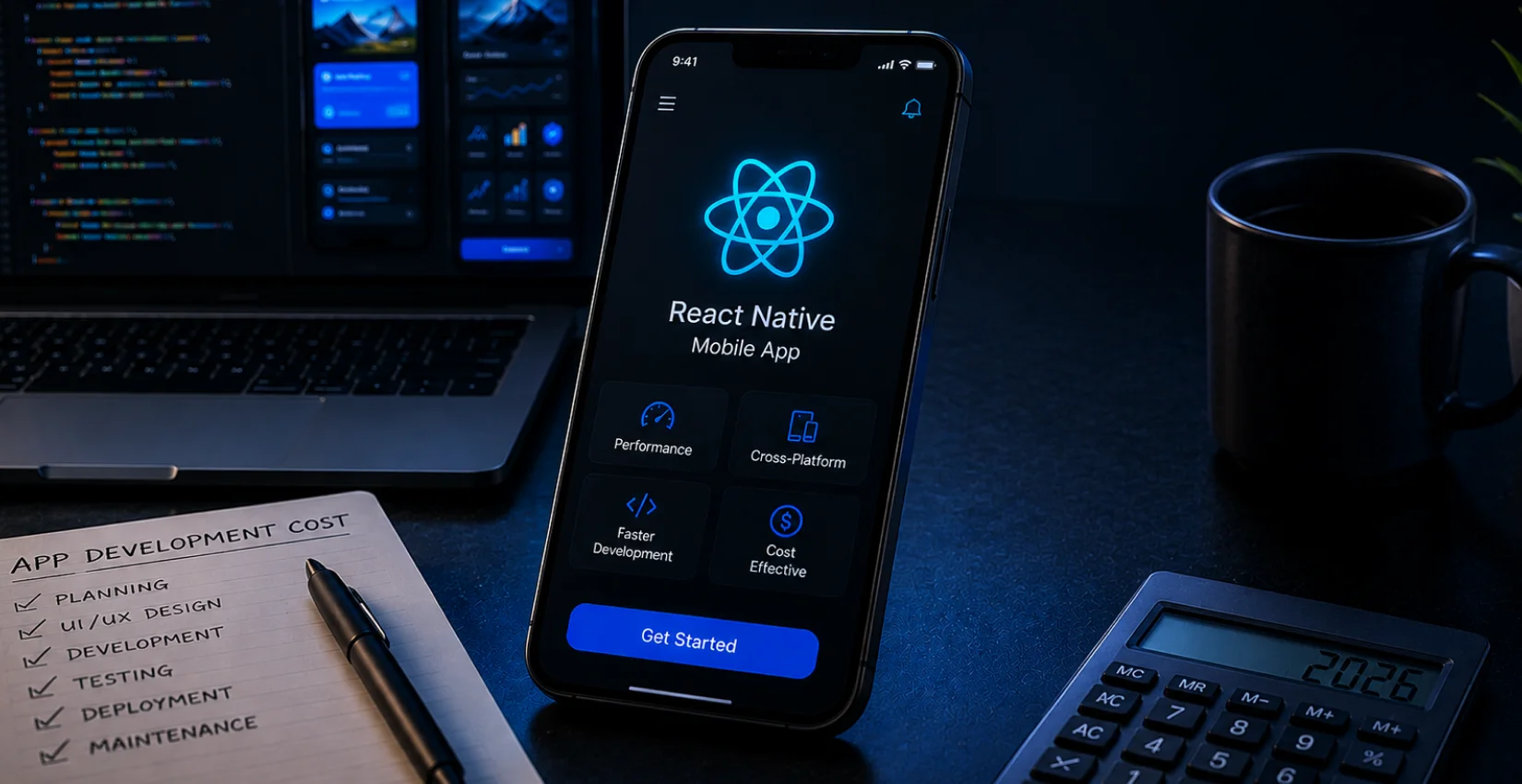




The need for excellent mobile apps has been growingrapidly as companies try to attract and retain users both on desktops and smartphones. New frameworks have made the app development process across different platforms much quicker and more cost-effective.
Well, React Native is the one leading the battle for the hearts of developers, providing companies with the chance to create robust applications for both Android and iOS by writing the code only once. Collaborating with a React Native app development company can drastically cut down your time to market while still offering you a native-like app performance.
Market Outlook and Future Growth of React Native (2026-2030)
A recent report by Intel Market Research predicts that the market for React Native app development will grow from $350 million in 2025 to $499 million in 2031, with a CAGR of 6.6% (Intel Market Research).
The worldwide market for this technology, especially in the US and Asia-Pacific, is primarily driven by the growing adoption of cross-platform frameworks, the need for cost-effective solutions, and shorter time-to-market.
Rising Popularity of Cross-Platform Development
Modern businesses are looking for development frameworks that are not only efficient but also economical and will provide the same user experience across all types of devices. Cross-platform mobile app development is a solution that perfectly fits this need, as it allows reusing code across various operating systems.
The central aspect that differentiates cross-platform development from native iOS development is efficiency. Native applications always deliver top performance, but in return, they have to maintain two separate codebases for iOS and Android, which drives up their cost and time.
On the other hand, cross-platform frameworks like React Native bridge this gap by providing a unified development and maintenance experience that is characteristic of both startups and big companies.
Why Choose React Native?
React Native, which is developed and managed by Meta, has grown to be one of the most trustworthy frameworks in the mobile app world. It operates on the JavaScript and React architecture basis but uses the native platform features to provide quick, smooth, and scalable apps.
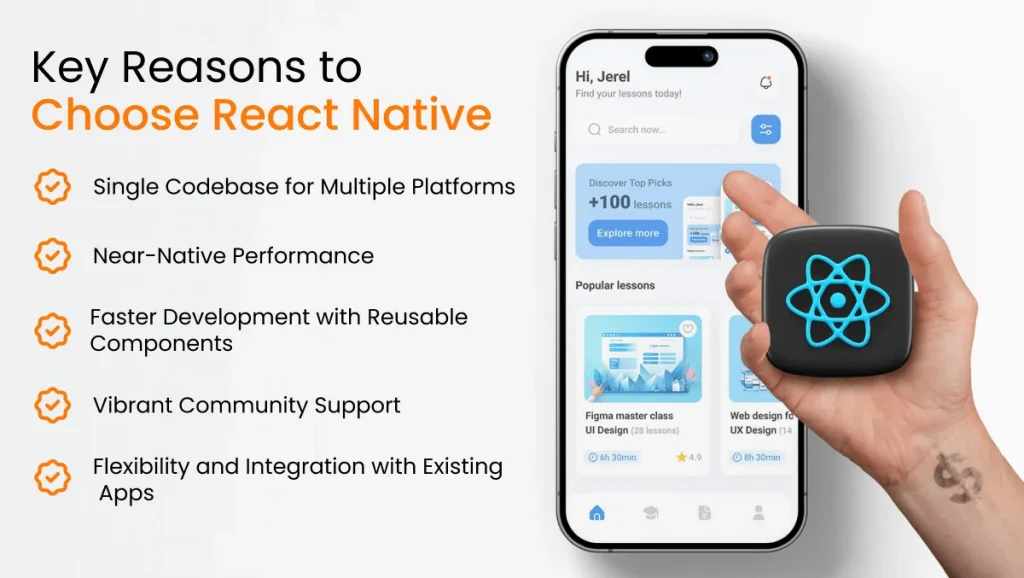
Key Reasons to Choose React Native
1. Single Codebase for Multiple Platforms
One writing will be for both Android and iOS platforms; this will be a great reduction in coding efforts and a significant speeding up of the delivery timelines.
2. Near-Native Performance
React Native can bring JavaScript code into native modules; thus, performance is very high, almost on par with native apps.
3. Faster Development with Reusable Components
The ready-to-use UI components, along with hot-reloading, make the development process simpler and faster, thereby improving overall efficiency.
4. Vibrant Community Support
With Meta and a robust open-source community backing, the React Native ecosystem is ever-changing and rich in libraries and plugins.
5. Flexibility and Integration with Existing Apps
Businesses can mix React Native modules with their older apps without having to do the entire rebuild process.
Partnering with a qualified React Native app development firm guarantees the maximization of these attributes for business growth and customer retention.

Comparing Modern Frameworks: Flutter vs React Native
The battle between Flutter vs React Native is the main topic of discussion in the cross-platform category. Flutter, which is basically a Google product, is developed using the Dart language and, at the end, it compiles into native code directly, whereas React Native forms an indirect process using JavaScript and React’s principles.
With Flutter, you get a consistent UI and performance, denoting starting in the middle of the pack. On the other hand, the Native has the upper hand with flexibility, community support, and the ability to use different technologies. In addition, the lack of React Native’s learning curve is a huge advantage for teams that already have experience in JavaScript or React.
The selection process of Flutter vs React Native pivots on project objectives, available resources, and the need for scalability. Many leading React Native Development companies still opt for React Native for its maturity, ecosystem integrations, and large Developer support network.
React Native vs Other Popular Frameworks
1. Angular JS vs React JS
The debate between Angular JS vs React JS is almost a prime consideration when it comes to the modern technology stack. Angular offers a complete solution; on the other hand, ReactJS concentrates on UI components that are simple yet very efficient.
The mobile realm has been conquered by React Native, which is an extension of React’s core functionalities. This empowers the developers acquainted with ReactJS to quickly switch over and develop cross-platform applications, along with the existing support of a single framework.
2. Cross-Platform vs Native Code
React Native not only provides development with a resource-friendly approach but also offers developers flexibility in creating high-quality apps with the least maintenance. If businesses make React Native app development company their partner, they will enjoy the reduced React Native app development cost and quicker launch, which are the benefits of these efficiencies.
Benefits of Using React Native for Enterprises
Companies are switching their mobile projects to React Native; the implementation of React Native can significantly alter the app strategies for enterprises. Below are some of the factors driving organizational migration towards React Native.

1. Reduced Development Time
Making use of components and a common codebase, the development time is, in a great measure, slashed.
2. Cost Optimization
The service of one team with React Native would be sufficient for both iOS and Android, instead of separate teams for each.
3. Enhanced Performance
React Native has a native code and JavaScript interconnection that is very efficient and ultimately ensures great UI rendering.
4. Real-Time Updates
The hot-reloading functionality instantly applies all modifications without requiring the app to be redeployed.
5. Future-Ready Scalability
The component-based structure of React Native is the reason why it is very convenient to resize the applications and also handle different releases.
From the perspective of mobile applications, an enterprise that is looking for a powerful option with a budget-friendly price tag will definitely put React Native app development cost as a very important factor when calculating their ROI. The cost will be determined by some factors like the app’s complexity, the degree of API integrations, and the UI design. However, the initial investment is usually paid off by long-term benefits.
Cost Factors in React Native App Development
The React Native app development cost is one of the most frequently asked questions by businesses. The total cost can be very different from one project to another, but the cost has several factors that influence it.
- App Complexity – Simpler apps need less time for development and are therefore less expensive than multi-feature enterprise-grade apps.
- UI/UX Design – The complex, custom designs are time-consuming and thus consume more development time.
- Integrations – The APIs, third-party SDKs, and database connections add to the timeline and thus the costs.
- Developer Expertise – Selecting the right React Native app development firm means that you will have a good architecture and cost optimization.
- Maintenance and Updates – Future updates may increase the total cost, but are necessary to keep the performance up.
| Role / Cost Component | Approximate Cost Range (USD) |
| Junior React Native Developer | $50,000 – $70,000 per year |
| Senior React Native Developer | $70,000 – $120,000 per year |
| React Native Full-Stack Developer | $120,000 – $200,000 per year |
| Project Manager | $10,000 – $40,000 per project |
| UI/UX Designer | $15,000 – $50,000 depending on complexity |
| QA Engineer / Tester | Typically 10-15% of total project cost |
| API Integration Specialist | $3,500 – $5,000 per feature |
| Maintenance & Support | $5,000 – $10,000 per month or update cycle |
| App Complexity Impact | $10,000 – $350,000+ total project cost |
Real-World Use Cases of React Native
Many well-known brands that became successful turn to React Native for their Mobile Applications:
1. Facebook
Facebook created React Native so that they could expedite the Mobile App development process while still getting the native-like performance on both Apple and Android devices. By collaborating with a React Native application development firm, the business can mimic the efficiency and user experience of Facebook.
2. Instagram
Instagram brought in the React Native technology to streamline the app performance and boost the level of development, adjusting the speed of getting updates on a regular basis across the platforms. This is the point where the usage of a React Native app development company for cross-platform solutions comes in very handy.
3. Airbnb
Airbnb dabbled with React Native for the feature of cross-platform development that they could switch easily, and then, later on, concentrated on custom solutions. The initial success they had marks the reason why such companies often turn to the best React Native developers for building scalable mobile applications.
It is very clear from these cases that the industry leaders have faith in React Native for the strengthening of both the user and the developer experiences.
The Role of Top React Native Development Companies
Working with the top React Native development companies will ‘easily’ go through the idea-to-deployment process. Technical know-how, Agility, and performance optimization are skills that these companies possess, and hence, the businesses will be able to achieve scale and speed at the same time.
They also provide ReactJS development services for getting the web and mobile projects supported under a single tech stack, which leads to quick feature alignment and improved maintenance in the long run.
Future of React Native in Cross-Platform Development
React Native is consistently being developed and supported not only by the developer community but also by Meta to advance the core architecture. The addition of features like Fabric Renderer, TurboModules, and Hermes Engine will improve speed and performance like never before.
When weighing cross-platform vs native iOS choices, React Native is always at the forefront when balancing performance, scalability, and cost. Increasingly more companies are contributing to it, and the future is as bright as it has ever been.
How to Choose the Right React Native App Development Partner?
When it comes to choosing the right React Native app development company, experience is important, but equally important is having experience in the vertical the business is aligned with. Confirm the following:
1. Experience and Portfolio
The portfolio of apps they produced in the past, the success stories, and compatibility with technology.
2. Cross-Industry Experience
If a React Native app development company has experience in more than one vertical (healthcare, e-commerce, and fintech), it would be able to adapt better.
3. Post-Launch Support
Regular and continued updates, bug fixes, and performance optimization (like maintaining an automobile will keep the app alive longer).
4. Cost Transparency
Understand how and break down the cost of React Native app development to fit within your budget.
Like many technologies, hiring specialized React Native app developers positions companies to avoid risk, timelines, and increase quality alignment of apps with plans/strategies.
Conclusion: React Native Is Here to Stay
React Native has changed the game when it comes to mobile app development for businesses. Due to its ability to work on multiple platforms, lively ecosystem, and almost native performance, it provides the highest value for big companies. Going with a trustworthy React Native app development company allows businesses to obtain new features, increase their capacity, and cut down the development time significantly.
Digital transformation is in full swing, and React Native’s nature and efficiency have made it the best choice for mobile app success all the way through. Whether it is AngularJS vs ReactJS, Flutter vs React Native, or native iOS vs cross-platform that is being compared, React Native has always been the one winning in the areas of cost, speed, and flexibility.


 Get in Touch
 By
By September 3, 2026