


The modern concept of healthcare is not only to treat illnesses. It is also about treating the patients at all stages. Every interaction is important, starting with the process of booking an appointment up to the follow-up visits. However, it can be difficult to manage patient information, reminders, and communicate manually. This is where the healthcare CRM software comes in.
It stores patient data at a single location and simplifies the daily work of health professionals. This blog will discuss the use of CRM software for healthcare in patient management and care. You will know how the software helps healthcare providers to provide better patient care.
Market Statistics on CRM Software for Healthcare
- The market size of healthcare CRM solutions has been estimated to hit USD 30.65 billion in the year 2030. Its CAGR is increasing at 7.7% between 2024 and 2030.
- The market is already dominated by North America, where it has a huge market share exceeding 57% in 2026.
- It is estimated that 82% of hospitals will employ AI-based CRM systems this year. (Source)
What Is CRM Software for Healthcare and How Does It Work?
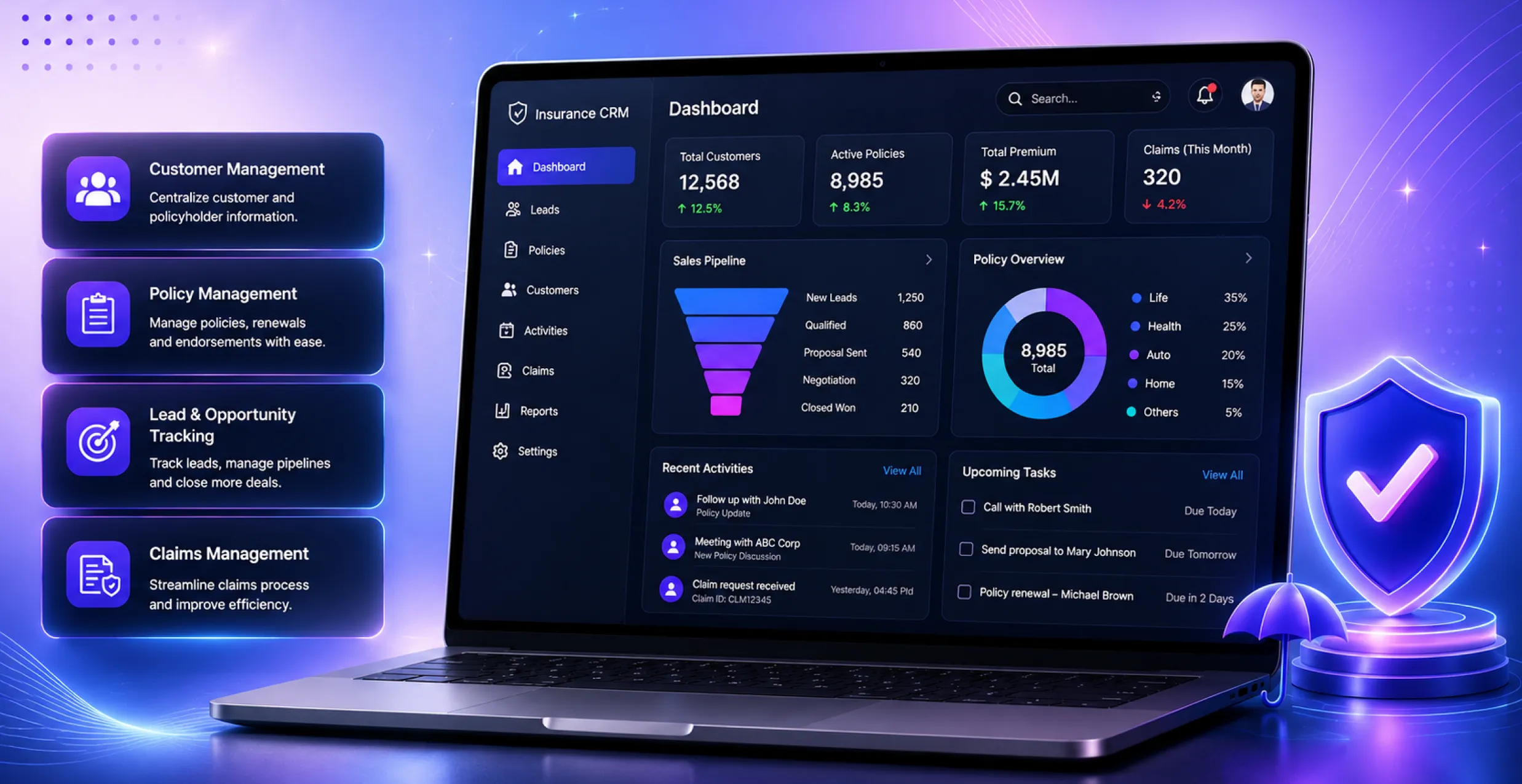
Healthcare CRM software refers to an online application used to assist hospitals, clinics, and other healthcare providers in managing patient relationships. It keeps the patient information, history of appointments, communication records, and follow-up schedule in a single location.
The software assists healthcare teams to remain organized and act accordingly to patient needs as they are required. It also enhances patient interaction by reminding, updating, and personalizing messages. All in all, the CRM for healthcare providers promotes more efficient coordination, reduces manual work, and contributes to a better patient experience across all touchpoints.
However, this is how Healthcare CRM Software works-
- Gathers and stores patient data in a hub.
- Checks the history of appointments and patient visits.
- Delivers automatic appointment and follow-up reminders.
- Handles back and forth with the patients via calls, emails, or messages.
- Helps health teams keep track of patient interaction and progress in care.
How Does CRM Software Improve Patient and Care?
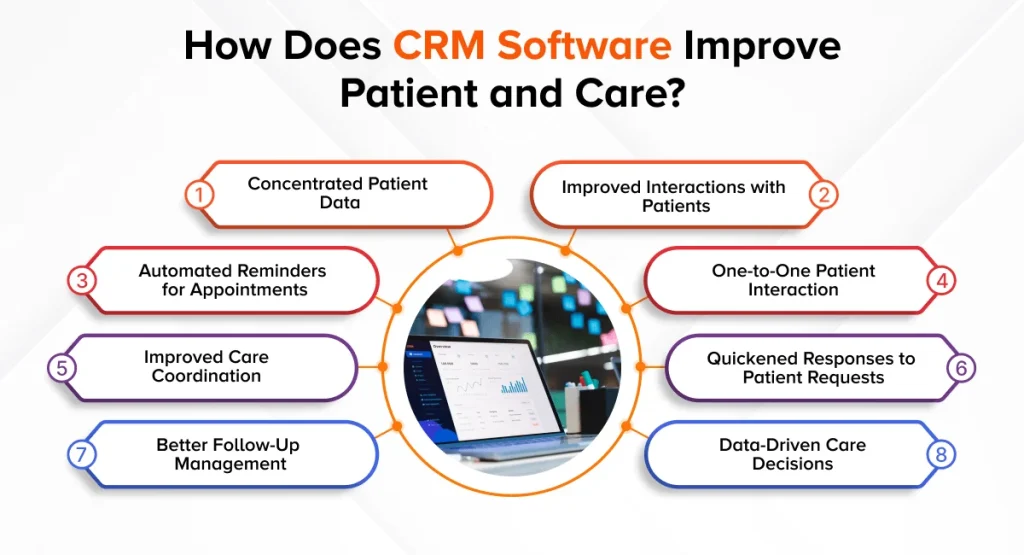
CRM software enables health practitioners to maintain relationships with their patients more effectively and systematically. But how does it improve patient care in general? Let’s know that!
Concentrated Patient Data
CRM software gathers the patients’ profiles, their contacts, visit history, and records of communication in a single location. This makes doctors and other staff members find precise data faster. It minimizes mistakes, time, and each patient gets the best treatment without having to repeat the same information at every appointment.
Improved Interactions with Patients
The CRM software assists medical staff in communicating with patients effectively. You can handle all the messages, reminders, and updates under one system. When developed by a reputable CRM software development company, the CRM facilitates personalized communication. This further enhances patient trust and involvement during the care process.
Automated Reminders for Appointments
CRM software for healthcare can make automatic follow-ups, appointments, and test reminders. This minimizes missed appointments and last-minute cancellations. This way, scheduling gets improved, and patients are kept updated. So, as a result, it saves manual labor and increases the efficiency of operations in general.
One-to-One Patient Interaction
CRM software monitors patient preferences, history, and behavior. This assists medical practitioners in transmitting clear messages and care notifications. Individualized interaction will then enable patients to feel appreciated. So, it enhances satisfaction and motivates patients to remain in contact with their healthcare provider in long-term care.
Improved Care Coordination
CRM software combines patient data that is acknowledged between and among departments, such as the reception, doctors, and billing departments. As long as an expert healthcare app development company develops it, the system guarantees quick data sharing. This enhances the coordination process, prevents information gaps, and enables the teams to collaborate to provide better patient care.
Quickened Responses to Patient Requests
CRM systems document patient inquiries, requests, and complaints on a single dashboard. This assists the staff in reacting promptly and delegating duties appropriately. So, quick reactions decrease patient frustration and create trust. It also makes sure that healthcare providers do not overlook any request during peak working hours.
Better Follow-Up Management
Follow-up visits, calls, and messages are automatically scheduled and tracked using healthcare CRM solutions. This would guarantee patients get their post-treatment care promptly. Also, follow-ups enable the identification of problems in a timely manner and enhance recovery. It also improves patient relationships that are long term.
Data-Driven Care Decisions
CRM software gives reports on patient contact, patterns of visits, and history of communication. Such insights enable healthcare providers to know the needs of patients. Informed decisions enhance the quality of services, care planning, and patient experience for ongoing enhancement of healthcare delivery.

How Much Does Custom CRM Development Cost for Healthcare?
The custom CRM Development cost depends on a number of factors including features, complexity of system and level of customization. A simple CRM can easily track appointments and handle the management of patients, making it affordable. More expensive systems are automated, have analytics and integrations with third-party systems.
However, the pricing is also subject to design, security, and compliance requirements. Custom CRM can cost between an average of $25,000 and $130,000 +. Though the ultimate cost would be based on your business objectives, the number of users and the scalability requirements. The appropriate CRM investment will guarantee improved performance, long-term value, and smooth operations in your organization.
| CRM Type | Approximate Cost | Estimated Development Time |
| Basic Healthcare CRM | $25,000 – $40,000 | 3-4 months |
| Mid-Level Healthcare CRM | $50,000 – $80,000 | 5-7 months |
| Enterprise-Grade Healthcare CRM | $80,000 – $130,000+ | 9 –12 months |
How Healthcare CRM Integrates with Existing Medical Systems?
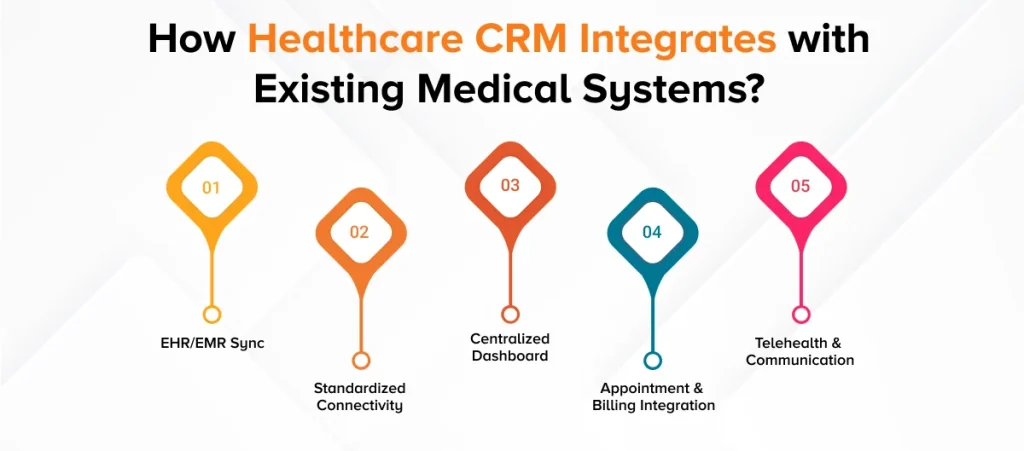
Healthcare CRM software operates with existing medical systems to improve patient management processes and enhance care coordination, and boost operational productivity. Best CRM software for healthcare industrysystem connects with EHRs, billing systems, and telehealth platforms to create secure and accurate unified records of patient information and communication.
What Are the Key Healthcare CRM Trends to Watch Out for in 2026?
With the ever-changing healthcare technology, the CRM systems are also evolving to suit the needs of both the patient and the provider. Now, there are a number of top CRM trends that are influencing how healthcare entities handle relationships and patient care in the year 2026.
AI-Powered Patient Insights
CRM systems are increasingly becoming based on artificial intelligence in healthcare. It assists in examining the behavior of patients, anticipating needs, and patient communication. The AI insights make patients more engaged and better-informed when making care choices.
Omnichannel Patient Communication
Patients demand to have a smooth channel of communication, such as ema
Key Integration Points:
- EHR/EMR Sync: Automatically retrieves patient records together with their scheduled appointments and their complete treatment record.
- Standardized Connectivity: The system employs APIs and HL7 and FHIR to enable users to transfer data between different networks in a secure and efficient manner.
- Centralized Dashboard: The system integrates data from various sources to create an all-encompassing view of patient information.
- Appointment & Billing Integration: The system automatically handles reminder notifications together with payment processing and insurance information changes.
- Telehealth & Communication: The system monitors both virtual medical sessions and all patient contact occurrences.
Also Read: Benefits of Health Information Exchange (HIE) Software Development
Salesforce vs HubSpot vs Zoho – Which Healthcare CRM Is the Best?
The appropriate Healthcare CRM selection should consider your organization’s size and workflow complexity, as well as your available budget. Here’s a brief comparison of Salesforce, HubSpot, and Zoho in the context of healthcare:
Salesforce
- Best for large hospitals and healthcare institutions with complex processes.
- Provides high customization options, advanced analytics capabilities, and complete medical system integration.
- The system requires high expenses while staff members need training to reach its full capabilities.
HubSpot
- Ideal for small to medium-sized clinics or practices.
- The system provides an easy-to-use interface together with patient engagement tools and marketing capabilities.
- The free version helps startups, while the premium plans become expensive.
Zoho
- The system provides an affordable solution that works well for small healthcare teams.
- The system provides flexible CRM systems that help organizations expand their business operations.
- Salesforce offers more powerful advanced features that exceed the capabilities of certain advanced functions.
Check Also: Continuity Of Care Software Solutions
Best Features of Healthcare CRM Software to Know About
CRM software in the healthcare sector simplifies the relationship between the provider and the patient and the daily operations. Here are some of the most important CRM software features that make healthcare CRM systems beneficial and efficient.
Centralized Patient Data
This feature is used to store all patient information in a single system. It consists of contact details, visit history, and communication logs. Access to information will assist healthcare staff in providing consistent and high-quality care.
Appointment and Schedule Management
The best CRM software for healthcare industry is used to manage appointments in an efficient manner. It helps in minimizing double bookings and errors in scheduling. Employees are able to update and manage schedules in real time.
Patient Engagement Tools
The feature is in favor of custom messages and care news. It assists in developing trust and enhancing patient satisfaction. So, ask your mobile app development services provider to add this feature to offer better care to all patients.
Follow-Up and Care Tracking
CRM applications do monitor the follow-ups of visits or treatments. It will guarantee that patients are promptly taken care of. The frequent follow-ups enhance health outcomes and patient loyalty.
Reports and Analytics
Patient activity and engagement are useful features of the best CRM for healthcare. This knowledge assists the practitioners in knowing the trends and enhancing services. This evidence-based practice results in improved care planning and operations.
il, SMS, chat, and phone. All of these touchpoints have become one view in CRM systems. This will provide prompt and consistent replies to enhance patient satisfaction.
Data Protection and Regulations
As the concern of data increases, security measures are being enhanced through CRM systems. Confidential patient data is secured by improved encryption, authorization, and audits. That is why many CRM Software Development Companies in the USA are taking this trend seriously as they face highly protective and strict regulations.
Mobile-First CRM Experience
Smartphones are being increasingly used to provide information to patients and the staff on the go. CRM systems are becoming mobile-friendly in terms of design and features. This trend enhances usability and makes the users connected at any place, at any time.
Patient Retention Predictive Analytics
Predictive analytics services assist healthcare teams in locating patients at risk of out-of-patient care. Providers are able to intervene with specific outreach by identifying patterns early on. This enhances patient retention and long-term patient relationships.
Conclusion
In summary, CRM software for healthcare is important in the management and care delivery of patients. It facilitates data organization, enhances communication, and facilitates better decision-making. Having the appropriate features and knowing the best trends, healthcare professionals will be able to establish a more powerful patient connection. As a result, it will provide consistent and high-quality care within a dynamic healthcare system.
Read More : Healthcare app development companies


 Get in Touch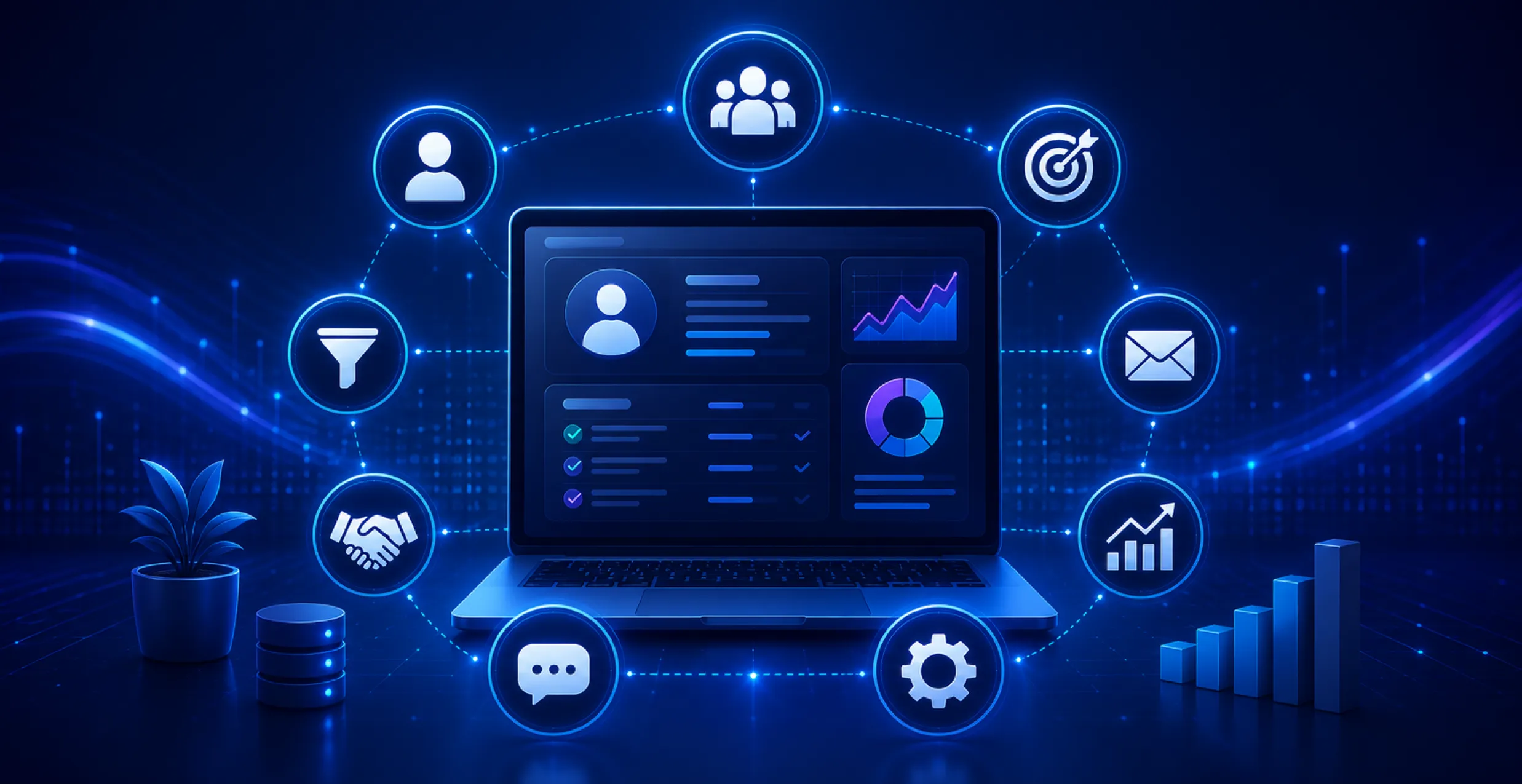
 By
By July 13, 2026