



Are you also one of the students who is feeling overwhelmed by studying alone? Are you getting distracted or unmotivated without the support of peers? You’re not alone!
If yes, then a virtual study group app might be your answer! Our virtual study group app development service is here to help students just like you.
In a fast-paced, digital world, learning together can make all the difference by boosting collaboration, accountability, and success. Virtual study group apps help to make connections with peers, share ideas, ask questions, and discuss challenging concepts in real time. Also helps to enhance the understanding of the material.
Understanding Virtual Study Group Apps
A virtual study group app is a digital platform that helps students to form study groups. They can collaborate from anywhere by bridging the gap between remote learners and their academic goals.
Additionally, it offers a dedicated space where the users can engage in group discussions, exchange notes, and review the study materials in real-time.
It offers a sense of community and provides continuous peer support and virtual study group apps that help students stay organized, motivated, and on track to achieve academic success.
By fostering a sense of community and providing continuous peer support, virtual study group apps help students stay organized, motivated, and on track to achieving their academic success.
Whether you’re preparing for exams, working on group projects or looking for assistance from fellow learners; make virtual study group app is the great solution. This application will turn the solitary task into a dynamic and enriching experience.
Join us to build virtual study group app development and discover how collaborative learning can lead to success and satisfaction in your academic journey!
Marketing Statistics for 2025
For 2025 and beyond, virtual study group apps are poised for major growth changes due to the increasing demand for mobile app learning and collaboration tools. Below are the marketing stats and trends to consider for virtual study group mobile app development:
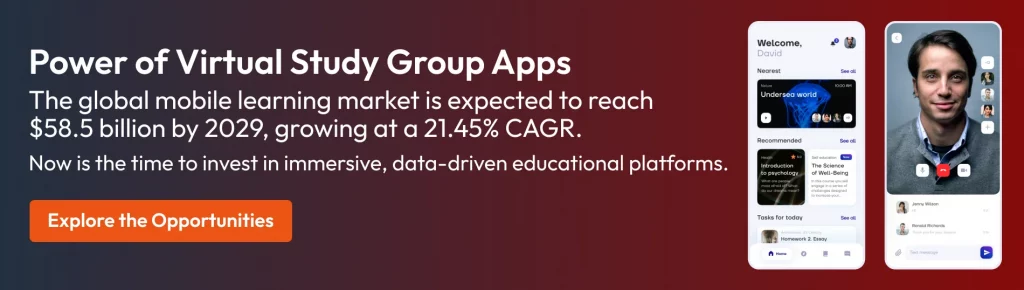
- According to research conducted by Lambda Test, the mobile learning market is projected to grow at a 21.45% CAGR from 2024 to 2029. Additionally, it will reach a value of $58.5 billion.
- Integrating the blockchain into creating a virtual study group app can assist in securing user data and academic credentials by increasing trust and privacy.
- According to Grand View Research, the AR/VR market, which is relevant for immersive learning apps, is expected to surpass $37 billion by 2025. It will result in significant growth in educational applications.
- The complete on demand app market is growing fastly. It is noted that by 2029, it will contribute to industries like food delivery that are projected to reach $320 billion by that time.
Features to Enhance Your Virtual Study Group App Development
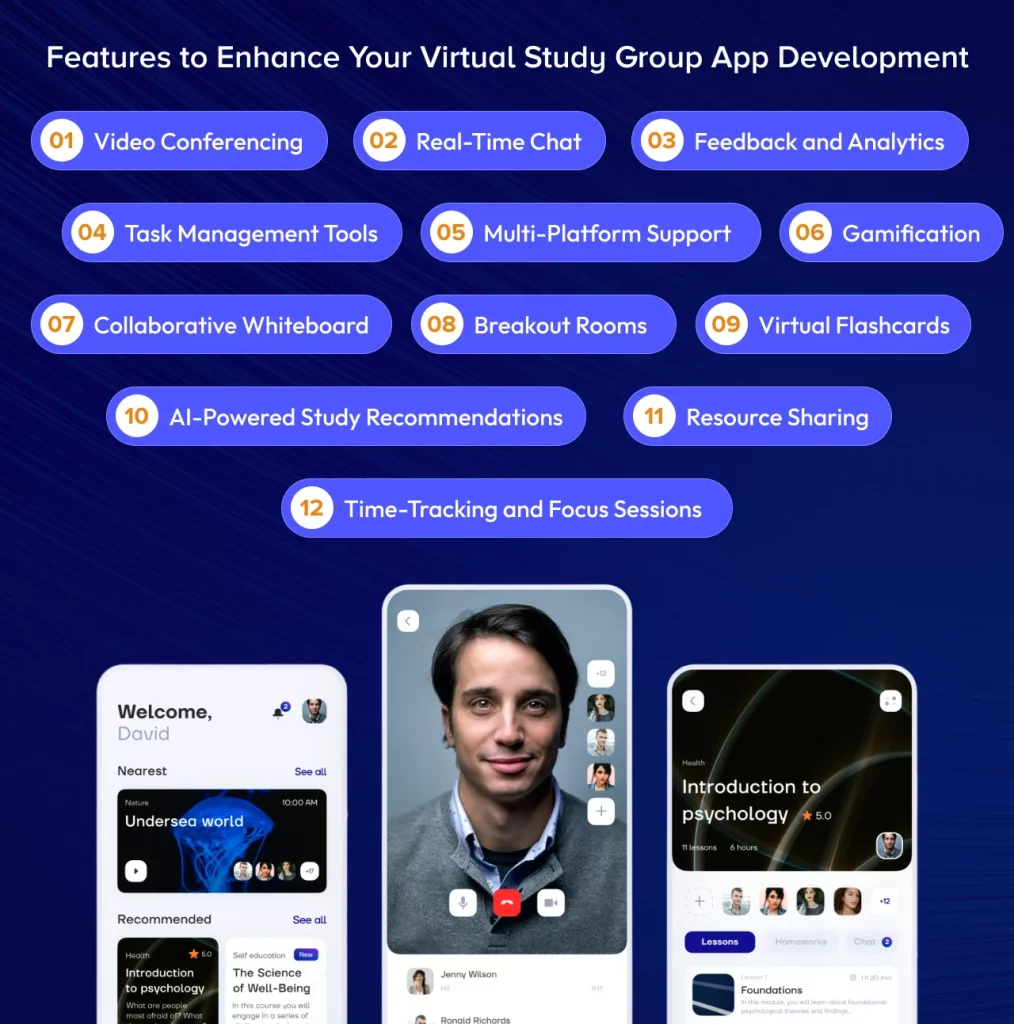
To stand out in the crowded market of educational apps, consider the following features:
1. Video Conferencing
Video conferencing in virtual study group app development helps to facilitate face-to-face interactions through high-quality video calls. With the help of this feature, users are able to engage in real-time discussion and enhance communication and collaboration.
2. Real-Time Chat
App to virtual study group development enables instant communication among users through a chat interface. This feature allows users to ask questions, share notes, and discuss topics in real-time, fostering a collaborative environment.
3. Resource Sharing
It allows users to upload and share documents, videos, links, and other study materials within the virtual study group mobile app development. For this reason, it helps create a centralized repository of learning resources that users can access.
4. Task Management Tools
With the help of task management tools, users can stay organized with to-do lists, deadlines, and reminders. This feature assists users in tracking their study progress, managing group assignments, and ensuring they stay on top of their academic responsibilities.
5. Gamification
Introduce elements of gamification such as quizzes, competitions, and rewards to make learning more engaging. By incorporating leaderboards and achievement badges, users can stay motivated and enjoy a fun, interactive learning experience.
6. Feedback and Analytics
Provide users with insights into their study habits and group performance through analytics dashboards. This feature allows users to track their progress, understand strengths and weaknesses, and receive constructive feedback on their learning journey.
7. Multi-Platform Support
Ensure the app is accessible across various devices, including smartphones, tablets, and desktops. This feature allows users to study anytime and anywhere, providing flexibility and convenience in their learning process.
8. AI-Powered Study Recommendations
Use artificial intelligence to analyze users’ study patterns and suggest personalized resources, study materials, or group discussions. This feature enhances the learning experience by directing users toward relevant content tailored to their individual needs.
9. Collaborative Whiteboard
It offers an interactive whiteboard that allows users to brainstorm, sketch, and illustrate ideas in real time during study sessions. This visual collaboration tool enhances problem-solving and aids in explaining complex concepts effectively.
10. Breakout Rooms
One of the best features of it is that it enables larger study groups to split into smaller, focused discussion rooms. Additionally, it allows users for more personalized discussions and deeper exploration of specific topics, making group learning more effective.
11. Virtual Flashcards
Develop Virtual study group app helps to provide users with the ability to create, share, and review flashcards for memorizing key concepts. On the other hand, flashcards are an effective study tool that can help reinforce learning through repetition and active recall. It is for enhancing information retention.
12. Time-Tracking and Focus Sessions
Integrate tools that allow users to track the time spent on different subjects and utilize techniques like the Pomodoro method to enhance focus and productivity. This feature encourages effective time management and helps users establish better study habits.
What Features Matter Most to Gen Z in Study Apps?
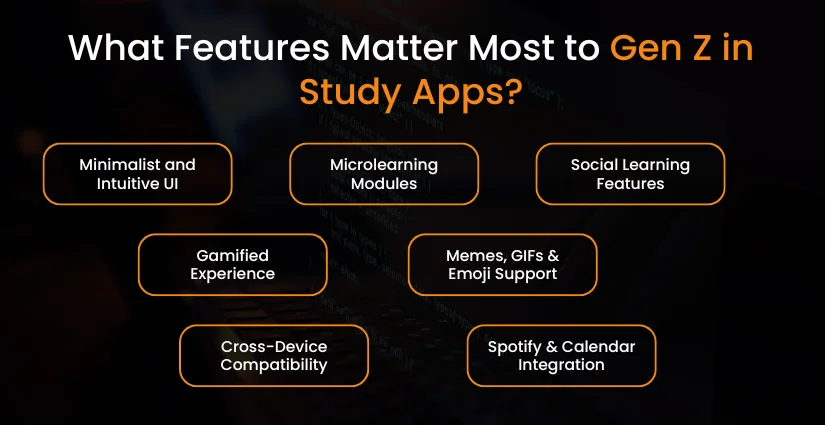
Gen Z, also known as digital natives, has grown up with smartphones, high-speed internet, and unending content at their fingertips. Their study habits resemble a mixture of efficiency, social connectivity, and personalization. To make a virtual study group app that speaks to this generation, the following characteristics should be taken into consideration:
Minimalist and Intuitive UI
Gen Z users prefer nothing fancy, interfaces-fast and aesthetic. It should be speedily functional, have easy navigation, dark/light modes, and distraction-blocking for studying sessions.
Microlearning Modules
Consume-their-content-bite-sized content at quick consumption periodicities for this generation. Incorporate flashcards, mini-quizzes, or 5-minute topical explainers into study groups.
Social Learning Features
That real-time chat feature with video conferencing, enabling emoji reactions, or even creating sub-groups or breakout rooms, will boost engagement.
Gamified Experience
Badges, study streaks, leaderboards, challenge modes; let’s add these features: competition goes a long way in motivating and keeping users active.
Memes, GIFs & Emoji Support
Hard to believe, but it is true: humor and relativity change the dynamics in Generation Z learning. Let us share study memes, GIFs, or cranky custom emojis in groups to interact more.
Cross-Device Compatibility
Seamless transitions from a mobile device to a tablet to a desktop are crucial. Gen Z may start on the tablet in class and finish up using a laptop at home.
Spotify & Calendar Integration
The good focus music is going to create. Have users sync their Spotify playlists inside study rooms. Sync the calendars for reminders, session planning, or assignment deadlines.
How to Add AI-Powered Personalization to Study Experiences?
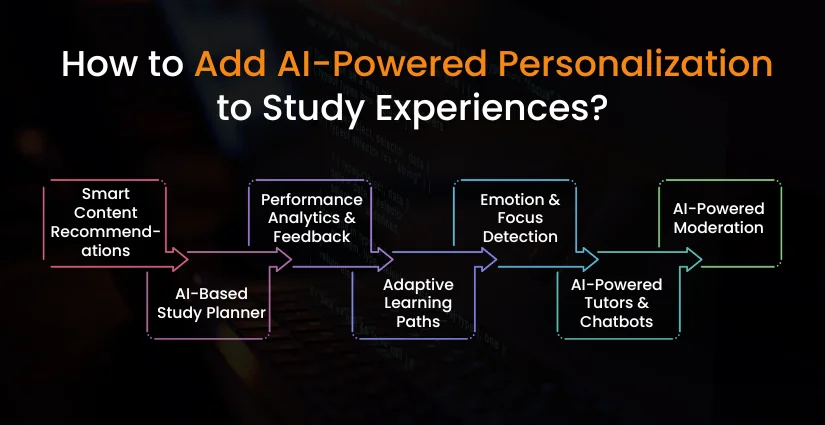
An AI is set to be the wave that will capture most students’ learning by literally flavouring it to engage them through content and speed. The role of AI in a virtual study group app is to maximize hyper-personalization and an innovatively efficient learning environment; all of these will be discussed further beneath:
Smart Content Recommendations
Employ AI algorithms, evaluate user behavior and preference and past activities to deliver relevant notes, videos, group discussions or quizzes to a particular study pattern.
AI-Based Study Planner
A dynamic scheduling assistant, which considers a user’s goals, strengths, weaknesses, and available time, could set time slots for specific activities and suggest when they should revise or test themselves.
Performance Analytics & Feedback
They provide personalized insights for the statement like being the best performer in the early morning hours or that you’re having trouble with trigonometry – here are some helpful group conversations and practice sets.
Adaptive Learning Paths
AI could guide the user through content at his or her speed of learning. Thus, a faster learner can jump ahead, while an average or slower learner could receive both more thorough explanations and simplified explanations or visual narration.
Emotion & Focus Detection
A camera (optional) can be programmed to detect fatigue, stress or a loss of focus by measuring typing patterns, hence requiring a break, change of study method, or relaxation music.
AI-Powered Tutors & Chatbots
Endear students to instantaneous doubt clearance through AI bots trained on a knowledge base. Bots suggest resources and provide summaries from notes in seconds.
AI-Powered Moderation
Fight all group chats with AI moderation tools that would help detect spam, bullying or off – topic distractions, keeping your group discussions spick, and safe.
The Functionality of Virtual Study Group Applications
These apps typically provide a user-friendly interface for scheduling study sessions, sharing materials, and facilitating discussions, making learning more accessible and enjoyable. On the other hand, comprehensive student information systems development can streamline academic management for educational institutions.
1. User Registration and Profile Creation
Firstly, users start by registering for an account and providing basic information. They can also personalize their profile with their academic goals and preferred study methods that help to enhance user engagement.
2. Group Creation and Joining
After the registration process, users can create a study group that is based on particular subjects, projects, or topics of interest. They can set rules, invite members, and define a group’s objectives by fostering a focused learning environment.
3. Scheduling Study Sessions
Develop an app for virtual study groups that often incorporates calendar integration features to allow users to schedule study sessions and receive reminders.
There are various eLearning apps types cater to diverse learning needs, from language learning to skill-based education.
4. Resource Sharing and Storage
In the virtual study group app development, users are able to upload and share the study materials, including documents, notes, videos, and useful links that are linked directly to the app.
5. Interactive Learning Tools
These apps will provide interactive tools like collaborative whiteboards that allow users to brainstorm and visualize concepts in real time. It helps to enhance group discussions and problem-solving activities.
6. Progress Tracking and Feedback
For enhancing accountability, there are many apps that provide learning analytics that assist users in tracking their academic progress. It includes completed tasks and study hours.
Why You Should Invest in a Virtual Study Group App Development?
Investing in a virtual study group app offers the potential for high returns, given the increasing reliance on digital learning solutions and the growing need for peer support among students.
Below are some added reasons to invest in the virtual study group apps:
Global Market Growth
The global elearning market is projected to reach $325 billion by 2025 by showcasing the significant opportunity for virtual study group apps. Also, successful eLearning app development requires a user-centric approach and seamless integration of multimedia content.
Cost Efficiency
Virtual study group app development helps to develop and maintain the cost more effectively than setting up physical learning centers. According to IBM, online education cuts training costs by 60% compared to traditional methods.
Personalized Learning
The virtual study group apps often incorporate AI and data analytics by allowing for a personalized learning experience. The studies show that personalized learning can increase student retention by 82% and engagement by 90%.
Flexible Learning Models
These apps provide flexibility for students by allowing them to study at their convenience and from any location. Additionally, this flexibility is especially beneficial for working professionals, parents, or individuals with irregular schedules.
It also provides the best language learning apps that combine intuitive interfaces and engaging activities to boost language proficiency.
Increased Collaboration
For this reason, the virtual study group apps enable real-time collaboration through features like video calls. Shared documents and instant messaging.
Integration of Gamification
There are many virtual study apps that assist in incorporating gamification features like quizzes, rewards, and leaderboards to increase user engagement and motivation.
The Development Journey of a Virtual Study Group App
The development of virtual study group app involves several stages, from initial concept and market research to design, development, testing, and deployment.
Market Research:
First, identify the target market and analyze competitors to uncover market gaps.
Feature Definition:
It is necessary to define important features to meet the requirements and needs of the user as per expectation.
UI/UX Design:
By creating an intuitive and accessible interface that is visually appealing and easy to navigate.
Development Process:
During the development process, it is necessary to code using agile methodologies and appropriate technologies or frontend and backend development.
Integration of Core Technologies:
In the app, it is necessary to integrate cloud computing, databases, and real-time communication tools into the app.
Testing:
By conducting comprehensive testing for functionality, performance, and security, engage in beta testing with users.
App Launch:
Finally, the app will be released on iOS and Android platforms that are supported by the pre-launch marketing strategies.
Checkout More: E-Learning App Development Trends
Core Technologies Behind Virtual Study Group App
For virtual study group app development for mobile, several technologies are essential. These tools and technologies will ensure robust functionality, smooth performance, and a user experience. Below mentioned are some key technologies that are behind an app:
Cloud Computing
This is one of the useful technologies that enables scalable solutions and seamless access to data from any device. Cloud services like AWS, Google Cloud, or Microsoft Azure provide the infrastructure necessary to host an app.
WebRTC
This is a technology that helps to facilitate real-time communication between users without needing an intermediary server. It is considered important for live study sessions and discussions. This is used for video-based eLearning platforms to provide dynamic, interactive learning experiences that captivate users.
Backend Development Frameworks
There are frameworks like Node.js or Django that are important for building the server-side logic of the application. They handle the user authentication, data management, and API integration by ensuring smooth communication between the front end and the back end.
Frontend Technologies
For mobile app development, there are frameworks like React Native or Flutter that are commonly used for creating responsive and visually appealing user interfaces.
This platform ensures the app functions seamlessly for both iOS and Android devices.
Database Solutions
Solutions such as Firebase, MongoDB, or PostgreSQL are important for managing user data, study materials, and group interactions.
On the other hand, they also provide real-time data synchronization by ensuring that users have complete access to the latest information.
Analytics Tools
By implementing tools like Google Analytics or Mixpanel that help to track user behavior and engagement within the app. For this reason, this data can guide improvements and feature enhancements that are based on user preferences.
Read Also: How to Develop University Mobile App?
Monetization Strategies for Virtual Study Group App Development
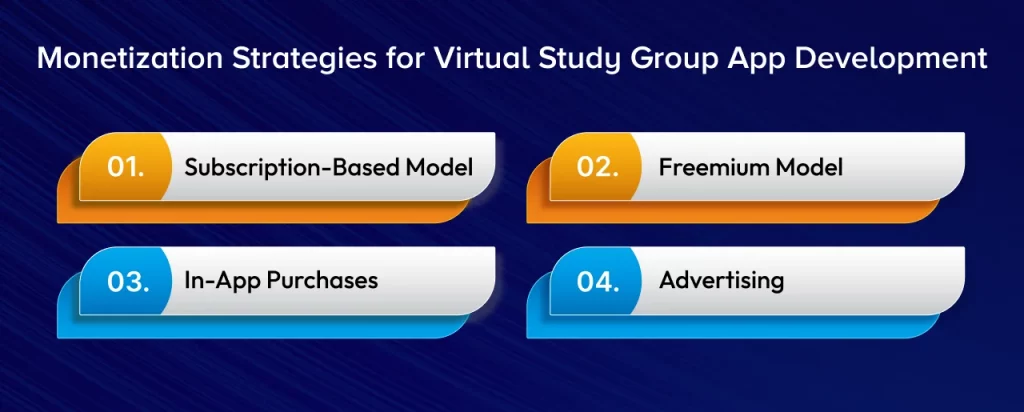
Successful revenue models may include subscription plans, freemium features, and partnerships with educational institutions, allowing for diverse income streams.
1. Subscription-Based Model
This is one of the models that charge a monthly or annual fee for premium features. Additionally, this model helps to ensure consistent revenue and allows users to access exclusive content, tools, or resources that enhance the learning experience.
2. Freemium Model
In the freemium model, users get the free version with limited features while charging for the advanced functionalities. Due to the free version, this model attracts a larger user base and allows the user to experience the app before committing to a purchase.
3. In-App Purchases
This model allows users to buy more add-on resources, tools, and services. Also, it includes study materials, exclusive tutorials, or personalized coaching sessions by providing the ease that pays for the things you need, not for everything.
4. Advertising
Advertising helps to generate revenue through the advertisements displayed within the app. By connecting with the relevant brands and educational services, you can easily offer the targeted ads without compromising the user experience.
Basically, keeping up with eLearning app development trends ensures your platform stays competitive in a fast-evolving industry.
Estimated Costs for Developing a Virtual Study Group App
The mobile app development cost of virtual study group can vary. It all depends on several factors like features, complexity, and the development of the team’s location.
On the other hand, you can expect to invest between $20,000 to $150,000. Below mentioned is the complete breakdown of the costs:
| Cost Factor | Estimated Cost Range | Description |
| Basic Features | $20,000 – $40,000 | Includes core functionalities such as user registration, video conferencing, chat, document sharing, etc. |
| Advanced Features | $40,000 – $80,000 | Adds features like gamification, advanced analytics, real-time collaboration tools, scheduling, and more. |
| Full-Scale Development | $80,000 – $150,000+ | Comprehensive development including all advanced features, high-end UX/UI design, custom integrations, etc. |
| Ongoing Maintenance and Updates | Varies based on scope | Regular updates, bug fixes, feature enhancements, and technical support post-launch. |
Summing Up the Potential of Virtual Study Group Apps
Collaboration is considered to be the key to success in today’s digital world. A virtual study group app development presents a valuable opportunity to hire mobile app developers.
For this reason, understanding eLearning business models is crucial for monetizing educational platforms and scaling operations.
By integrating the important features and understanding the development process, you can create an app that will not only meet the needs of students but also help to stand in a competitive market.
Are you also thinking of virtual study group app development? If yes, then Octal IT Solution is here to assist you in turning your vision into reality. We have a team of experienced developers who have experience creating innovative and user-friendly apps with our custom mobile application development services.
Our team will guide you through every step of the process. It starts from conceptualization and design to development and launch.
Mobile app developers will ensure your app will be equipped with the latest features and technology to provide a seamless, engaging experience for users.
Partner with Octal IT Solution, and let’s create something that drives success for both students and your app development companies!



 Get in Touch
 By
By September 10, 2026