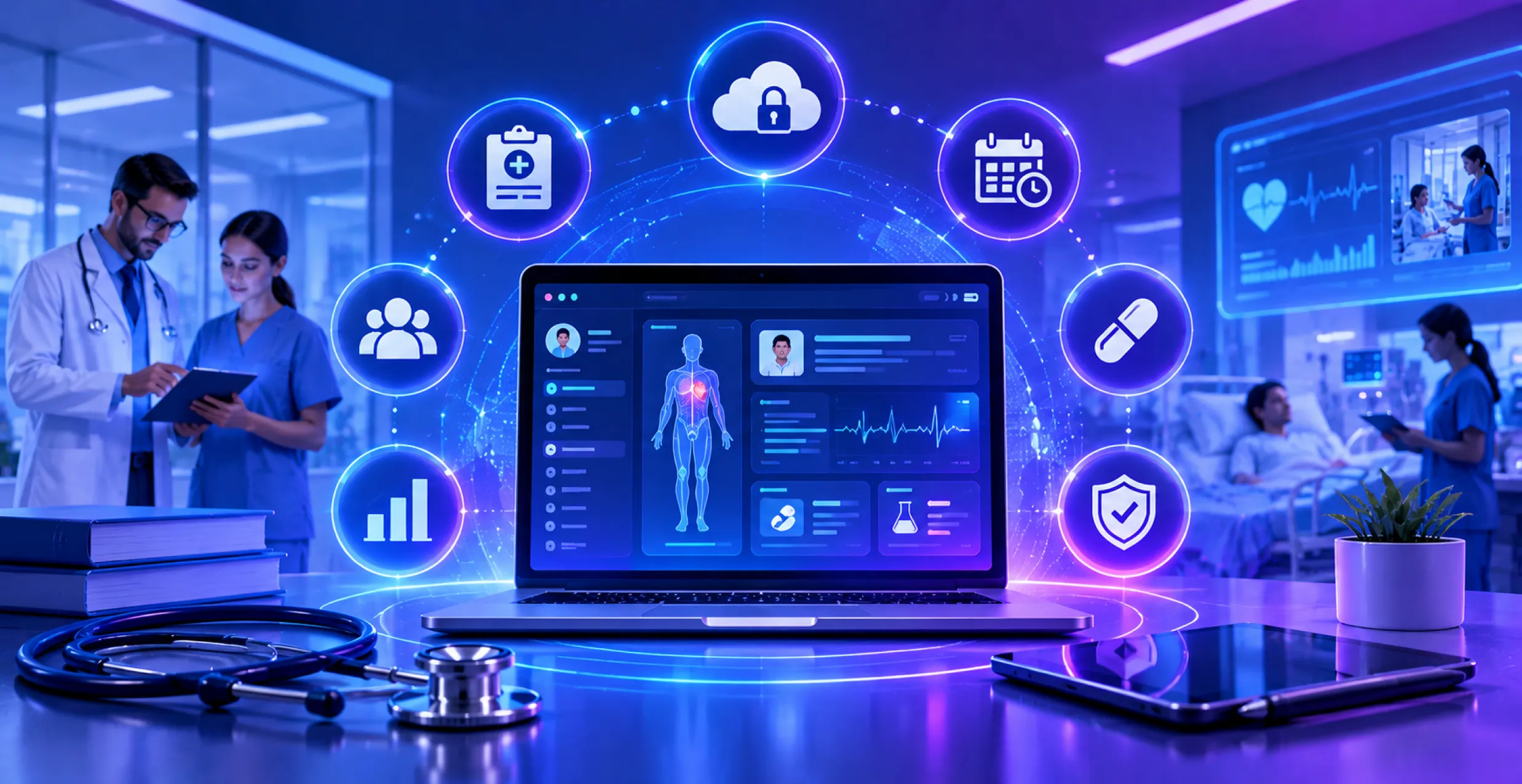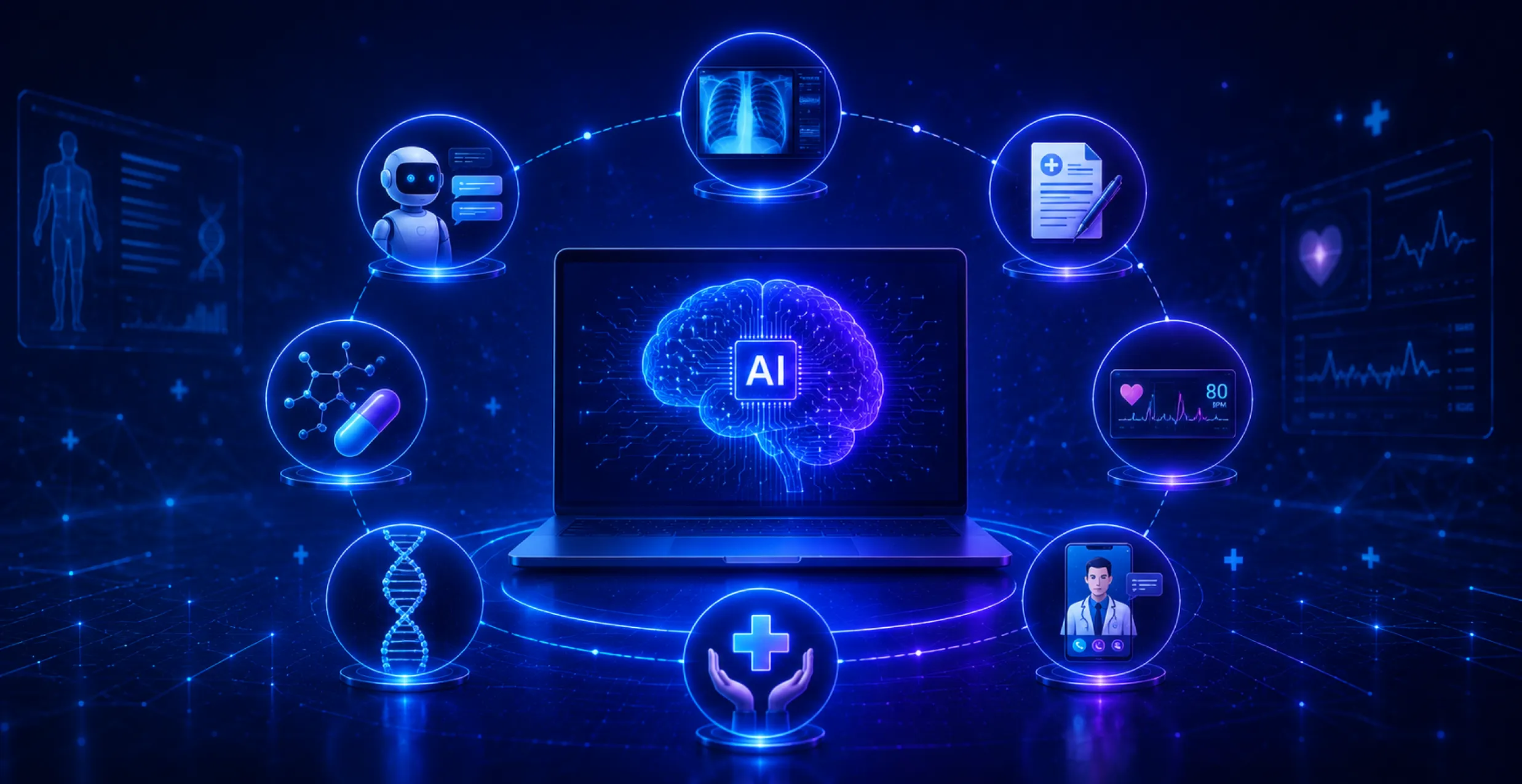



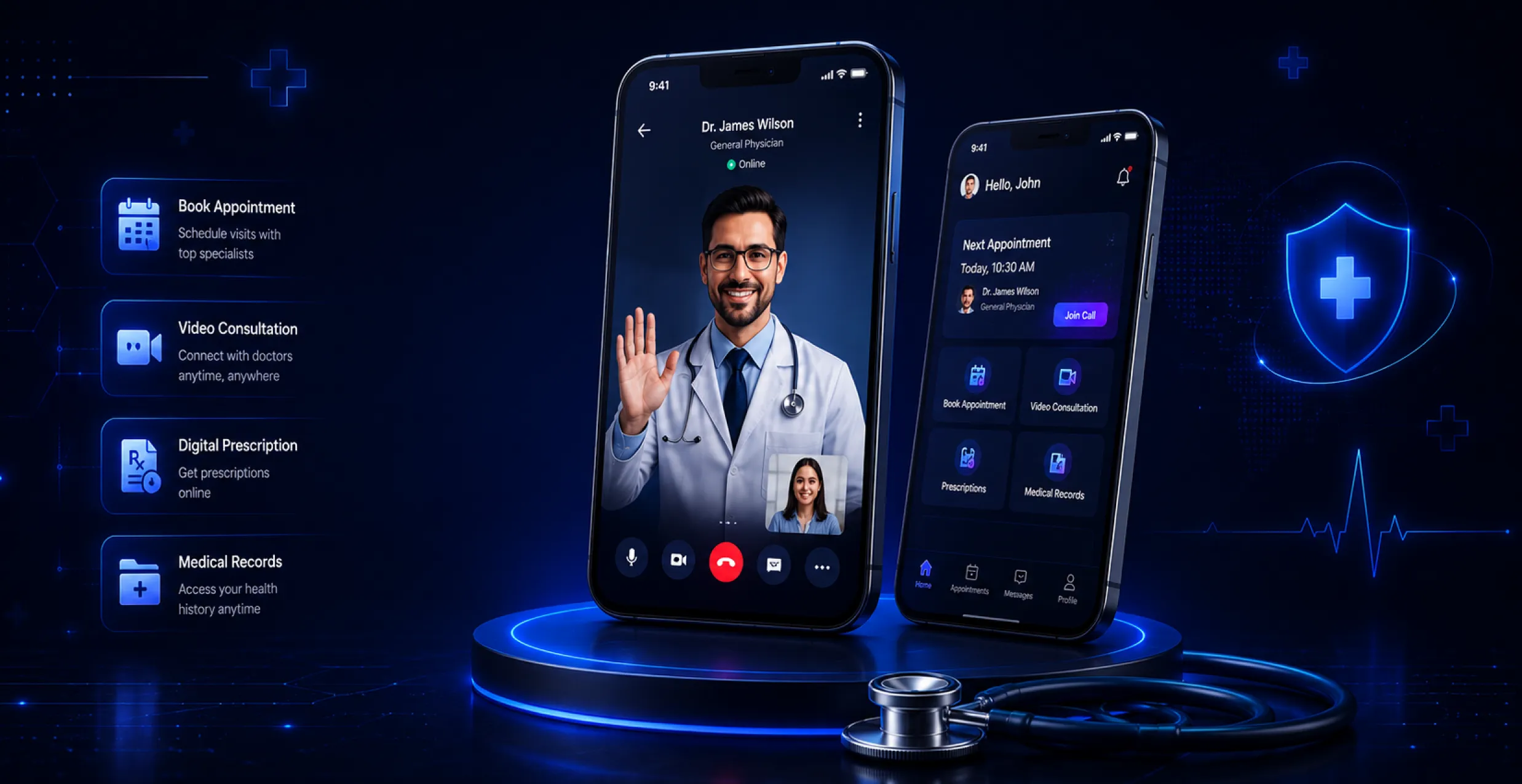
Have you ever tried reaching a doctor quickly but ended up standing around in those long hospital queues anyway? It’s exactly why doctor on demand app development is turning into a real game-changer across healthcare. With virtual check-ins and digital prescriptions, telemedicine apps are making healthcare more immediate, more reasonable, and, honestly, easier to reach for everyday people.
According to Mordor Intelligence, the patient-centric healthcare app market was valued at USD 26.13 billion in 2025 and is expected to grow at a CAGR of 38.85% during the forecast period (2026-2031).
Right now, many organizations are putting more investment into doctor-on-demand app development to improve the patient journey, broaden medical access, and form scalable digital healthcare platforms.
What is a Doctor On-Demand App?
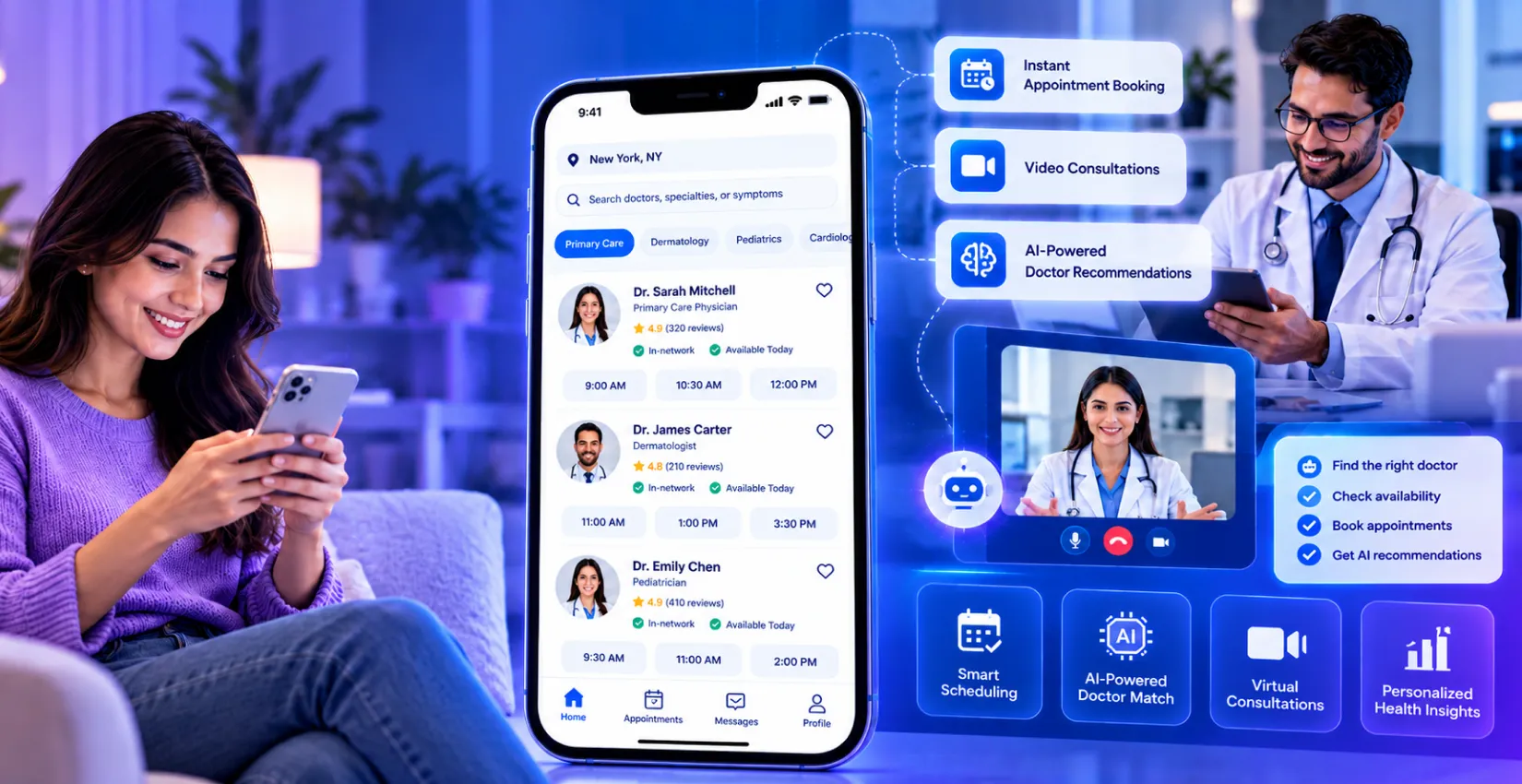
Doctor on-demand app development is basically about building digital health platforms so patients can get in touch with physicians via video, audio, or quick chat consultations anytime. With this kind of app, the whole process gets simpler, like booking, online consults, prescription handling, and even remote healthcare monitoring. So, on-demand doctor app development becomes necessary for today’s healthcare services.
Why Businesses Should Invest in Doctor On-demand App Development Solutions
The rising demand for virtual healthcare and remote check-ins is pushing companies to invest in doctor on demand app development solutions in order to make healthcare more reachable, boost patient interaction, and build steady long-term business growth.
1. Growing Adoption of On-demand Doctor Platforms
On-demand doctor platforms are quickly gaining traction because they make healthcare access easier and more immediate. When businesses use doctor on-demand app development services, they can reach patients in different regions digitally.
2. Increasing Patient Preference for Remote Healthcare
These days, many patients tend to prefer virtual healthcare for its convenience and quick medical aid. It is due to the services of doctor-on-demand app development that organizations are able to give patients an uninterrupted healthcare experience using only their smartphones.
3. Benefits for Hospitals, Clinics, and Startups
Using a state-of-the-art telemedicine platform built by a reliable healthcare app development service company, hospitals and clinics are able to save money, improve scheduling, and increase patient satisfaction.
4. Revenue Opportunities in Doctor On Demand App Development
Several different monetization techniques, like subscription services, fees for consultation, ads, and premium health care services, can be used with the doctor on demand app development service.
5. Future Scope of Digital Healthcare Platforms
Healthcare is moving toward digital-first routines, supported by AI features, virtual care, and that broader shift in what people expect when they need help. So if someone invests in telemedicine app development now, they usually open long-term expansion chances for modern healthcare brands.
Types of Doctor-on-Demand Apps
Different types of doctor on-demand applications are providing help to healthcare companies by making the process of offering specific healthcare services more efficient. From video consultation apps to apps that provide emergency care solutions, such software is making it easier for patients to access various healthcare services.
1. Video Consultation Apps
With video consultation applications, patients can connect with a doctor through live video sessions to get their health-related problems solved.
2. Audio Consultation Apps
In audio consultation applications, patients can get voice-based consultation for their health-related queries, which enables them to get healthcare advice conveniently.
3. Chat-based Healthcare Apps
Through chat-based healthcare apps, patients can contact their doctors instantly by using the messaging system available in the application for healthcare support.
4. Emergency Healthcare Assistance Apps
Using emergency healthcare apps, patients can get emergency assistance along with an ambulance and a doctor on the go in their emergencies.
5. Mental Health Consultation Apps
In mental health apps, users can get connected with therapists and counselors virtually for getting their mental health consultation.
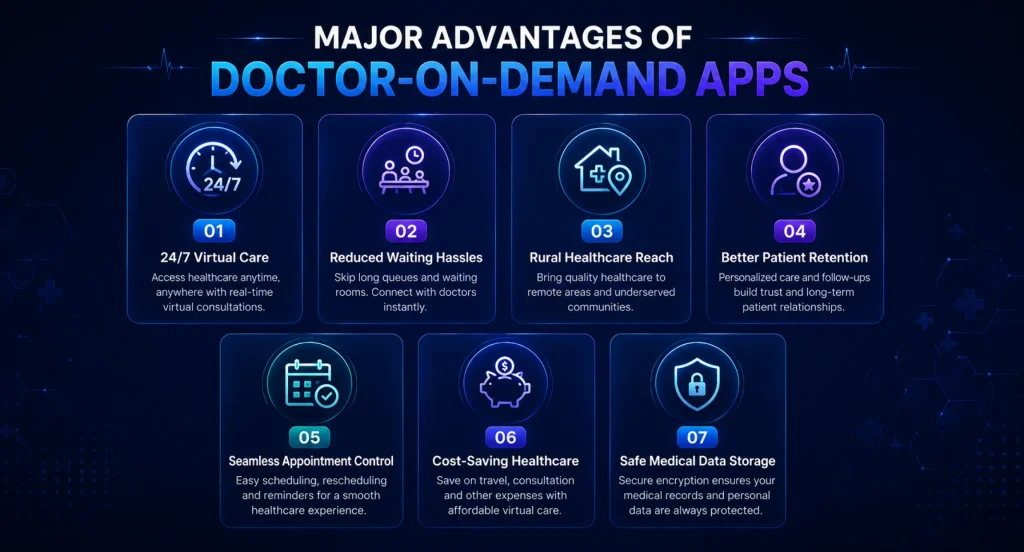
Key Benefits of Doctor-on-Demand App Development
Doctor consultation apps are helping healthcare providers offer faster, smarter, and more accessible medical services while improving operational efficiency and patient satisfaction across digital healthcare platforms.
1. 24/7 Access to Healthcare Services
The availability of healthcare services round the clock is ensured through the use of the on-demand doctor app development software that ensures instant medical services regardless of physical presence in a health center or clinic.
2. Reduced Patient Waiting Time
Instant appointment and consulting services provided by healthcare service companies through mobile doctor consultation application development ensure quick management of patients.
3. Improved Healthcare Accessibility in Remote Areas
Healthcare applications provide an opportunity for healthcare service companies to extend their services in remote areas that lack proper healthcare facilities.
4. Enhanced Patient Engagement and Retention
Patient engagement features provided by healthcare applications enable healthcare service companies to engage their customers and establish long-term professional relationships.
5. Better Appointment Scheduling and Management
Appointment management features provided by mobile healthcare applications ensure efficient scheduling and management of patient appointments by healthcare providers.
6. Cost-Effective Healthcare Delivery
Use of mobile doctor consultation application development ensures lower costs for healthcare services provided both to hospitals and patients.
7. Secure Digital Medical Records Management
Mobile doctor consultation application development ensures efficient storage and management of patient medical records, prescriptions, and consultation histories.
Essential Features of Doctor On-demand App Development Solutions
Doctor consultation applications need certain features to be included to make them more efficient in terms of usability and user experience. They must have capabilities that will contribute to the improvement of the patient’s experience, simplification of healthcare process management, and easy communication between patients, doctors, and even healthcare managers.
A. Patient Panel Features
1. User Registration and Profile Management
Here, users should be able to sign up and manage their personal data as well as use such additional options as adding medical records to access healthcare services from a doctor-on-demand application.
2. Doctor Search and Filters
Users should have the ability to find the right specialist according to his or her specialty, ratings, availability, experience, and consultation fee.
3. Appointment Booking and Scheduling
Patients should have the option to make an appointment with a certain doctor, change its date, or even cancel it thanks to an integrated scheduler of the on-demand doctor appointment app development platform.
4. Video/Audio Consultation
This type of communication makes consultations possible without going to a hospital by providing a real-time video/audio feature for on-demand doctor app development services.
5. E-prescription Management
The digital prescription can be provided by doctors themselves and can be used or downloaded by patients at any time.
6. Online Payment Integration
The integration of secure online payment gateways helps make payments easy, fast, convenient, and safe, from consultation fees to healthcare payments.
7. Ratings and Reviews
Reviewing healthcare professionals is an important feature that can help increase transparency and improve healthcare-related decisions in the future.
8. Push Notifications and Reminders
Automatic appointment, medication, and follow-up reminders can be sent via push notifications for increased patient engagement.
9. In-app Chat and Support
The integrated instant messaging system allows users to communicate directly with doctors, thus receiving fast help related to their health issues.
B. Doctor Panel Features
10. Doctor Profile Management
Doctors will have the capability to modify their doctor profiles, including qualification details, fees charged, experience levels, and availability information.
11. Appointment Management Dashboard
Doctors will have the ability to manage appointment details, consultation requests, cancellation of appointments, and patient history using healthcare-specific dashboards.
12. Availability and Schedule Management
Doctors will be able to adjust their schedules and appointment times to manage their appointments and avoid any scheduling conflicts.
13. Video Consultation Tools
Doctors will be able to communicate effectively with patients using healthcare video chat consulting tools.
14. Prescription and Medical History Access
Medical practitioners will be able to access the health information of patients and even issue prescriptions.
15. Earnings and Payment Tracking
Doctors will be able to check their incomes and earnings from consultations using income dashboards.
C. Admin Panel Features
14. User and Doctor Management
Admin Console With the admin console, the admin can monitor the activities of the patients and doctors, manage the health care operations, and verify their profiles.
15. Dashboard and Analytics
The analytics dashboard provides important information on the app’s performance and effectiveness, activity of patients, consultations, and changes of services.
16. Appointment and Payment Management
The administrators will have control over appointments, management of cancellations, and monitoring of all payments made on the platform.
17. Content and Notification Management
The administrators will also be able to change content and push notifications for a greater patient experience and engagement.
18. Reports and Performance Monitoring
Advanced reporting techniques will allow the business to keep track of healthcare operations, users’ activities, income generated, and app performance.
Advanced Features to Include in On Demand Doctor App Development
Modern healthcare platforms need advanced technologies, not just to “work” but to really upgrade patient experiences. They should also push operational efficiency forward and make healthcare delivery more organized, smarter, and scalable. In practice, this is where intelligent on-demand doctor app development solutions become a big deal, even if things move fast.
1. AI-powered Symptom Checker
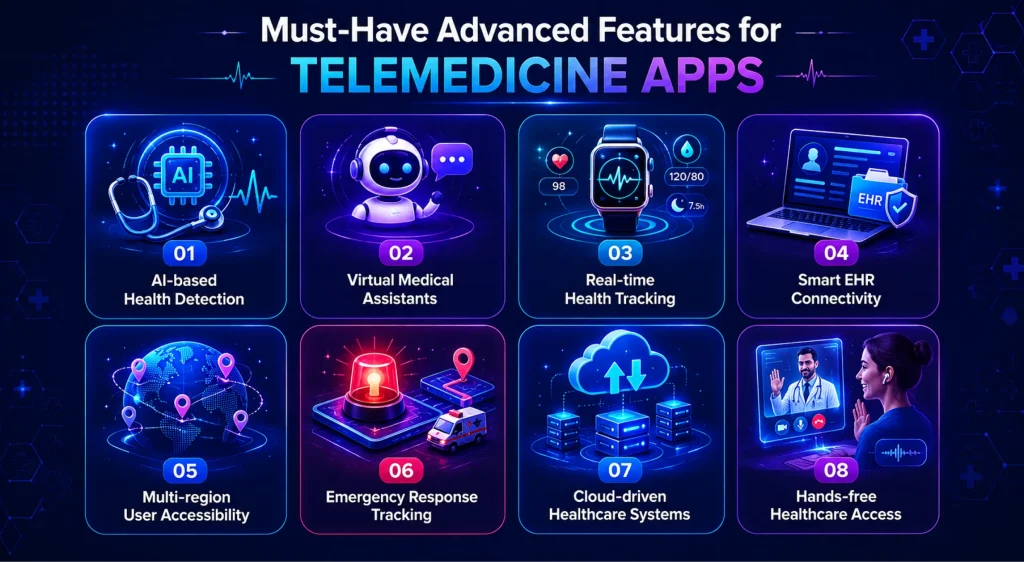
AI-based symptom checkers do more than make a quick guess. They take in patient-reported symptoms and then share preliminary health suggestions so users can narrow down what might be going on before booking an actual consultation through doctor-on-demand app development platforms.
2. AI Chatbot Integration
AI chatbots provide immediate assistance, answer any healthcare-related questions, facilitate scheduling appointments, and increase user engagement, as well as greatly reduce the number of tasks that should be handled manually by customer service representatives.
3. Wearable Device Integration
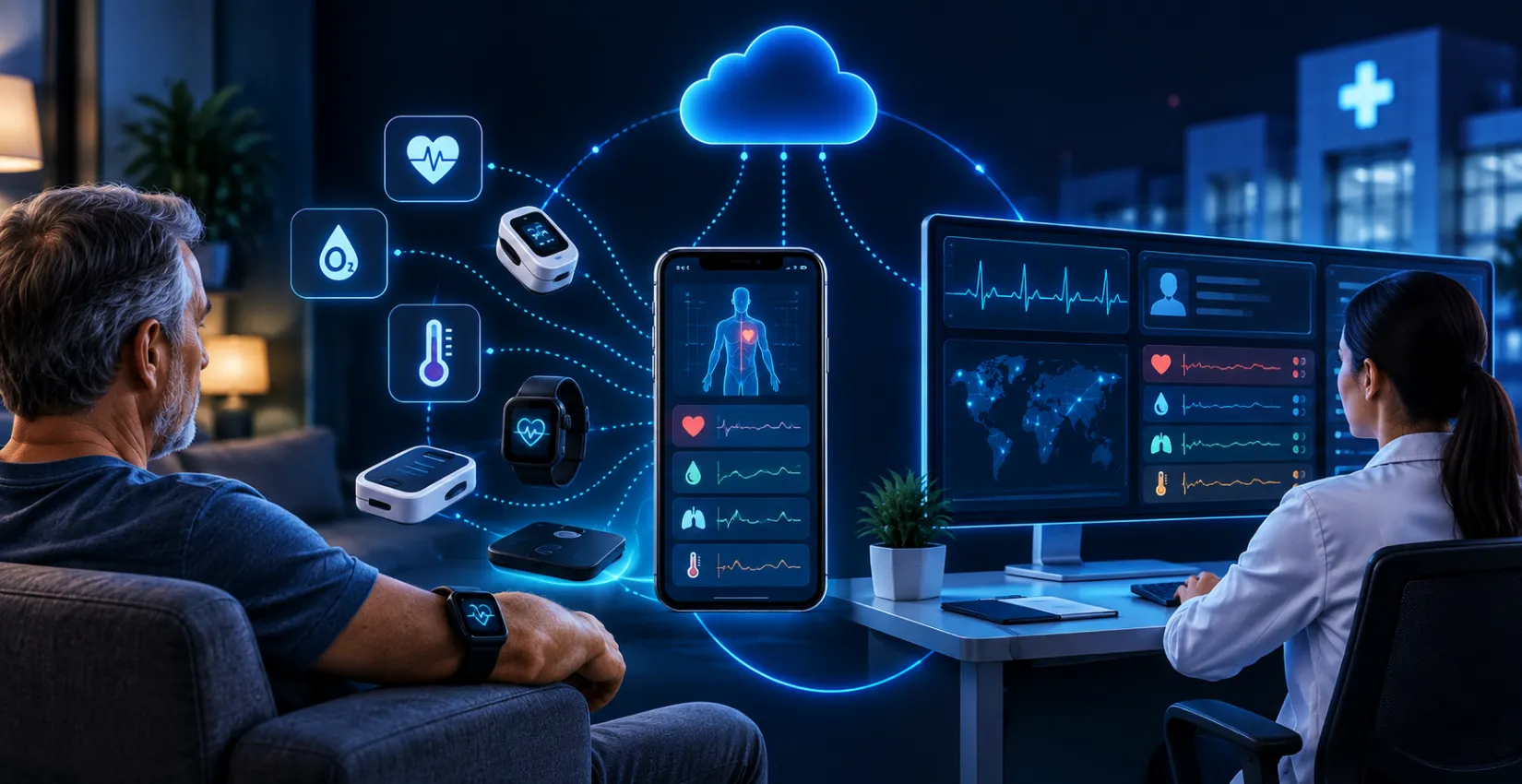
Using wearable devices is an opportunity to track such health-related parameters as heart rate, blood pressure, and activity patterns. As a result, doctors have an option to monitor patients’ states online, which may seem trivial but can be really beneficial.
4. Electronic Health Records (EHR) Integration
Integration with EHR allows gaining access to medical history, including patients’ medications and diagnoses, which helps make the process of making a diagnosis more accurate and efficient.
5. Multi-language and Multi-currency Support
Support of many languages and currencies on a platform allows users from other countries to benefit from it and be comfortable in an international healthcare environment.
6. Real-time Ambulance Tracking
Real-time ambulance tracking helps people find nearby ambulances quickly. It also shows arrival estimates during urgent situations, so emergency assistance can start sooner.
7. Cloud-based Healthcare Management
With cloud integration, data is stored securely, and it keeps scaling smoothly; also, it stays reachable from multiple devices and even different locations without too much trouble. It makes healthcare information accessible across multiple devices and locations.
8. Voice Assistant Integration
Voice-enabled healthcare applications make common tasks lighter, like appointment booking, gentle reminders, and patient conversations. This is especially helpful for elderly users and for differently abled patients too.
Top Use Cases of Doctor-on-Demand App Development Solutions
Doctor consultation apps are reshaping digital healthcare for businesses that want to provide virtual medical services. They can also improve access and make patient management more streamlined, using modern healthcare technologies.
1. Virtual Doctor Consultation Apps
Virtual consultation apps let patients get in touch with healthcare professionals through video or voice calls, anytime. This makes “doctor on demand” app development pretty valuable for today’s healthcare providers, especially when people need help fast.
2. Online Doctor Appointment Booking Platforms
Online appointment booking platforms make it easier to manage consultations. They cut down on idle waiting periods and also boost operational efficiency for hospitals and clinics due to on-demand doctor appointment app development solutions.
3. Chronic Disease Management Apps
This category of apps helps users monitor their chronic illnesses such as diabetes and hypertension. In turn, medical specialists have the opportunity to analyze the state of the health metrics of the patient. Thus, patients receive medical consultations faster and more efficiently.
4. Mental Health Consultation Applications
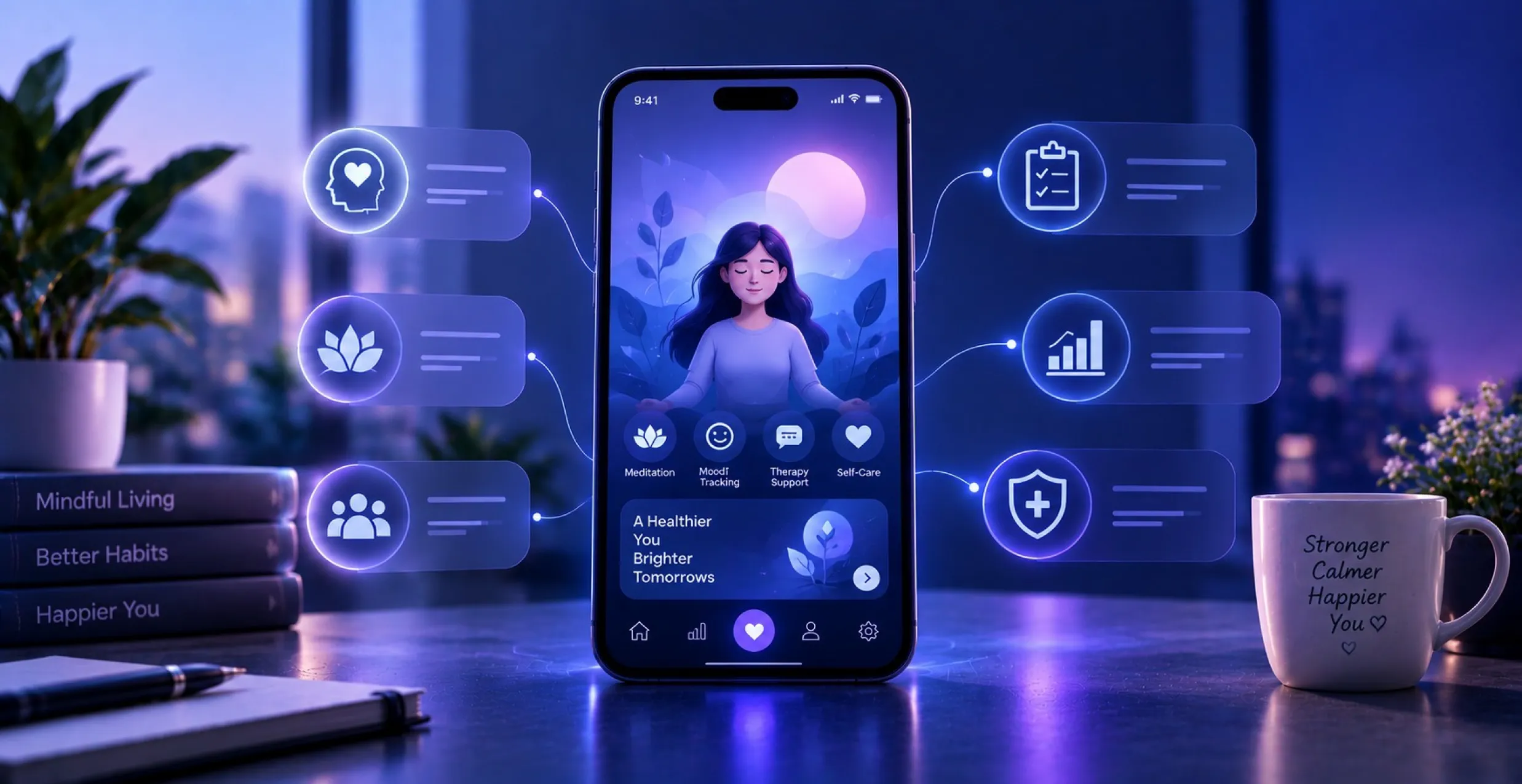
Applications for mental health and wellness provide consultation sessions and therapy sessions in a confidential environment, as well as programs for the emotional well-being of users.
5. Remote Patient Monitoring Solutions
Remote patient monitoring solutions connect wearable devices with healthcare analytics. That way, patient vitals can be tracked continuously, and medical support becomes more proactive, so health outcomes can improve.
Doctor On-Demand App Development Process
To create a healthcare application that actually works well, you need strategic planning, modern technologies, and a smooth user experience. This is what supports secure and efficient doctor-on-demand mobile app development without making the process complicated for anyone involved.
Step 1. Market Research and Requirement Planning
Market research and requirement planning seem like a necessary thing to be done before starting to build the Demand Doctor app, as otherwise, you’ll end up building an application without any basis at all.
Step 2. UI/UX Design and Feature Planning
Create a convenient interface of the application for consulting purposes in the field of medicine and identify its main features to facilitate people’s access to the consultation.
Step 3. Technology Stack and App Development
Choose the best technologies to be used in order to achieve better performance, flexibility, and scalability of the developed application.
Step 4. Testing, Security, and Compliance
Testing and debugging of the application and its compliance with HIPAA regulations should be performed in order to secure the data.
Step 5. Deployment and Ongoing Maintenance
Think about deploying and maintaining the application, which can be achieved with the help of a professional mobile app development company.
Best Technology Stack for D-demand On-demand Mobile App Development
Choosing the right technology stack is basically crucial for building secure, scalable, high-performing healthcare applications. With the right setup, app performance goes up, patient experience gets better, and doctor on demand app development services become more seamless too, while still keeping long-term scalability possible with modern healthcare app development companies.
| Technology Area | Recommended Technologies |
| Frontend Technologies | React Native, Flutter, Swift, Kotlin |
| Backend Technologies | Node.js, Python, Laravel, Django |
| Database Solutions | MongoDB, PostgreSQL, MySQL, Firebase |
| Cloud Infrastructure | AWS, Google Cloud, Microsoft Azure |
| Video Calling APIs | Twilio, Agora, Zoom SDK, WebRTC |
| Payment Gateway Integration | Stripe, PayPal, Razorpay, Braintree |
| Security Technologies | SSL Encryption, OAuth 2.0, JWT Authentication |
| AI and Analytics Tools | TensorFlow, OpenAI APIs, Google Analytics |
| Push Notifications | Firebase Cloud Messaging, OneSignal |
| EHR/EMR Integration | Epic API, Cerner API, Redox API |
| DevOps and Deployment | Docker, Kubernetes, Jenkins |
| Real-time Communication | Socket.io, PubNub, MQTT |
Doctor On Demand App Development Cost Breakdown
The cost to develop the on-demand doctor app really depends on how complex the whole thing is, what features you want, which technologies are involved, what development region you choose, and even how the team is set up. In practice, businesses should plan budgets smartly, because scalable healthcare solutions are never a small thing.
Phase-by-Phase Healthcare App Pricing
| Development Phase | Estimated Cost |
| Market Research & Planning | $3,000 – $6,000 |
| UI/UX Design | $5,000 – $10,000 |
| Frontend & Backend Development | $15,000 – $40,000 |
| API & Third-party Integrations | $5,000 – $12,000 |
| Testing & QA | $4,000 – $8,000 |
| Deployment & Maintenance | $3,000 – $10,000/year |
Cost Breakdown by Developer Roles
| Team Role | Average Hourly Cost |
| Project Manager | $25 – $60/hour |
| UI/UX Designer | $20 – $50/hour |
| Frontend Developer | $25 – $70/hour |
| Backend Developer | $30 – $80/hour |
| QA Engineer | $20 – $45/hour |
| DevOps Engineer | $30 – $70/hour |
Cost Estimation by App Complexity
| App Complexity | Estimated Cost |
| Basic On-demand Doctor App | $20,000 – $40,000 |
| Medium Complexity App | $40,000 – $80,000 |
| Advanced AI-powered App | $80,000 – $150,000+ |
Cost Based on Development Region
| Region | Average Development Cost |
| North America | $80 – $150/hour |
| Western Europe | $60 – $120/hour |
| Eastern Europe | $40 – $80/hour |
| India | $20 – $50/hour |
| Southeast Asia | $25 – $60/hour |
The overall cost to develop on-demand doctor app platforms is not fixed; it shifts based on customization levels, how much scalability you need, and what kind of ongoing support is expected after launch. So if a company is thinking about healthcare apps, it’s worth evaluating the on-demand doctor app development cost carefully before they hire developers.
Revenue Models for Doctor On-demand App Development Solutions
Healthcare businesses can build a steady income in several ways while also boosting patient engagement and growing their digital healthcare services by using doctor-on-demand app development solutions.
1. Subscription-based Model
Individuals make monthly or annual payments for unlimited consultations, additional healthcare services, and better personalized medical advice using the service of the on-demand doctor app.
2. Commission-based Model
A commission is earned by the platform for every consultation made with the help of the app, making it quite scalable in the process.
3. Consultation Fee Model
Users make direct payments in terms of consultation fees for any audio, video, and chat-based healthcare services delivered with the help of the doctor’s app.
4. Freemium Model
Healthcare features remain free of cost, while advanced features like specialty consultations, artificial intelligence in healthcare, and scheduled appointments can be accessed using subscriptions.
5. Advertisement Model
Healthcare businesses can earn more money by showing relevant healthcare ads, pharmacy promotions, or wellness campaigns inside the app platform.
6. Corporate Healthcare Partnerships
Organizations can also team up with other companies to deliver employee health programs, virtual check-ups, and wellness management services. This usually happens via digital healthcare platforms, and it can be sort of seamless when it is set up right.
Challenges in Doctor-on-Demand App Development and Their Solutions
When you build a doctor-on-demand application, it includes technical and regulatory hurdles. Companies that invest in doctor on demand app development solutions should handle those obstacles carefully so the rollout is actually successful.
1. Data Privacy and Security Concerns
Healthcare applications deal with very sensitive patient data, so there is always a higher security risk. Using strong encryption, secure cloud storage, and multi-factor authentication can really help shield health records and keep them safer in practice.
2. HIPAA and Healthcare Compliance Issues
Healthcare rules are involved, especially for businesses that are newer to this space. Teaming up with seasoned healthcare app development service providers helps organizations stay aligned with HIPAA, GDPR, and other security expectations in this field.
3. Real-time Video Consultation Challenges
If someone has unstable internet connectivity, the consultation quality can drop fast. Adding optimized video APIs and scalable cloud infrastructure tends to support steadier calls and overall better patient experiences.
4. User Trust and App Adoption
Patients might be unsure about trusting digital healthcare platforms. Because of that, having transparent policies, verified doctors, and clear ratings, along with secure payment systems, can help build credibility and move people toward adoption.
5. Integration with Legacy Healthcare Systems
Merging a new app with older hospital setups can get complicated, sometimes painfully so. But when teams use standardized APIs and cloud-based healthcare solutions, it becomes much easier to achieve smoother, more integrated system connections.
6. Managing High Traffic and Scalability
As healthcare platforms grow, they can see heavy user traffic, and it ramps up fast. Using scalable cloud hosting along with load-balancing tech helps keep the app running stably, especially when things get busy at peak hours.
Healthcare Compliance and Security Standards for Doctor-on-Demand Apps
Doctor-on-demand solutions also have to follow tight security and compliance rules, because patient info can’t be treated casually. These standards protect health data, build real trust, and help make sure that doctor-on-demand delivery is safe, which is why most healthcare app development services focus on security and compliance.
1. HIPAA Compliance
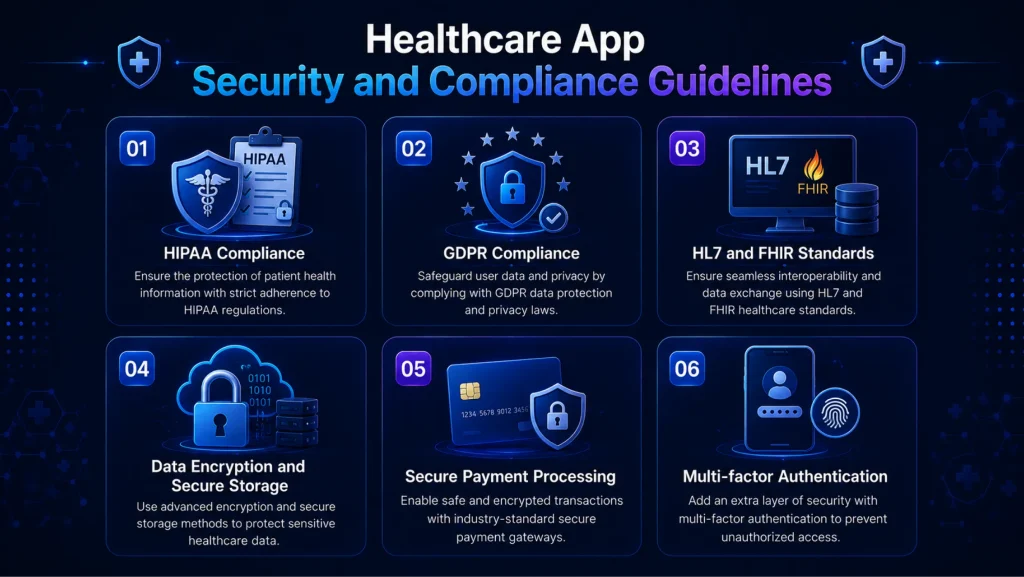
Compliance with HIPAA occurs due to the protection of patients’ healthcare data via storage, limited access, and encryption within applications designed for the health industry.
2. GDPR Compliance
In accordance with GDPR recommendations, it is necessary to provide data management that is clear for the end-user and effective. Moreover, privacy protection is required to be provided for cross-region healthcare applications.
3. HL7 and FHIR Standards
The use of HL7 and FHIR standards ensures interoperability in terms of exchanging data between hospitals, clinics, and applications designed for the healthcare industry.
4. Data Encryption and Secure Storage
Data encryption protocols help prevent data theft by ensuring that data is well-encrypted when it comes to being stored or transmitted. This measure is especially helpful in minimizing cybersecurity risks.
5. Secure Payment Processing
With regard to telemedicine, secure payments should be made possible through the use of payment gateways within the application.
6. Multi-factor Authentication
It is also essential to ensure multi-factor authentication as another measure that will increase security for doctors, patients, and administration.
Top APIs and Integrations for On-demand Doctor App Development
Through advanced APIs and integration technologies, functionalities of healthcare applications can be enhanced along with improved communication and scalability, which is beneficial for business organizations as well to develop doctor-on-demand applications according to the needs of modern times.
1. Video Conferencing APIs
Doctors can conduct their video conferencing sessions securely with patients through APIs such as Twilio, Agora, and Zoom SDK in healthcare applications.
2. Payment Gateway APIs
The payment gateway APIs, such as Stripe, PayPal, and Razorpay, ensure secure transactions in healthcare applications, including payment of consultation fees.
3. EHR/EMR Integration APIs
EHR and EMR APIs allow healthcare providers to gain access to patients’ medical history and prescribed medications in a secure environment.
4. Chat and Messaging APIs
The real-time messaging APIs enable communication between doctors and patients, making healthcare applications accessible and providing additional services.
5. Cloud Hosting Integrations
Using cloud hosting platforms such as AWS, Google Cloud, and Microsoft Azure, scalability and security can be provided in healthcare applications.
6. Analytics and Reporting Tools
The analytics tools will assist businesses in evaluating healthcare platform performance and operational efficiency through integration technologies.
How AI is Transforming Doctor-on-Demand App Development
AI is revolutionizing the digital healthcare industry via improved diagnostics, automation, patient interaction, and efficiency via advanced mobile doctor-on-demand application development.
1. AI-powered Diagnostics
With the use of artificial intelligence, the diagnosis of symptoms and healthcare records becomes faster and assists doctors in achieving accuracy in treatments.
2. Predictive Healthcare Analytics
AI-based health analytics enable the detection of health issues, the prediction of disease, and proactive healthcare services for better delivery of medical care.
3. Smart Appointment Scheduling
With the help of AI-based appointment scheduling techniques, booking, cancellation of appointments, and optimization can be achieved easily.
4. AI Virtual Healthcare Assistants
AI-based virtual assistants help in answering queries about healthcare, providing support, and issuing reminders to help enhance users’ experiences.
5. Personalized Treatment Recommendations
Artificial intelligence is useful in making personalized recommendations based on patients’ records.
6. Future of AI in DoctorApps
Doctor applications in the future have great prospects and will make improvements in healthcare automation, virtual assistants, prediction, and interactions with patients.
Future Trends in Doctor-on-Demand App Development
The future of digital healthcare will be expected to adopt advanced technology-based solutions for providing affordable healthcare facilities, automation, and an enhanced user experience through doctor-on-demand applications.
1. AI-driven On-demand Doctor Apps
Use of artificial intelligence in healthcare applications will help to automate consultations, diagnose diseases accurately, and engage users with smarter healthcare systems.
2. IoT-enabled Remote Patient Monitoring
Remote monitoring of patients will be possible through IoT-enabled devices, which will help doctors in keeping a check on the health conditions of patients.
3. AR/VR in Virtual Healthcare
Virtual and augmented reality technologies can play a vital role in teleconsultations, training, and treatment through the use of healthcare applications.
4. Blockchain-based Healthcare Apps
Blockchain technology-based healthcare applications will make such applications more secure, transparent, and distributed healthcare record management.
5. Voice-enabled Healthcare Solutions
Use of voice assistants in healthcare applications will not only enhance the user experience but will also make it easy to schedule patient visits.
6. 5G-powered Telehealth Applications
Better connectivity will enable video teleconsultations and remote monitoring of patient health through telehealth applications.
Why Choose Us for Doctor-on-Demand App Development Services?
Successful health care applications demand domain knowledge, cutting-edge technologies, and proper development strategies that help achieve secure and user-friendly health care solutions.
1. Expertise in Healthcare App Development Services
We, as a top doctor on-demand app development company, specialize in offering you scalable and secure healthcare applications that match the modern requirements of the telemedicine business.
2. Skilled Doctor On Demand App Developers
We have highly skilled developers who specialize in providing doctor on demand app development services.
3. End-to-end Development Solutions
Our professional developers offer end-to-end on-demand app development services for health care application development that meet your requirements as a business from all around the world.
4. Custom and Scalable Healthcare Applications
We specialize in developing customized telemedicine applications that are scalable and perform well to provide the best customer experience.
5. Agile Development Approach
Our agile approach to development allows fast delivery of projects for our clients from the health care sector.
6. Ongoing Support and Maintenance
We ensure our clients get regular updates, performance optimizations, and support for their healthcare platform to be effective and successful.
Also Read : HL7 Interface Development
Final Thoughts
The advent of doctor-on-demand apps has changed the face of the healthcare industry through easy and convenient access to healthcare facilities. From virtual consultations to healthcare solutions based on artificial intelligence, telemedicine apps have opened new opportunities for both healthcare organizations and startups in the healthcare industry.
The utilization of doctor-on-demand app development would help in securing higher patient interaction, better healthcare management, and remaining competitive in the healthcare technologies sector. Engaging a professional on-demand doctor app development company would enable the provision of future-ready healthcare solutions for long-term business growth.


 Get in Touch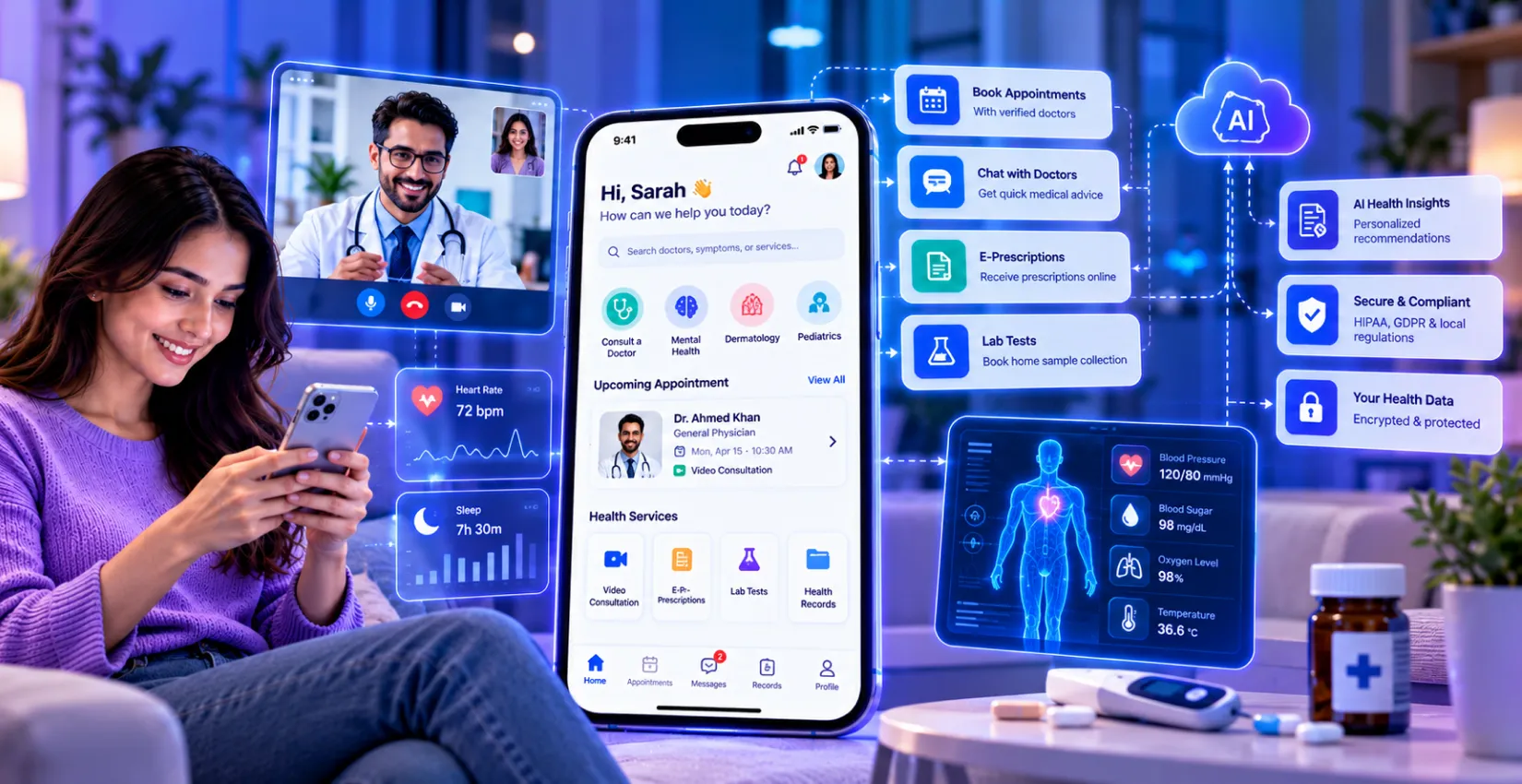
 By
By October 23, 2026