


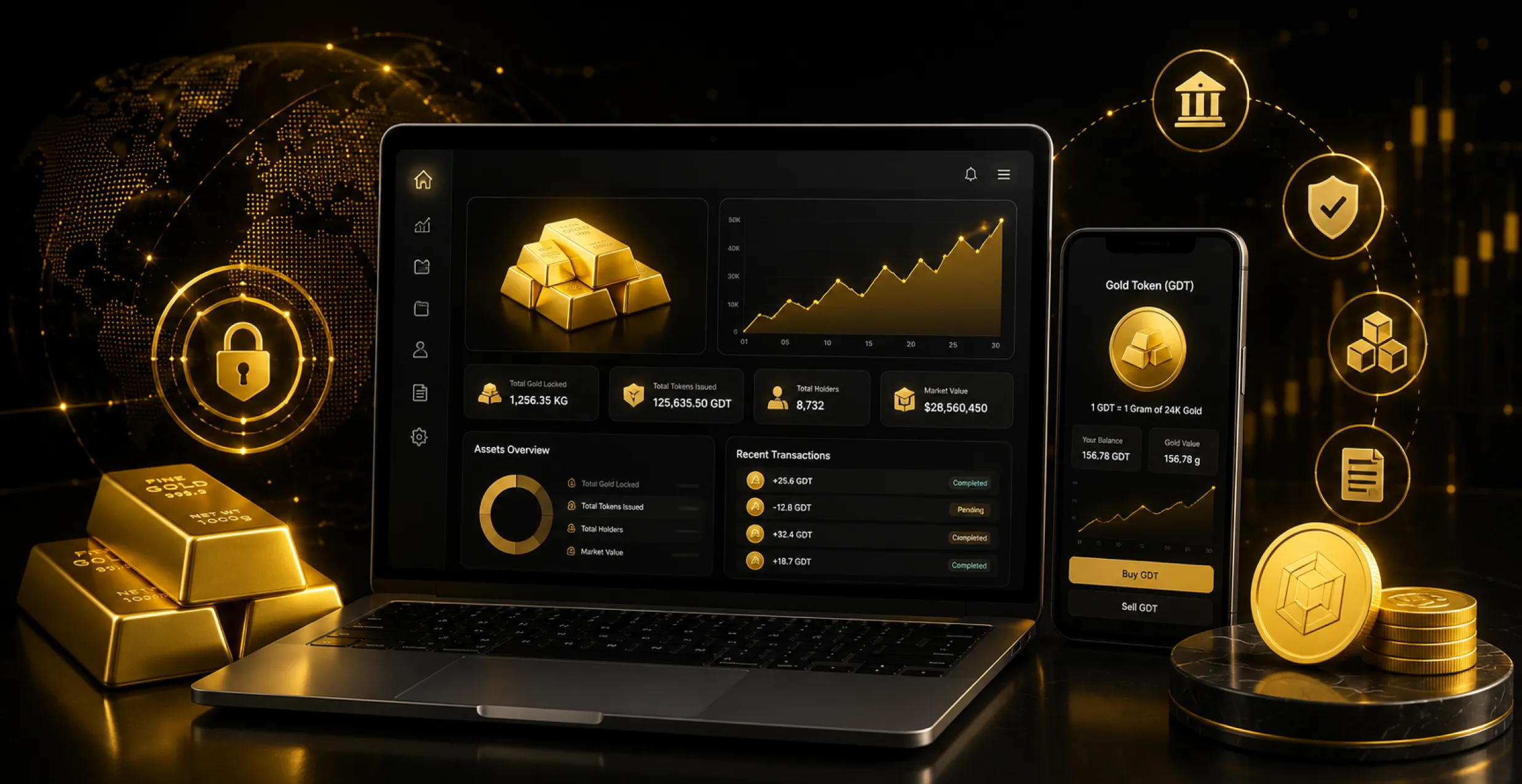
A trader in Dubai buys gold at midnight, from her phone, in three taps. No vault visit, no paperwork, no broker on hold. This is the promise of Gold Tokenization. It is quietly reshaping how the world invests in bullion.
Search interest around tokenization gold queries keeps climbing worldwide this year. Entrepreneurs everywhere are asking a simple question. How do we build something like this for our own market?
Want to clear your doubts regarding the gold tokenization platform? If yes, you have landed on the right article, as here we will discuss its components, development cost, benefits, process mistakes to avoid, and every aspect.
- What Is Gold Tokenization?
- Gold Tokenization: Global Market Size
- The Problem with Traditional Gold Investment And How Tokenization Solves It?
- How Gold Tokenization Works: From Vault to Blockchain?
- Core Components of a Gold Tokenization Platform
- Redemption Explained: Can You Really Convert Tokenized Gold Back to Physical Gold?
- Step-by-Step Guide: How to Build a Gold Tokenization Platform
- Regulatory and Compliance Considerations You Can't Ignore
- Real-World Use Cases: Who's Already Using Tokenized Gold
- Business Benefits of Launching a Gold Tokenization Platform
- Tech Stack Powering Modern Gold Tokenization Platforms
- How Much Does It Cost to Develop a Gold Tokenization Platform?
- Tokenized Gold vs Tokenized Oil vs Other Commodities: Key Differences
- Common Mistakes Businesses Make When Building a Tokenization Platform
- Why Partner with Octal IT Solution for Gold Tokenization Development?
- Conclusion
- FAQs
What Is Gold Tokenization?
Gold tokenization is the process of turning a tangible piece of gold into a digital token on a blockchain. Each token is a specific weight, typically one gram, of gold. The gold is stored in an audited vault and regularly checked by independent third parties. The token is held by investors, trades immediately, and can be redeemed for physical gold when necessary.
Ownership does not change when a shipment occurs, but rather when a transaction occurs. You can purchase a fraction of an ounce from anyone, without having to go to a dealer. Combines old world trust with new-world speed, and puts gold within reach of more people. Today, tokenization is viewed as a logical next step in commodity trading by businesses.
Gold Tokenization: Global Market Size
Numbers tell the growth story clearly. Consider these verified figures from recent industry reports.
- As per the report of Fortune Business Insights, the market is projected to be worth USD 4.7 billion in 2026 and reach USD 15.9 billion by 2034, exhibiting a CAGR of 16.40%.
- Tokenized gold trading volume hit $90.7 billion in Q1 2026 alone, already topping all of 2025.
- Full-year 2025 tokenized gold volume reached $84.6 billion, showing rapid acceleration into 2026.
- The broader tokenized RWA market cap climbed to $19.32 billion by March 2026, up 256.7% in fifteen months.
- Tokenized commodities, led by gold, formed 28.7% of the entire RWA sector by Q1 2026.
The Problem with Traditional Gold Investment And How Tokenization Solves It?
The storage fees, insurance, and risk of theft are part of the cost of purchasing physical gold. Its quick sale is seldom easy and costly. These barriers can be eliminated by tokenizing ownership on a blockchain. Through these dApp development services, investors are provided with immediate liquidity, fractional ownership, and clear proof of reserves.
| Factor | Traditional Gold Investment | Tokenized Gold |
| Storage | Physical vault or locker needed | Held digitally, no personal storage |
| Liquidity | Slow, dealer dependent | Instant, 24/7 trading |
| Minimum Investment | Often high | Fractional, as low as $1 |
| Transparency | Limited proof of reserves | On-chain, auditable records |
| Transfer Speed | Days | Minutes |
| Global Access | Restricted by region | Available worldwide |
How Gold Tokenization Works: From Vault to Blockchain?
It transports gold from a physical vault straight to a real-life digital asset. This change is possible and reliable with 6 steps.
Physical Gold Sourcing and Vault Storage
Gold bars are provided by certified refiners and are kept in a secure, insured, and LBMA-approved vault around the world.
Third-Party Auditing and Verification
The gold reserves are regularly audited by independent auditors to ensure that the gold stocks in the vaults do not differ from the gold that has been issued as tokens by any significant amount.
Minting Digital Tokens on the Blockchain
Developers issue tokens of the same amount of gold with standard tokens such as ERC-20 or other protocols.
Smart Contracts Linking Tokens to Physical Reserves
This one-to-one relationship between each token and its gold backing is automatically maintained by smart contracts.
Trading, Transfer, and Custody of Tokens
Investors are able to trade tokens on exchanges or wallets, with the ownership of the tokens changing instantly, with no physical gold moving involved.
Continuous Reserve Reconciliation
Platforms will regularly balance the total amount of tokens in circulation against the amount in the vaults, and report to users on proof-of-reserve.
Core Components of a Gold Tokenization Platform
It takes multiple technical levels to have a reliable platform. Each is integral and has its own unique role in operations. Below are the major components that a major Web3 development company considers while developing a gold tokenization platform.
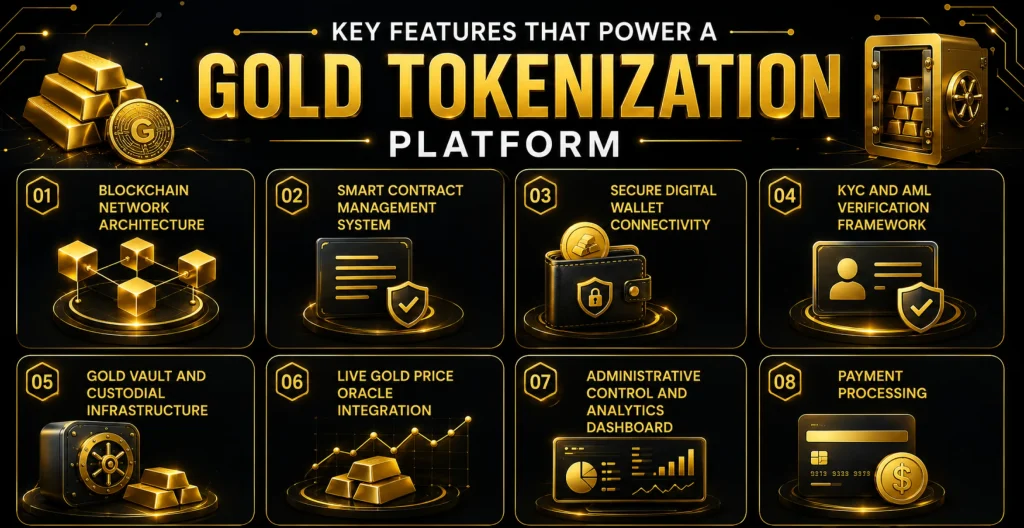
Blockchain Infrastructure Layer
This layer provides permanent and transparent records of ownership, transactions, and token issuance to all. Eliminates single points of failure. All entries remain visible, verifiable, and untamperable and unmanipulable.
Smart Contract Engine
Rules governing minting, burning, and redemption are automatically enforced by smart contracts, eliminating human mistakes and lowering expenses. They are instantly executed when conditions are met. This engine ensures that token supply is very closely tied to the vaults’ reserves.
Digital Wallet Integration
Wallets allow for the use of several blockchain networks. Investor funds held 24 hours a day are safeguarded by strong security and back-up features. A reputable DeFi wallet development company can facilitate users to securely manage tokens and transactions.
KYC/AML Compliance Module
The module validates the customers and filters transactions, in accordance with the international anti-money laundering regulations. It automatically alerts you to suspicious activity. This layer is expected by regulators, and trusted by investors that take it seriously.
Vault and Custody Management System
This mechanism helps in monitoring physical gold holdings, and the data on the blockchain is directly correlated to the custodian’s records. It helps ensure that tokens issued and gold stored are matched up. Records are kept up to date by custodians near to real time.
Real-Time Price Oracle Integration
Live gold prices are fed on the platform by Oracles, guaranteeing accurate token valuation at all times. They extract information from various reliable sources. This prevents any pricing manipulation and maintains investor confidence.
Admin and Reporting Dashboard
All transactions, compliance, and reserves are tracked on a single dashboard by administrators. This makes day-to-day management a lot easier. Custom reports are useful for teams to identify issues before they turn into bigger problems.
Payment Gateway and On/Off Ramps
These ramps enable users to easily and quickly switch between fiat and token currencies. They have several payment options and multiple currencies. Quick settlement means a seamless and dependable investor journey.
Redemption Explained: Can You Really Convert Tokenized Gold Back to Physical Gold?
Yes, most reputable platforms will let token owners convert tokens into physical gold. Typically, users will ask for redemption after a minimum amount of tokens has been reached. Then the platform arranges gold delivery or gold vault pick-up of matching physical gold.
Certain platforms do cost redemption fee and shipping costs for this service. Not all platforms have physical redemption, so make sure to check before you invest.
Step-by-Step Guide: How to Build a Gold Tokenization Platform
The way to build a compliant platform is an established process. This is how serious enterprises undertake the development of the gold tokenization software.
Step 1: Define Business Model and Token Structure
Determine if tokens are based on grams, ounces, or parts of gold reserves. This decision determines the price, redemption criteria, and target investors. Get it right early.
Step 2: Choose the Right Blockchain Network
Choose the transaction speed, security, and regulatory compatibility with your region for a network balance. With public chains, it is possible to view transactions. Permissioned chains are good for institutions that require greater control and privacy.
Step 3: Partner with a Certified Gold Custodian
Collaborate with vaults that are certified by the LBMA, which offer insured vaults and regularly produce audit reports. This is an opportunity to enhance investor trust. Look for custodians with a successful history and clear reporting of reserves.
Step 4: Design Smart Contracts and Token Economics
With well-designed contracts, you can avoid supply mismatches. All tokens are always backed by verifiable physical gold. Avail token development services that provide minting, burning, and redemption logic while maintaining fully matched reserves.
Step 5: Build and Integrate Core Platform Features
Integrate wallets, KYC modules, dashboards, and payment gateways into a single system. The features need to work together in harmony. A seamless customer journey is the main factor of adoption and retention.
Step 6: Testing, Auditing, and Launch
Conduct extensive security audits and checks prior to going live to real investors. Vulnerabilities are identified early by third-party auditors. When taken carefully, a launch preserves your reputation and investor capital.
Regulatory and Compliance Considerations You Can’t Ignore
The development of a digital gold platform is guided by regulation in each and every major decision. As compliance is ignored, this can result in expensive delays later.
Securities Law and Token Classification
Gold tokens can be registered as securities by regulators, such as the SEC, thus imposing strict registration requirements.
KYC/AML Requirements
The Financial Action Task Force requires identity verification and transaction monitoring in all of its member jurisdictions around the world.
Cross-Border Regulatory Variations
There are significant differences in rules throughout the UAE, Singapore, the EU and the USA.
Custodian Licensing and Reserve Audits
Vault partners require proper licensing, and regular independent audits of actual gold reserves.
Data Privacy and Reporting Obligations
Platforms need to adhere to GDPR and other regulations related to financial and personal data of users.
Working with Legal and Compliance Advisors
Trained legal professionals guide the proper structuring of tokens, steering clear of regulatory obstacles in various markets.
Real-World Use Cases: Who’s Already Using Tokenized Gold
Real-World Use Cases of Tokenized Gold reveal how mainstream this technology has already become. Their success offers useful lessons for newcomers.
Paxos (PAX Gold)
Each token has one fine troy ounce of PAX Gold in a vault in London. Reserves are audited monthly by independent auditors. If the number of tokens exceeds a certain value, investors can use them for the purchase of physical bars.
Tether Gold (XAUT)
Tether Gold is similar and has become one of the most traded tokenized commodities in the world. One token is equivalent to one gold allocation in Swiss vaults. Liquidity gives a greater appeal to both retail and institutional traders.
Perth Mint (PMGT)
PMGT is being introduced by Australia’s government-backed mint, which will allow investors to access blockchains with sovereign trust. Cautious buyers are assured with the support of their State. This is the model of how governments can gain confidence in entering the tokenized commodity markets.
DigiShares and Institutional Gold Offerings
DigiShares allows institutions to tokenize gold assets with permissioned and private investor distribution. They concentrate their platform on compliance-heavy situations. The strategy works well for funds and family offices that want discretion over their entry points.
Comtech Gold
The platform, based in the UAE, connects tokens directly to gold in Dubai’s vaults. Comtech aims at regional investors who are looking for Sharia-compliant investments. It is an indicator of the rising demand for tokenized bullion products in the Middle East.
Business Benefits of Launching a Gold Tokenization Platform
The advantages of Gold Tokenization Services are not just limited to the convenience of everyday investors. These advantages appeal to investors and also the long-term development of the platform.
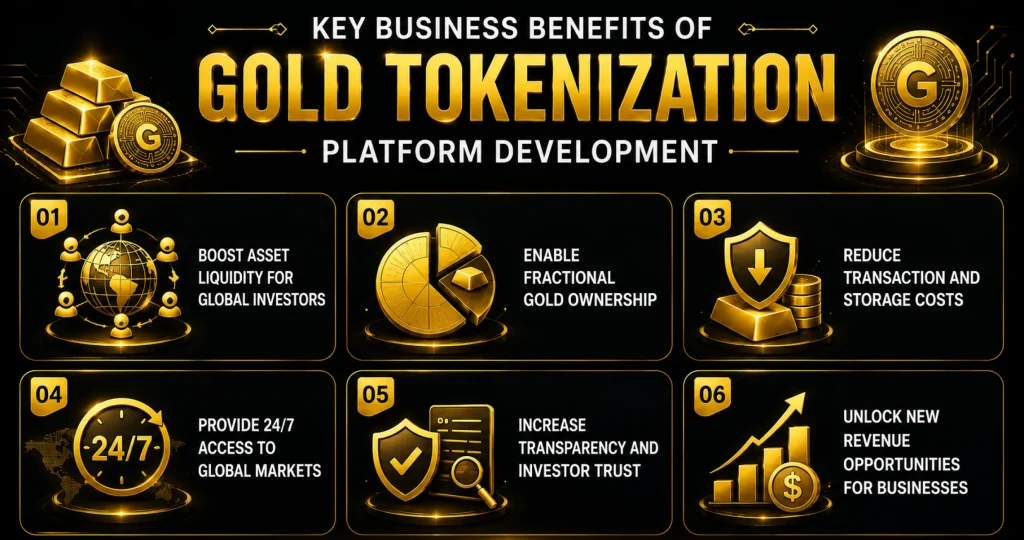
Increased Liquidity for Investors
The instant trading of tokens allows investors to enter and exit trades without waiting for market segmentation.
Fractional Ownership Opportunities
This enables small investors to now be customers of your platform and gives you a whole lot more customers to deal with.
Lower Transaction and Storage Costs
Digital tokens eliminate numerous storage and handling charges associated with owning physical gold.
24/7 Global Market Access
Unlike traditional markets, tokenized gold trades 24/7 around the globe.
Enhanced Transparency and Trust
Through blockchain records, investors can have reliable evidence that each token has a corresponding reserve.
New Revenue Streams for Businesses
Platforms make money from transaction fees, redemption fees, and offering premium custody services.
Tech Stack Powering Modern Gold Tokenization Platforms
The Tech Stack Used in Gold Tokenization Development keeps evolving toward stronger, faster security.
- Blockchain Networks
Ethereum, Polygon, Solana, or permissioned chains like Hyperledger.
- Smart Contract Languages
Solidity, Rust, or Vyper for secure contract logic.
- Backend Frameworks
Node.js, Python Django, or Java Spring Boot for platform services.
- Databases
PostgreSQL or MongoDB for transaction and user data storage.
- Security Tools
Multi-signature wallets, HSMs, and third-party smart contract auditors.
How Much Does It Cost to Develop a Gold Tokenization Platform?
Costs vary widely based on complexity, features, and location of your development partner.
By Platform Type
| Platform Type | Estimated Cost Range |
| MVP Gold Tokenization App | $25,000 to $45,000 |
| Full-Featured Platform | $50,000 to $90,000 |
| Enterprise-Grade Solution | $100,000 and above |
By Core Features
| Feature | Estimated Cost |
| Smart Contract Development | $8,000 to $15,000 |
| KYC/AML Integration | $5,000 to $10,000 |
| Wallet and Custody System | $10,000 to $20,000 |
By Geographic Location
| Region | Hourly Rate Range |
| North America | $100 to $180 |
| Western Europe | $80 to $150 |
| South Asia (India) | $25 to $50 |
By Compliance Complexity
| Compliance Level | Added Cost |
| Single Jurisdiction | $5,000 to $10,000 |
| Multi Jurisdiction | $15,000 to $30,000 |
Tokenized Gold vs Tokenized Oil vs Other Commodities: Key Differences
Different commodities bring different storage, liquidity, and regulatory challenges to tokenization projects. Here is a clear comparison.
| Aspect | Tokenized Gold | Tokenized Oil | Other Commodities (Silver, Real Estate) |
| Storage Complexity | Low, compact vaults suffice | High, requires tanks and logistics | Varies significantly by asset type |
| Price Volatility | Relatively stable | Highly volatile | Moderate to high |
| Redemption Feasibility | Straightforward physical delivery | Complex, logistically difficult | Depends heavily on asset |
| Investor Demand | Very strong globally | Growing but niche | Moderate, asset dependent |
| Regulatory Clarity | Fairly established | Still developing | Inconsistent across regions |
Platforms supporting tokenized commodities gold oil often serve very different investor profiles entirely.
Common Mistakes Businesses Make When Building a Tokenization Platform
Businesses can save a lot of time, money, and reputation by avoiding the below-listed mistakes.
Skipping Regulatory Research Early On
It is easy to find that businesses that do not pay attention to the regulations in the beginning are forced to rebuild or close down later when the time comes.
Choosing the Wrong Blockchain Network
The wrong network can lead to scalability problems and higher transaction costs in the future.
Ignoring Custodian Due Diligence
Working with an unregistered custodian could cause investors to lose confidence in the custodian and result in a mismatch of the reserves.
Underestimating Compliance Costs
Many startups underestimate the costs of the various legal, audit, and reporting obligations.
Weak Smart Contract Auditing
Without adequate audits, platforms are vulnerable to hacks and massive monetary losses.
Poor User Experience for Non-Crypto-Native Investors
The high level of technical jargon in interfaces intimidates generic investors who don’t know about wallets and blockchain terms.
Why Partner with Octal IT Solution for Gold Tokenization Development?
Octal IT Solution is of the top asset tokenization development companies in the world. We have been providing secure and scalable blockchain solutions in various industries all over the world since 2007. We have ISO and CMMI Level 3 Certifications, showing disciplined, quality-driven development processes.
We are also a recognized member of the Forbes Technology Council. Our Gold Tokenization Development Services encompass strategy, design, smart contracts, and comprehensive deployment assistance. We also provide Gold Tokenization Development Solutions as per the regulatory and business requirements of the customer.
Our team is equipped with strong blockchain development skills as well as experience in compliance, in line with the rules and regulations established by the respective regulatory authority. The team extends the platforms with marketplace features, wallets, and dashboards.
Our engineers create platforms that are truly trusted by investors, from smart contracts to custody integration. Opting for Octal is selecting a partner who has the credibility in the industry to back them up in reality.
Conclusion
The notion of tokenizing gold is not just the domain of a handful of investors looking for niche gold investments. It is a true transformation towards the ownership of accessible, transparent, and liquid gold. If the business is smart enough to get ahead of the curve in this area, it can be a first-mover advantage.
From an MVP to enterprise-grade, there’s an opportunity. Octal IT Solution as a top blockchain development services provider, is here to support you in your complete journey. The key to success and failure lies with the right technology partner.

 By
By September 8, 2026




 Latest Stories
 Get in Touch