



Ever wondered how traditional vaults are turning into digital codes? The digital transformation in banking systems has become an essential requirement for modern banking operations. Financial institutions are competing to implement crypto banking solutions because cryptocurrency has become a standard part of their banking services. But is your business ready for the shift?
According to Coherent Market Insights, the global blockchain in banking market is projected to grow from $14.72 billion in 2026 to $220.43 billion by 2033, reflecting a massive 47.2% CAGR.
This guide highlights how banks that operate with cryptocurrency systems use advanced technology to create secure financial solutions, maintain their ability to expand, and develop new features. Through crypto banking software development, organizations establish connections between their existing systems and upcoming financial solutions.
Exploring Crypto Banking Systems and Architecture
The current banking system of modern architecture uses a cloud-based banking platform to maintain constant system access. While delivering fast transaction processing, it connects traditional banking systems with modern blockchain technology to create a seamless customer experience.
1. Cloud-Based Platforms
The platform enables banks to develop cryptocurrency solutions through its flexible framework while maintaining safe storage of extensive digital asset information with immediate worldwide asset accessibility. The current configuration serves as an essential requirement for blockchain application development companies that need to deliver services with continuous availability.
2. Software Essentials
The crypto banking software development requires a major emphasis on building secure system backends. The digital software uses these essential components as the basic foundation and supports its entire operational framework.
3. The IoT Connection
A blockchain software development organization creates smart banking systems through its combination of smart device technology and ledger systems, enabling machines to process automatic payments between themselves.
4. Operational Comparison
A comparative analysis shows that modern digital banking systems achieve quicker transaction processing times and lower transaction costs. When compared to traditional banking systems that use physical branches because they operate on outdated technologies.
Critical Features of Modern Crypto Banking Platforms
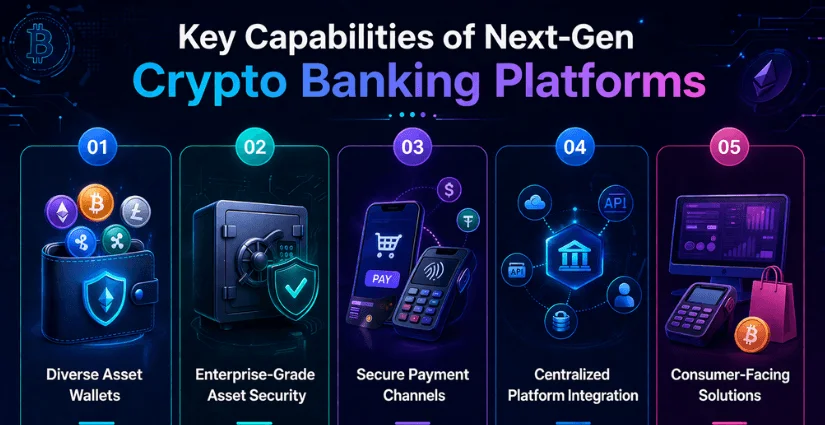
To succeed, a crypto banking platform development project must prioritize user experience and security. These features form the backbone of a competitive, modern financial application that rivals traditional institutions.
1. Multi-Asset Wallets
Crypto banking platforms give users access to hot wallets, which they can use for their daily transactions, while providing cold storage solutions to protect their blockchain wallet development assets during extended periods. The hybrid solution has become an essential method developers use to create their mobile banking applications at the highest level of quality.
2. Institutional Custody
The software requires institutional security standards because it uses multi-signature protocols and hardware security modules to protect its private key management system from unauthorized access.
3. Payment Gateways
Merchants gain the ability to accept digital assets from customers located around the world. The business uses crypto payment gateway integration to convert crypto assets into fiat currencies and helps them manage price fluctuations.
4. Unified Integration
It enables digital assets to merge with existing digital banking platforms and lets users handle both fiat and crypto assets from a single application interface without needing to switch between different apps.
5. Retail Systems
The crypto payment system enables instant retail transactions and cuts down the waiting period needed for traditional cross-border wire transfers and clearinghouse operations.
Security and Compliance in Crypto Banking Software
Crypto banking systems depend on security as their fundamental element. Financial institutions must establish platform safety through advanced encryption and compliance measures because their trustworthiness depends on full protection.
1. Security Software
This involves implementing end-to-end encryption and DDoS protection to safeguard the crypto banking software development lifecycle from sophisticated cyber threats.
2. Compliance Frameworks
The regulatory framework consists of KYC regulations, AML laws, and digital asset consulting services. Digital asset consultants who possess expertise will help your platform become compliant with international regulations and will decrease the possibility of money laundering and identity theft attacks in a complicated legal environment.
3. Fraud Prevention
The top blockchain app development company uses artificial intelligence to track unusual user behavior and helps them prevent financial loss through instant fund protection that connects with their smart contract development processes.
4. Smart Contracts
Automates trust through audited code. Using examples of smart contracts, banks can facilitate automated lending and escrow services without human intermediaries, ensuring total transparency
Note: If you want to develop smart contract platforms, then discover the right smart contract development company according to your project requirements.

Crypto Banking Software vs Traditional Digital Banking Software
The crypto banking software development aims to create user-friendly systems that offer operational benefits through their decentralized structure and continuous access to their transaction records yet fall short of delivering the operational speed and system transparency found in traditional banking operations.
| Feature | Traditional Banking Software | Crypto Banking Software |
| Transaction Speed | 1-3 Business Days | Near-Instantaneous |
| Intermediaries | Multiple Banks/Clearing Houses | None (Peer-to-Peer) |
| Availability | Bank Hours/Business Days | 24/7/365 |
| Cost Structure | High Intermediary Fees | Low crypto payment system fees |
| Data Integrity | Centralized Database | Immutable Blockchain Ledger |
Custom Banking Solutions & Specialized Development
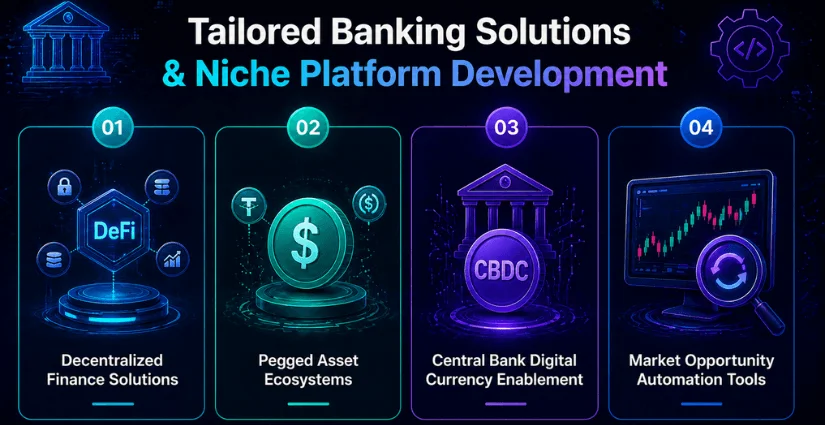
The competitive market demands specific capabilities generic software programs cannot deliver. The specific market requirements of their target audience enable institutions to develop niche products through custom banking finance solutions.
1. DeFi Development
With the help of DeFi development, users are allowed to lend and borrow without any restrictions, establishing a new advancement in financial technology because it eliminates all traditional financial control mechanisms.
2. Stablecoin Platforms
This develops price-stable assets that maintain a fixed value to fiat currency, thereby delivering a secure stablecoin banking platform that allows risk-averse users to access blockchain advantages without exposure to price fluctuations.
3. CBDC Support
Supports governments in CBDC banking software development, creating digital versions of national currencies for efficient, traceable, and secure public distribution to citizens.
4. Arbitrage Tools
It allows traders to use arbitrage software for price exploitation between exchanges through its banking interface and offers direct access to liquidity and profit generation. The integration of these tools into the system remains seamless within the broader crypto banking platform.
The Development Process: How to Build a Crypto Banking App
A successful crypto banking application development requires structured project planning that combines new banking applications with essential financial system requirements.
Step 1: Strategic Planning and Fintech Solution Development
The first step of strategic planning with fintech solution development requires extensive market research to establish the distinct value proposition and regulatory pathway. The digital banking transformation process starts at this point for most traditional banking institutions.
Step 2: UI/UX for Mobile Banking App Development Services
The mobile banking app development services require UI/UX design to create user-friendly interfaces that allow non-technical users to execute complex blockchain transactions with ease.
Step 3: Development of Crypto Banking Software (Frontend & Backend)
The development process for crypto banking software encompasses both frontend and backend development through developers who create scalable APIs while connecting blockchain nodes. Develop a core banking system to support user-based growth without any limitations.
Step 4: Fintech Apps Development, Testing, and Quality Assurance
The testing process for fintech application development includes comprehensive testing procedures to guarantee that the application functions without any errors while testing security systems and operational performance during times of maximum user demand.
Step 5: Deployment and Banking Software Services Support
The application deployment process, combined with banking software services support, enables the platform to receive continuous updates, including security enhancements and blockchain protocol modifications.

Understanding Crypto Banking Software Development Cost
The crypto banking software development cost requires assessment of the project complexity throughout the development process. A basic MVP differs significantly from a full-scale institutional platform with advanced security.
1. Platform Expenses
The total costs of developing crypto banking platforms depend on two factors: the number of blockchains used and the complexity of the security measures implemented.
2. Tailored Budgeting
The organization receives a customized product through its investment in custom fintech solutions. The higher initial expense helps organizations avoid technical debt problems that often occur with off-the-shelf software solutions.
3. App vs. Core: Crypto Banking App Development
Developing a crypto banking app development interface is often more affordable than rebuilding a complete backend core banking system, though both are necessary for a full-stack solution.
4. Hiring Experts
When you hire crypto banking developer teams, you pay for specialized knowledge in cryptography. The specific skills of this field are what make banking software development projects succeed or fail.
The Crypto Development Cost Breakdown for Better Budgeting
The crypto banking software development cost depends on multiple factors, including both your team’s geographical location and the technological difficulties of your selected features. In 2026, building a secure, compliant platform requires a strategic budget
1. Cost by Specialist Roles (USA Market)
The largest budget is used when you hire specialized talent for fintech solution development. Blockchain-specific roles in development work incur expenses exceeding normal web development costs by 20 to 30 percent.
| Specialist Role | Hourly Rate (Avg.) | Monthly Retainer |
| Blockchain Architect | $180 – $250 | $28,000 – $40,000 |
| Smart Contract Developer | $150 – $210 | $24,000 – $33,000 |
| Backend Engineer (Node/Go) | $120 – $180 | $19,000 – $28,000 |
| UI/UX Fintech Designer | $100 – $160 | $16,000 – $25,000 |
| Cybersecurity/Auditor | $200 – $300 | $32,000 – $48,000 |
2. Cost by Development Phase
The structured development lifecycle of crypto banking platforms guarantees proper fund distribution from the initial discovery stage until the final post-launch support phase.
| Development Phase | Timeline (Est.) | Cost Allocation |
| Discovery & Legal | 3 – 5 Weeks | $15,000 – $30,000 |
| UI/UX Design Phase | 4 – 8 Weeks | $20,000 – $45,000 |
| Core Development | 16 – 32 Weeks | $80,000 – $250,000 |
| Testing & Security Audit | 4 – 6 Weeks | $30,000 – $70,000 |
| Deployment & DevOps | 2 – 4 Weeks | $10,000 – $25,000 |
3. Cost by Project Complexity
The final project cost increases with every additional feature you implement, including CBDC banking software development and AI fraud detection.
| Complexity Level | Feature Set | Time to Build | Estimated Total Cost |
| Basic (MVP) | Simple wallet, BTC/ETH support, KYC | 4 – 6 Months | $60,000 – $120,000 |
| Moderate | Multi-chain debit cards, staking | 7 – 10 Months | $130,000 – $280,000 |
| Advanced | DeFi banking software, AI, CBDC | 12+ Months | $300,000 – $600,000+ |
| Enterprise | Full global compliance, custom core | 18+ Months | $1,000,000+ |
4. Cost by Geographic Region (Global Rates)
US crypto companies use offshore and nearshore teams to reduce their expenses for developing crypto banking software.
| Region | Avg. Hourly Rate | MVP Cost (Est.) | Expertise Level |
| North America | $120 – $250 | $150,000+ | High (Compliance & Security) |
| Western Europe | $90 – $180 | $110,000+ | High (Fintech & UI Design) |
| Eastern Europe | $45 – $90 | $60,000+ | Moderate-High (Tech Prowess) |
| India / SE Asia | $25 – $65 | $40,000+ | Massive Talent Pool |
| Latin America | $50 – $100 | $70,000+ | Great for Nearshoring (US Time) |
Modern Tech Stack for Crypto Banking Software Development
The crypto banking platform development needs a technology base that can deliver both security and operational efficiency through its modular design and ability to scale. The platform needs this combination of traditional fintech development tools and decentralized protocols because it enables compliance with regulations during high-frequency trading operations.
| Layer | Technology Recommendations (2026) |
| Blockchain Networks | Ethereum (L2s), Solana, Polygon, Avalanche |
| Smart Contracts | Solidity, Rust, Vyper |
| Backend | Go (Golang), Node.js, .NET 10 |
| Frontend (Web) | React.js, Next.js, TypeScript |
| Mobile | Flutter, React Native (Fabric Engine) |
| Databases | PostgreSQL, MongoDB, Redis |
| Cloud & DevOps | AWS, Azure Confidential Computing, Docker |
| Security & Auth | OAuth2, Biometric MFA, AWS Key Vault |
| Integration APIs | Plaid, Web3.js, Ethers.js |
Real-Time Financial Monitoring and Analytics
Users need modern banks to give them insights; banks need to deliver through their data-based solutions. The implementation of analytics within crypto banking software creates enhanced financial decision-making capabilities while delivering complete transparency to all involved parties.
1. Autonomous Fraud Detection
The integrated AI-powered fraud detection system examines millions of data points in real time to prevent fraudulent activities in crypto banking solutions from damaging both your institutional-grade digital asset custody and user trust.
2. Predictive Liquidity Management
The advanced analytics system predicts cash flow patterns, enabling US crypto companies to manage their reserves while using crypto banking software to perform instant fiat-to-crypto transactions without running into liquidity problems.
3. On-Chain Transaction Transparency
Blockchain security software enables institutions to monitor their distributed ledgers because it provides complete access to their distributed ledgers while documenting all activities that occur during the development of their crypto banking platform in a way that can be verified at any moment.
4. Automated Regulatory Reporting
The cryptocurrency banking system uses its real-time tools to assist organizations with compliance because it automatically generates reports that meet SEC and FINRA requirements, thus reducing the time needed for manual data entry work, which often results in errors during digital asset consulting activities.
5. Behavioral User Insights
The process of observing user behavior in fintech app development enables companies to create highly customized banking solutions that help them maximize their return on investment from crypto banking software through precise service delivery.
Future Trends in Fintech and Digital Payments
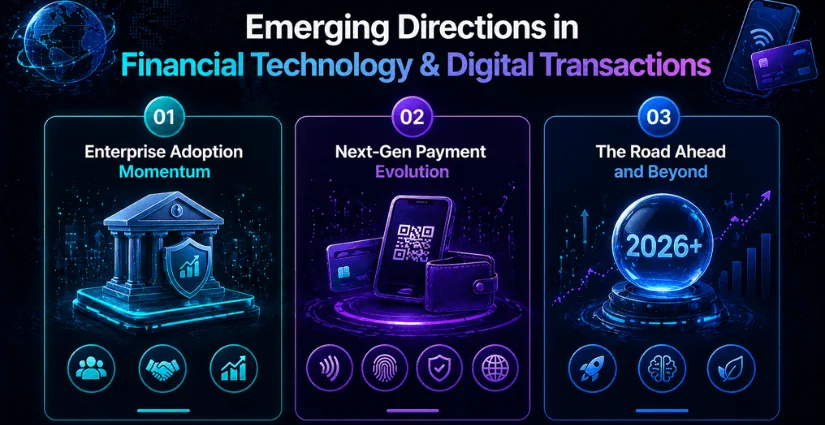
The fintech app’s development experiences fast-paced changes, modern technology creates. The ability to predict future developments enables us to understand how global changes, together with technological innovations, will influence our financial transactions.
1. Institutional Influence
The companies create liquidity for global markets while generating international standards that help US-based crypto businesses expand their operations into conventional financial markets.
2. Payment Innovations
Future digital payment company models will use biometric technology together with artificial intelligence for process optimization and will enable users to transfer cryptocurrency through their existing peer-to-peer applications.
3. 2026 and Beyond
The banking sector will establish AI-based wealth management systems together with cross-chain asset transfer systems as their new operational standard.
Start Your Crypto Banking Development Journey with Octal IT Solution
Do you want to become a pioneer in the upcoming financial revolution? Octal IT Solution provides top-tier banking software development tailored to your vision. Our company assists you in managing custom software development challenges while we develop secure systems that can expand and deliver products ready for market.
- Our developers have expertise in developing crypto banking software and creating DeFi protocols.
- We provide dedicated teams who develop mobile banking applications.
- Our company has demonstrated its ability to develop and implement blockchain banking software.

Final Words
Developing crypto banking software requires developers to possess coding abilities while needing them to comprehend financial regulations, together with blockchain technology. A specialized fintech software developer will establish your platform through secure production and innovative development.
Your chosen banking software development partner will determine your market success as your business continues to develop. The top banking software development companies will transform your ideas into a worldwide financial solution while developing a secure and user-friendly blockchain wallet system.
Read More : Hire Crypto Exchange Developer


 Get in Touch
 By
By July 9, 2026