



Organizations are now operating based on analytics and effective management. Some of the most popular ones include ERP software and accounting software, which are aimed at simplifying various yet equally significant processes.
Although they are the same at face value, the two systems perform different functions and introduce varying advantages to organizations. ERP or enterprise resource planning software is more than financial management software that incorporates functions such as HR, inventory, supply chain, and other functions into one system.
The accounting software is majorly concerned with financial reporting, bookkeeping, and compliance management, on the other hand.
The decision to go with an ERP or accounting solution will follow your business size or industry, and your scale requirements. Whereas small businesses usually kick start with accounting software, then enterprises tend to move towards ERP as a complete management tool.
This blog will discuss what they are, their significant differences, integration potential, and which alternative may better fit your business, either when you are considering a solution or when you are looking at how to develop accounting software.
What is ERP Software?
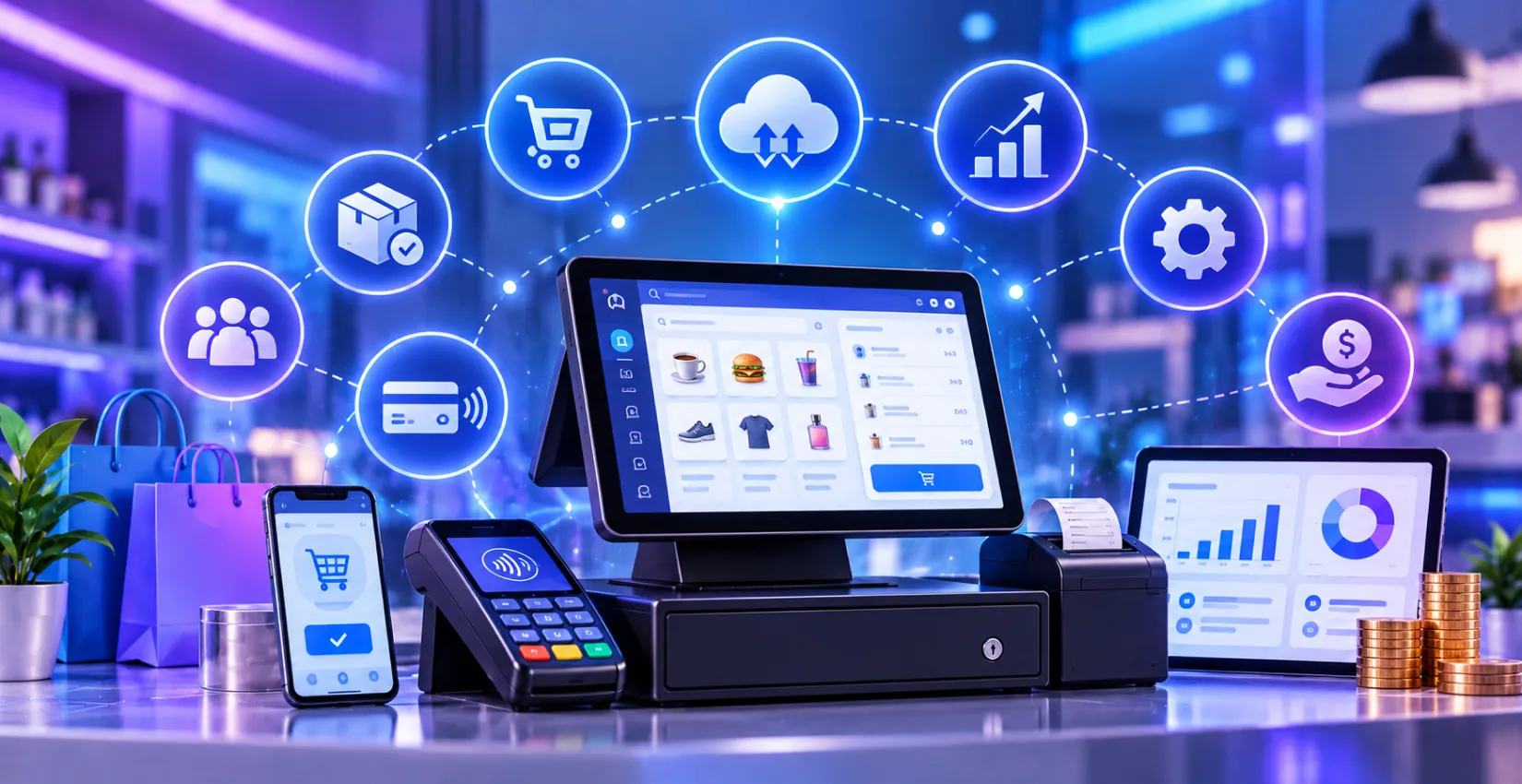
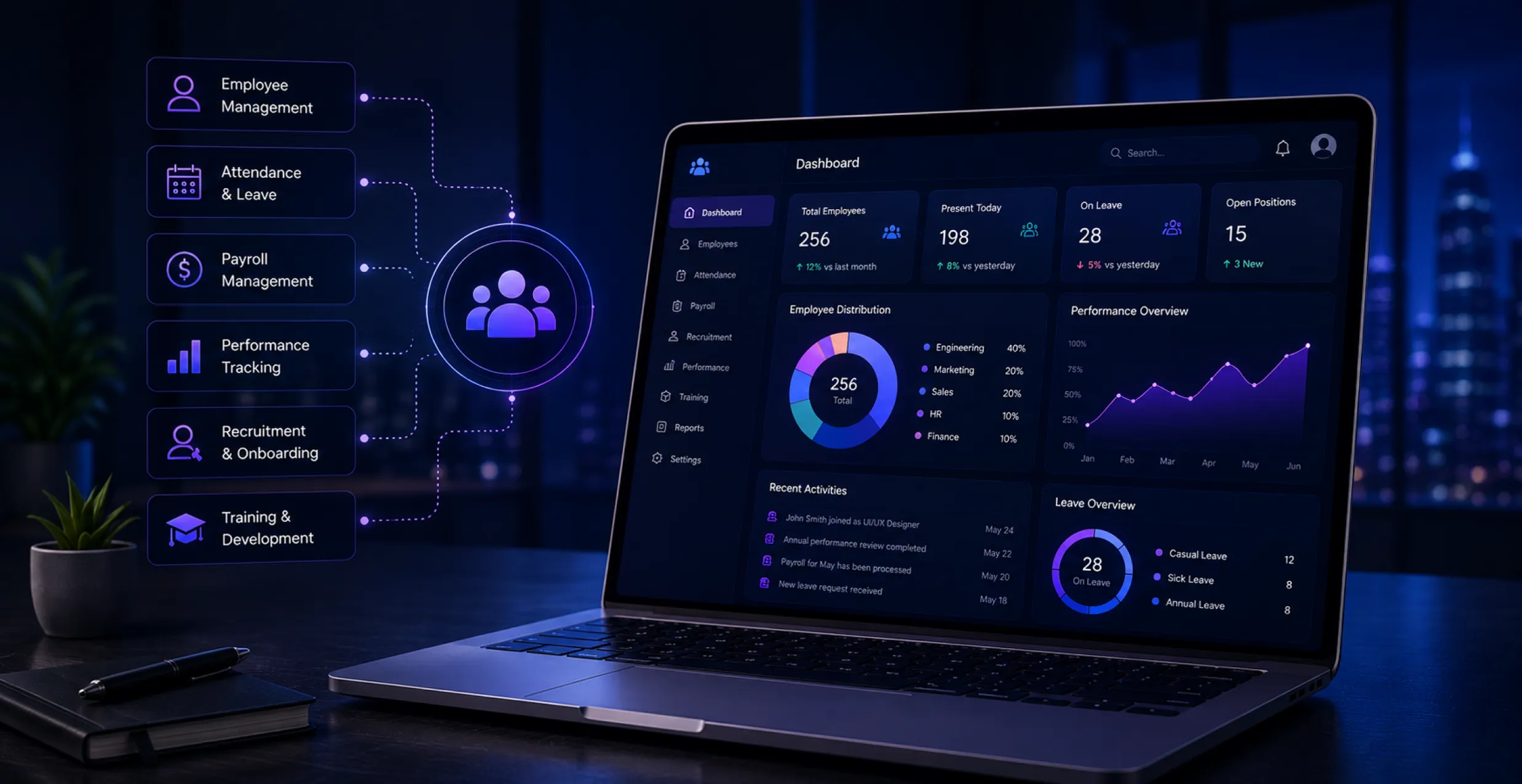
Enterprise Resource Planning software, or ERP software, is a single platform that is intended to centralize and manage different business processes. ERP offers a harmonized ecosystem of efficiency and collaboration in terms of finance, HR, procurement, supply chain, and inventory management, as well as customer relationship management.
It breaks down the existing barricades between various departments and provides real-time information that can be used in decision-making.
The existing ERP system can be scaled and relies on the cloud to make it flexible for any industry. They tend to incorporate the latest technologies, like artificial intelligence in ERP, to improve predictive analytics, automation, and process optimization.
ERP software has been valued at USD 64.83 billion in 2024. It is expected to reach at USD 123.41 billion by 2030 increasing at a CAGR of 11.7% from 2025-2030. ERP assists organizations in enhancing productivity and minimizing operational expenses with excellent reporting and compliance capabilities. Companies that intend to transform their businesses usually seek the services of an ERP Software Development Company to design specific systems that match their requirements.

What is Accounting Software?
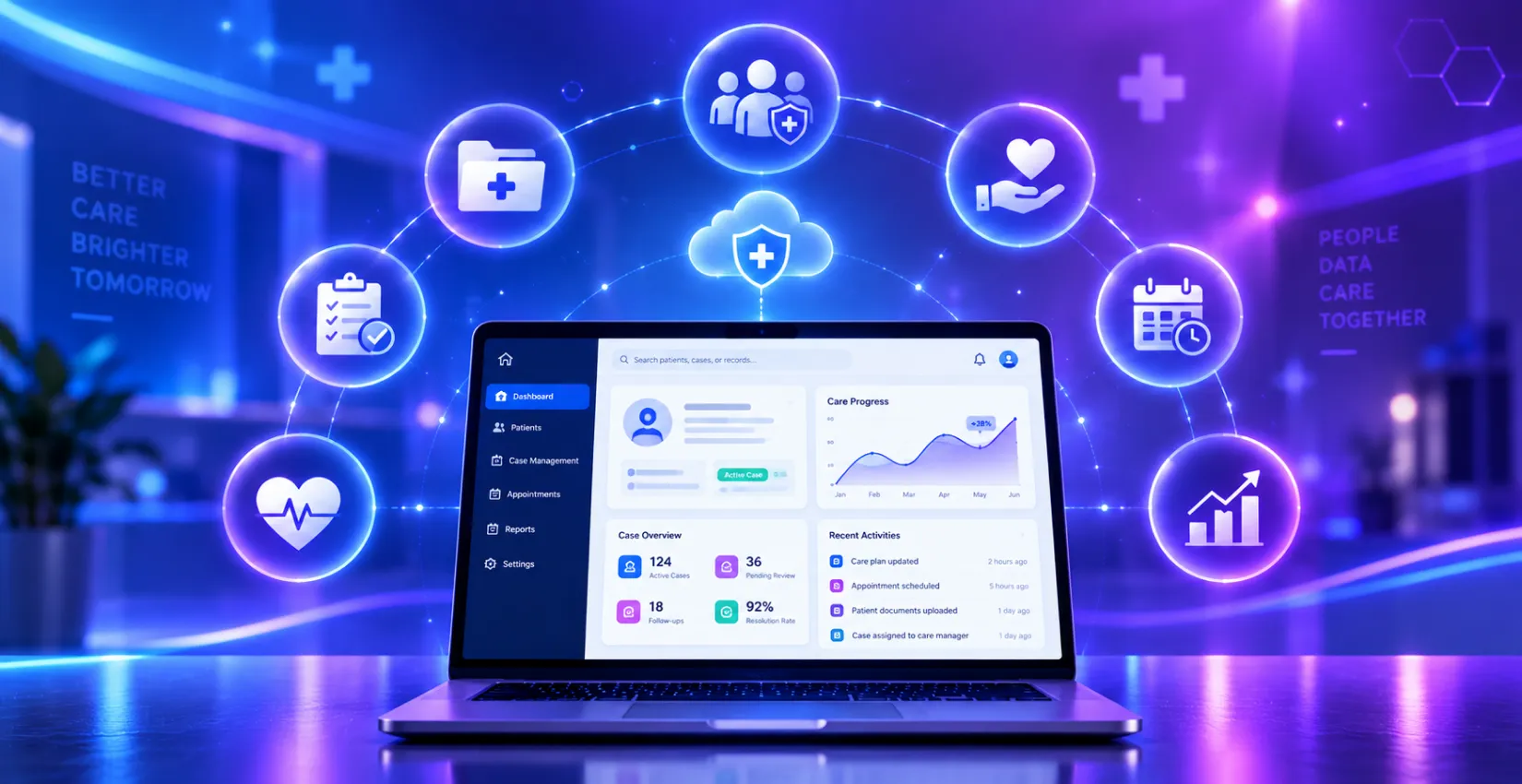
Accounting software is a particular program enabling the control of financial operations, record keeping, and preparing a report. It also eases operations such as bookkeeping, invoicing, payroll, managing, and tracking expenses, and helps businesses to remain in compliance and financial order.
Small business accounting is a low-priced and easy-to-use alternative to larger enterprise accounting tools available to SMEs and startups. Automation, which eradicates human errors and improves efficiency, is also compatible with high-tech platforms.
Due to the emergence of accounting software development services, businesses now have an opportunity to develop specific solutions according to their industry and compliance requirements. It doesn’t matter what level of payroll-oriented or tax-ready accounting software you need; how to build accounting software is then a primary consideration of businesses that need flexibility, control, and scalability in their financial management.
Key Differences Between ERP vs. Accounting Software
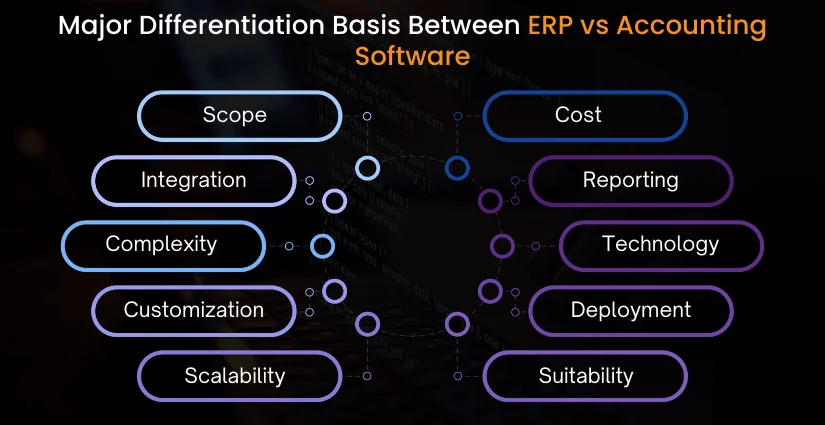
Below is a table highlighting the differences between ERP and accounting software that would help you bring clarity to your mind.
Feature | ERP Software | Accounting Software |
Scope | Covers multiple business functions (finance, HR, supply chain, CRM) | Focuses mainly on financial management and bookkeeping |
Integration | Integrates across all departments | Limited to financial processes |
Complexity | More complex, requires training | Easier to use with basic training |
Customization | Highly customizable via modules | Customization limited to finance workflows. |
Scalability | Designed for large and growing enterprises | Suited for SMEs and startups |
Cost | Higher implementation and maintenance costs | Relatively affordable and quick to deploy |
Reporting | Provides comprehensive cross-departmental insights | Focused financial reports |
Technology | Often integrates AI, ML, IoT, and automation. | Primarily supports bookkeeping automation |
Deployment | Cloud and on-premise options | Mostly cloud-based, SaaS models |
Suitability | Best for enterprise resource planning | Best for managing financial transactions |
1. Scope
ERP software is not limited to financial management, but also covers HR, supply chain, procurement, and CRM, which is why it is suitable for the business world. On the other hand, accounting software is more accounting and compliance-driven and fits better in smaller organisations that need simpler finance-only applications.
2. Integration
Using ERP, businesses have the benefit of cross-departmental integration, where there is consistency in data within HR, financial, and inventory. However, accounting software can only integrate with economic data, and enterprises will need third-party tools to expand integration, which could pose a problem in collaboration across the enterprise.
3. Complexity
Enterprise resource planning software is highly complicated, and it needs professional training to use it easily. In the meantime, accounting software is simple and easy to use by accountants, SMEs, and finance teams with minimal or no complex learning curves.
4. Customization
ERP systems may be extensively customized toward industry-specific modules, in both the medical field and the manufacturing industry. Conversely, customization of accounting software is mainly restricted to financial processes such as tax applications or payroll applications.
5. Scalability
ERP systems will have the ability to expand with companies, increasing geographic and industry expansions. SMEs with a lower scaling need are best served by accounting software, but the development of accounting software can become more flexible.
6. Cost
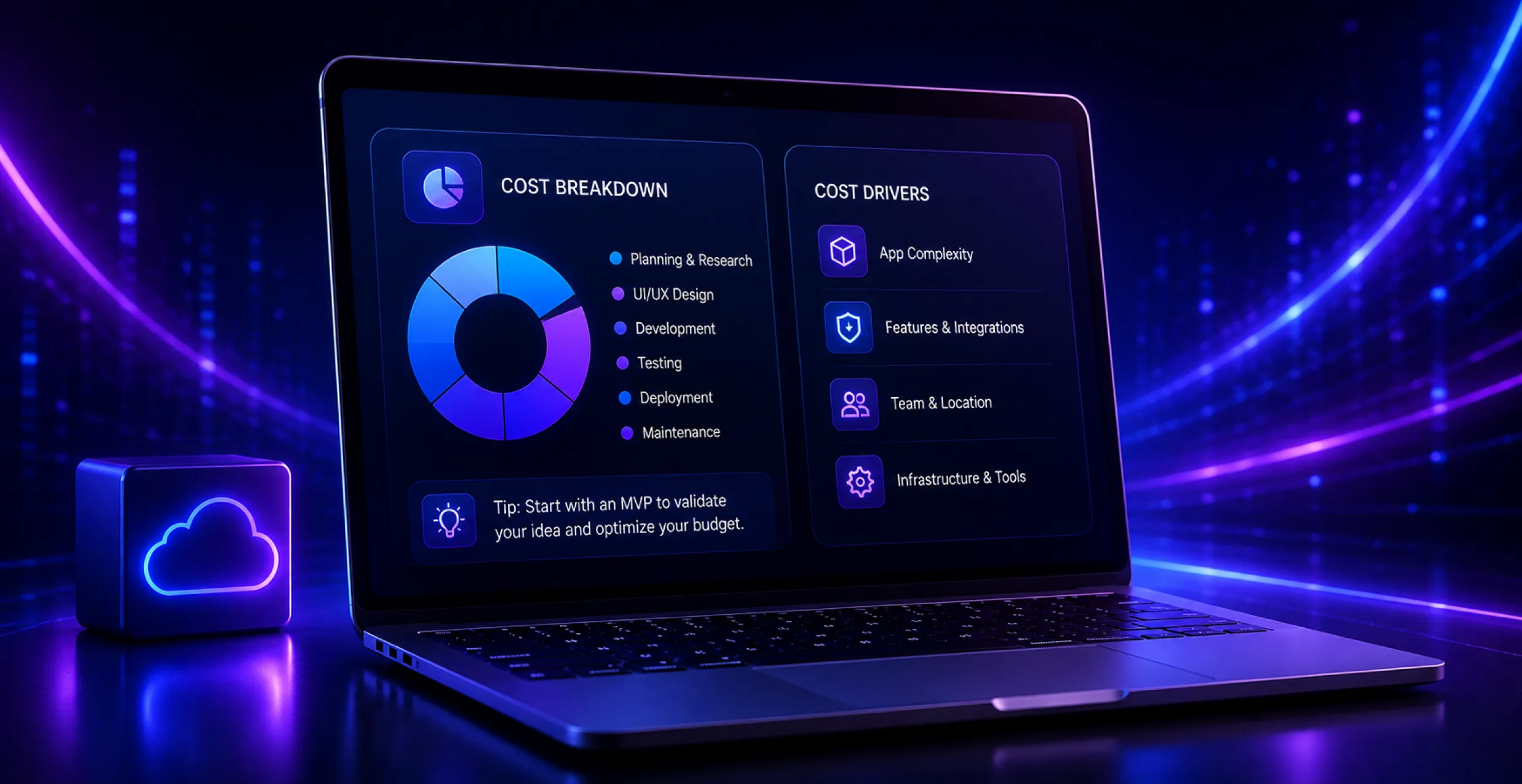
ERP is a larger investment as it has a higher licensing, setup, and training cost. On the contrary, accounting software is very affordable, and the cost to develop accounting software for small businesses is very cheap with the SaaS model.
7. Reporting
ERP reporting consists of cross-functional analytics, which allow businesses to track the overall performance. However, reporting through accounting software is limited to providing focused information on financial statements, taxes, and compliance, providing more limited yet accurate information.
8. Technology
Contemporary ERP systems utilize ERP artificial intelligence to make predictions, automate, and optimize the supply chain. The accounting software is very complex, yet it is mainly used to automate compliance and bookkeeping, rather than multidepartment work.
9. Deployment
ERP is available on the cloud and on-premises, allowing flexibility to enterprises. Most accounting programs are cloud-based, available on subscription, and this is what small enterprises require when trying to access them remotely without complications.
10. Suitability
ERP software suits organizations that want all the enterprise resource planning to be integrated, and accounting software suits businesses that solely concentrate on financial management. Depending on the size of the company, budget, and business requirements, the decision will be made based on these factors.
Read more: How to Develop Odoo ERP Software?
ERP Software or Accounting Software: Which is Better?
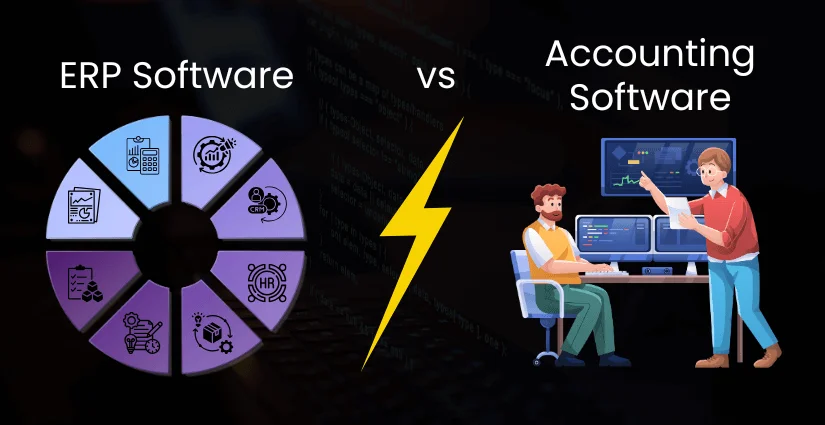
The ERP vs. accounting software argument is not about which software is generally better, but which one fits your business purpose better. ERP software is an ecosystem of its own, incorporating HR, supply chain, sales, and finance in a single system.
Businesses engaging in different processes find this necessary because it reduces duplication of information, improves efficiency, and allows strategic decision-making based on real-time analytics.
Small business accounting software, on the other hand, is a low-priced software that offers basic features such as payroll, invoicing, and compliance management.
In the case of SMEs, a complete ERP can be a costly and unnecessary investment. Small companies find it easy to remain financially organized without incurring heavy overheads because accounting systems are fast to implement and easy to use.
ERP may be taken into account by businesses that require scaling and flexibility with modular architecture due to their fast expansion strategy or various business processes. Accounting software development services will be more beneficial to those who mainly require financial control and can tailor the software solutions to industry and compliance needs.
Finally, it depends on your long-term strategy and structure. Accounting solutions are often used to start a startup and then eventually upgrade to ERP. Researching the features of how to create accounting software with added features can be a way to find what to use, or walking through an ERP Software Development Company will guide you on what to use.
Can You Integrate ERP Systems With Accounting Software?
Yes, the ERP systems can be interconnected with accounting software and form a strong hybrid ecosystem. This integration enables organizations to gain access to the financial accuracy of accounting software and utilize the benefits of the holistic process management of ERP.
Generally, the invoices generated in an accounting system can be linked directly to an ERP module to an accounting system, like the supply chain or HR module, and ensure consistency in data across an organization. This helps to minimize duplication of entries, reduce human error, and enhance the accuracy of reporting. It then allows businesses to have consolidated dashboards with financial and operational data.
Another reason why many enterprises invest in automated bookkeeping software development is to continue to refine the workflows and bind ERP and finance together. Developed APIs allow integrating the financial systems and enterprise resource planning software with ease.
The best target audience with integration would be the business at a transition stage, i.e., not large enough to require an advanced accounting system, but not yet prepared to implement ERP. Another idea that custom development teams examine is how to create accounting software that is ERP compatible, so that it is scalable without interruption.
The combination of two lets businesses be flexible. It is possible to perform complicated tasks with the help of ERP and guarantee financial accuracy with the help of accounting systems. This system is usually less expensive than running a blown ERP now, and at the same time, it gets companies ready to upgrade in the future.

Final Words
Whether to use ERP software or accounting software is ultimately determined by the size of your business, budget, and your business vision. ERP systems incorporate a unified strategy, including HR, supply chain, finance, and many more, which makes them a good fit in large organisations that require overall enterprise resource planning solutions.
Conversely, accounting software is more of a financial management tool. As a result, it is the most suitable product for SMEs to use when cost-effective and compliance-driven solutions are required.
With the increasing demand for accounting software development services, businesses can now be flexible and design their own solutions that can suit their work processes. You may also need to consult with the appropriate development partner, whether you are researching how to create accounting software or whether ERP makes sense as a long-term solution.
When you take enough time to evaluate your current needs, as well as the future expansion of the company, considering the right system to use will make a difference between businesses functioning effectively, being cost-effective, and expanding to their full potential. These two alternatives are both strong, and the one that would best suit is aligning technology with your organizational roadmap.


 Get in Touch
 By
By September 30, 2026