


The health and fitness market has evolved significantly in the last 10 years across the world. What once involved gym subscriptions and energy tracking has become a data-rich framework of technology, applications, and artificially intelligent knowledge. Wearable fitness applications, individual health applications, and activity tracking mobile applications are some of the major drivers behind this transformation as they place the user at the heart of the wellness process.
This blog will discuss the three largest trends that define the future of health and fitness and what business, developers, and users can expect in the future.
Fitness App Development: Global Market Size
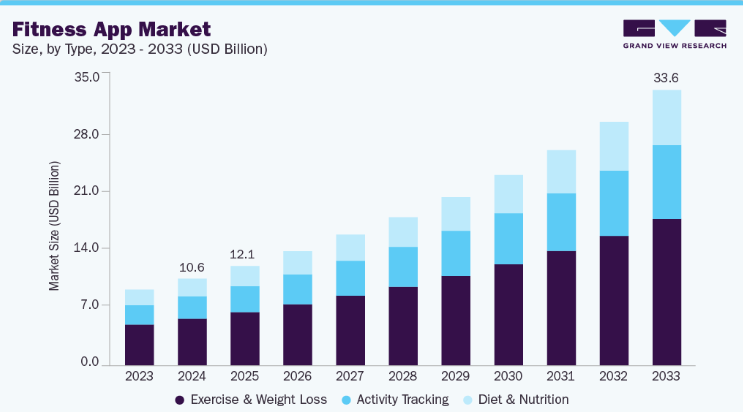
The global fitness app market was valued at USD 10.59 billion in 2024 and is expected to reach USD 33.58 billion by 2033, expanding at a CAGR of 13.59% between 2025 and 2033. This growth is fueled by rising health consciousness, rapid technological innovation, the lasting effects of the COVID-19 pandemic, and supportive economic factors like increasing disposable income and healthcare expenditures.
Fitness apps have had approximately 858 million downloads in 2023 (Business of Apps). The market cuts across different categories such as running, cycling, yoga, and fitness trackers in general. They have gained popularity among the various age groups due to their convenience and personalized characteristics.
Smartphones have become a communication tool, but are now essential to the management of health and fitness. Fitbit and MyFitnessPal, Garmin Connect, Fooducate, Noom, and Google Fit are some of the apps where users can follow their exercise, nutrition, and well-being.
With wearable technology (like smartwatches), these apps provide real-time information about heart rate, calorie burn, and the quality of sleep. A report by the NIH (2023) estimates that close to one out of three Americans is currently monitoring their health using wearable technology.
Top 3 Technology Trends in Health and Fitness Industry
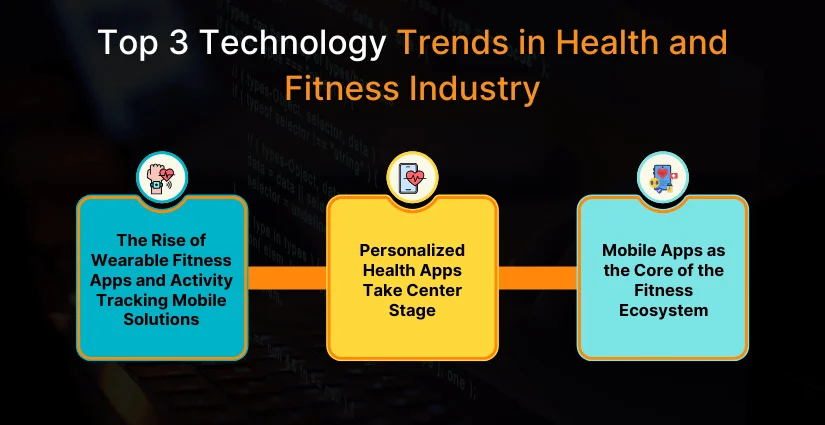
Trend 1: The Rise of Wearable Fitness Apps and Activity Tracking Mobile Solutions
The first huge transformation in digital health was the fitness app development on a wearable device. Since Fitbit watches up to Apple Watches and Oura Rings, the wearables have ceased to be accessories; they are now an invaluable device in keeping track of health and performance optimization.
The Power of Wearables
Based on reports from the recent industry, wearable technology is among the leading global trends in fitness every year. Those devices are used to measure not only steps and heart rate but also sleep patterns and Oxygen saturation. But what is really magic is when these devices, with the aid of activity tracking mobile solutions, process the data and transform it into valuable results.
Current wearable fitness applications not only record your exercise, but can be connected to activity tracking mobile applications to record improvements such as recovery scores, stress, and sleep quality, providing users with a complete picture of their health.
Smarter Tracking and Deeper Insights
The first generations of fitness trackers had a restricted range of activity trackers for step-count and calories. In the present day, activity tracking mobile solutions have advanced to become intelligent, which are able to measure your energy levels, suggest rest days, and can also detect irregular heartbeats.
Through such insight, wearable fitness applications can provide users with real-time coaching to make informed decisions about their routines. You are either running a marathon or you need better sleep habits; an activity tracking mobile solution has become your coach in your pocket.
Personalized Data Meets Motivation
Motivation is one of the largest obstacles to having a routine of fitness. Wearables solve this through gamification and real-time feedback. Fitness applications in the form of a wearable device promote consistency by offering challenges, badges, and progress reports, and mobile solutions of activity tracking are used to tailor the recommendations to meet the individual goals of the user.
As an illustration, when your device notices that you are feeling tired, your application could automatically change the intensity of your workout or propose a rest.
The Road Ahead for Wearables
The wearable fitness apps of the future are in integration. New types of smart rings, sensor-enabled apparel, and improved biosensors are coming up, and they all produce more precise health data. The future of activity tracker mobile applications will require them to process massive amounts of biometrics without compromising privacy and security.
This development presents massive potential to companies that invest in custom mobile app development services aimed at health and wellness technologies.
Trend 2: Personalized Health Apps Take Center Stage
The second trend that is changing the fitness scene is the emerging trend of personalized health applications. Nowadays, consumers have a higher demand for technology that knows their special needs, whether it is their tastes in food or their stress levels, and provides customized advice.
What Are Personalized Health Apps?
Contrary to conventional fitness trackers, personalized health applications are dynamically adjusted to the user. They process data like age, gender, fitness objectives, wearables, and even emotional state to give their unique insights.
To use sleep data on your smartwatch to recommend a different workout routine or suggest a particular meal to improve your recovery, an individualized health application can be used as an example.
Why Personalization Is the Future of Wellness
The one-size-fits-all approach has been killed. Citizens are moving towards being health-conscious and, as such, require tailored solutions. With AI and machine learning, personalized health applications are now able to handle real-time data as provided by wearable fitness applications and activity tracking mobile applications and transform raw numbers into actionable insights.
Instead, users tend to stick with apps that are intuitive, or follow their trends and change them as they do.
Examples of Personalized Health Apps
Currently, such personalized health applications as MyFitnessPal, WHOOP, and Fitbod can offer individual workout, nutrition, and recovery plans. They combine data provided by activity tracking mobile solutions to determine your performance each day and prescribe a particular follow-up.
To give an example, in case your wearable shows that you have low rates of heart rate variability, the personalized health app can suggest meditation or yoga classes rather than intense training.

The Role of AI and Predictive Analytics
Personalized health apps are based on artificial intelligence. Artificial intelligence algorithms can analyze behavioral and biometric data about you and predict the reaction of your body when subjected to various routines. When combined with information on wearable fitness apps and activity tracking mobile solutions, the apps will provide hyper-relevant information that enhances engagement and retention.
Benefits of Personalization for Users and Businesses
- Higher engagement: Users stay committed when apps provide individualized feedback.
- Better outcomes: Custom recommendations result in measurable progress.
- Business growth: Developers can use personalization as a differentiator to attract and retain users.
For companies investing in this space, working with an experienced healthcare software development company ensures proper integration of wearable technology, AI, and data security protocols.
Trend 3: Mobile Apps as the Core of the Fitness Ecosystem
The third trend is what has it all together. The contemporary health and fitness experience revolves around mobile apps. Being able to synchronize data in a smartwatch or plan a workout virtually, activity tracking mobile solutions, and wearable fitness apps have become the core of every wellness program.
The Evolution of Fitness Apps
At first, the options of fitness apps were reduced to the simplest tracking and manual ones. The current wearable fitness applications and individualized health applications have become all-encompassing wellness applications. They combine nutrition, exercise, meditation, and community functions – with a single streamlined application.
The most effective activity track mobile solutions offer real-time feedback and can be used across multiple devices, and implement gamification to increase the motivation of the users.
Integration Across Devices
Each average user possesses more than one smart device. It is important that it is seamlessly integrated. Mobile solutions focused on activity tracking are now integrated with various wearables, exercise devices, and even smart home devices to provide a single health profile.
You can use the example of your smartwatch being connected to your treadmill, sleep tracker, diet app, etc., all through a central wearable fitness app on your phone.
Read More: 6 Ways 5G Is Powering Smarter Mobile Apps
Beyond Fitness: The Wellness Ecosystem
The current customized health apps do not just end at physical activity. They go all the way to mental health, stress management, and preventive care. Mood data, hydration, or telehealth consultation scheduling are available in the same application, where the user can log their moods.
This unified solution makes wearable fitness applications and activity tracking mobile solutions the future of preventive healthcare.
Business Implications
In the case of businesses, it is a colossal opportunity, as a result of this convergence. The creation of superior wearable fitness apps and customized apps regarding health is a complex task in terms of design, safe data processing, and user-friendly experiences.
The wearable integration, AI, and multi-platform compatibility should be considered by the companies working on creating a custom mobile app at the beginning.
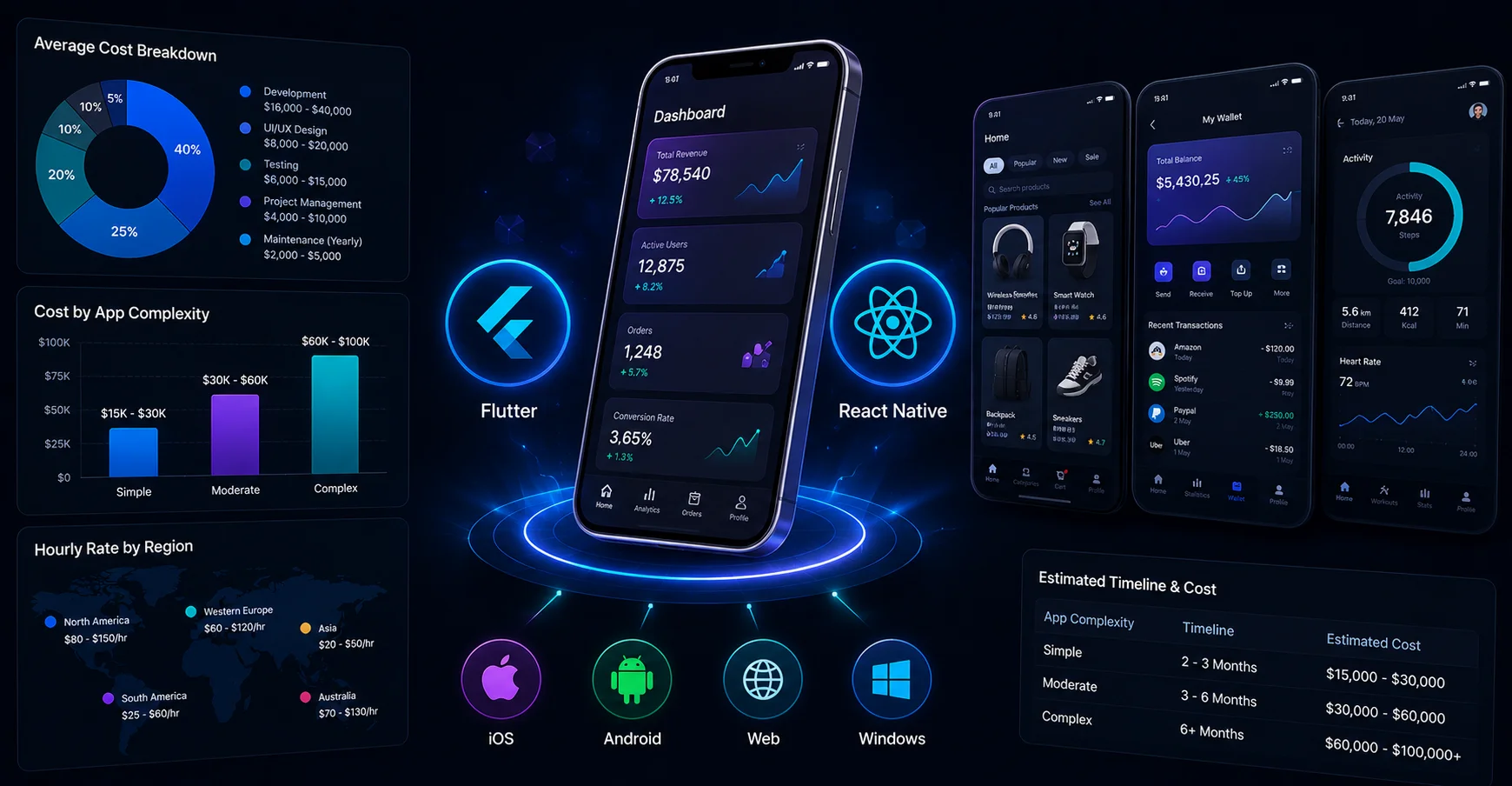
Also, it is important to have knowledge about mobile app development costs, as sophisticated functionalities such as biometric tracking, analytics, and personalization may have a massive effect on budgets. Betting on the correct features in the early stages guarantees long-term ROI.
How do These Three Trends Work Together?
When wearable fitness apps, personalized health apps, and activity tracking mobile solutions operate in synergy, the result is a seamless, data-driven experience.
Here’s how the ecosystem works:
- Wearables collect data on steps, heart rate, sleep, and oxygen levels.
- Activity tracking mobile solutions process that data, offering summaries and trends.
- Personalized health apps interpret it, providing individualized recommendations and actionable insights.
This integration empowers users to understand their health in real time and take proactive steps toward improvement. It also opens new avenues for healthcare professionals, corporate wellness programs, and fitness brands to engage with their audiences.
Also Read: IoT Integration in Mobile Apps: 5 Ways It’s Connecting the World
Opportunities and Challenges Ahead
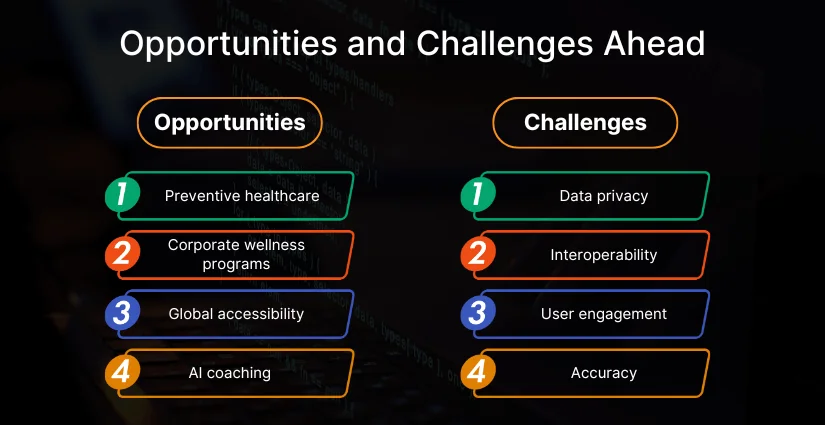
Below, we have mentioned the major opportunities and challenges while developing mobile apps in the health and fitness industry.
Opportunities
- Preventive healthcare
Female fitness apps constantly check vital signs, which allow for the identification of anomalies in time. This can help the user and the healthcare providers to act in a timely and preventive manner, which can help to minimize hospital visits and enhance long-term health outcomes.
- Corporate wellness programs
Activity tracking applications can also be introduced into the organizations to keep track of the fitness of employees, promote their involvement in wellness initiatives, and minimize stress-related diseases, with the end result being improved productivity, morale, and health culture across the company.
- Global accessibility
The decreasing prices of smart devices and mobile applications mean that anyone in the world, regardless of their income level, can now use fitness tracking and health information, which will reduce inequalities in healthcare and promote healthier lifestyles.
- AI coaching
The next wave of AI-based fitness apps will provide personalized and dynamic instructions using real-time feedback to engage the user with virtual coaches providing incentives, technique remedies, and constant adaptation to changing health objectives.
Challenges
- Data privacy
As health apps store sensitive biometric data, encryption, clear data policies, and adherence to regulations are needed to ensure that users are not affected by breaches, misuse, and unauthorized access by third parties.
- Interoperability
Standardization of data formats between devices and platforms is lacking, thus hindering seamless integration. It can be concluded that creating universal protocols would provide the stability of data sharing, integrated understanding, and a more streamlined user experience.
- User engagement
Lots of users are demotivated after getting interested in it. Interest can be maintained with the help of gamification, social features, and personal progress tracking, which will guarantee commitment to fitness in the long term and improved health results.
- Accuracy
Imprecise sensors may deceive the users and lose credibility. Ongoing technology calibration, machine learning improvements, and clinical validation should be essential to good fitness values and health-actionable information.
All developers, businesses, and users should go through these issues cautiously in order to realize the full potential of the wearable and mobile health technology.

Final Thoughts
The future of fitness is intelligent, networked, and individual. The convergence of wearable fitness applications, custom health applications, and activity tracking mobile applications is changing the way individuals monitor, learn, and enhance their health.
Businesses should invest in new solutions and collaborations with a reputable healthcare software development firm that has an idea of wearable integration, data protection, and scalable app architecture.
Being an entrepreneur who may be considering the possibility of developing custom mobile apps or evaluating the cost of developing a mobile app, the takeaway is simple: personalization and connectivity are the future of fitness.
Wearable technology is not only transforming exercise routines, but it is also transforming a smarter, healthier world.
FAQs
Fitness has become more affordable with the use of technology in the form of mobile applications, virtual training, and smartwatches that track real-time statistics and ensure that users remain motivated and get measurable outcomes.
Custom-made fitness programs are favored by people since they are designed to fit personal objectives, body shapes, and lifestyles, which leads to better results and sustainable use.
Virtual and hybrid workouts give users flexibility and convenience so that they can exercise at any given time, regardless of location, due to the live-streamed classes, on-demand videos, or app-based routines.


 Get in Touch
 By
By September 30, 2026