


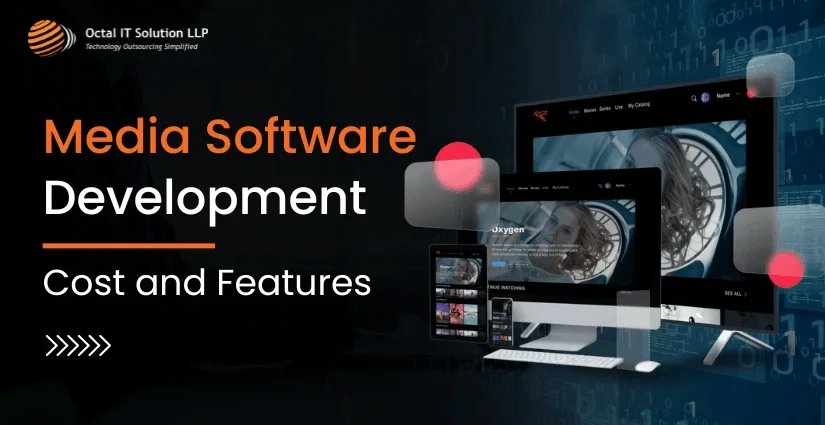
The media industry is rapidly evolving with AI-powered content creation, video streaming platforms, and advanced analytics. As businesses compete for audience attention, media software development has become essential for delivering scalable, personalized, and engaging digital experiences in 2026.
In this blog, we will discuss what is media software development, the factors contributing to the development cost of media software, and what we predict for businesses in terms of media software in 2026.
Software Development: Global Statistics
The global custom software development market was valued at USD 43.16 billion in 2024 and is projected to reach USD 146.18 billion by 2030, growing at a CAGR of 22.6% from 2025 to 2030. The rapid growth of digital transformation initiatives, cloud adoption, AI-powered applications, and the increasing demand for industry-specific software solutions are key factors driving market expansion. Businesses are increasingly investing in custom software development to improve operational efficiency, enhance customer experiences, and gain a competitive advantage in a rapidly evolving digital landscape.
What is Media Software Development?
Media software development services involve creating software and platforms which support the generation, dissemination and reception of media. As technology and media change people require new software solutions which are crucial in the modern world.
These solutions vary in a broad spectrum and cover as many aspects of managing and delivering media as needed to guarantee creators and consumers have the proper tools for the task.
One of the most important subcategories of media and entertainment software development is front and back-end content management systems (CMS). These tools are mandatory for handling content, as they enable users to create, edit, and sort articles, videos or images with ease.
Types of Media Software Solutions
A good media software prevents versioning problems, allows the work of several teams simultaneously, and ensures that content is easily discoverable and manageable given the increasing need for different kinds of digital media.
Video streaming software development is another major segment of the media industry .These software are for live and online content of videos and VOD and offer users the chance to stream videos on different devices.
These include features like adaptive streaming and accounts for users and such a purpose, these platforms are suitable for entertainment, educational and professional broadcasting.
Audio streaming app development has experienced significant growth as users increasingly consume music, podcasts, and digital audio content which makes users access large collections of music and podcasts. These platforms make it possible for the creator to disseminate their audio content to the world with features such as playlists, recommendations, and offline mode. In this case, the increasing need for audio content in the media market makes these services quite vital.
Social media management tools are very important for anyone who wants to manage his/her brand or personal accounts. These software solutions help users in planning, formatting, and reporting social media material on different networks.
By providing insights into audience engagement and content performance, these tools enable users to refine their strategies and maximize their impact in the digital space during media app development.
Finally, analytics and reporting tools are essential for understanding audience behaviour and measuring the success of media streaming software development. These solutions offer valuable insights that inform decision-making, allowing creators and marketers to adapt their strategies based on real-time data.
By leveraging analytics, businesses can better understand their audience, optimize their content, and ultimately enhance their overall media strategy.
Also read: How to Hire Software Development Team
Key Features of Media Software Development in 2026
As media consumption evolves, so do the features of media software. Here are some essential features to include in 2026.
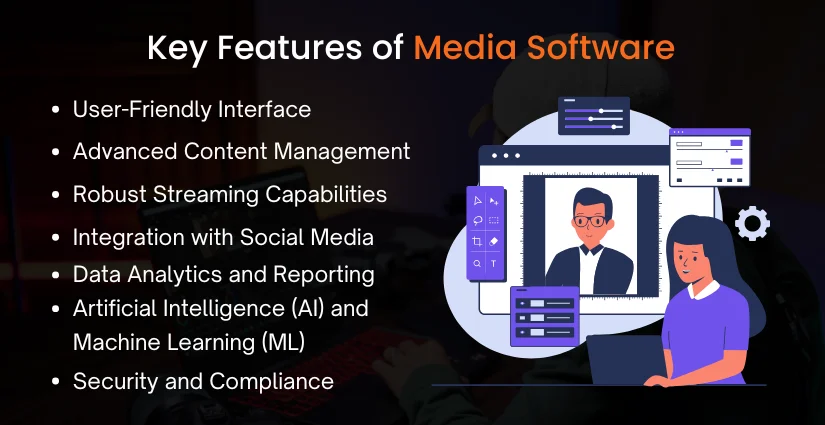
User-Friendly Interface
This appears to be a significant feature for media software development since user interaction is critical to media usage. It must allow people to move around the system as they work on content creation or management or as mere consumers. This includes design for desktops, tablets, and other commonly used devices such as smartphones.
Advanced Content Management
Today’s CMSs should allow for different media formats that include text, audio, video, and graphics. Some of the features to incorporate in such a system include the Drag and Drop facility, Version Control, and Collaboration.
Robust Streaming Capabilities
For video and audio platforms, high-quality streaming coupled with small delays is an essential component. Such additional functionalities as adaptive streaming, offline mode, and compatibility with several devices will improve user experience.
Integration with Social Media
The work flows well with social media networks for sharing the content and reaching the audience. With this thought, media software development should allow quick sharing and promotion through different social sites to reach out to more people.
Data Analytics and Reporting
In 2026 culture of analytical decision-making will play a decisive role in organizational success. Software for media should supply powerful analytical capabilities to analyze how many users visit the site, the ways, and performance of content posted, and the profile of viewers. Real-time adoption enables businesses to change course whenever new information is reported.
Artificial Intelligence (AI) and Machine Learning (ML)
AI and ML are transforming media and entertainment software development through automation and personalization. Features such as personalized content recommendations, automated tagging, and predictive analytics will enhance user engagement and streamline operations.
Security and Compliance
With increasing concerns over data privacy and security, media software must prioritize robust security features. This includes encryption, user authentication, and compliance with regulations such as GDPR and CCPA.
Media Software Development Cost: Factors Affecting Pricing in 2026
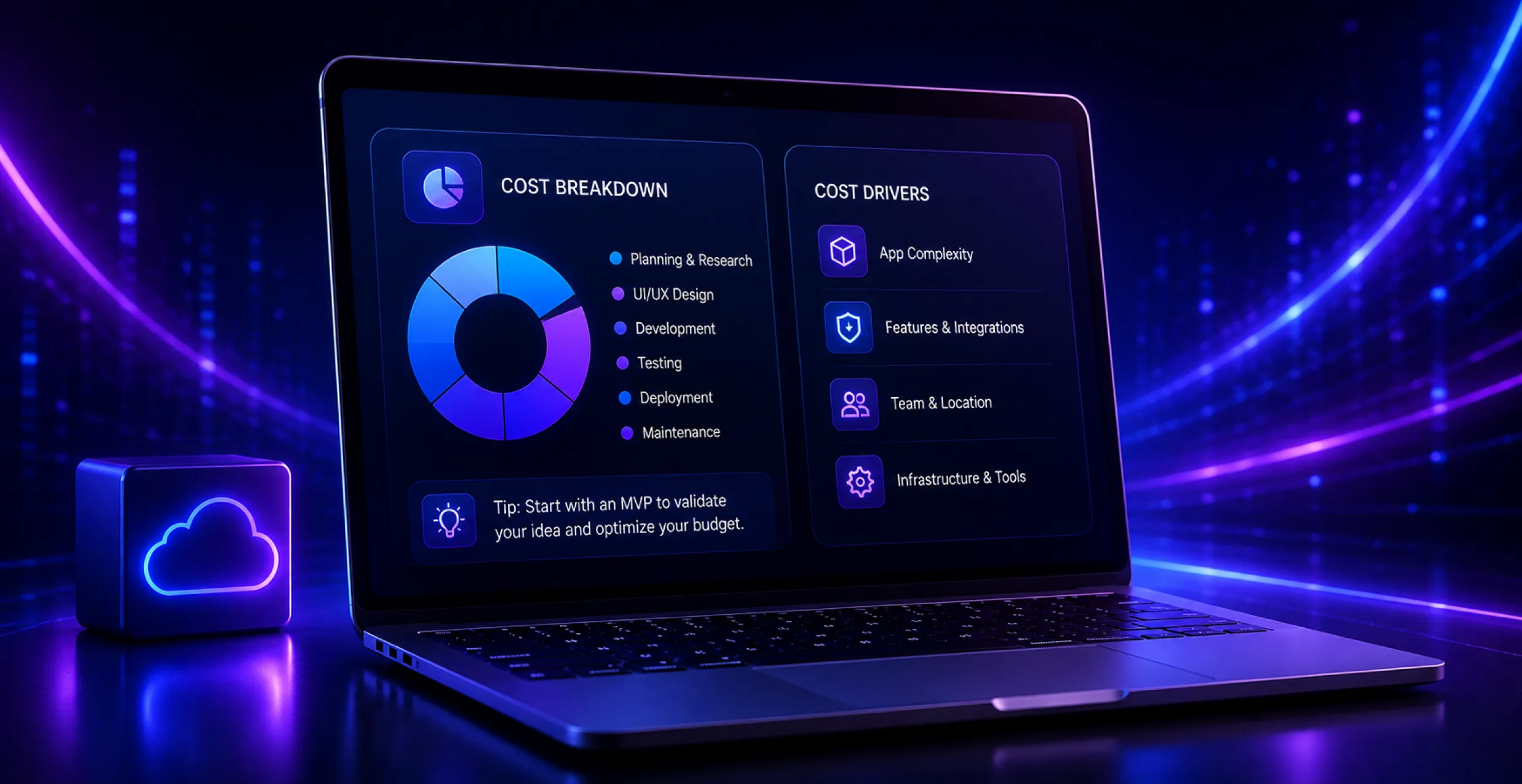
The cost of media development software in 2026 can vary significantly based on several factors. Hiring a top software consulting services provider helps reduce the cost to a greater extent. Below are some of the factors which influence the development costs.
Complexity of Features
When features are more complicated, the high development cost will be the outcome. Extraordinarily, if you incorporate features such as recommended or real-time analytics, the engineer will need to hire a professional and extra time.
Type of Software
Each type of media software falls under different costs. For instance, a basic widget of a content management system can be cheaper than a complex platform for video streaming that has more requirements for the backend.
Development Team Location
The location of the development team can be costly. For example, employing a team in North America or Western Europe would cost more in comparison with Eastern European or Asian contractors.
Development Methodology
Adopting agile and waterfall will impact one on the timeline and the other on the costs. However, there is a question about flexibility in the context of the agile development framework, which claims the possibility of higher initial costs but more accurate satisfaction of users’ needs.
Maintenance and Support
Technical support is an area that can be a great challenge to most software, especially those in the media. We expect that the management budget will sufficiently incorporate these costs, as they can accumulate to significant amounts.
Estimation of Media Software Development Costs
While it’s challenging to provide an exact figure for media software development costs without specific project details, we can offer a general range based on industry standards:
| Types of Platform | Estimated Cost | Estimated Timeframe |
Simple CMS Development | $10,000 – $50,000 | 2 – 4 months |
Video Streaming Platform | $50,000 – $250,000 | 4 – 8 months |
Social Media Management Tool | $30,000 – $150,000 | 3 – 6 months |
Comprehensive Media Solution | $250,000 and above | 6 – 12 months |
Media Software Development Process: Six Key Steps
Media software development services involve a structured process to ensure that the final product meets user needs and industry standards. Here are the six essential steps:
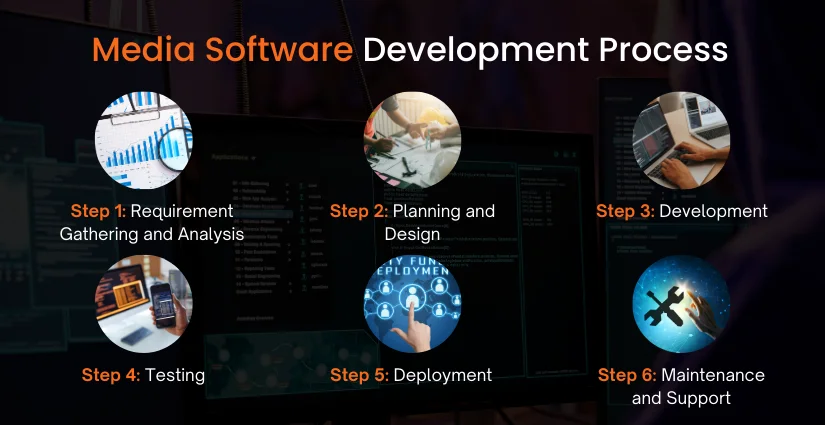
Requirement Gathering and Analysis
In this initial phase, clients, users, and developers thoroughly discuss the goals and requirements that the media software should meet.
This includes analyzing the user, the feature, and the technology that users want to see in the system. Accurate recording of these necessities serves to effectively mark a basis for the project.
Planning and Design
Once the requirement has been set, the team proceed to the planning as well as the designing of the software in question. This entails the development of a wireframe of the intended interface, interface designs and system design.
In the design phase, the important goals consist of catching the perfect UX experience and coordinating the visual elements with the brand. By the end of this stage, there is a creation of project schedules that will act as the roadmap for the development of project milestones and timelines.
Development
Here, the coding activities that are central to the development phase occur actually. The chosen programming languages and frameworks are utilized to create the software after the requirements laid down in the preceding phases.
This step often involves iterative cycles, allowing for adjustments based on ongoing feedback and testing to ensure that features are implemented correctly and function as intended.
Testing
Testing forms one of the significant stages in the media software development lifecycle. This includes functional tests, usability tests, performance tests, security tests and many other tests that help to discover a bug or problem.
Testing is critical in making software as reliable as possible so that it meets the quality that it was developed to meet in the market before being released in the market. There may also be Use-acceptance testing (UAT) done in order to get feedback from the real end-users.
Deployment
After all the assessment phases have been gone through, the software is set for release. This involves presenting the software to the targeted users.
Deployment entails setting up the environment, data transfer should a need arise, and coordination of all parts and units.
Maintenance and Support
The best approach is always to ensure that after they have been deployed they are well-maintained and supported in the future. This includes the correction of any error as well as the addition of new features because of changing circumstances or in response to users’ complaints.
Technical support helps in many ways. Most users can fix any problem without difficulty. This creates the right attitude towards the software to continue using it.
Latest Trends Shaping Media Software Development in 2026
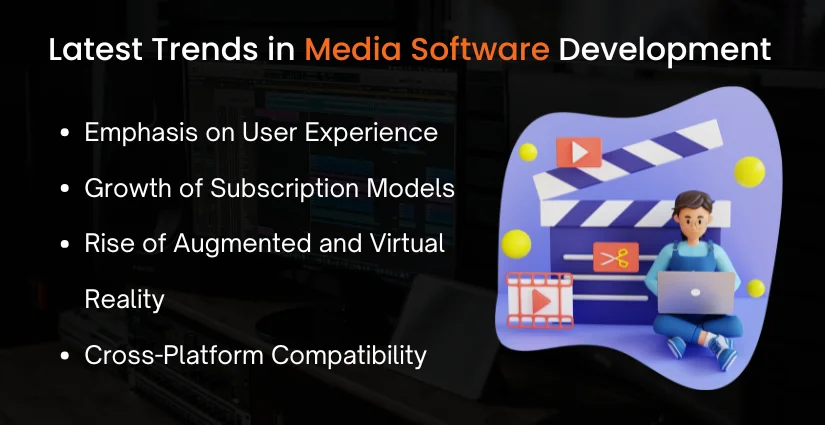
As we look toward 2026, several trends are likely to shape the landscape of media software development. Below are some of the software development ideas to consider during media development software.
Emphasis on User Experience
Product experience or user experience (UX) will continue to be important, and personalization is going to become a big thing. De-personalization of content and interfaces will cause increased excitement and relevance.
Growth of Subscription Models
Paid models of media consumption are expected to sustain their growth on the Internet. Software tools for subscription management especially those used in billing and delivery of content will become popular.
Rise of Augmented and Virtual Reality
Regarding the integration of mediated immersive experiences, media software that can now be enhanced with AR and VR benefits will experience positive growth.
Cross-Platform Compatibility
Because users engage media on multiple devices, good software that supports cross-device compatibility will be important. This includes the use of responsive designs and synchronizing user preferences.

Conclusion
In 2026, the media software development landscape will be characterized by innovation, user-centric design, and robust analytics capabilities. Understanding the key features and factors influencing development costs will be essential for businesses looking to invest in media software.
Partnering with an experienced media software development company like Octal IT Solution helps businesses build scalable streaming, content management, and analytics platforms that stay competitive in 2026
Read more: Data Analytics Software Development: Cost & Features
FAQs
What is media software development?
Media software development entails the design of software that is specifically used in the creation, dissemination, use and sharing of media content via streaming services, audio services, content management systems and social networking platforms.
How long does it take to develop media software?
Depending on the industry in question, the stages of this development process may take a shorter or longer time. Small-scale software may take 3 to 6 months at most while complex ones like stream/video xbmc/Kodi software can take 6 months and above.
What features should I consider for my media software?
Some features to look out for when selecting an LMS include; simple graphic user interfaces, strong content management capabilities, streaming, integration with social media, analyzing tools and security measures for consumers’ sensitive information.
How much does media software development cost?
It as a result goes without saying that cost estimates can greatly differ depending on such factors as the scope of the work done and the degree of difficulty involved. Inexpensive basic media solutions are more likely to cost at least 10,000 US dollars. Whereas the more complicated and sophisticated media platforms’ designs may cost over 250,000 US dollars.
Do Octal provide ongoing support and maintenance after deployment?
Yes, we provide maintenance services for your media software. Once implemented, we can update them on a regular basis, frequently, support any problem encountered as well as secure them against hackers’ attacks.


 Get in Touch
 By
By October 8, 2026