


Introduction
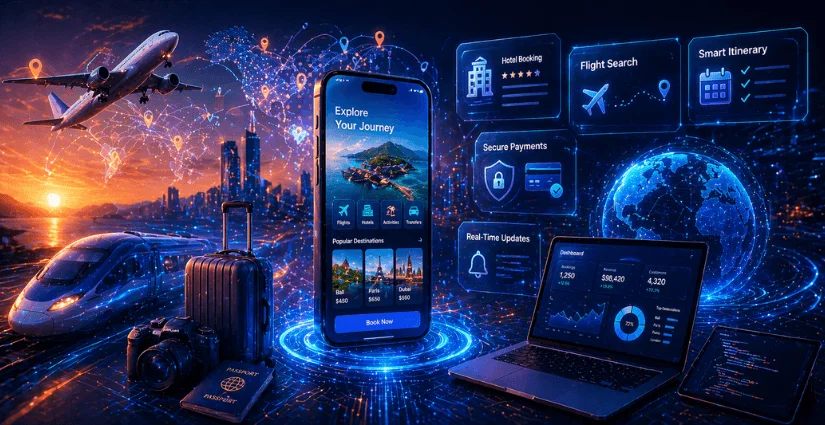
Are you still offering generic vacation packages while your competitors provide AI-curated “intentional journeys”? The year 2026 will mark the end of standard booking systems that offer identical packages to all customers. Travelers now demand personalized travel experiences, and for that they require custom travel software development solutions.
The travel technology market will achieve a value of $17.43 billion by 2032, according to market research, showing a compound annual growth rate of 6.8% (Source: Research And Markets). US-based startups need to develop advanced services that go beyond standard templates if they want to maintain their market position.
A travel software development company has transformed from its role as a vendor into a strategic partner who assists clients with market navigation in an industry where North America holds close to 35% of worldwide technology expenditures.
Why Startups Need Custom Travel Software Development?
Startups must eliminate the “gross fragmentation gap” that currently exists. Modern travelers dislike using multiple applications to handle their travel arrangements because they require a system that provides instant solutions for their actual travel problems.
1. Unique Value Proposition (UVP)
UVP enables you to establish your business as the only provider of your unique service that competitors cannot match.
2. Niche Market Capture
The niche market of software development for startups enables the creation of specialized tools, including AI-powered routing systems designed for families and environmentally friendly itinerary planning solutions.
3. Scalability
The custom designs of our software solution provide users with the ability to expand their software through new features that can be activated based on the growing number of users.
4. Fragmented Itinerary Fix
The flight, hotel, and local transit systems should be combined into one platform that provides real-time updates to help travelers feel less stressed while using the application.
5. Ownership of Data
When you possess complete control over your database, you can access detailed information about user behavior, allowing you to create highly precise marketing campaigns that will produce greater returns on investment in the future.
Essential Features of Modern Travel Booking Systems
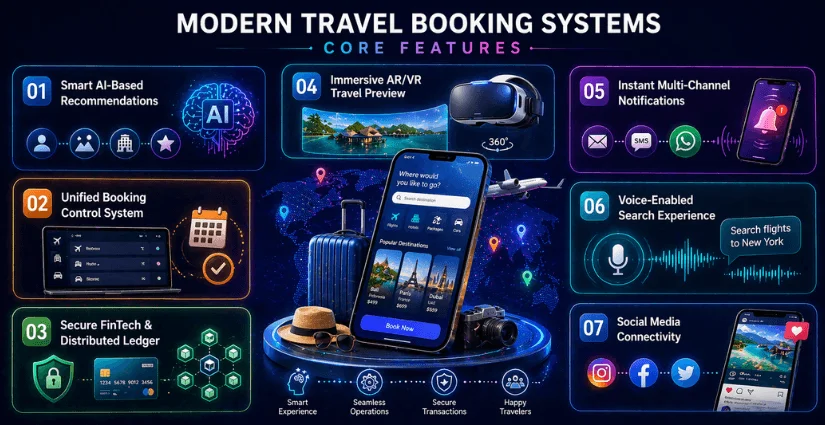
A booking engine represents the most basic requirement for your platform, while its success depends on your developed system functioning as a digital concierge that meets all traveler requirements before they ask for assistance.
1. AI-Powered Personalization
This uses machine learning to create adaptive packaging that recommends activities based on current weather conditions, user mood, and their previous activity choices.
2. Centralized Reservation Management
This functions as a “single source of truth” and provides real-time inventory data to all travel booking platforms for the purpose of controlling reservations.
3. FinTech & Blockchain
It combines secure multi-currency payment gateways with blockchain-based smart contracts to deliver immediate fraud-proof refunds and loyalty program rewards.
4. AR/VR Destination Previews
It enables users to experience complete 360-degree virtual hotel tours and view city attractions, leading to higher booking conversion rates.
5. Real-time Multi-channel Alerts
It provides immediate push notifications through WhatsApp and SMS and in-app alerts, informing users about gate modifications, weather-related delays, and local safety information.
6. Voice-Activated Search
This allows travelers to perform searches and make bookings without using their hands, which has become essential for current software development in the travel and hospitality industry.
7. Social Integration
The platform provides users with built-in tools that enable them to share travel itineraries and divide costs with their friends directly from the platform.
Deep Dive into Travel Software Development Services
Businesses need to comprehend the full range of travel software development services because this knowledge enables them to select the most suitable business model and technological solutions for their needs.
1. Travel Portal Development
Our travel app development company develops B2B and B2C platforms that can manage complex business operations while handling high user volume and implementing multiple vendor systems.
2. Travel App Development Solutions
Our mobile-first strategies provide travelers with offline access to GPS navigation and real-time booking abilities they can use through mobile devices.
3. Tourism Software Solutions
The specialized software enables management of local tours and activities through digital ticketing and guide scheduling and real-time availability tracking.
4. Hospitality Software Development
We provide hospitality management system solutions that combine IoT technology and smart-tech solutions to deliver keyless entry, smart-room controls, and automated guest services.
The Step-by-Step Guide to Developing Travel Software
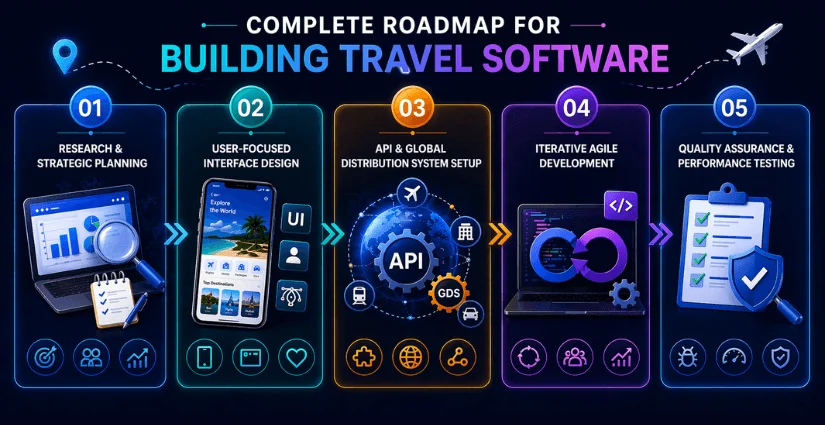
The success of platform development requires a structured development approach. The established development framework will help your travel software development project complete its work on time and within financial limits while achieving high-performance outcomes.
Also Read: Top 10 Software Development Companies in Chicago in 2026
Step 1: Discovery & Consulting
The first software consulting services stage begins with our team determining your technology needs and business goals, which we will use to develop effective market solutions.
Step 2: User-Centric UI/UX
A hired development team builds accessible interfaces that enable travel software systems to manage complex traveler routes during their complete travel experience.
Step 3: API & GDS Integration
The system gains connection capabilities to global distribution networks through Amadeus and Sabre integration and includes advanced AI customer service chatbot support from LLMs.
Step 4: Agile Development
A well-structured development process uses iterative sprints for feature creation, enabling ongoing feedback while coding work proceeds through its entire duration.
Step 5: Testing & QA
The QA team conducts comprehensive stress tests to validate system performance during maximum traffic conditions and guarantees your international travelers will have a bug-free experience.
Also Visit: Aviation Software Development Services
Analyzing Travel Software Development Cost in the USA
Budgeting for a travel platform in 2026 requires a granular understanding of where every dollar goes. The USA market incurs expenses because businesses need to hire developers for travel software who must meet strict security standards. The typical mid-range travel software development costs between $60,000 and $200,000, yet actual costs depend on the specific requirements and travel software development approach you select.
Cost Breakdown by Project Phase
Each successful development project executes its work based on a predefined sequence of stages. The initial funding for the discovery stage brings about financial advantages because it prevents rework costs throughout the development.
| Development Phase | % of Total Budget | Estimated Cost (USD) |
| Discovery & Planning | 10% | $5,000 – $20,000 |
| UI/UX Design | 15% | $8,000 – $30,000 |
| Development (Front/Back) | 60% | $35,000 – $120,000+ |
| Testing & QA | 10% | $5,000 – $20,000 |
| Deployment & Launch | 5% | $3,000 – $10,000 |
Cost by App Complexity
The app development costs depend on their complexity, and the cost will increase according to their level of artificial intelligence. The expenses of basic utility applications remain affordable for users, but advanced platforms such as Expedia require substantial funds to support their backend systems during peak usage.
| Complexity Level | Estimated Cost (USD) | Timeline | Example Features |
| Basic (MVP) | $25,000 – $50,000 | 3–4 Months | User login, static listings, 1 platform |
| Standard/Moderate | $60,000 – $150,000 | 6–9 Months | Booking, real-time GPS, pay gateways |
| Complex/Enterprise | $200,000 – $500,000+ | 10+ Months | AI-engines, AR tours, GDS Integrations |
Cost by Professional Roles (Hourly Rates)
When building your team, you need to evaluate two factors: the seniority level and the specialized skills of your team members. The travel industry will see its highest salary costs in 2026 for professionals who possess AI and blockchain architect expertise.
| Team Member Role | Hourly Rate (USD) | Experience Level |
| Project Manager | $80 – $130 | Mid to Senior |
| UI/UX Designer | $70 – $120 | Senior |
| Senior Developer | $120 – $180 | 6+ Years |
| QA Specialist | $60 – $100 | Mid |
| Solution Architect | $150 – $250 | Expert |
Cost by US Region (Developer Rates)
The total development costs of a software development project depend on its geographical location. Cities like San Francisco and New York charge businesses the highest operational costs because they are tech hubs, while developing tech cities provide businesses with affordable rates that match their operational standards.
| US Region | Avg. Hourly Rate | MVP Estimate (USD) | Market Context |
| West Coast (SF/Seattle) | $160 – $250 | $45,000+ | High-end innovation, AI specialty |
| East Coast (NYC/Boston) | $150 – $220 | $40,000+ | FinTech & secure payment focus |
| Central (Austin/Chicago) | $120 – $180 | $35,000+ | Great balance of talent and cost |
| Southeast (Atlanta/Miami) | $100 – $160 | $30,000+ | Rapidly growing travel-tech scene |
Are You Ready for the Future? The 2026 Travel Tech Readiness Checklist
The Travel Tech Readiness Checklist evaluates your facilities to prepare for future developments. Your business needs to assess its digital maturity before proceeding with custom travel software development for startups. The US market today requires businesses to use advanced technology because anything less will result in silent profit losses. The existing data indicates that US travel companies experience revenue loss up to 30% because their legacy systems fail to meet modern API requirements and traveler needs.
Take the 1-Minute Digital Audit
You need to assess your existing system against these four essential benchmarks that will be used in 2026:
- Real-Time Legacy Sync: Your system should synchronize with GDS and local boutique APIs within 2 seconds, or your customers will experience “stale” inventory problems.
- The “Five-Tap” Mobile Rule: The mobile interface needs to enable users to complete multi-city bookings through searching and customizing with five taps or fewer.
- Intelligence Integration: The organization uses predictive analytics to establish dynamic pricing, or you currently depend on fixed seasonal rate cards.
- Compliance & Privacy: This existing platform needs to meet all requirements for 2026 international privacy laws and biometric security protocols.
Your business experiences revenue loss through customer departures because you failed to meet all requirements. The process of moving to custom travel software solutions enables businesses to regain their lost market share, amounting to 30% of their market share.

Top Trends in Travel and Hospitality Software Development
The hired company should implement current software development trends that are transforming industry operations to maintain its competitive advantage.
1. Sustainability Tech
Nowadays, companies need to develop carbon footprint calculators and “green-only” filters that will enable eco-conscious Gen Z and Millennial travelers to choose their travel options.
2. Blockchain Identity
A well-developed system enables users to execute border crossings without physical documents through its decentralized ID system while building airline loyalty programs that function across multiple platforms.
Note: If you want to build secure, decentralized transactions and automated smart contracts, then you should hire a blockchain app development company for your platform.
3. Subscription Models
Travel-as-a-Service model, enabling users to pay monthly fees for special travel technology discounts and business travel solutions with companies like ITILITE.
4. Hyper-Local AI
This trend provides real-time neighborhood-level AI recommendations that use current local events and crowd density data to generate their results.
5. Predictive Maintenance
For hospitality, using IoT to predict when hotel assets need repair, ensuring zero downtime for guest-facing amenities.
Choosing the Right Custom Travel Software Solutions Provider
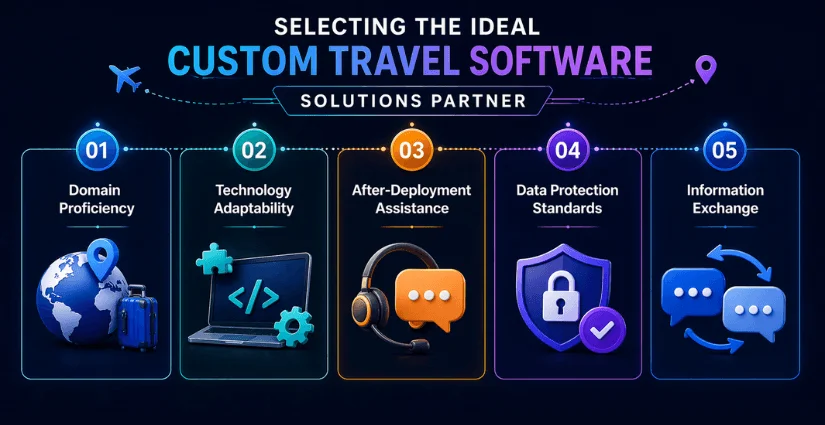
Selecting a partner is the most essential decision you will make. You need a custom travel software solutions provider that understands both code and the complex travel supply chain.
1. Industry Expertise
The travel portal software development company must demonstrate successful project delivery while possessing deep knowledge about GDS and API system interoperability.
2. Technical Versatility
The custom travel software development team needs to demonstrate expertise in modern frameworks, including Flutter, for their cross-platform development capabilities.
3. Post-Launch Support
A great partner provides continuous support, including system maintenance and security enhancements, together with new feature development after the product launch.
4. Security Compliance
The organization needs to establish that they maintain all essential data security protocols, including GDPR and CCPA regulations, to safeguard sensitive traveler information and payment data.
5. Communication Flow
Companies that provide clear project management together with scheduled updates through systems such as Jira and Slack should receive your highest selection priority.

To Summarize
The travel business will maintain its competitiveness against all other custom software development companies by developing the software in the rapidly changing travel industry. The investment in a custom solution creates an application that functions as an expandable resource and provides exceptional benefits to your customers.
Your business will achieve successful travel portal development through the efficient execution of your operational challenges. Do you want to lead the travel industry transformation that will occur in 2026? A successful business needs a partner who understands how technology and travel combine to support your future growth.


 Get in Touch
 By
By October 21, 2026