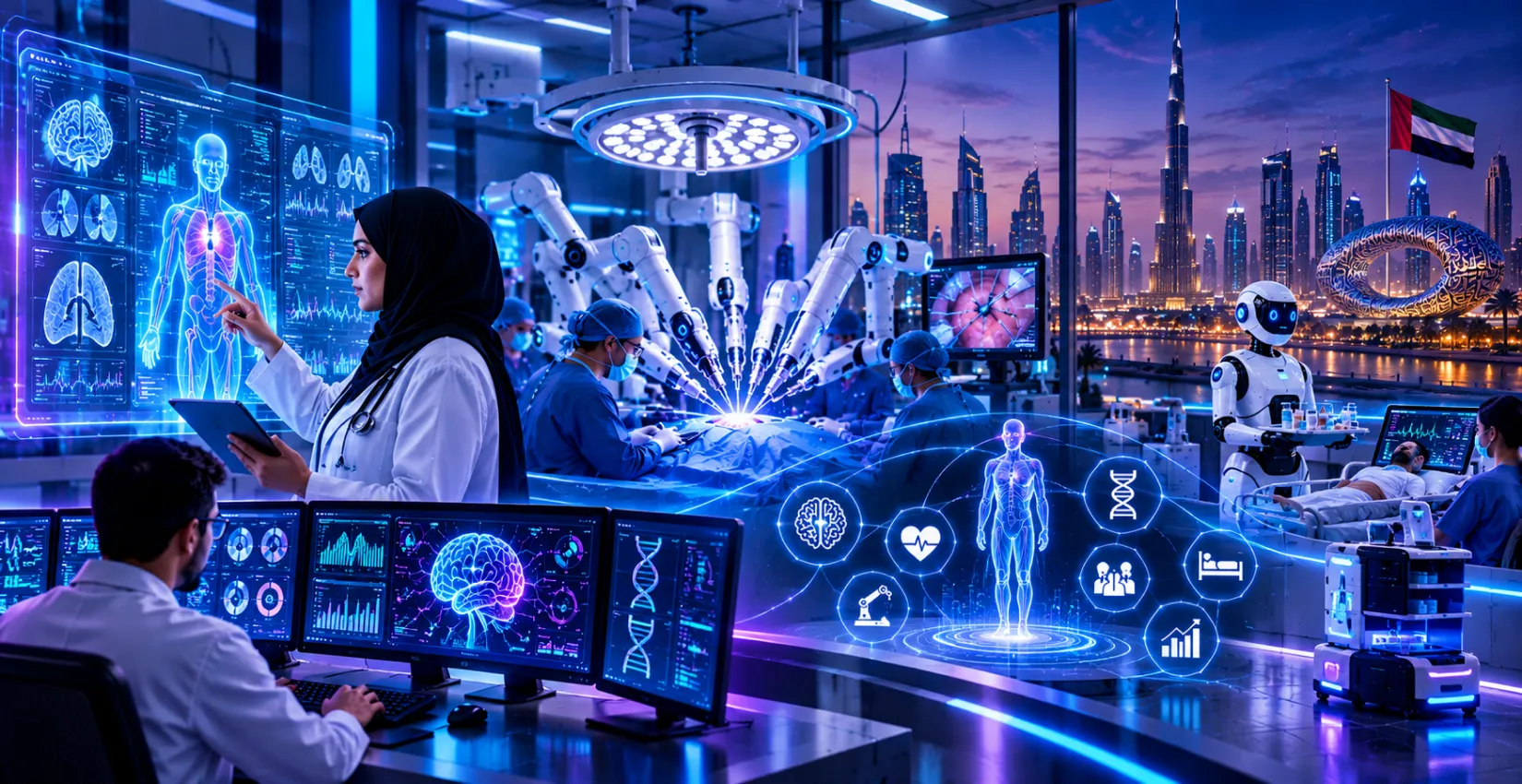



The past few years have seen an enormous growth pattern in the hospitality sector, driven by numerous reasons such as millennial travel to their favourite destinations or Gen Zs wandering to find their Instagram handle or Snapchat. Whatever that may be, the demands of the guest are increasing, and the competition level is becoming cutthroat. The brands are leaving no stone unturned to find a smarter way to meet customer expectations without pressurising their staff or teams. That’s where the smarter tech, i.e. Generative AI in hospitality steps in. Generative AI in hospitality industry is not just automating tasks but is also creating new possibilities for service, communication, and various other aspects.
Be it a hotel, resort, travel company, or any other business, Generative AI is getting leveraged in every business type. That’s why businesses are looking out for Generative AI development services to help them build solutions that give an edge in the industry. Today, people are not asking “What is Generative AI?” but are finding ways to use it for their hospitality business. In this article, we will delve deep into the Generative AI use cases in the hospitality industry.
Do you know that Generative AI in hospitality has already influenced 30% of the service professionals, and the numbers are only going to grow?
The GAI market is currently valued at 632.18 million and is expected to reach the valuation of $3,581.95 million by 2032.
What is Generative AI in Hospitality Industry?
Imagine Sara. She is a hotel manager who runs three restaurants across Europe. Each day, she faces a pile of mails or messages full of booking requests, last-minute changes or cancellations, and guests expecting customised services. Even if she had a couple of team members to help, replies in seconds and learns the preferences of guests. That’s the power of today’s modern AI tools. We have seen the working of Generative AI in e commerce, Generative AI in banking, and other industries, but it is now also being utilised in the hospitality industry as well.
Generative AI leverages modern tools for generating ideas, responses, and solutions based on past experience and real-time data. It is not dependent on static scripts but adapts to the current interaction.
In hospitality, using Generative AI, you can send unique messages to each guest with tailored itineraries and thoughtful suggestions. All this will sound human and not automated. There are many resorts and hotels that are using AI assistants for managing multi-lingual communication, anticipating guests’ needs, and maintaining a unique & consistent style.
For Sara, Generative AI will help by reducing repetitive tasks and providing more bandwidth to create meaningful and personalised guest moments. In the 3rd decade of the 21st century, the shape of hospitality is changing through the transformation of both guest-facing and operational areas.
Top Use Cases of Generative AI in the Hospitality Industry:
Below are the top Generative AI use cases in hospitality:
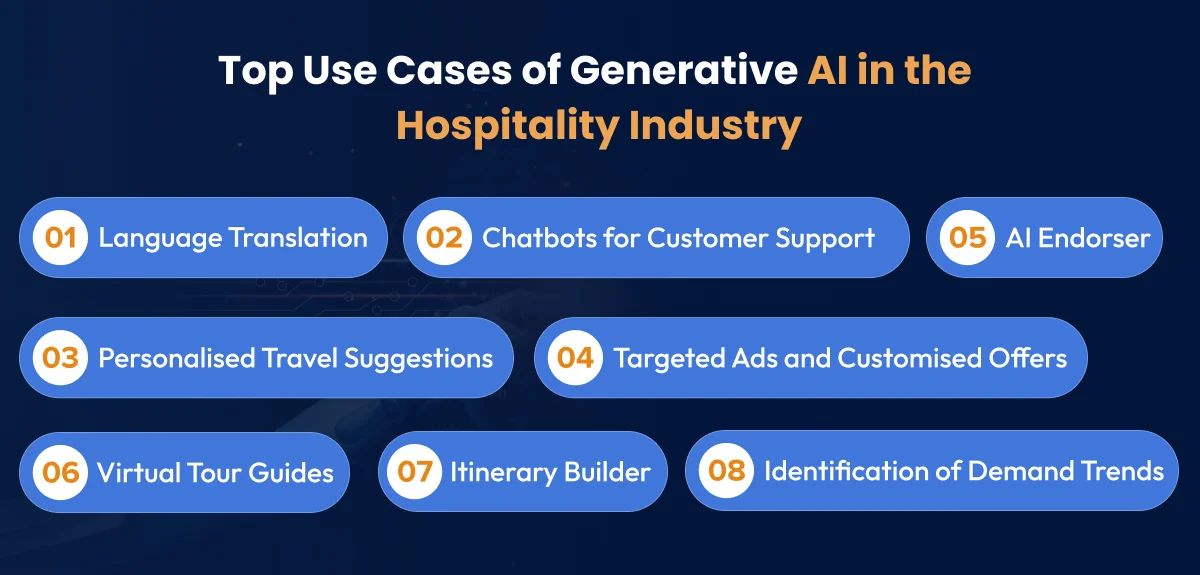
1. Language Translation:
Language translation is the amongst the most popular Generative AI use cases in hospitality. It is a significant improvement in the hospitality industry as it makes it easier for travellers to communicate across any geographical region and eliminates language barriers. Tourists can easily communicate in unfamiliar languages, and that’s why international trips become highly accessible and enjoyable.
The tourists or travellers can navigate, dine, and interact locally with ease and have no dependency on others while communicating. From the business viewpoint, it is a strategic move for hospitality companies to leverage AI-powered translation tools.
The hotels, resorts, and travel companies can provide multilingual customer support and tailored experiences to each client in any region. It also reduces the need for a multi-lingual workforce. It reduces operational costs. For e.g. MakeMyTrip has partnered with Microsoft to launch a voice-assisted booking feature. It was initially in English and Hindi. Soon, it will also include more Indian languages like Bhojpuri.
2. Chatbots for Customer Support:
We are witnessing improvements every day in Generative AI-powered chatbots. These chatbots are developed with advanced natural language processing and machine learning capabilities. They are capable of understanding and responding to understand and respond the queries of the users with high accuracy. Furthermore, unlike humans, these chatbots can work 24 x 7 and offer immediate assistance without any delay. Generative AI chatbots can handle a wide range of issues, from small queries like flight statuses to complex issues of changes in itinerary or accommodation recommendations.

3. Personalised Travel Suggestions:
Today’s travellers, especially Gen Zs, always look out for their personal tastes during travel. You would be surprised to know that more than two-thirds of them want a personalised guest experience with AI rather than focusing on cost. With Gen AI, you can plan tailored and satisfying experiences for guests. AI can analyse the preferences of the guests and accordingly suggest destinations & activities that correlate to the interests of the guests.
AI can also help in identifying the preferences of the visitors, such as room selection, dining choices, and others. By leveraging AI in such a manner, you can gain a competitive edge and ensure high-quality feedback from your guests.
A good epitome of this is Expedia. It has introduced a feature in which there is a conversational trip planning experience powered by ChatGPT. With this, the members can engage in open-ended conversations within the app. They also get personalised recommendations for tourist destinations, accommodations, routes, etc.
Read More: LLM vs Generative AI
4. Targeted Ads and Customised Offers:
Using the past data of customers and the latest interactions, AI can create tailored promotions and more relevant ads. Customers will get bespoke travel deals which have higher chances of conversion. It will help in ensuring that the marketing efforts will reach the right target audience and achieve greater traveller satisfaction. It also builds a strong bond between the brand and the audience.
5. AI Endorser:
AI Endorser is also an important use case among Generative AI use cases in hospitality industry. These AI-based characters are designed to portray travel companies and engage with their visitors in a unique and entertaining way. These do not imitate brand ambassadors but interact with varied consumers. These not only create brand interaction but also add a considerable level of desirability to the service. They are an innovative combination of marketing and technology and have broken new ground in the presentation and experience of the company offering.
6. Virtual Tour Guides:
Generally, we also face a problem that we are skeptical for our leisure stay location, surroundings, spaciousness, ambience, and other parameters. With a virtual tour guide, i.e. the amalgamation of Gen AI and Augmented Reality technology, guests can move through a location as if they are physically present there. If you are visiting the Taj Mahal, you can actually have a walk-like experience in the corridors of the Taj Mahal with AI. A guest planning for the iconic Kumbh Mela can actually get a feel of the congested roads filled with people. These experiences also motivate the travellers to experience it in reality by physically being present.
7. Itinerary Builder:
Building an itinerary that covers all the important sightseeing points within the stipulated time is often a headache for both tourism providers and guests as well. With the Generative AI planner, hospitality businesses can curate entire journeys, day by day.
This includes booking a ride, getting attraction tickets, and recommending good times to visit. Paytm, an Indian FinTech firm, has just come up with Paytm Checkin, an AI-powered travel booking app that is bound to make trip planning and administration very much easier. Powered by Generative and Conversational AI, the tool provides destination recommendations, customised itineraries, and booking management for buses, trains, and flights.
8. Identification of Demand Trends:
AI has always been working by analysing historical data and market trends. The same is true with Gen AI as well. It can analyse the data along with competitor pricing to optimise your service prices in the same way. It steps ahead by also identifying patterns of social media, which isn’t possible for a human. It will help you understand the trends in demand.
In the hospitality industry, it is important to align your business, staff, and the overall atmosphere of your property as per the current trends. With Gen AI, you will not just manage and allocate the resources for serving customer needs, but you will also maintain competitive pricing.
Visit More: conversational ai vs generative ai
Wrapping Up:
When we look forward in the hospitality industry, we need to understand that technology will now define the guest experience. That’s why embracing Generative AI in hospitality is no longer a choice but a necessity to stay relevant in the market.
At Octal IT Solutions, we don’t say we build AI solutions, but now it is our forte to deliver the best AI solutions and services in the market. Share your requirement to develop an unparalleled experience for your guests.
Click Also: Generative AI in Fintech


 Get in Touch
 By
By October 16, 2026