


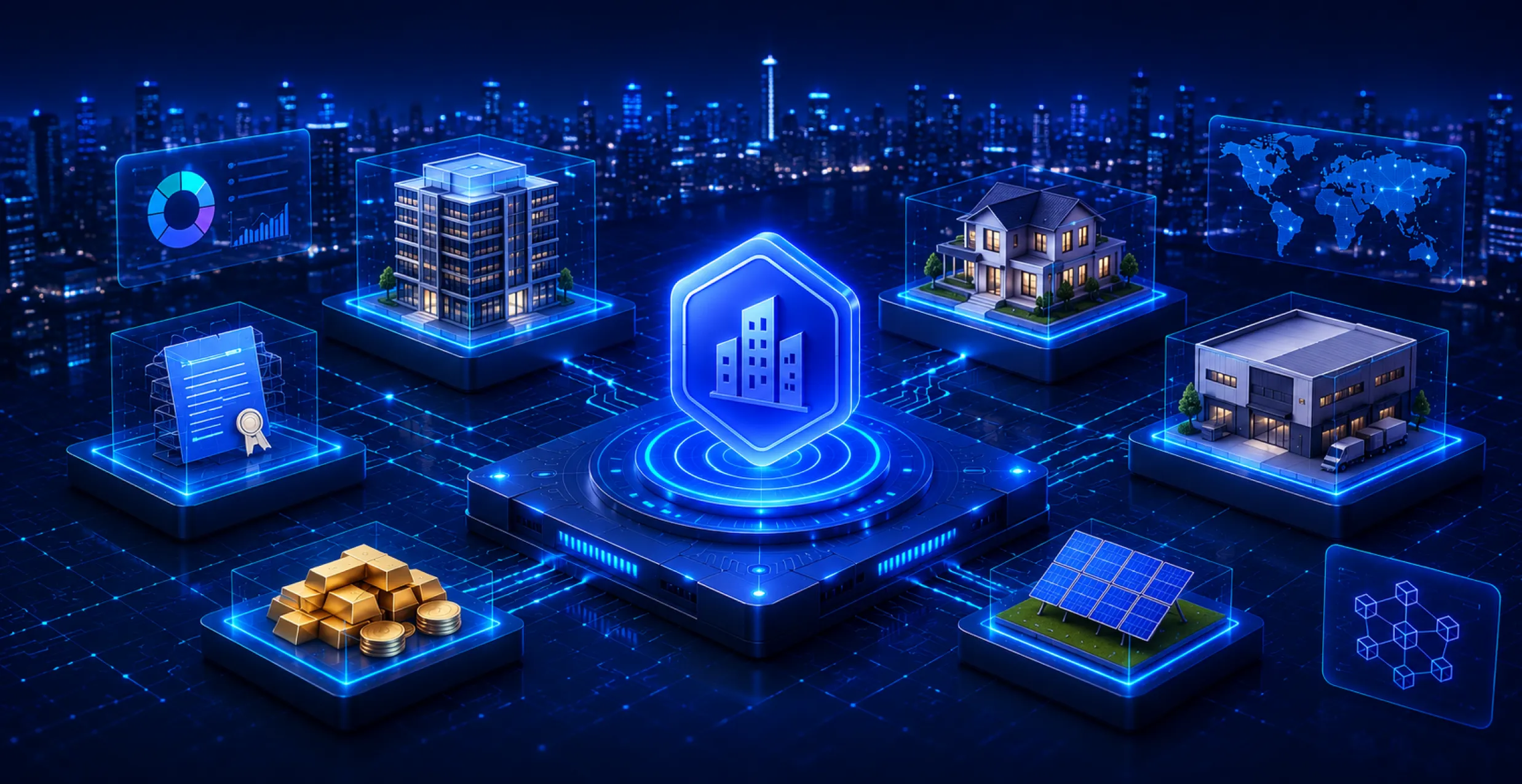
BlackRock CEO Larry Fink put it simply. “We’re just at the beginning of the tokenization of all assets,” he said. He was speaking about real estate, equities, and other holdings moving onto blockchain.
When the world’s largest asset manager says this, founders should pay attention. Real estate, gold, and private funds are already moving onto blockchain rails. But one question stops most founders before they even start. How much does RWA tokenization platform development cost in 2026?
The answer depends on far more factors than most expect. Waiting too long could mean paying significantly more later. This guide breaks down every real cost driver in simple terms.
So, let’s start our discussion and understand the cost of building a RWA tokenization platform in a detailed manner.
What Is RWA Tokenization Platform Development?
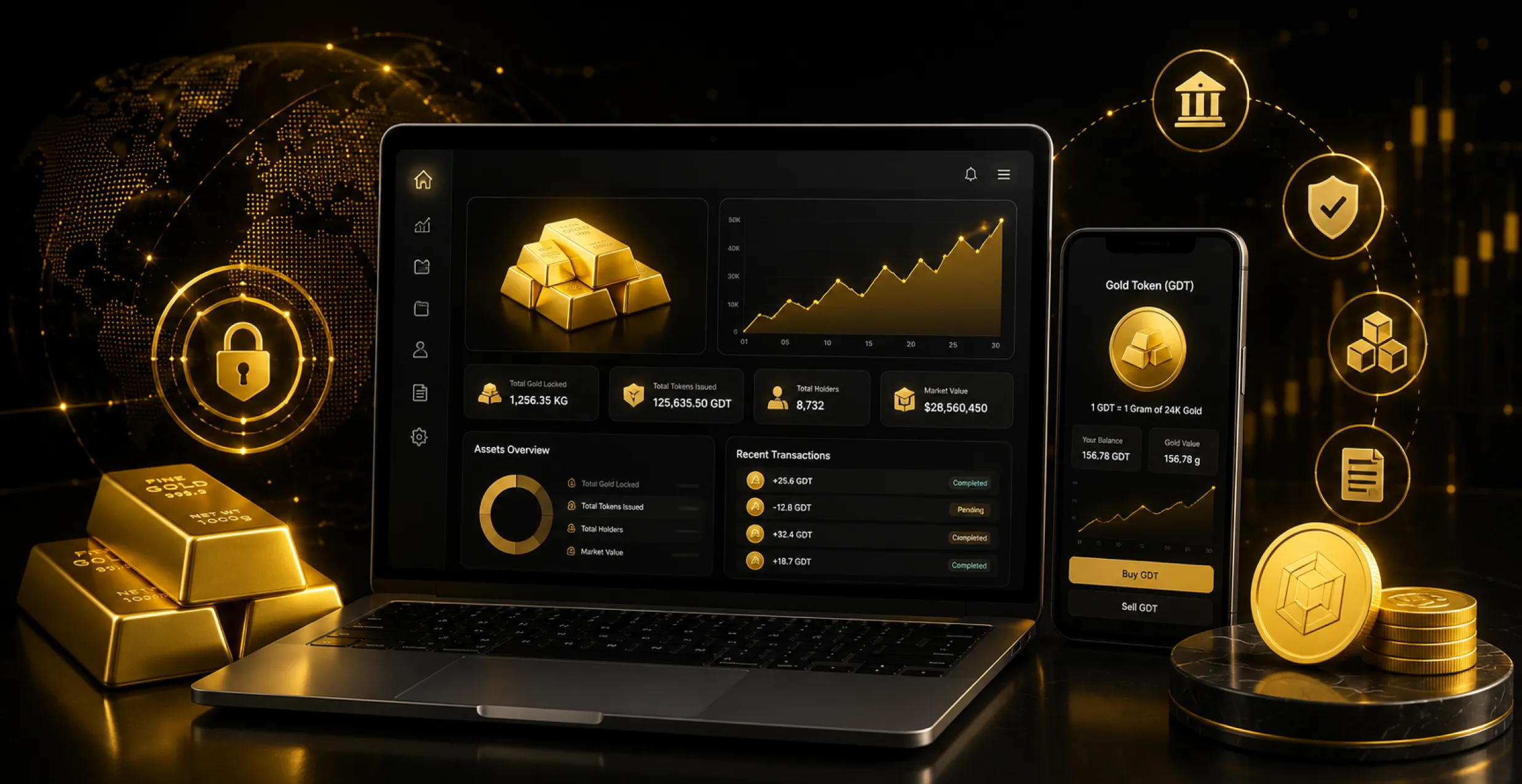
Real-world assets, such as real estate or gold, are not released for years. This all changes with tokenization. It is one of the Web3 development services that transforms physical assets into digital tokens on the blockchain. Every token is a true piece of ownership that has real values.
These tokens are easily purchased, sold, and traded by investors. Founders are leveraging tokenization platform development to access illiquid assets. The system features compliance monitoring and secure custodial service together with smart contracts.
This creates a trustworthy digital asset tokenization platform for investors. This is the model that businesses adopt to get to investors around the world. Paper documents are quickly converted to an electronic transferable format.
Asset Tokenization Software Market: Global Size
- As per the report published by Mordor Intelligence, the global asset tokenization market is estimated to reach USD 3.01 trillion in 2026.
- The same report has expected that this market will reach USD 18.74 trillion by 2031.
- According to Fortune Business Insights, North America dominated the market in 2025 with a 34.90% share.
- Forbes has reported that currently the tokenized assets market is valued at $60 billion across 7000 products.
Why Is RWA Tokenization Booming in 2026?
There is a growing interest in real world assets that continues to increase annually. Investors want predictable returns and not the traditional market fluctuations. The ownership models of tokens are now supported explicitly by the regulations in major markets.
There are active pilot programs underway by banks and asset managers. Smaller entry points for large assets are also desired by retail investors. RWA tokenization solutions are the answer to this, as fractional ownership is easy.
Thousands of small investors have come to a single property. Gold, bonds, and even art are all the same model. Whereas traditional documentation was opaque, blockchain provides transparency. The shorter the settlement times, the more institutional players will become interested in this area.
The demand for liquid, clear assets continues to grow all over the world. This is what makes 2026 a turning point for tokenization.
Key Factors That Affect RWA Tokenization Platform Development Cost
A ton of factors determine the cost of your platform. Founders should be aware of all the factors before entering into development. This helps avoid budget surprises later.
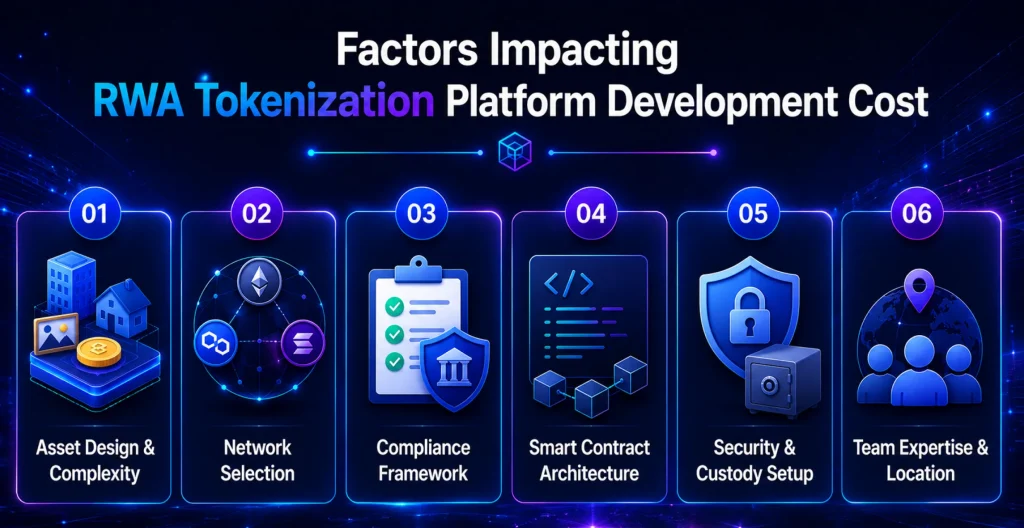
Asset Type and Complexity
All assets are not the same and do not require the same rules. Real estate has to be checked through the law, and gold has to be proven to be in custody. The cost of developing an asset tokenization platform varies greatly based on the type of asset. These assets are always more complex and require more in-depth compliance work and legal review.
Blockchain Network Choice
Gas fees are higher on public chains, such as Ethereum. Permissioned or private chains save massive transaction fees! The costs of blockchain asset tokenization is related to its long-term plan. This is a wise choice that will save money right across the platform’s life cycle.
Compliance and Legal Requirements
There’s securities legislation for each region. Legal counsel, KYC tools and audit trails all take up costs. Failure to do so leaves room for the possibility of steep penalties in the future. Good compliance work can ensure the security of investors and the long-term reputation of the platform.
Smart Contract Complexity
Simple contracts are cheaper to construct and test. There is a trade-off between the complexity of the logic and development time, such as dividend payouts. The more you test the more secure the software will be, and the fewer bugs will be found later. This step directly affects your real world asset tokenization cost estimate.
Custody and Security Infrastructure
Investor funds are fully protected with the use of secure crypto wallets and custody solutions. There are additional costs for multi-signature systems and cold storage. The failure to do so here will put your whole site at risk. Long-term trust is achieved with strong security.
Team Location and Expertise
The hourly rates vary from development team to development team around the globe. Blockchain developers are more experienced than general developers and therefore, they command a higher fee. Your total budget is determined by location and proficiency. You need to find the right team to ensure you have the right expertise that does not break the bank.
RWA Tokenization Platform Development Cost by Asset Type
The cost will depend on the asset you’re tokenizing. Certain assets require more legal effort than others. Below is a straightforward ranking, by category.
| Asset Type | Estimated Cost | What Drives the Price |
| Real Estate | $30,000 to $80,000 | Legal structuring, title checks, dashboards |
| Gold and Precious Metals | $25,000 to $60,000 | Custody proof, simpler compliance |
| Art and Collectibles | $35,000 to $70,000 | Fractional asset tokenization features |
| Private Equity and Funds | $90,000 and above | Complex investor structures |
| Invoices and Receivables | Under $40,000 | Simpler reporting requirements |
However, real estate tokenization platform development falls somewhere in the middle of the above range. There should be specific compliance and reporting requirements for each category.
Security Token Development Cost vs Utility Token Cost
Not all tokens are created equal. Security tokens and utility tokens are very different. They also vary in the amount of their development costs.
| Factor | Security Token | Utility Token |
| Represents | Real ownership, shares, property rights | Access to a service or platform |
| Estimated Cost | $40,000 to $90,000 | $20,000 to $50,000 |
| Legal Requirements | Strict compliance, investor verification | Minimal legal work needed |
| Ongoing Cost | Regular compliance monitoring | Fewer regulatory hurdles |
The selection of a desired type of crypto token development is solely up to your business objectives.
Cost to Build an Enterprise RWA Tokenization Platform
Large organizations need more than just a simple platform. Enterprise projects are more complex and come with greater expectations.
| Component | Estimated Cost |
| Core Platform Build | $100,000 to $180,000 |
| Multi Chain Support | $15,000 to $30,000 |
| Custom Dashboards and API Integrations | $20,000 to $40,000 |
| Dedicated Support and Maintenance | Ongoing, billed monthly or yearly |
Typically, enterprise grade RWA tokenization solutions range from $100,000 to $250,000. Founders should expect to spend more than just on the initial launch on scaling costs.
Must-Have RWA Tokenization Platform Features and Their Associated Cost
Some of the features differentiate a good platform from a bad one. These must be done first, before any code is written, by the founders.
| Feature | Estimated Cost | Why It Matters |
| Investor Onboarding and KYC | $8,000+ | Fast, secure verification on every blockchain tokenization platform |
| Smart Contract Engine | $10,000 to $20,000 | Handles issuance, transfers, ownership rules |
| Investor Dashboard | $6,000 to $12,000 | Clean view of holdings, returns, documents |
| Payment and Settlement Integration | $5,000 to $10,000 | Instant, secure buying and selling |
| Custody and Wallet Management | $8,000 to $15,000 | Protects tokens from theft or loss |
| Compliance and Reporting Tools | $7,000 to $14,000 | Keeps regulators and investors informed |
| Secondary Marketplace | $12,000 to $25,000 | Tokenization software development for trading after launch |
| Admin and Analytics Panel | $6,000 to $10,000 | Visibility into platform performance |
Skipping any of these features early usually costs more to add later.
Explore More: Real Estate Tokenization Development Cost
Smart Contract Development Cost for RWA Platforms
Each transaction of the tokens is processed automatically and securely by smart contracts. They are expensive and depend on the complexity and features they have.
| Contract Type | Estimated Cost |
| Basic Transfer Logic | $8,000+ |
| Dividend or Voting Rights Logic | $15,000 to $25,000 |
| Multi Chain Compatibility | $10,000 to $20,000 extra |
| Security Audit | $5,000 to $15,000 |
Our smart contract development process includes multiple rounds of independent testing. Skipping audits risks costly exploits after your platform goes live.
Real World Examples: How Businesses Use RWA Tokenization Platforms?
Today, there are various real companies that use tokenization successfully. These RWA tokenization solutions are testament to the viability of the model at scale.
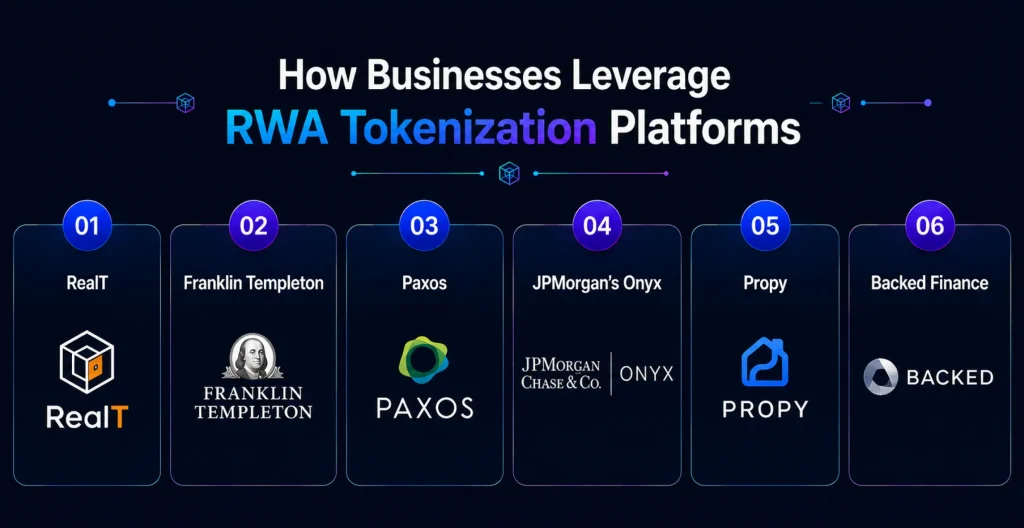
RealT
RealT has operated since 2019, tokenizing U.S. rental properties into fractional ownership shares. Each property sits under a dedicated LLC, represented by ERC-20 tokens on Ethereum. The platform has attracted over 65,000 registered investors so far.
It has distributed more than $29 million in rental income overall. Investors receive weekly payouts in stablecoins directly to their wallets. RealT also lets holders leverage properties through an AAVE-powered DeFi platform.
Franklin Templeton
Franklin Templeton launched BENJI in 2021 as its tokenized money market fund. It represents the on-chain share class of the Franklin OnChain Government Money Fund. This was the first U.S.-registered mutual fund using blockchain as its official record. By 2026, the BENJI suite held close to $2 billion in assets.
The fund now runs across eight public blockchains, including Ethereum and Solana. Dividends are posted daily by minting new tokens into investor wallets.
Paxos
Paxos issues PAX Gold, where each token equals one troy ounce of physical gold. The gold is stored in LBMA-accredited vaults under regulated custody. Its market cap currently sits around $1.8 to $1.9 billion.
Holders can verify the exact bar backing their tokens through a lookup tool. Monthly third-party audits confirm the gold reserves remain fully backed. Paxos recently expanded PAXG beyond Ethereum onto the Solana network too.
JPMorgan’s Onyx (now Kinexys)
JPMorgan’s blockchain platform, once called Onyx, has been rebranded as Kinexys. It has processed over $1.5 trillion in notional transaction value since launch. Daily transaction volume now averages more than $2 billion consistently.
Kinexys serves major institutional clients like Siemens and BlackRock today. The platform recently expanded into near real-time, on-chain FX settlement services. This shows how deeply banks are embedding tokenization into core systems.
Propy
Propy records real estate deeds and escrow transactions directly on the blockchain. It has facilitated billions of dollars in property transactions worldwide. The platform has even handled some high-profile celebrity real estate listings.
On-chain title records help reduce fraud tied to forged ownership documents. Propy significantly shortens closing timelines compared to traditional paperwork-heavy processes. It plans to add AI tools for automating fractional property deals soon.
Backed Finance
Backed Finance tokenizes traditional securities like stocks and bonds on-chain, showcasing how fintech software development is transforming access to global financial markets. This lets crypto-native investors access conventional financial instruments without leaving blockchain platforms. Its tokens are designed to track the underlying security’s real market price.
Unlike traditional markets, these tokens can trade continuously, twenty-four hours a day. Backed Finance operates under a framework requiring full 1:1 asset backing. It reflects the broader push to bring equities and bonds on-chain.
Regional Cost Comparison: RWA Tokenization Development Pricing Worldwide
Worldwide, changing locations was an expensive development process. The pricing of a real world asset tokenization platform depends largely on the standing of your team in the real world.
| Region | Hourly Rate |
| India | $25 to $50 |
| Eastern Europe | $40 to $80 |
| North America | $120 to $220 |
| Western Europe | $90 to $180 |
Development costs for a RWA tokenization platform differ significantly, depending on the region in 2026. Indian teams are fairly priced and at the same time they are of great quality. In the Western world, the prices are higher, because of the higher living costs. Nowadays, the majority of founders opt for multiregional teams. This is the right way to manage the three aspects of quality, communication and budget.
Custom Tokenization Platform vs Ready-Made Solutions: Cost Comparison
The cost to develop a custom RWA tokenization platform is higher initially, but it does not require vendor lock in. Custom-built digital asset platforms also scale smoothly over the years.
| Factor | Ready-Made Software | Custom Platform |
| Starting Cost | Lower, subscription based | $50,000 and above |
| Ownership | Stays with the vendor | Fully owned by the business |
| Customization | Limited | Complete flexibility |
| Long Term Value | Recurring fees add up | Stronger long term value |
Hidden Costs Businesses Often Miss in RWA Platform Development
Many people ignore expenses other than initial development altogether. Many of these cost items are unexpected costs that are not anticipated by teams until after launch.
Continuing compliance monitoring brings in recurring expenses after launch day. All of the above costs add up rather rapidly, too. Safety is frequently the reason for smart contract audits for the development of tokenized asset platforms.
Marketing and investor onboarding support also require ongoing budget allocation. Legal fees continue as regulations change across different countries. A solid asset tokenization platform plan accounts for these costs early. Skipping this planning step often causes budget overruns later.
Check Also: Top RWA Tokenization Development Companies
How to Reduce Your RWA Tokenization Platform Development Cost?
With smart planning, you can reduce the cost of creating an RWA tokenization platform by a huge margin. Don’t start with all the features right away, begin with a minimum viable product.
Hire seasoned developers that do not have to do rework later. Integrate into the blockchain infrastructure rather than creating from the ground up. To prevent costly legal revisions, consider plan compliance needs up front. Develop in areas where there is a high value proposition.
Take care of security issues first, rather than fixing security issues later. These are the steps to follow to keep your budget on track without compromising on platform quality.
Why Choose Octal IT Solution for RWA Tokenization Platform Development?
Octal IT Solution works as a trusted RWA tokenization platform development company. Our team combines legal awareness with strong technical execution. As an RWA tokenization software development company, we handle compliance directly.
We offer complete asset tokenization platform development services from planning through launch. Our background as an RWA blockchain development company covers every major blockchain network.
Our team also provides broader blockchain development services for founders. Working with an enterprise blockchain development company means fewer delays and stronger security.
We are a CMMI Level 3 Appraised organization providing enterprise level digital transformation solutions to our clients. Our official membership at Forbes Technology Council also makes us a reliable partner offering best solutions on trending technologies.
Our developers build custody, compliance, and investor tools under one roof. We test every smart contract thoroughly before any public launch.
Octal IT Solution supports founders from early planning through post launch maintenance. Choosing the right partner protects your investment and your investors both.
Conclusion
Every founder deserves a clear answer on RWA tokenization platform development cost before starting. This guide covered pricing, features, regions, and hidden expenses honestly.
Enterprise RWA tokenization platform development demands more investment but delivers stronger long term returns. A solid blockchain platform for real-world asset tokenization builds lasting investor trust. The right RWA tokenization solutions turn slow, illiquid assets into fast digital opportunities.
Octal IT Solution helps founders move from idea to secure, working platform. Our team handles compliance, security, and technology under one experienced roof. Ready to put a number on your project? Get a free RWA tokenization cost estimate from our team today.


 Get in Touch
 By
By September 8, 2026