


Insurance organizations across 2025 will make fast digital transformation a key aspect of their operations. Enterprises seek advanced methods to handle customer relationships because both client demands and market competitiveness continue to evolve.
That’s why more insurance firms are making the strategic decision to develop Insurance CRM software tailored to their specific needs.
The need to manage policy management together with lead nurturing, along with compliance tracking, has made the previous approach using spreadsheets and disconnected tools inadequate. Organizations at this time require specialized platforms to boost operational efficiency and sustain customer loyalty.
Insurance CRM software development has become a top priority for insurers aiming to gain a competitive edge.
- Why CRM Software for Insurance Companies Is a Necessity?
- Insurance CRM Software Development Market Size
- Why Insurance Companies Need Insurance CRM Software Development?
- Key Steps to Develop Insurance CRM Software
- 5 Best Insurance CRM Software
- CRM Software for Insurance Companies: Custom vs. Off-the-Shelf
- Common Challenges in Insurance CRM Software Development
- Estimating the Insurance CRM Software Development Cost
- How to Choose an Insurance CRM Software Development Company?
- Final Thoughts
- Frequently Asked Questions
Why CRM Software for Insurance Companies Is a Necessity?
Insurance organisations thrive in an industry which requires maximum trust, together with enduring client relationships.
CRM software for insurance companies supports the maintenance of client relationships through its lead management features and automated policy renewals, as well as claim handling and compliance tools, which deliver a superior experience to users.
As we step deeper into a digital-first era, to develop Insurance CRM software is not just about tracking customer interactions; it’s about delivering a proactive and personalized experience.
It’s about knowing your client before they reach out, predicting their needs, and responding at the right moment with the right solution.
While some organizations may be tempted to rely on generic CRM platforms, Insurance CRM software development tailored to the specific needs of the industry can deliver unmatched value. A system built from the ground up for insurance workflows can drastically reduce human error, increase agent productivity, and ensure that no opportunity or renewal slips through the cracks.

Insurance CRM Software Development Market Size
The insurance platform market is poised for strong growth, projected to rise from USD 116.16 billion in 2025 to USD 207.52 billion by 2030, with a compound annual growth rate (CAGR) of 12.3%.
This surge is largely driven by significant investments over USD 1.5 billion in the U.S. and more than USD 1 billion in Europe. Notably, B2B SaaS companies have attracted nearly 40% of InsurTech funding, focusing on innovations in areas such as payment processing, risk management, underwriting software, and claims handling.
Most of these innovations incorporate artificial intelligence (AI), with firms actively enhancing their offerings through AI-based solutions. Additionally, evolving consumer preferences are prompting strategic shifts across the industry, as over 60% of insurance leaders acknowledge the need to adapt their transformation strategies to meet changing customer demands.
Why Insurance Companies Need Insurance CRM Software Development?
Insurance companies depend on trust-based customer relationships as their key foundation. Through a CRM system, agents obtain client demands and suggest customized insurance products while delivering smooth customer assistance.
Every phase of customer interaction receives streamlined processing through CRM systems for both new client acquisitions and life insurance policy renewals.
That’s why many firms are investing heavily in Insurance CRM software development. Let’s break down what makes this investment so impactful:
- Enhanced customer experience
- Improved data accuracy and insights
- Increased agent productivity
- Better compliance tracking
- Streamlined communication and follow-ups
Also read: Top 20 software development companies in uk
Key Steps to Develop Insurance CRM Software
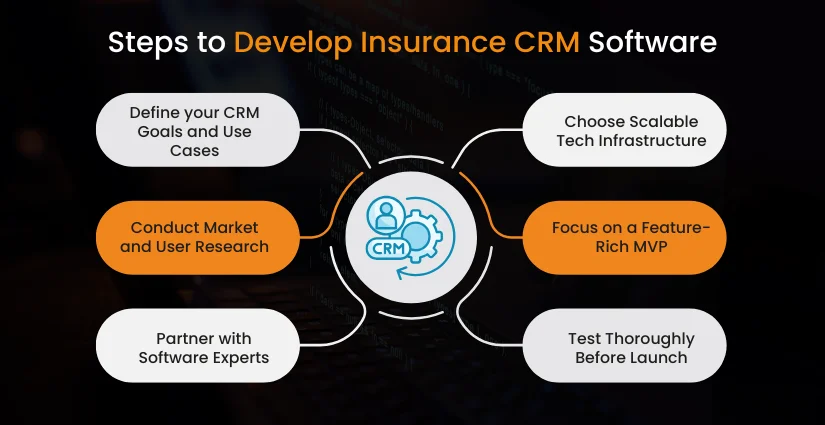
Building CRM software tailored to insurance companies isn’t just about choosing the right tech—it’s about aligning software development with real-world insurance workflows. Here’s how to get it right.
1. Define your CRM Goals and Use Cases
Success in any project depends on having clarity at its beginning. Identify your core objectives. The objectives of your project include improving customer retention while automating lead follow-ups as well as reducing claims processing time, though you seek all these goals.
The determination of critical CRM features and system scope depends on establishing clear business goals.
2. Conduct Market and User Research
Ask for opinions from all members of your organization, including agents and underwriters, together with clients. What bottlenecks do they face? The users need solutions that enhance their workflow and simplify their operational efficiency.
The outcomes of this research enable you to establish a CRM system that satisfies actual user needs, thus encouraging early user adoption.
3. Partner with Software Experts
It’s crucial to work with a CRM software development company or a custom software development services provider with insurance domain expertise. They’ll guide you in mapping workflows, managing integrations, and handling regulatory requirements.
4. Choose Scalable Tech Infrastructure
Choose modern cloud-based architectural designs which efficiently handle large customer information, together with transaction data, along with extensive third-party integration capabilities for rate engines or policy database resources.
5. Focus on a Feature-Rich MVP
Start small, but smart. A minimum viable product (MVP) having core modules encompassing policy management and lead tracking, and client profile features, allows you to test your concepts by making quick changes.
6. Test Thoroughly Before Launch
A well-developed CRM can still fail if bugs or poor UX derail usability. Partner with software testing services to ensure every module performs under load and complies with security standards.
5 Best Insurance CRM Software
To develop Insurance CRM software with a competitive edge, it helps to look at what the industry leaders are doing right. Here are five platforms setting the standard in 2025.
1. Salesforce Financial Services Cloud
Each enterprise insurance provider relies on Salesforce because it offers deep analytics alongside AI automation and high flexibility for their insurance workflow requirements.
2. Zoho CRM for Insurance
Zoho enables insurance agencies to design customized business processes and streamlines their marketing system and policyholder communication management through its flexible module system.
3. Insureio
Insureio presents itself as an ideal system for life insurance professionals by uniting quoting tools with client nurture abilities and compliance tracking and document automation under one unified display.
4. Vertafore AMS360
Insureio functions both as an agency management system that optimizes comprehensive end-to-end policy processing for insurers operating in mid-sized insurance agencies.
5. AgencyBloc
Businesses dealing with life and health insurance will find the complete solution in AgencyBloc because it brings together CRM capabilities with quoting functionality, along with compliance tracking and commission management tools under one platform.
Studying these platforms can inspire powerful software development ideas for your own CRM, especially around automation, user experience, and integration.
Also Read : Top 20 Insurance Software Development Companies
CRM Software for Insurance Companies: Custom vs. Off-the-Shelf
Many insurers ask whether we should buy an off-the-shelf CRM or build a custom solution. The right answer depends on your business complexity, size, and long-term goals.
| Feature | Off-the-Shelf CRM | Custom CRM Software |
| Cost | Lower upfront cost | Higher initial investment |
| Time to Deploy | Ready to use quickly | Requires planning and development |
| Scalability | Limited to vendor’s updates | Scales based on your growth needs |
| Customization | Basic personalization | Full customisation of workflows and UI |
| Integration | May not support older systems | Built to integrate with legacy platforms |
| Ownership | Vendor-managed features and data | Full data ownership and control |
For companies seeking long-term ROI, the ability to develop Insurance CRM software customized to their exact needs is often worth the upfront investment. This is especially true when working with experienced custom software development companies that understand insurance-specific requirements.
Common Challenges in Insurance CRM Software Development
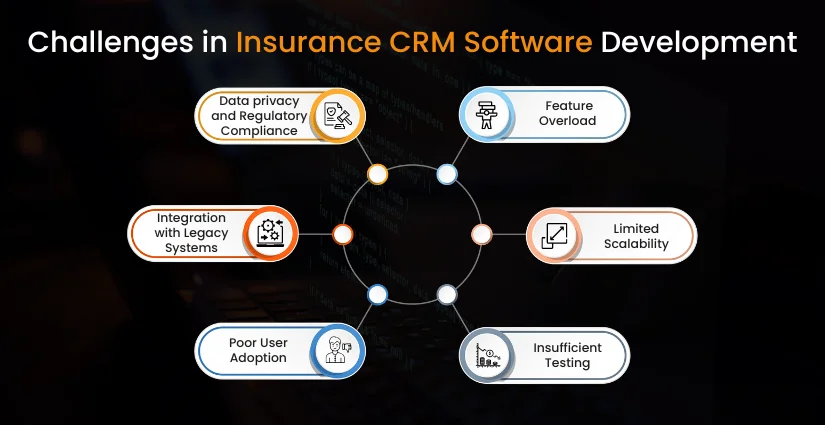
Developing CRM software for the insurance industry can unlock major efficiencies, but it’s not without hurdles. Understanding these challenges helps you avoid pitfalls during your project.
Data Privacy and Regulatory Compliance
Certainly, the processing of delicate client data requires absolute adherence to HIPAA, GDPR and all the particular state insurance legal frameworks. Your system architecture needs to build compliance functionality during its first-day design phase.
Integration with Legacy Systems
Insurance businesses maintain their operations using obsolete IT systems. The process of achieving data transportation along with compatibility between systems demands complex technical expertise and specialized architectural design.
Poor User Adoption
When new tools are difficult to use, agents will avoid working with these systems. Users adopt CRM tools better when the system duplicates insurance business practices and displays user-friendly interfaces.
Feature Overload
Adding multiple features to a system seems logical initially, but this approach makes processes more complicated and less effective. The system should concentrate primarily on enhancing crucial features which support operations.
Limited Scalability
The lack of a scalable design in a CRM system enables current functionality but may fail later on. The selection of flexible infrastructure guarantees that your business will grow while your system adapts accordingly.
Insufficient Testing
Skipping proper QA invites bugs, downtime, and frustrated users. Engaging software testing services ensures a stable, high-performing product from launch.
Also read: How Much Does Software Development Cost in United States?
Estimating the Insurance CRM Software Development Cost
Calculating the cost to develop insurance CRM software is widely based on project scope. A basic CRM with essential modules might range from $30,000 to $60,000. However, a full-featured platform integrated with multiple services, automation layers, and analytics could easily exceed $200,000.
Factors affecting cost include:
- Complexity of features (e.g., AI suggestions, predictive analytics)
- Tech stack and licensing fees
- Number of third-party integrations (e.g., payment gateways, quoting tools)
- Custom UI/UX design
- Timeframe and developer rates
The smartest way to get a realistic estimate is to consult with software development consulting services. These experts assess your requirements and offer accurate timelines and budget breakdowns, helping you plan more effectively.
How to Choose an Insurance CRM Software Development Company?
Selecting the right partner to help you develop Insurance CRM software is critical. Your vendor should be more than a coder—they should be a strategic ally with industry insight and technical expertise.
Industry-Specific Experience
Work with teams that possess expertise in insurance processes, beginning with underwriting to claims management. Your needs, alongside compliance obligations, will be forecasted by them.
Ability to Offer Custom Software Development Services
Generic platforms won’t cut it. Choosing a firm that provides customized service experiences consistent with your business structure is essential.
Transparent Pricing and Planning
You should receive a clear scope of work, with detailed timelines and an accurate software development cost estimate.
Agile Development Process
By following an iterative process, you achieve quick feedback times combined with improved risk control and capabilities to add new features.
Post-Launch Maintenance
Your CRM system will require periodic maintenance as well as correction of bugs and additional enhancements. Continuous support from vendors should be your priority when making your selection.
Strong Portfolio and References
Ask to see past insurance CRM projects, case studies, and testimonials. Good custom software development companies have nothing to hide.

Final Thoughts
In today’s competitive and compliance-heavy insurance market, a powerful CRM system is no longer a luxury; it’s a necessity. Whether you’re a growing agency or an established insurer, deciding to develop Insurance CRM software is a smart long-term move.
By focusing on user needs, leveraging the right technology, and partnering with the right custom software development services, you can create a solution that enhances customer satisfaction, streamlines operations, and boosts revenue.
So, if you’re exploring insurance CRM software development, start by outlining your vision, exploring software development ideas, and partnering with professionals who understand the unique needs of your industry.
With the right team, tools, and technology, your insurance CRM could become your company’s most powerful asset.
Frequently Asked Questions
What is Insurance CRM software, and why do insurance companies need it?
Insurance CRM software is a specialized customer relationship management tool designed for insurance agencies and brokers. It helps manage client data, automate policy renewals, streamline claims processing, and improve customer engagement.
With rising customer expectations in 2025, having a custom CRM is essential for operational efficiency and personalized service delivery.
How is custom Insurance CRM software better than off-the-shelf solutions?
Custom CRM software is built to align with your agency’s exact workflows, compliance needs, and customer lifecycle.
Unlike generic tools, it offers full flexibility, seamless integration with existing systems, and scalability as your business grows. It’s ideal for insurers looking to stand out in a competitive market.
What features should I include when developing Insurance CRM software?
Key features include client management, lead tracking, policy and claims automation, document storage, reporting dashboards, and compliance tools.
Advanced CRMS may also include AI-driven insights, chat integrations, and workflow automation. Your final feature set should align with your specific goals and pain points.
How much does it cost to develop Insurance CRM software?
The cost can vary significantly based on functionality, customization, and tech stack. Basic CRM systems may start around $30,000, while fully custom enterprise solutions can exceed $200,000.
To get an accurate estimate, it’s best to consult with a CRM software development company like Octal, which can assess your needs and provide a detailed quote.
Why should I choose Octal for Insurance CRM software development?
Octal brings over a decade of experience in custom software development, with a dedicated team specializing in insurance tech solutions.
From consulting and UX design to integration and post-launch support, Octal offers end-to-end services to help you develop Insurance CRM software that drives real business results.

 By
By September 1, 2026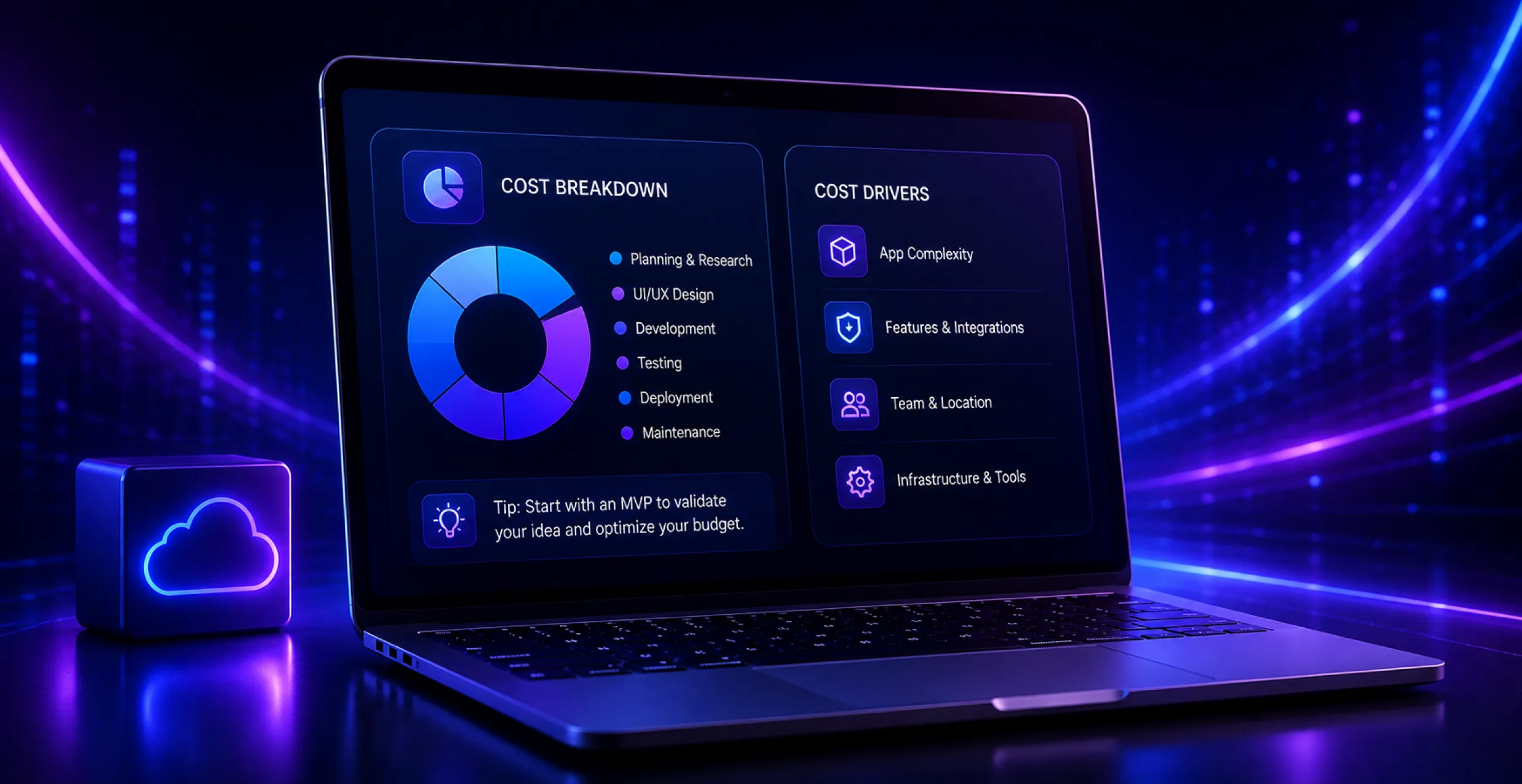





 Latest Stories
 Get in Touch