


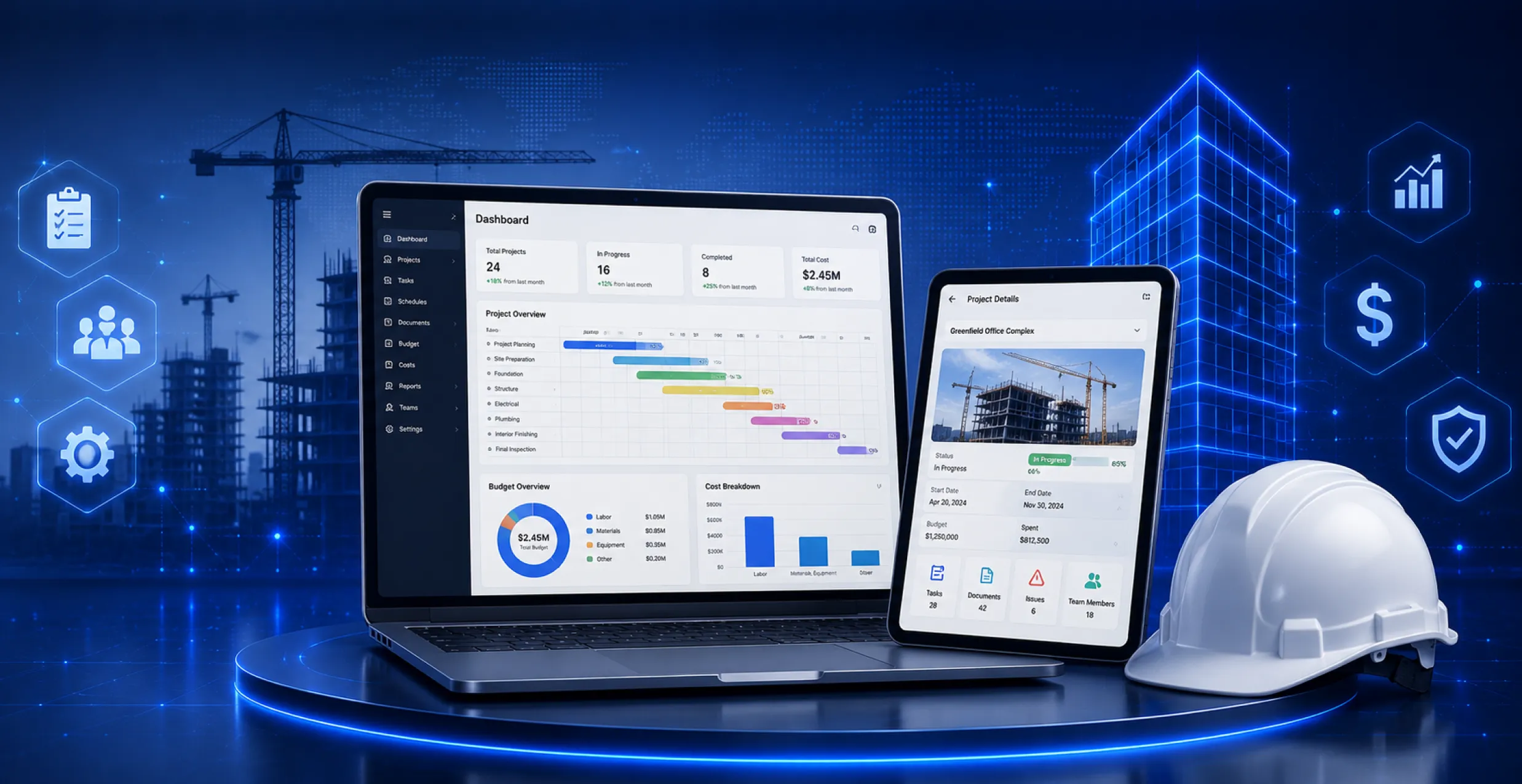
Do you still find yourself relying on spreadsheets, calls without end, and disconnection in your system? Construction companies will soon adopt more efficient digital technology solutions to make things easier, faster, and more visible.
Based on the statistics provided by Grand View Research, the value of the global construction management software market is projected to be USD 7.67 billion in 2025 and further increase to USD 16.37 billion in 2033 at a CAGR of 10.2% during 2026-2033.
Today, a growing number of firms are investing in software development within construction. This article will explain all aspects of developing construction software for you. Let’s start with the fundamentals!
- Construction Software Development Overview
- Why Do Construction Companies Need Construction Management Software?
- Key Features of Construction Management Software
- Benefits of Custom Construction Management Software
- Types of Construction Management Software
- Real-World Use Cases of Construction Management Software
- AI in Construction Management Software
- Tech Stack for Construction Management Software Development
- Construction Software Development Process
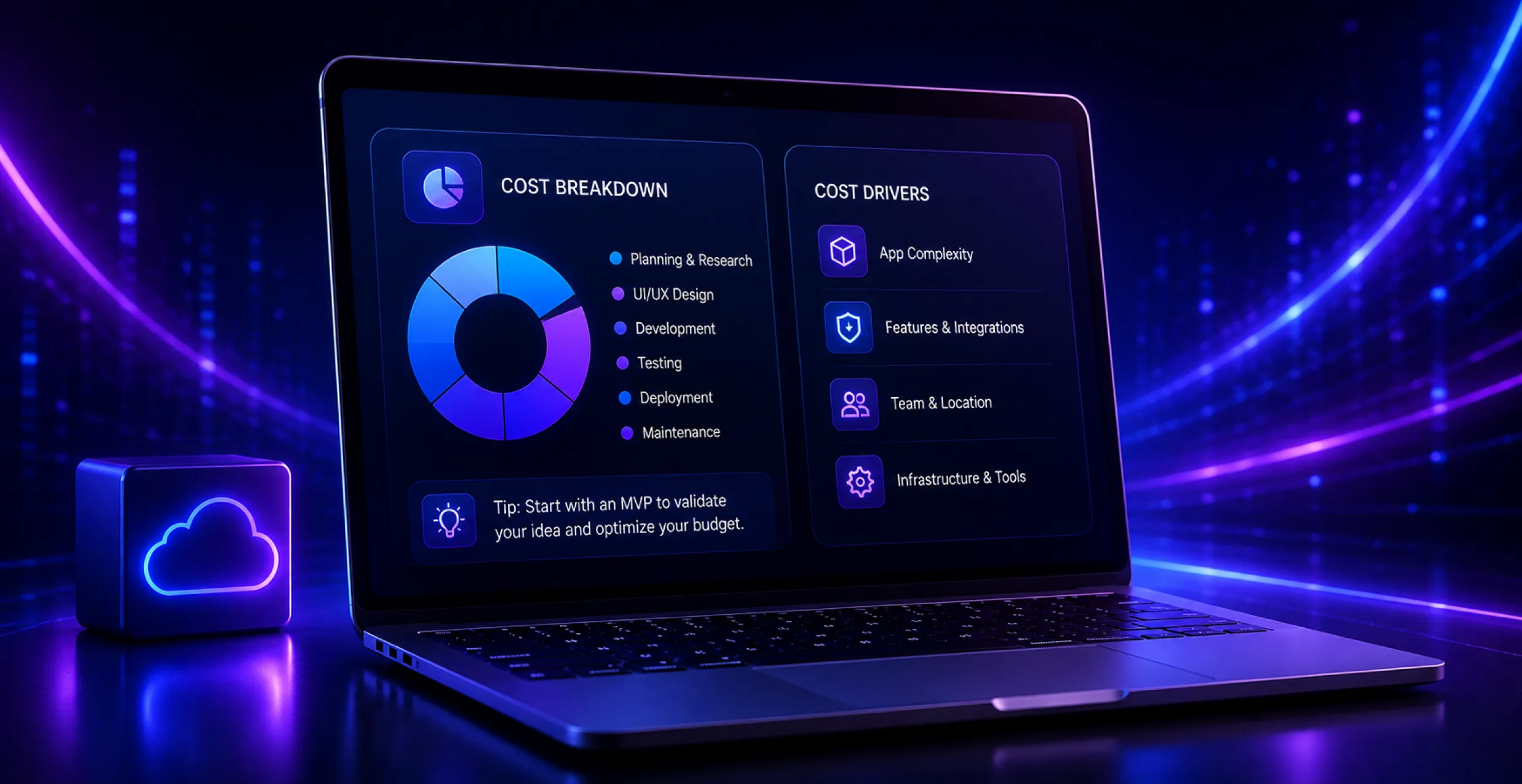
- Cost of Construction Project Management Software Development
- Development Phase-Wise Cost Breakdown
- Cost Estimation by Development Team
- Development Cost by Software Complexity
- Cost Based on Development Region
- Challenges in Construction Software Development
- Future Trends in Construction Management Software
- Why Invest in Custom Construction Management Software in 2026?
- Why Choose Octal IT Solution for Construction Software Development?
- Final Thoughts
- FAQs
Construction Software Development Overview
Construction management software development refers to the creation of software that will help construction companies manage their projects with regard to scheduling, budgeting, personnel, and communication.
Modern construction software development services allow having more control over projects and help construction organizations manage projects quicker, more efficiently, and in a more transparent way.
1. Understanding Construction Management Platforms
This type of software combines all the processes mentioned above into one integrated system.
2. How Construction Software Solutions Improve Project Operations
The use of such software can help eliminate unnecessary routines, make project collaboration quicker, and provide timely information about projects for office workers and field specialists.
3. Difference Between Off-the-Shelf and Custom Construction Software Development
In the first case, people deal with general functionality, while custom construction software development implies implementing personalized workflow and integration possibilities.
Why Do Construction Companies Need Construction Management Software?
Construction businesses should have an intelligent approach to optimizing their various operations, eliminating superfluous activities, and speeding up the process of construction through various capabilities provided by such construction management software.
1. Managing Complex Construction Workflows Efficiently
The development of modern construction software provides companies with an opportunity to distribute tasks, make schedules, offer ways to approve them, and make reports on daily work.
2. Improving Collaboration Between Field and Office Teams
Intelligent dashboards make it easier for field engineers to communicate with office administrators via workflow automation services.
3. Reducing Delays, Budget Overruns, and Communication Gaps
The utilization of real-time information and communication ensures that miscommunications, delays, and overbudgeting are prevented throughout the construction process.
4. Streamline Construction Workflow
Automation of some tasks makes it possible for the construction firm to automate some operations, approve projects quickly, and improve operational efficiency.
5. Better Resource Planning and Productivity
Due to modern project tracking technology, construction companies are able to allocate resources efficiently.
Key Features of Construction Management Software
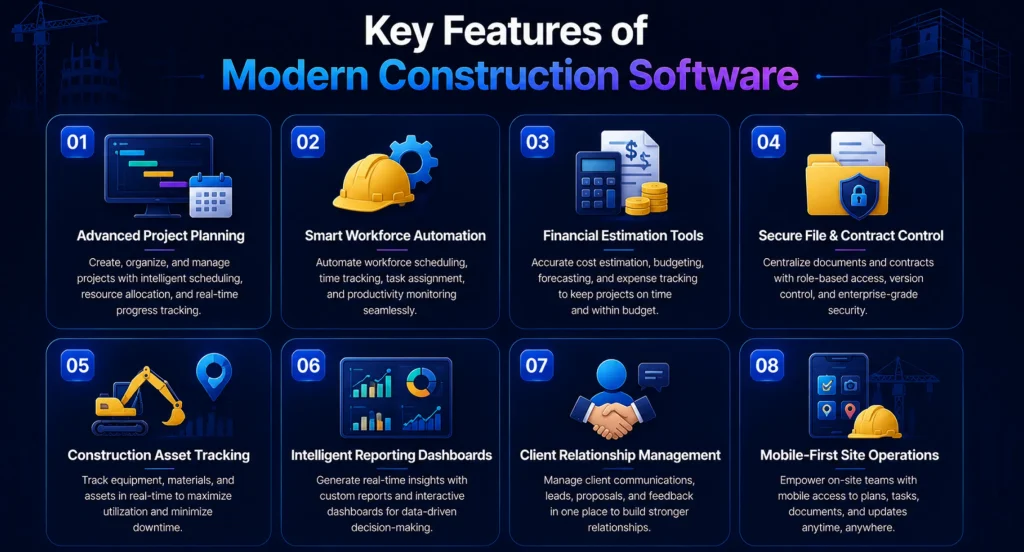
Modern construction platforms that have automated options, such as real-time tracking and collaboration, enhance efficiency and offer better control over the projects.
1. Project Planning and Construction Scheduling Software
Due to the advanced project planning software, it becomes easy to plan and schedule projects through the construction scheduling software available.
2. Workforce and Field Service Management Software Integration
Due to the integration with the workforce and field service management software, monitoring the tasks and presence of the employees at the construction site is easy.
3. Budgeting and Cost Estimation Tools
Through the cost estimation tools and application software, the construction process is easier to plan due to the effective monitoring of the expenses involved.
4. Document and Contract Management
With the help of documentation and contract management software, construction firms can keep project records organized and accessible throughout the project lifecycle, from initial plans and contracts to as-built documentation that reflects the completed work.
5. Equipment and Inventory Tracking
Construction companies will be able to manage the materials and equipment needed for the project without any interruption.
6. Real-Time Reporting and Analytics Dashboards
Through the analytics dashboard, it is easy to learn about how efficient, productive, and profitable your project is in real time.
7. CRM and Client Communication Features
Communication technologies have been embedded that will improve customer communication using the CRM software development capabilities.
8. Mobile Accessibility for On-Site Teams
Through the use of mobile apps, field staff are able to get notifications and send reports straight from their project location.
Benefits of Custom Construction Management Software
Custom-built software is used to improve scalability and process efficiency and to enable optimization using specialized tools for construction needs.
1. Better Scalability for Growing Construction Businesses
Scalability improvement with software use is not an issue because customized software can handle numerous construction projects, teams, and sites easily.
2. Streamlined Operations Through Workflow Automation Services
Automated workflows can help increase efficiency as there will be less paperwork involved and faster task management within different departments.
3. Improved Project Visibility and Team Coordination
With dashboards, tracking projects, performance of workers, and budgets becomes easy, thus promoting collaboration between different construction departments.
4. Enhanced Compliance and Risk Management
Custom software makes it easier to manage compliance, audits, licenses, and other risk factors related to construction projects.
5. Centralized Data Management with Construction ERP Software
With custom construction ERP solutions, data management is optimized as well as storage and retrieval, with the help of software.
Types of Construction Management Software
The construction industry employs various software solutions based on the size of the projects, the objectives of operations, and the requirements of workforce management.
1. Construction Project Management Software
Such software assists in managing the processes related to project planning, budget management, task tracking, communications, and reporting with the help of an operational dashboard.
2. Centralized ERP Management Platforms
The ERP solutions integrate such departments as finance, procurement, HR, inventory, and operations into one system to improve business performance.
3. Project Timeline & Scheduling Tools
This type of software will assist in planning resources, project timetables, workforce management, and milestone achievement.
4. Field Service Management Software
With the help of such software, it becomes possible to monitor field technicians, assign tasks, keep an eye on attendance, etc.
5. Construction SaaS Development Solutions
Cloud-based SaaS platforms deliver scalability and remote access capabilities with minimal infrastructure investments.
6. AI Construction Management Software
This innovative type of software utilizes AI technologies in such tasks as prediction, automation, risk assessment, scheduling optimization, and more.
7. Mobile-First Construction Management Apps
Mobile applications facilitate collaboration, reporting, remote monitoring, and many other things, and this is only possible with the help of mobile app development.
Real-World Use Cases of Construction Management Software
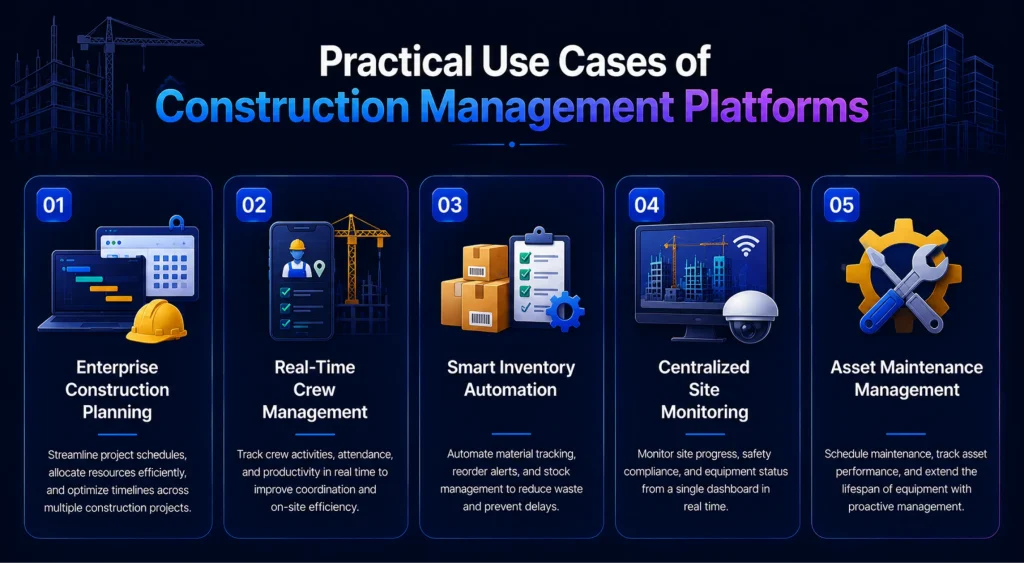
Construction software solutions are revolutionizing the way in which businesses handle operations, communications, and project implementation in their respective residential, commercial, and industrial projects.
1. Large-Scale Infrastructure Project Management
There is software in which construction firms can organize contractors, finances, deadlines, and other requirements involved in large-scale infrastructure projects.
2. Real-Time Workforce and Attendance Tracking
The field crew members are able to track their attendance, update their progress, and also get tasks from their management through the software.
3. Automated Procurement and Inventory Management
The construction firms have made their procurement processes automated in order to ensure that there are no shortages on the project sites.
4. Multi-Site Project Monitoring
Cloud-based dashboards and reporting tools enable managers to monitor different construction projects at once.
5. Equipment Maintenance and Utilization Tracking
Due to the use of AI, the performance of the equipment can be tracked in order to eliminate any downtime or costs.
AI in Construction Management Software
As a result of the integration of AI into construction management software, this tool becomes more intelligent and useful in many ways.
1. AI-Powered Project Forecasting and Risk Analysis
Artificial intelligence is able to make predictions based on the analysis of data about a particular project and potential future problems.
2. Predictive Maintenance and Equipment Monitoring
These applications observe the equipment as well as plan maintenance activities to prevent sudden outages of machines.
3 AI-Based Construction Scheduling Optimization
AI algorithms possess the ability to analyze the availability of the workforce, weather conditions, and interdependencies in projects.
4. Smart Resource Allocation and Workforce Planning
AI solutions will enable us to implement effective planning and management of the workforce for construction projects.
5. AI Chatbots and Automated Reporting Systems
With the help of AI solutions, people are able to automate reporting procedures, answer inquiries about operations, and create reports.
6. Future Impact of AI App Development in Construction
The future of AI app development in construction includes optimization of workflow, analysis, and monitoring through the use of AI solutions.
Tech Stack for Construction Management Software Development
A well-selected technology stack guarantees high scalability, security, performance, and integration capabilities for construction management software applications.
| Layer | Technologies |
| Frontend | React.js, Angular, Vue.js |
| Backend | Node.js, Python, .NET, Java |
| Mobile App Development | Flutter, React Native, Swift, Kotlin |
| Cloud Infrastructure | AWS, Microsoft Azure, Google Cloud |
| Database | PostgreSQL, MongoDB, MySQL |
| APIs & Integrations | REST APIs, GraphQL |
| AI & Analytics | TensorFlow, OpenAI APIs, Power BI |
| ERP Integration | SAP, Oracle ERP |
| CRM Integration | Salesforce, HubSpot |
| Security | OAuth 2.0, JWT, SSL Encryption |
| DevOps | Docker, Kubernetes, Jenkins |
The proposed tech stack provides capabilities for constructing management SaaS applications, ensuring enterprise scalability and ERP software development system integration.
Construction Software Development Process
Building construction management software is not just about building features. It is a whole process that should make construction companies manage their projects better and work effectively.
Step 1. Requirement Analysis and Project Planning
Requirements analysis and gathering are essential to realize your own needs and the peculiarities of your business. Here, you become familiar with the goal of your project and develop your strategy for a construction management solution.
Step 2. UI/UX Design for Construction Software Solutions
Once the planning is complete, designers create user-friendly interfaces of the main screens that are going to be used by both office staff and workers on-site. It is all about making the software easy to navigate and efficient to use.
Step 3. Custom Software Development for Construction Businesses
This step involves the creation of all the essential functions within the software by developing necessary third-party integration features according to your construction business’s needs.
Step 4. Testing, Integration, and Deployment
The software is put through rigorous tests for performance, security, and functionality before its installation. The software is eventually installed after debugging and full integration procedures.
Step 5. Post-Launch Maintenance and Upgrades
Once launched, the software needs to be maintained so that its performance and security can be improved and upgraded in the long run.
Cost of Construction Project Management Software Development
The overall construction management software cost really depends on how hard the project is, what features are needed, which integrations you’re expecting, the deployment method, and even the development location where the work gets done.
Development Phase-Wise Cost Breakdown
| Development Phase | Estimated Cost |
| Requirement Analysis | $5,000 – $10,000 |
| UI/UX Design | $8,000 – $15,000 |
| Development | $25,000 – $120,000 |
| Testing & QA | $5,000 – $15,000 |
| Deployment & Support | $5,000 – $20,000 |
Cost Estimation by Development Team
| Team Role | Hourly Rate |
| Project Manager | $30 – $80 |
| UI/UX Designer | $25 – $70 |
| Frontend Developer | $30 – $90 |
| Backend Developer | $35 – $100 |
| QA Engineer | $20 – $60 |
Development Cost by Software Complexity
| Complexity Level | Estimated Cost |
| Basic Software | $20,000 – $40,000 |
| Mid-Level Platform | $40,000 – $100,000 |
| Enterprise Solution | $100,000 – $300,000+ |
Cost Based on Development Region
| Region | Average Hourly Rate |
| North America | $100 – $200 |
| Western Europe | $70 – $150 |
| Eastern Europe | $40 – $90 |
| India | $20 – $60 |
Modern construction software pricing tends to shift based on things like cloud hosting, third-party integrations, AI features, and whether you’ll need continuous upkeep, especially under SaaS app development models.
Challenges in Construction Software Development
Construction software initiatives usually come with operational complexity, tricky connections between systems, scalability concerns, and real-time collaboration needs across distributed teams and job sites.
1. Managing Complex Workflows and Data Synchronization
A lot of construction companies manage several workflows at the same time. Having centralized dashboards and automated synchronization tools can lower those operational mismatches, and it makes project coordination smoother.
2. Integration with Legacy Construction Systems
Many older platforms simply do not play nicely with newer environments. API-based integration approaches help connect existing software with newer digital solutions more efficiently than doing everything manually.
3. Security and Compliance Challenges
Construction platforms store sensitive financial and operational information. Strong encryption, strict access controls, and compliance monitoring all help harden the software security posture and reduce risk over time.
4. User Adoption and Workforce Training
Some employees can resist new technologies, even when the tools are helpful. Using simple interfaces, doing onboarding sessions early, and running role-based training programs can help people adopt faster and keep day-to-day operations more efficient.
5. Scalability Issues in Construction SaaS Development
If the business grows quickly, the software can start slowly or just be less stable. Cloud-native infrastructure and a modular architecture are often the way to keep things scalable and also support long-term flexibility.
Real-Time Communication and Offline Accessibility Challenges
Construction sites can have rough connectivity, so conversations and updates get interrupted. Offline syncing options, plus mobile-first solutions, can keep the workflow going smoothly.
Future Trends in Construction Management Software
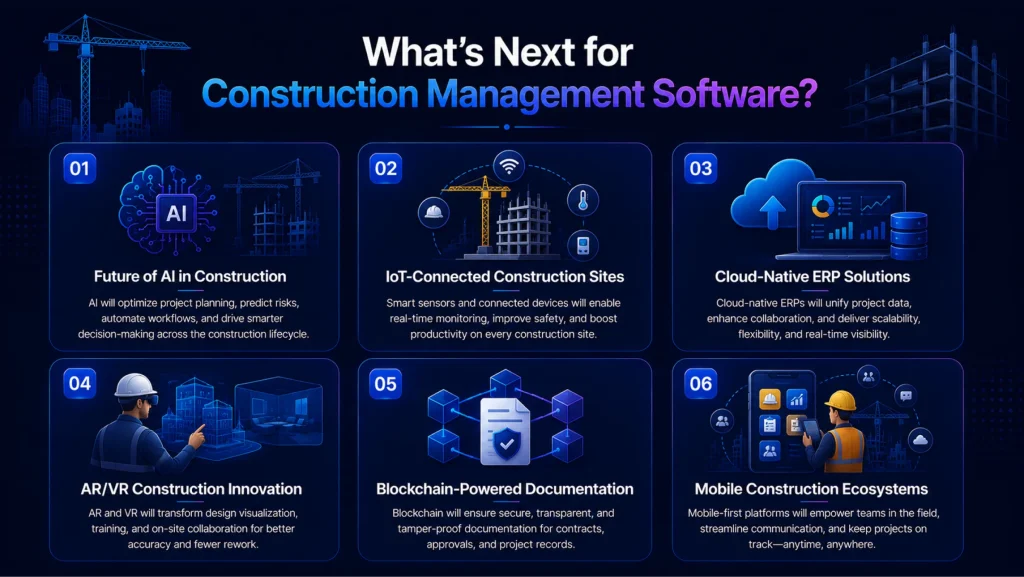
The construction industry is steadily moving toward digital innovation, automation, and AI-enabled platforms. The goal is basically to boost project efficiency, strengthen workforce management, and improve operational intelligence across the board.
1. Rise of AI Construction Management Software
AI-powered platforms are expected to keep automating forecasting and reporting, doing risk analysis as well, and supporting scheduling tasks. That should lead to better operational decision-making in a more consistent way, not just when someone is paying close attention.
2. IoT-Enabled Construction Project Monitoring
With IoT devices on the job, companies can track equipment status, workforce productivity, safety conditions, and material usage in near real-time across the whole site without much delay.
3. Cloud-Based Construction ERP Software Development
Cloud-native ERP platforms will make things more scalable, too, and also simpler for remote access plus day-to-day cooperation among teams, especially in modern construction operations.
4. AR/VR Integration in Construction Management Platforms
Using AR/VR tech should make 3D visualization easier, help with remote inspections, support hands-on workforce training, and improve how accurate construction planning turns out in practice.
5. Blockchain for Construction Contract Management
Blockchain is expected to bring more clarity to agreements, strengthen contract protection, speed up payment processing, and help with document validation across different parts of the construction ecosystem.
6. Growth of Enterprise Mobile App Development in Construction
Enterprise mobile app development will keep growing because businesses will keep pushing for remote teamwork and better field worker connectivity.
Also Read : Inventory Management Software Development
Why Invest in Custom Construction Management Software in 2026?
Custom software solutions support construction companies in getting better day-to-day efficiency, handling growth, and pushing automation further. Also, it is driving real long-term business growth as the industry becomes more and more digital.
1. Long-Term ROI for Construction Businesses
With custom platforms, the whole workflow can smooth out, fewer operational frictions happen, productivity tends to rise, and project management routines get more optimized; this often turns into higher long-term profitability.
2. Competitive Advantages of Digital Construction Solutions
The newer digital tools also help with better decision-making, clearer client conversations, easier workforce coordination, and faster project delivery, basically fewer delays and more control.
3. Role of Software Construction and Development in Business Growth
A scalable software base gives room for expansion, keeps operational flexibility, and allows smarter resource handling across the construction operations.
4 Future-Ready Automation and Scalability Benefits
Custom software lets companies move toward AI, automation, cloud technologies, and advanced analytics so they are ready for what comes next and can keep scaling without losing progress.
Also Read : Top 20 Enterprise Software Development Companies
Why Choose Octal IT Solution for Construction Software Development?
Octal IT Solution delivers scalable and industry-focused construction software, which is tailored to modern business needs and also those future digital transformation goals.
- We have expertise when it comes to construction management software development for new startups and big enterprises.
- There is strong experience in custom automation and in construction ERP software integration, too, not just standalone build work.
- Our development teams are skilled across cloud, mobile, AI, and SaaS-based construction platforms, where everything tends to connect together.
- We provide end-to-end support from planning all the way through deployment and then ongoing maintenance.
- There are proven capabilities in scalable workflow automation services and enterprise software solutions.
Final Thoughts
The construction industry is moving fast toward digital transformation, automation, and AI-based project management. Investing money into construction business software development services, plus modern construction management platforms, allows organizations to get better results, reduce operational delays, and handle projects more efficiently.
From workflow automation to AI-driven forecasting and mobile accessibility, custom software solutions can give long-term scalability plus new avenues for business expansion. Firms that adeptly use advanced digital platforms today will likely have better operational control and also a more solid competitive edge later in the future construction market. If they also blend new tech with the best project management software approaches, then the efficiency gains and overall project success should get even higher.


 Get in Touch
 By
By September 30, 2026