


The automotive retail environment is shifting fast due to shifting consumer patterns, mobility subscriptions, digital retailing, and the advent of connected cars. The modern-day dealerships are progressively challenged to maximize inventory turnover, minimize operational overheads, enhance the stock visibility in more than two lots, and tailor customer purchasing experiences. Modern dealerships have become too large, complex, and fast to use manual or traditional software systems.
The trend towards intelligent, integrated, and autonomous fleet and inventory management is also receiving a significant boost from the growing power of automation, telematics, and data-driven decision-making, a trend swiftly being adopted by the industry. More and more dealerships are currently investing in next-gen vehicle inventory software development to realize real-time stock accuracy, predictive stocking, and centralized visibility.
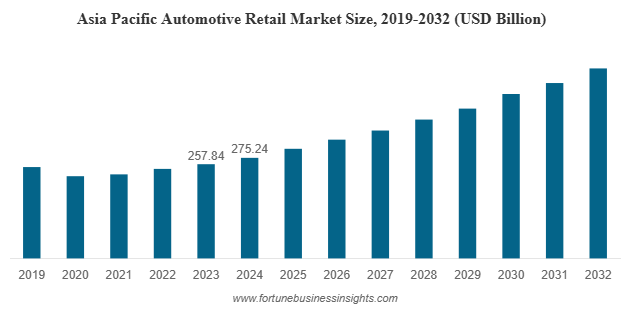
The global automotive retail globally is projected to grow significantly, as it will increase to USD 1,178.50 billion in 2032 at a 7.4% CAGR, starting with the figure of USD 714.43 billion in 2025. As 72 percent of automotive consumers now begin their shopping experience online, dealerships need to replace the traditional systems with those that provide them with real-time vehicle availability, transparent pricing, and personalized shopping experiences (across digital touchpoints). Meanwhile, aging stock is still bleeding profitability, and the profitability of dealerships is actual and is declining by an average of $350 500 per vehicle per month, which means that smart and automated inventory control is an essential requirement and not an option.
In this blog, we will cover how next-gen vehicle inventory software solutions are transforming auto dealerships with AI-powered fleet management, predictive stocking, automation, and real-time visibility.
- What Makes Next-Gen Inventory Systems Different?
- Core Features of Modern Automotive Inventory Platforms
- The Role of AI in Transforming Dealership Stocking & Fleet Operations
- Integration Capabilities with Dealership Tech Ecosystems
- Smart Stocking for Auto Dealerships: How It Works
- Fleet Management Software for Auto Dealerships: Key Use Cases
- Implementation Roadmap for Modern AI Vehicle Systems
- Tech Stack for Next-Gen Dealership Systems
- Business Benefits & ROI of AI-Led Inventory and Fleet Solutions
- Future Trends Shaping Automotive Retail & Fleet Digitization
- Conclusion
- FAQs
What Makes Next-Gen Inventory Systems Different?
Inventory and fleet systems in modern dealerships are automated, real-time, intelligent, and AI-enabled workflows. Inventory management is shifted towards being predictive and not reactive. These advanced platforms, unlike the legacy dealer management systems (DMS) that only provide basic listing and stock records, provide live information from various sources, thus operations become dynamic and insight-driven.
Traditional vs AI-Driven Dealership Inventory
| Aspect | Legacy DMS / Traditional System | AI-Based Modern System |
| Stock Tracking | Manual or limited automation | Real-time live syncing across locations & channels |
| Forecasting | Guesswork, historical sales only | AI models predicting demand, pricing, and stocking |
| Procurement | Reactive purchase decisions | Automated ordering recommendations based on demand |
| Pricing | Uniform/static | Dynamic pricing driven by market conditions |
| Customer Personalization | Limited | Hyper-personalized car recommendations |
Nowadays, dealerships need automotive inventory management solutions that are integrated with OEM feeds, CRMs, ERPs, and third-party vehicle marketplaces. This allows a single source of truth, lessens operational bottlenecks, and equips the teams with the right stock and fleet information.
Key Capabilities of Modern Systems
- Increased visibility of stocks in the showrooms, warehouses, and online.
- Pricing, promotion, and multi-channel listing in real-time.
- Predictive analytics to optimize stocking and most selling models.
- Automated lead to stock matching to close deals more quickly.
- AI-based stock aging notifications and transfer suggestions.
- VIN scanning, decoding, and automated listing generation.
- Location-level dealer group control and mobility service units control.
The developments demonstrate the way in which dealerships are rethinking the methods by which they maintain, allocate, and maximize their inventory, with the help of digital-first systems.
Next-generation platforms provide a rich set of new advanced features that are meant to modernize the workflow of the dealership, enhance decision-making, and make it more agile.
Core Features of Modern Automotive Inventory Platforms
With AI-based fleet management software increasingly becoming a basic requirement but not a luxury, automation at scale based on AI is being implemented in dealerships.
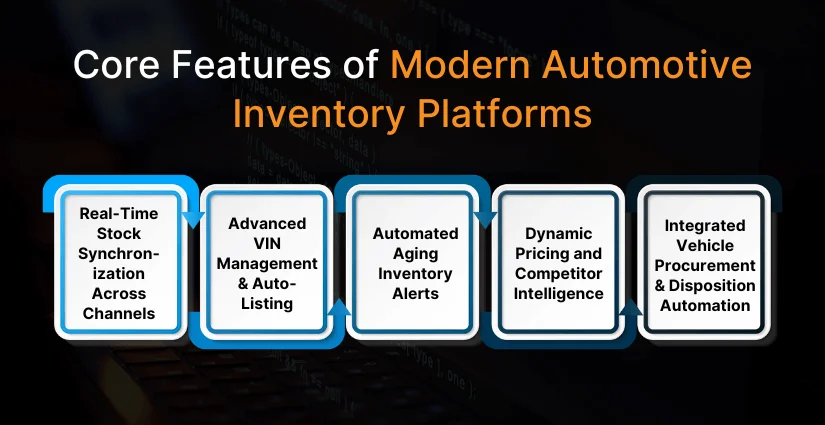
The most advanced modern platforms have some core capabilities as listed below:
Real-Time Stock Synchronization Across Channels
The modern systems can update the stock status instantaneously in the physical lots, dealership web pages, online auto markets, social commerce platforms, OEM platform, and partner showrooms. This removes discrepancies, enhances accuracy in listing, and speeds to market entry for new entrants.
Advanced VIN Management & Auto-Listing
AI-powered VIN scanners installed on the platforms retrieve consolidated records, specifications, prices, OEM characteristics, and warranties in a few seconds. This saves up to 80 percent of manual work and provides accuracy of listing on the platforms.
Automated Aging Inventory Alerts
Stocking over the suggested ages leads to increased holding costs and low margins. The AI code detects ineffective models in time and recommends pricing changes, promotions, or transfers within the company to ensure the turnover is optimized.
Dynamic Pricing and Competitor Intelligence
Having access to real-time market data, AI engines can constantly revise prices depending on the trends of demand, seasonality, the interest of the region, competitor pricing, and market saturation. In dealerships applying such a dynamic pricing system, there are up to 15% revenue per vehicle increases.
Integrated Vehicle Procurement & Disposition Automation
The system compiles stock variances, customer and sales trends, and suggests which cars should be purchased and when to de-fleet. It also automates auctioning/resale decisions for aging fleet units, maximizing asset lifespans.
These advancements showcase how digital-first systems are redefining how dealerships manage, distribute, and optimize their inventory.

The Role of AI in Transforming Dealership Stocking & Fleet Operations
Artificial intelligence is proving to be central in transforming vehicle inventory and mobility fleet ecosystems. The algorithms provided by AI are helping the dealerships go beyond the inertia of spreadsheets and gut-based decisions to autonomous, predictive, and customer-centric workflows.
As smart auto dealership software is increasingly data-driven, AI is also helping dealerships to drive five key aspects:
Predictive Stocking & Forecasting
AI predictive models leverage real-time sales data, geographic purchasing behavior, population dynamics, seasonality, changes in fuel prices, interest rates, and mobility factors to forecast customer demand. It makes sure that dealerships stock the appropriate vehicles, in the appropriate quantities, at the appropriate place. The retailers who have implemented AI-based forecasting have realized 2035% better stock accuracy.
AI for Fleet Routing, Allocation & Utilization
AI will increase operational efficiency as it will be able to optimize fleets allocated to test drives, delivery, rental, and subscriptions.
Key outcomes include:
- Up to 40% reduction in fuel costs
- Better safety adherence and driving.
- Improved fleet usage by taking an average of 50 to 80 percent.
These advantages indicate the worth of the dealership inventory management software, in combination with telematics and IoT, to realize the efficiency of the whole vehicle life cycle.
Also Read: AI in Fleet Management- Key Use Cases and Benefits
Sales Optimization Through AI Insights
AI processes through customer preference data, CRM feeds, source of leads, and competitor stock, to prescribe the maximum possible vehicles to each customer type. This minimizes sales cycles and enhances the level of conversion.
Integration Capabilities with Dealership Tech Ecosystems
Contemporary automotive retail business operations are based on an integrated technology platform that incorporates sales, service, marketing, mobility, and customer interaction. An effective platform should not only be connected with internal dealership systems but also with external automotive and mobility networks. This is where the development of AI vehicle inventory system is highly important because it provides interoperability and real-time data flow through all business units.
The major integration capabilities are:
CRM and Lead Management Integration
Integrating inventory solutions and CRM solutions allows automatic lead-to-stock mapping, individualized car proposals, and quicker dealings. The sales teams will be able to recognize at a glance which vehicle can suit the customer’s needs, their budget, as well as purchase intentions, enhancing customer contact and the conversion rate. This is further enhanced with a CRM software development company system.
ERP & Accounting System Integration
Integrated accounting removes duplication of data, invoice synchronization, taxation, and automation of financial reconciliation. This will provide finance leaders with live information on revenue, margins, and profitability of all dealerships.
OEM, Marketplace, and DMS Integration
- Real-time OEM feeds allow up-to-date vehicle specifications.
- AutoTrader, Cars.com, CarGurus, and OLX Autos Direct are publishing to marketplaces.
- Connection with Dealer Management Systems (DMS) to smooth workflows.
IoT & Telematics for Fleet Intelligence
In the case of fleet-based dealer models, telematics sensors transmit real-time information of the vehicle, such as location, usage, health, and driving trends. This enables smarter subscription-based test-drive, Fleet, rental, and mobility services.
Smart Stocking for Auto Dealerships: How It Works
Inventory optimization is no longer about filling showroom space, but rather a data-based exercise that will give maximum profit per square foot, whilst also addressing customer demand-fit. The key to smart stocking for auto dealerships is a perpetual intelligence cycle that operates with the help of AI, data analytics, and market indicators.
Must Read: Different Types of Software in the Automobile Industry
How the Smart Stocking Model Works
Demand Sensing & Market Analysis
The AI-based models are used to forecast demand using sales patterns, buyer profiles, regional appeal, fuel cost influence, car model demand, and seasonal factors, to guarantee proper inventory planning.
Stock Scoring & Mix Optimization
Automobiles are rated on profitability, velocity of demand, trend of aging, and probability of purchase. This assists dealers in striking a perfect balance between high movement and high-margin vehicles.
Automated Procurement Recommendations
AI suggests the appropriate model, variant, quantity, and timing in which to buy. Dealerships using this model have had a maximum of 32 percent increase in stock-margin alignment.
Smart Allocation Across Dealership Network
There are several cases when a single group runs numerous dealerships, so AI is used to guarantee the maximum optimization of inventory distribution in various regions to respond to hyper-local needs.
Lead-to-Inventory Matching
AI scans dynamic leads and compares them to the existing inventory, increasing the speed of sales and minimizing customer waiting time.
Smarter stocking also considers fleet management software of auto dealerships through which strategic deployment of demo, rental, and subscription vehicles is maximized as a means of ROI.
Fleet Management Software for Auto Dealerships: Key Use Cases
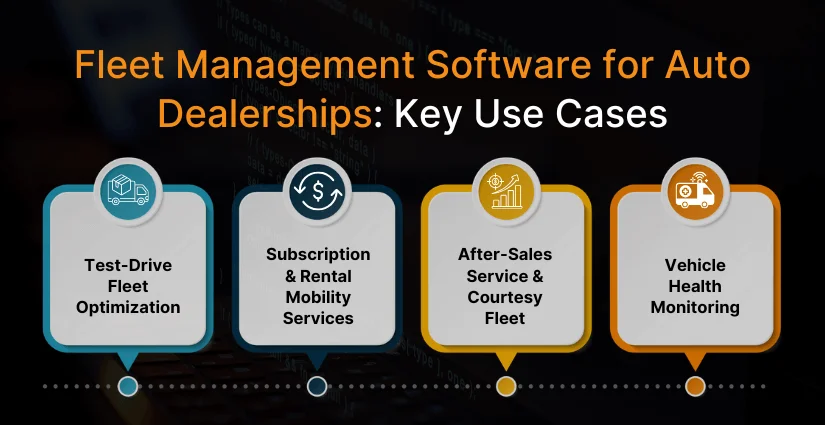
As the customer demands are moving towards mobility-as-a-service, dealerships are dealing with various kinds of fleets, including test drive units, subscription fleet, rental fleet, and staff mobility units. Fleet digitalization is an essential competence as the automotive inventory management solutions increase their coverage.
Test-Drive Fleet Optimization
The following are the most widespread and impactful use cases:
- On-the-fly reservation and assignment.
- Safety tracking of drivers and routes.
- Mechanical car preparedness and maintenance notifications.
Test-drive conversion in dealerships is increased by 2845 percent when using AI scheduling.
Subscription & Rental Mobility Services
The dealerships joining the subscription/rental mobility industry require sophisticated fleet tracking and billing, asset health monitoring, and contract lifecycle management. AI enhances retention, use of assets, and cost efficiency.
After-Sales Service & Courtesy Fleet
Easy Rides also provides courtesy cars when doing service or maintenance. AI guarantees equitable allocation, monitoring of availability, and turnbacks in a time-saving abuse and enhances customer satisfaction.
Vehicle Health Monitoring
- Telematics + AI help monitor:
- Engine condition
- Battery condition (particularly EV)
- Predictive maintenance
- Tire/Brake wear
AI diagnostics save downtimes and increase the lifecycle by 15-20% lifecycle.
With these capabilities incorporated into the software used in the management of dealership inventories, the dealers can have centralized control of the fixed inventory as well as the live fleet assets.
Implementation Roadmap for Modern AI Vehicle Systems
An AI-first platform demands a plan with a systematic roadmap with emphasis on scalability, data maturity, and interoperability. The following is a typical implementation scheme of major enterprise automotive projects:
Step-by-Step Implementation Stages
| Stage | Key Activities |
| Discovery & Consulting | Requirement analysis, current system audit, AI readiness evaluation |
| Data Modeling Strategy | Data lake architecture, telematics, CRM, ERP & marketplace data mapping |
| Platform Architecture & UI/UX | Interface design, workflows, dealership dashboards |
| AI Model Development | Demand forecasting, stock scoring, pricing engine, fleet telematics analytics |
| Integrations & API Enablement | CRM, ERP, DMS, OEM, Payment, IoT, Marketplace integrations |
| Testing & Deployment | Security testing, UAT, pilot run, multi-location rollout |
| Training & Adoption | Staff onboarding, process SOPs, AI governance |
| Support & Optimization | Continuous enhancement aligned with business growth |
To speed up implementation, the enterprises frequently hire an enterprise app development company or an expert automotive technology partner.

Tech Stack for Next-Gen Dealership Systems
The technological base of the contemporary platforms necessitates a scalable, modular, and API-first architecture.
- Frontend- React, Angular, Vue.js
- Backend- Node.js, Python, .NET, Java (Spring Boot
- Database- PostgreSQL, MongoDB, MySQL
- Cloud – AWS, Azure, Google Cloud
- AI/ML- TensorFlow, PyTorch, Scikit-learn
- IoT & Telematics- MQTT, AWS IoT, Google Cloud IoT
- Integrations- REST APIs, GraphQL, Webhooks, EDI
- DevOps- Docker, Kubernetes, Jenkins, Terraform.
The dealerships working with a custom software development company are certain that the architecture is adjusted to their operational scalability, technological maturity, and multi-location demands.
Business Benefits & ROI of AI-Led Inventory and Fleet Solutions
Digital-first dealerships that switch to next-gen gain quantifiable operational, financial, and customer experience benefits.
Proven ROI Impact
- 25-40 decrease in the inventory carrying expenses.
- Stock turnover in dealership networks is 30 percent quicker.
- Gross margin per vehicle improved by 1832%
- 20–35% reduction in fleet downtime
- Personalization lead-to-sale to a 2x.
The adoption of smart auto dealership software also changes the internal processes- manual efforts are reduced by as much as 55%.
Custom software development services are also popular with dealers who need custom-made features to consider automated logistics, self-serve apps, vehicle digital twins, or AI chatbot sales assistants.
Future Trends Shaping Automotive Retail & Fleet Digitization
AI-powered fleet management software and inventory ecosystem will keep moving towards autonomy instead of automation as the technology develops. Main future innovations are:
Autonomous Inventory Replenishment
AI-based financial intelligence and demand-sensing will cause systems to auto-buy, sell, or clear stock automatically based on the human-independent systems.
Generative AI Sales & Service Assistants
AI copilots will direct the sales representatives, suggest customer-specific vehicles, create individual offers, and answer users in real-time.
Digital Twin of Dealership Networks
Digital twins will help have a simulated stock placement, sales predictions, and fleet utilization to aid in optimizing the revenue plans through dealership chains.
EV-Centric Fleet Intelligence
EV telematics will enhance battery analytics, charging allocation, route planning, and lifecycle optimization.
Automobile dealerships that invest in the development of AI vehicle inventory systems early will be in a good position to spearhead the second stage of automotive retail disruption.
Conclusion
The car industry is now moving at a high rate to an intelligent, interconnected, and AI-based future. There are dealers who have already made huge financial and operational profits by implementing fleet management software in their auto dealerships and inventory automation software. As competition rises, margins decline, and customer demands change, AI-first platforms have become a tool of survival, effectiveness, and scalable expansion.
These new generation systems (such as dealership inventory management software, fleet intelligence, predictive stocking, etc.) are helping dealerships to become more than a traditional retail model and move towards a full mobility ecosystem that is completely digital. The collaboration with an appropriate technology provider and, in particular, the company that develops CRM software and is familiar with the automotive industry guarantees a more rapid implementation, the ability to expand over time, and constant innovation.
FAQs
AI uses customer demand, seasonal trends, regional interests, and market information to suggest the most appropriate vehicle combination. It improves the inventory management solution in the automotive industry by minimizing overstocking, maximizing turnover, and maximizing profit.
Yes. Modern architecture supports numerous efforts to integrate with CRM, ERP, DMS, telematics, OEM feeds, and marketplaces, enhancing data consistency across smart auto dealerships’ stocking and fleet processes.
The cost is reliant on features, integrations, AI functionality, and scale. The comprehensive solution may need to involve a custom software development company to do the implementation on a custom basis.
Encryption, role-based access, audit trail, and compliance with SOC2, GDPR, and ISO are used in enterprise-grade platforms, thus ensuring secure next-gen vehicle inventory software development lifecycle operations.
Yes. Smart auto dealership software is also used to facilitate better tracking, prevent misuse, and increase utilization even with test-drive and internal use vehicles.

 By
By November 10, 2025





 Latest Stories
 Get in Touch