


Key Takeaways
- AI Application Modernization is essential for businesses to stay competitive and address legacy system challenges.
- It uses machine learning and automation to improve software quickly and reduce technical debt significantly.
- Key benefits include improved accuracy, reduced manual effort, lower long-term costs, and enhanced security posture.
- Companies should build a clear AI modernization strategy that aligns technology with business goals and capabilities.
- Successful modernization requires choosing the right approach for each application and partnering with experienced technology providers.
Are you still running your business on software that was made for some other era, like way back when? While competitors ship new features in weeks, legacy systems prefer to turn what should be a simple update into month-long projects, and that gap keeps widening.
The global AI app modernization services market, valued at USD 26.43 billion in 2026, is expected to rise to USD 56.68 billion by 2032, with a CAGR of 13.51%, per 360iResearch. That jump points to a clear reality: enterprises can’t keep acting like modernization is optional.
AI-based application modernization is quickly becoming the quickest route for bridging that gap, swapping out guesswork for smarter code review, automated refactoring, and a swifter migration path. In this guide, we’ll talk through how AI application modernization works and what you can do to get started.
AI-Driven Application Modernization: What It Is and How It’s Transforming Legacy Systems
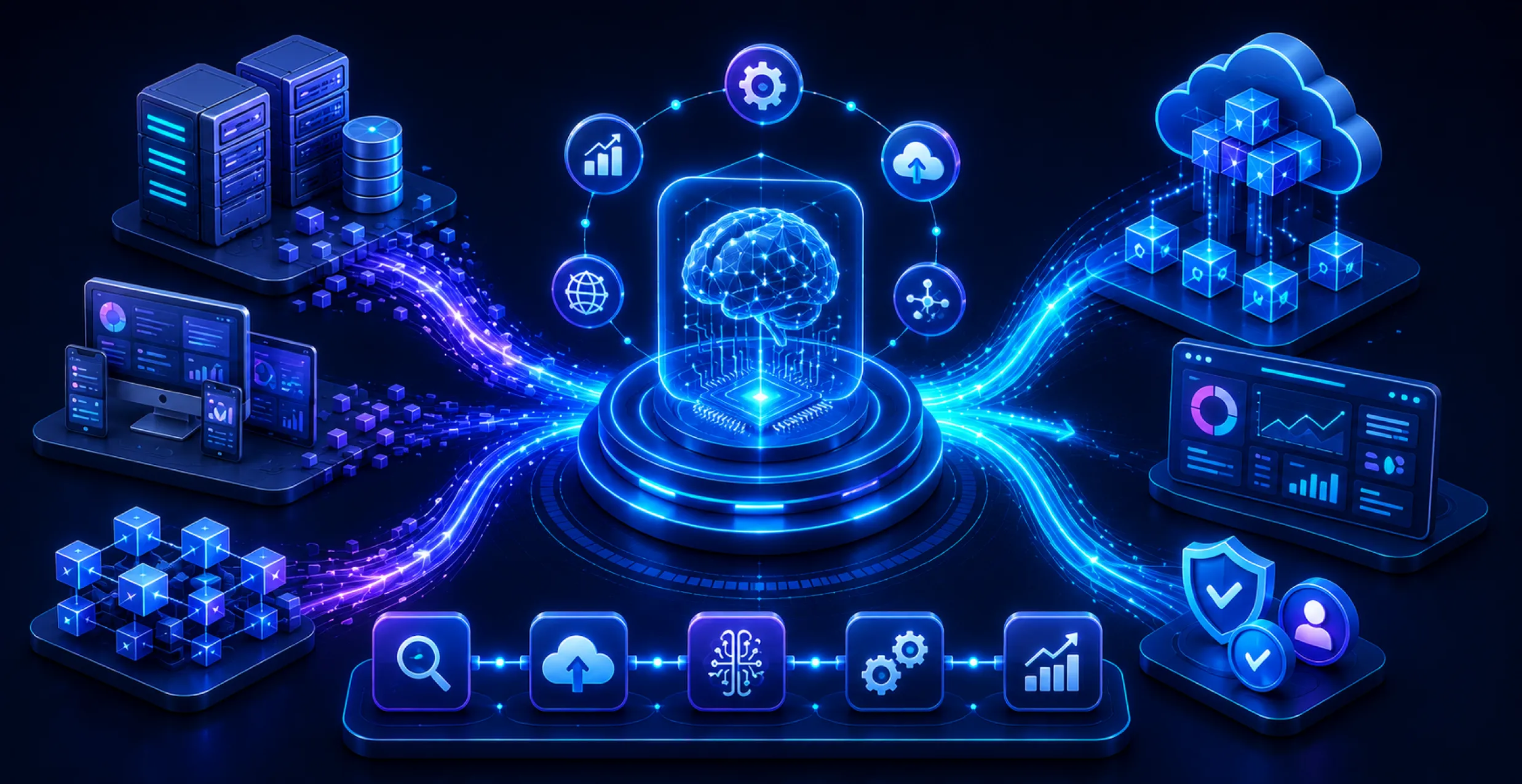
AI-driven application modernization uses machine learning, generative AI, and smart automation to upgrade the existing software instead of rebuilding it from scratch line by line. Rather than leaning only on manual audits, AI tools comb through codebases, flag weak spots, and outline modernization routes in a much smaller window than typical approaches require, so it ends up being one of the fastest-growing AI services for legacy system modernization out there right now for enterprises across the board.
Under the hood, the whole thing begins with AI-powered code analysis that draws dependency maps, highlights security holes, and measures technical debt across the application. Then generative AI-based modernization moves in, kind of helping translate code; it can also spin up automated test cases, and it does cloud readiness scoring too, while intelligent automation takes care of all the repetitive migration chores that used to need massive engineering teams and, frankly, months of careful manual work to get through.
- Automated code assessment: AI scans millions of legacy code lines in hours, not weeks. Furthermore, it flags both stale frameworks and security weaknesses quickly.
- Faster refactoring: Generative AI models convert old languages (COBOL or older Java, for example) into modern frameworks with way less manual rewiring and more reuse than you’d expect.
- Continuous testing: AI-generated test cases keep verifying expected behavior at each step. So regressions get caught early before they finally show in production.
- Data-driven decision-making: AI dashboards give leadership live visibility into modernization progress and total spend. They also show ROI, so everyone can align without guesswork.
Organizations looking at this shift start by evaluating agentic AI development services to benchmark internal ability against what can be achieved with the right technology partner.
Key Benefits of AI in Application Modernization
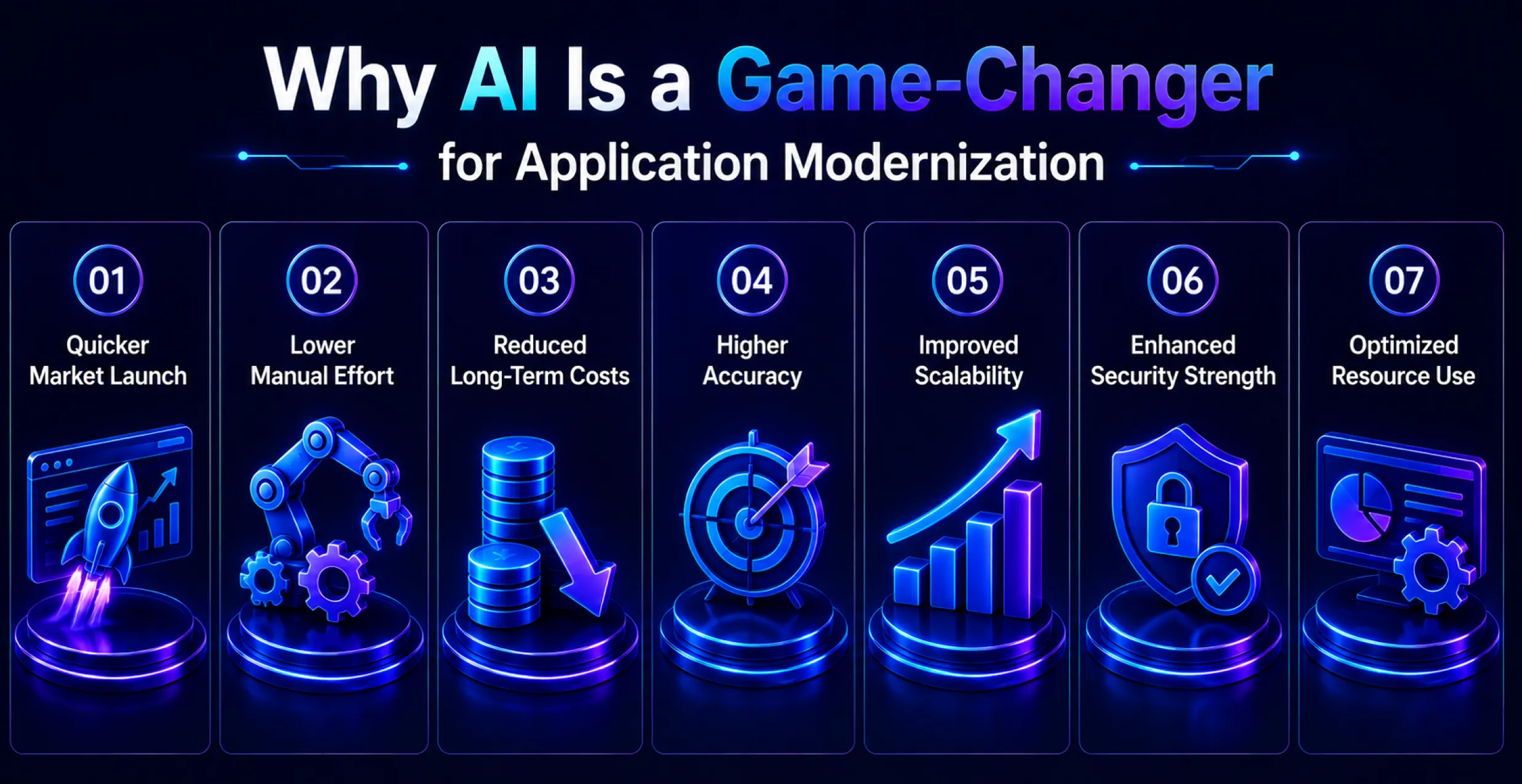
The benefits of AI in application modernization go past just speed. It changes the way enterprises plan, execute, and then scale transformation, not just in a straight line either. From cost control to improved correctness, AI reshapes nearly every step in the modernization lifecycle. Additionally, it reframes the whole approach from the beginning.
1. Improved Accuracy
AI powered testing and validation spot defects, security weaknesses, and compatibility gaps that human checks often overlook. This precision reduces the chances of post-launch failures. Additionally, it can keep business-critical operations safe from sudden downtime or data loss.
2. Reduced Manual Effort
Automation handles repetitive work like code fragments, regression testing, and documentation tasks. That means engineering teams spend less time on basic grunt work. Additionally, more time is spent on high-level architecture decisions, lifting both output and morale across the modernization push.
3. Lower Long-term Costs
There is an upfront investment, but AI for business application modernization lowers the ongoing upkeep by tackling technical debt earlier. Enterprises can significantly reduce legacy platform maintenance, licensing, and those last-minute emergency fixes over a five-year horizon.
4. Stronger Security Posture
AI keeps checking for weaknesses across the entire modernization journey, not only once everything is finished. A proactive routine that tends to close those security gaps. Those outdated, legacy systems often drag along, almost unnoticed, for years.
5. Smarter Resource Allocation
When leadership finally has better visibility into AI development costs. Along with project timetables, teams can set budgets in a much more grounded way. That helps avoid scope creep, which shows in traditional, manually driven transformation projects.
AI-Powered Software Modernization Services: Core Offerings
AI app modernization services cover the full transformation lifecycle from the first assessment through to post-launch tuning. Knowing what these core offerings include helps enterprises pick the right modernization partner and also lock in the project scope for their projects accurately.
1. Legacy Code Assessment
AI tools look over existing codebases to bring out technical debt, security concerns, and modernization priorities. The outcome gives stakeholders a clearer, evidence-backed starting point before any real migration effort kicks in, not just guesses.
2. Cloud Migration and Re-Platforming
AI-assisted migration shifts applications into cloud-native settings with limited interruption. This uses automated dependency mapping to arrange the migration steps safely. So critical business functions don’t end up breaking critical business functions mid-transition.
3. UI/UX Modernization
AI looks at user behavior patterns and then rethinks outdated screens, flows, and navigation, making things more usable and more accessible. While still keeping the day-to-day workflows employees and customers depend on.
4. Post-Modernization Monitoring
AI-enabled monitoring tools keep watch on how applications are actually doing after go-live. Catching weird errors early on and then help teams fine-tune systems long after the modernization project is done.
When you partner with a team that manages full-stack AI platform development. These capabilities usually slip into your current enterprise infrastructure seamlessly, not like a bunch of separate point solutions sitting alone.
Building an AI Application Modernization Strategy
An AI modernization strategy should sync technology choices with business aims from day one. If there isn’t a clear roadmap, even the best and most advanced AI tools can lead to fragmented, costly modernization efforts.
1. Define Clear Business Objectives
Before any engineering kicks off, sort out what the modernization is supposed to deliver. Like faster releases, lower costs, or better scalability. So that every AI-driven choice connects back to something tangible with measurable business outcomes.
2. Audit the Existing Application Portfolio
Use AI-based assessment capabilities to inventory all applications and rank them by business criticality and technical risk. This ordering helps stop wasted effort: low-impact systems first.
3. Choose the Right Modernization Approach Per App
Not every app needs a complete rebuild. With AI-assisted analysis, you can figure out for each existing system whether to rehost, refactor, or rearchitect it, depending on cost as well as risk.
4. Select the Right Technology Partner
Look at vendors that provide GenAI development services with real modernization. Make sure they understand both the technical migration work and the industry-specific compliance requirements your business operates under.
5. Build in continuous governance
Put measurable targets in place, security checkpoints, and rollback plans across the whole strategy. AI-driven monitoring should be part of the plan from the beginning, not something tacked on after launch.
AI Modernization Roadmap for Enterprises (Step-by-Step)
An AI modernization roadmap turns the strategy into actual work. Using a phased approach, down to the sequence, lowers risk and helps keep huge modernization initiatives on track, with budget too.
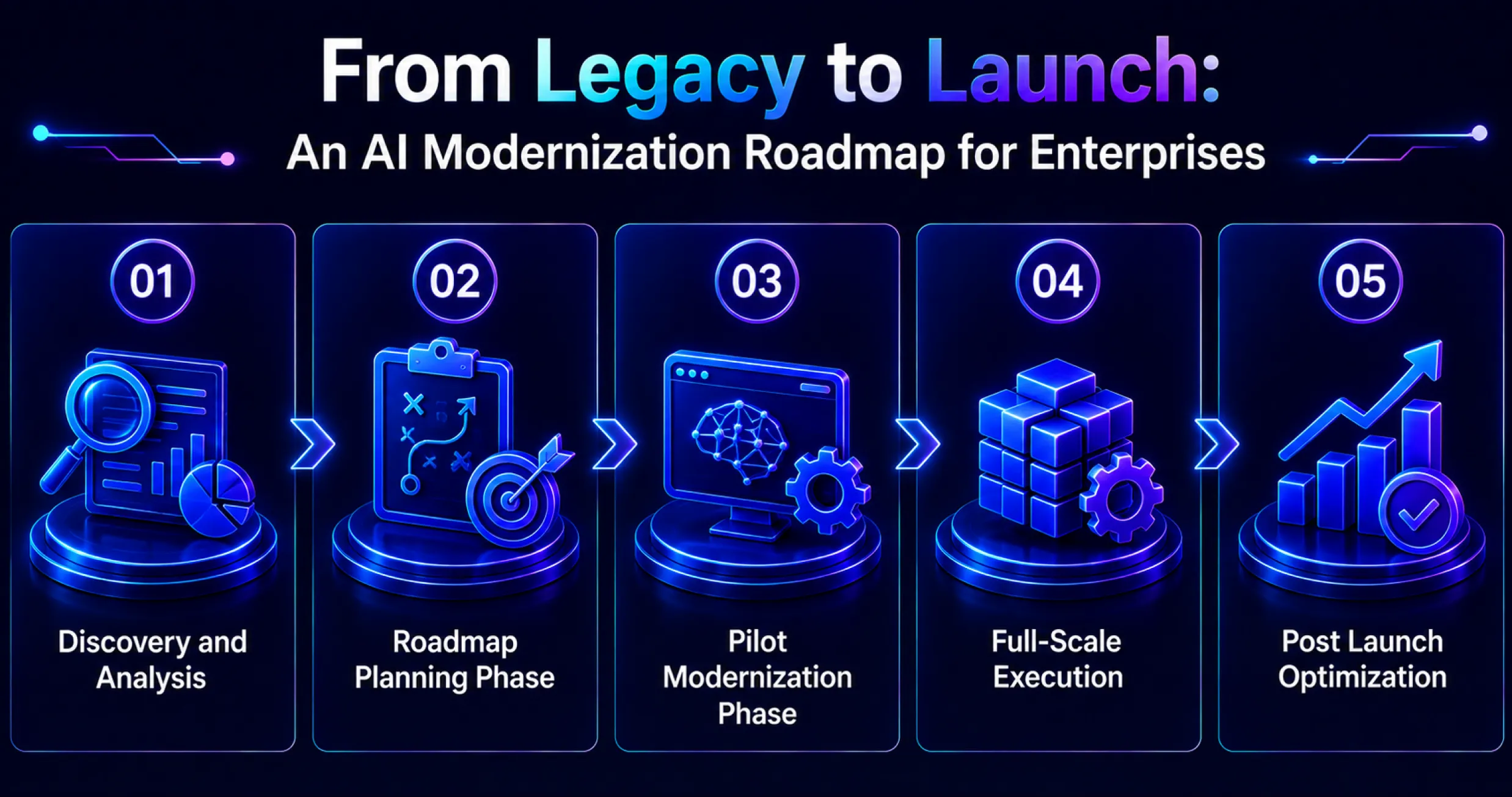
1. Discovery and Assessment
AI tools review the complete application landscape, then generate a detailed map of dependencies, risks, and modernization priorities. Usually this step takes days, not the weeks that manual audits require.
2. Roadmap Planning and Sequencing
From the assessment data, teams sort out which applications to modernize first. Weighing business urgency against technical complexity to avoid disrupting critical operations during the transition period.
3. Pilot Modernization
Before doing a full rollout, run a pilot on one lower-risk application. This also confirms the chosen AI tools and the modernization approach. Surfacing issues early while the stakes remain manageable and contained.
4. Scaled Execution
After the pilot holds up, teams broaden modernization across the rest of the application portfolio. Furthermore, they use AI automation to keep everything consistent and moving fast as the work grows significantly larger.
5. Post-launch Optimization
After deployment, AI-powered monitoring continuously tracks performance, usage, and cost data. Enterprises then use that information to tune systems more precisely and to plan the next modernization phase with a lot more confidence.
Some enterprises that don’t have in-house AI talent will rather hire AI developers on a project basis. So they can deliver particular roadmap phases without growing permanent headcount too much.
Choosing the Right AI Modernization Approach
Deciding between rehosting, refactoring, and rearchitecting changes not only costs and schedules but also the eventual value of an AI legacy application modernization effort. If that decision is sound, then early prevention can avoid costly rework later.
1. Rehost When Speed Matters Most
AI-assisted rehosting, sometimes described as “lift-and-shift,” moves applications to the cloud with almost no code changes. This approach works best when delivery timelines are tight and when the priority is speed, not a structural tune-up, right now.
2. Refactor for Moderate Transformation
Refactoring rearranges code without changing the core functionality. AI tools, in a practical way, identify which modules are most worthy of refactoring. So you get performance gains without the full cost of a rebuild.
3. Rearchitect for Long-term Scalability
For apps that are at the center of future growth, rearchitecting is key. Moving toward microservices or a serverless setup tends to deliver the most flexibility. But yes, it does ask for more investment and the implementation timeline upfront.
4. Match the Approach to Business Criticality
High-risk, high-value systems often make rearchitecting worth it. Lower-priority services might only need rehosting or a lighter adjustment. AI-driven risk scoring helps teams make this call with data, not guesswork.
5. Factor in Team Capability
If your internal team lacks experience in modernization. Partnering with providers that offer established AI development services can make the path clearer. This can reduce costly trial-and-error mistakes along the way.
Minimizing Downtime and Risk with AI-Powered Migration
Downtime during migration can shake revenue, customer confidence, and everyday operations. AI-powered application migration lowers this exposure a lot. Because it automates the most failure-prone stages within the transition process.
1. Automated Dependency Mapping
AI figures out all the links between apps, databases, and background services before anything starts. So when you migrate, you do not get those surprising outages that happen with manual planning.
2. Phased, AI-guided Cutover
Rather than one huge and risky switch, AI stages the move in smaller phases. Testing each bit first before moving on, and that alone cuts the blast radius down when something goes wrong.
3. Real-time Rollback Capabilities
AI-powered migration tooling keeps an eye on system health all through the cutover. When anomalies show, it can trigger an automated rollback right away. This helps the business continue without needing to scramble and manually intervene under pressure.
4. Predictive Load Testing
Before going live, AI runs traffic like it is real life, so you can catch performance bottlenecks early. That way, the modernized application handles production workload from day one without unexpected slowdowns.
5. Post-Migration Validation
AI checks the data and performance before and after, and it confirms feature parity automatically. Organizations weighing the AI development cost for migration efforts often discover that this validation step reduces costly post-launch firefighting considerably.
Best Practices for Application Modernization with AI
Every successful modernization project starts with a clear plan. Best practices for application modernization begin with auditing the current codebase. Teams want to know what they should retain, fix, or update. Skipping this step regularly leads to wasted budget and delays.
1. Build A Strategy Before You Build Code
A robust AI application modernization strategy maps business goals to technology decisions. It defines priorities, timelines, and success metrics in advance. This keeps stakeholders aligned throughout the modernization journey.
2. Automated Code Analysis and Refactoring
AI tools analyze thousands of lines of code within hours. They typically flag security vulnerabilities, useless code, and hidden dependencies. This cuts manual review time by significant margins.
3. Choose the Right Technology Partner
Many businesses rely on external AI integration services to guide them in this process. Experienced partners bring proven frameworks and avoid common technical pitfalls. This also reduces the risk of rushed deliveries.
5. Document Everything Along the Way
Documentation often gets ignored when deadlines become tight. Clear documentation explains why teams made those decisions. This saves time when new engineers join the task later.
How Much Does AI-Driven Application Modernization Cost?
AI development cost is one of the first questions business leaders ask. AI for enterprise application modernization pricing depends on the scope of work. Upgrading a small application costs much less than rebuilding an entire enterprise system. Typical costs vary depending on the project’s size and complexity.
| Application Type | Estimated Cost | Typical Timeline | Complexity Level |
| Small application | $15,000 – $60,000 | 6 – 12 weeks | Low |
| Mid-sized application | $60,000 – $150,000 | 3 – 6 months | Medium |
| Enterprise application | $150,000 – $1,000,000+ | 9 – 12+ months | High |
| Legacy core system (banking/ERP) | $300,000 – $2,000,000+ | 12 – 18+ months | Very high |
AI-powered Application Transformation: Real-World Cases
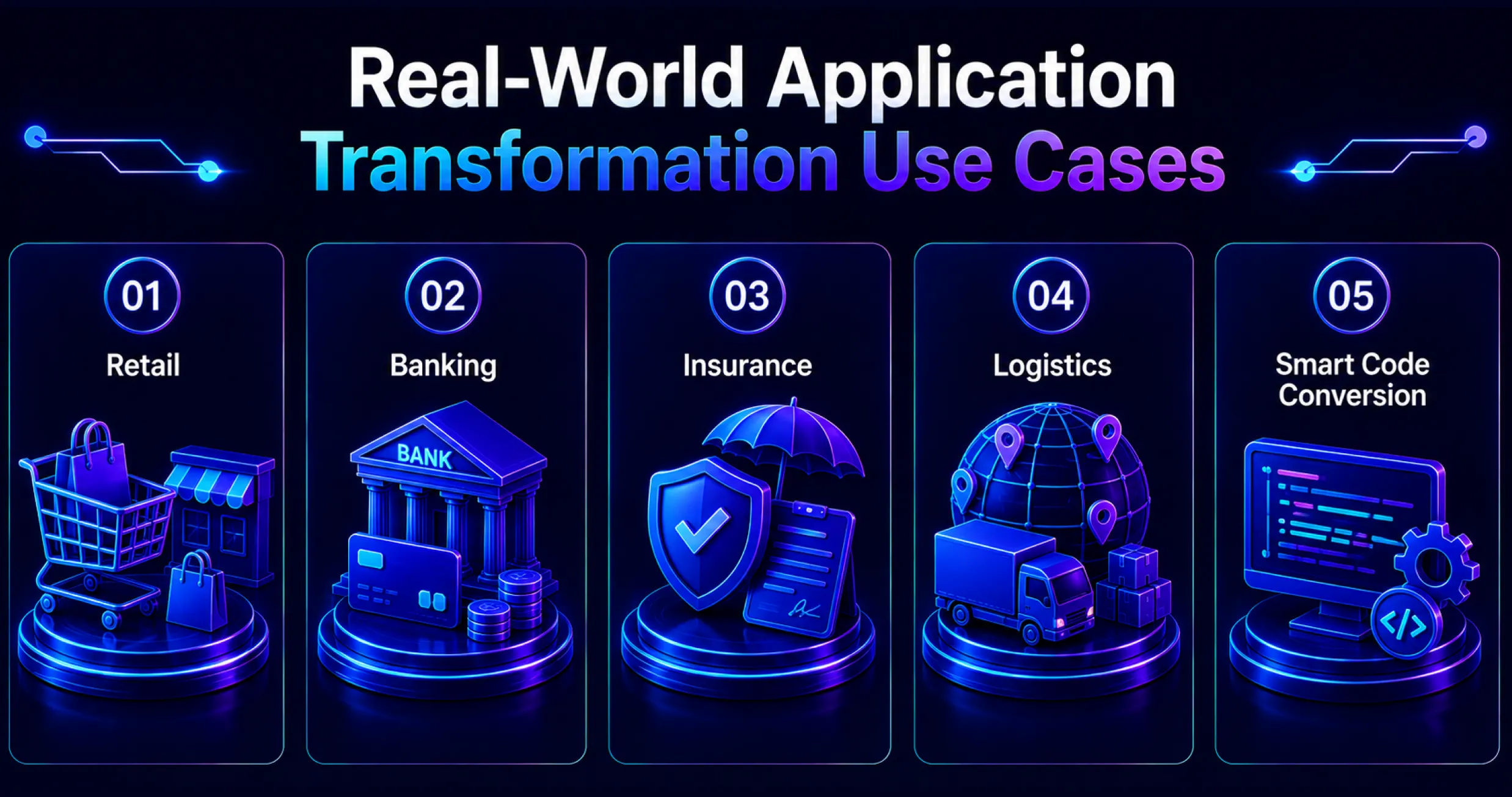
Businesses across industries are already seeing significant results. AI-powered software transformation has moved beyond experimentation. Companies are now using it to improve performance, reduce costs, and modernize legacy systems. Here are some examples of how it plays out in practice.
1. Retail: Real-Time Inventory System
Retailers use AI to update inventory records overnight. Stock levels automatically sync across stores and online channels. This prevents teams from overselling customers and missing revenue opportunities.
2. Banking: Faster Fraud Detection
Banks are redesigning fraud detection systems to analyze transactions in real-time. Older batch-based systems once took hours to flag a suspect transaction. Modern AI models instead catch fraud in seconds.
3. Insurance: Automated Claims Processing
Insurance companies are using AI to update claims processing systems that used to take days. Automation now runs document review and approval steps. Customers get faster payments and real-time claim status updates.
4. Logistics: Smarter Routing Engines
Logistics businesses are redesigning management tools to reduce delivery time and gas costs. AI adjusts routes based on live traffic and weather data. This keeps the fleets efficient even during unexpected disruptions.
5. Legacy Code Translation with Generative AI
Legacy modernization with generative AI is transforming how teams rewrite legacy code. Generative AI helps convert legacy code into modern programming languages and frameworks. A major tech company reportedly pays about $1 billion a year for licenses. It does so for a single legacy modernization project, according to the American Enterprise Institute.
Gartner also predicts that 40% of enterprise applications will embed task-specific AI models by the end of 2026. Many companies are now pairing modernization initiatives with comprehensive AI software development tools. This allows them to add smart capabilities even as they upgrade legacy systems.
AI Business Application Modernization: Industry-Specific Applications
Different industries have specific update requirements and priorities. AI business application modernization looks very different in healthcare than in retail or finance. A one-size-fits-all approach often doesn’t work in such diverse regulatory and technical environments.
1. Healthcare
Healthcare organizations are using AI-powered application modernization services to update patient documentation systems. These updates also increase information accuracy to meet strict compliance regulations. Faster systems mean faster diagnosis and greater patient outcomes.
2. Retail & E-commerce
Retailers are upgrading e-commerce infrastructure to handle unexpected traffic spikes. Real-time inventory synchronization prevents overselling across stores and channels. Better stock information also creates a smoother buying experience.
3. Manufacturing
Manufacturing companies combine factory floor data with cloud systems using AI. This provides real-time visibility into equipment performance and production. Predictive maintenance reduces unplanned downtime during production lines.
4. Logistics & Supply Chain
Logistics businesses use AI for fleet monitoring and inventory control systems. The system improves inventory visibility across every level of the distribution chain. This helps teams respond quickly to delays and disruptions.
5. Banking & Financial Services
Financial institutions are relying on AI legacy application modernization to stabilize the former central banking structure. Fraud detection improves when smartphones analyze transactions in real time. In addition, regulatory reporting can be faster and more thorough. Conversational AI for Finance can also help modernize customer-facing interactions through automated, intelligent communication.
6. Education
Education platforms are modernizing legacy systems into learning management systems to support hybrid classrooms. Student data now syncs between smartphones and campuses in real time. This makes remote and in-person learning far more consistent.
Common Challenges in AI-Driven Services for Modernizing Legacy Applications
Modernization is rarely a smooth, straight-line process. AI-driven services for modernizing legacy applications face real technical and organizational barriers. Here are the most common ones, alongside ways to solve them.
1. Integration Failures & Downtime
Challenge: Data transfer errors and integration failures cause sudden downtime.
Solution: Run transfers in small, tested batches rather than a large cutover. This limits the impact if an issue occurs.
2. Finding the Right Modernization Partner
Challenge: Many companies struggle to find the right modernization partner.
Solution: Vet providers on real company listings, not just sales pitches. Find established AI legacy system modernization services with references you can definitely call.
3. Budget Overruns
Challenge: Poor initial planning often increases project costs.
Solution: Scope the project in phases with frequent checkpoints. This makes AI software modernization costs predictable and easier to manage.
4. Employee Resistance to Change
Challenge: Teams comfortable with old systems often say no to change.
Solution: Get employees involved early and provide hands-on training. Clear communication builds buy-in and reduces friction later on.
5. Data Quality Issues
Challenge: Years of inconsistent information and duplicate data complicate the migration.
Solution: Cleaning and standardizing data before starting the migration helps. This prevents bigger, costly problems after launch.
How Can Octal IT Solution Help You With AI Application Modernization?
Octal IT Solution features AI-driven legacy application modernization for evolving businesses. The team blends deep engineering expertise with modern AI tools. This combination shortens the modernization timeline by significantly reducing delivery time.
As one of the trusted AI development companies, we also manage ongoing post-launch support. This includes integrated performance monitoring, security patching, and future feature fixes. Customers get a long-term technology partner, not just a one-time provider.
Clear communication is at the center of our engagement. Customers receive regular updates and performance and progress metrics. This keeps customers informed while avoiding deep technical expertise. Every project also includes a post-launch review to confirm that the new system meets business goals.
From AI-powered application migrations to completed platform rebuilds, our group covers the entire journey. The team has worked in fintech, healthcare, retail, logistics, and many other industries. This developing experience allows you to be less surprised throughout your work.
Final Words
AI application modernization is no longer optional for growing businesses. Legacy systems slow companies down and drain each year’s budget. The right modernization partner turns that burden into an advantage.
Delaying modernization only increases maintenance costs and technical debt. Octal IT Solution helps organizations modernize with clarity, speed, and confidence. Ready to future-proof your applications? Reach out to us today.
 By
By September 24, 2026




 Get in Touch