


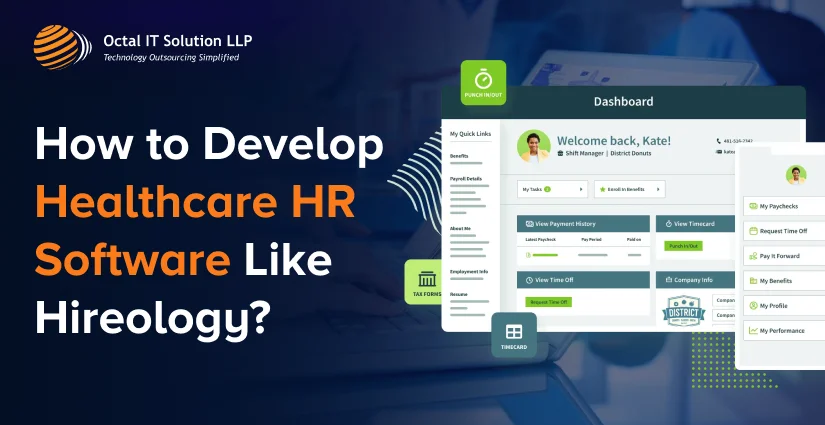
Are you looking to develop healthcare HR software like Hireology? If yes, you have landed on the right page.
The healthcare industry needs trained employees permanently. It struggles to handle complex human resources demands including regulatory issues workforce acquisition and the maintenance of trained staff.
Healthcare institutions understand that efficient HR management stands as their main organizational priority in their growth phase.
The implementation of robust healthcare HR software under the name of Hireology helps businesses operate more efficiently. Also, it improves staff selection encourages employee connection and maintains adherence to regulatory rules.
The following blog will outline the core aspects along with technical components and the development process to develop healthcare HR software like Hireology in 2025.
What is Healthcare HR Software?
The healthcare field requires specialized HR software that exclusively eliminates management issues within the human resources department. The system unites recruitment tools with onboarding and compliance oversight scheduling, payroll modules and performance evaluation features which operate under healthcare-enforceable rules.
This software attempts to replace traditional manual processes in human resources. It also offers higher operational efficiency and standard compliance for healthcare workers.
You can hire a top software development consulting services provider who can help you create efficient healthcare HR software to enhance your business operations.
Healthcare HR Software: Global Market Size
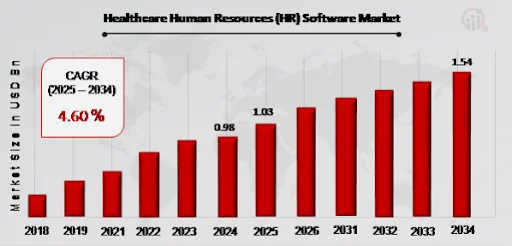
According to MRFR analysis, the Healthcare Human Resources (HR) Software Market was valued at 0.98 billion USD in 2024. The market is projected to grow from 1.03 billion USD in 2025 to 1.54 billion USD by 2034, with a compound annual growth rate (CAGR) of approximately 4.60% during the forecast period from 2025 to 2034.
The market growth is primarily driven by technological advancements in healthcare and the increasing number of ageing nursing professionals.
Exceptional Features to Look at When You Develop Healthcare HR Software like Hireology
When developing hr software for healthcare like Hireology, it’s essential to focus on features that streamline HR processes, ensure compliance, and improve employee engagement. However, it is possible only if you hire software developers who possess a team of expert professionals.
Below are eight must-have features to include during healthcare HR software development.
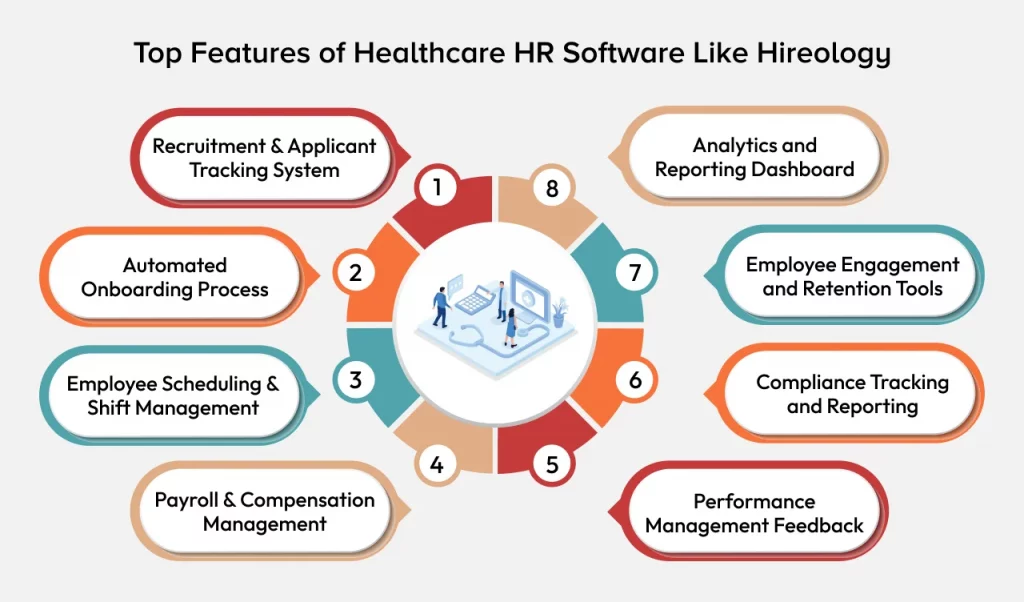
1. Recruitment and Applicant Tracking System (ATS)
The recruitment tool should have integration capabilities with multiple job sites because it requires an efficient system to manage applications.
The system executes candidate acquisition and resume evaluation together with appointment weekend. It lets hiring supervisors dedicate their time to optimal candidate choices instead of handling manual work.
2. Automated Onboarding Process
Healthcare staff onboardings require teams to handle many documents as well as compliance training and background checks. The implementation of automated onboarding processes permits new employees to execute essential documentation tasks and training procedures which produces fast and effective onboarding before their work commencement.
3. Employee Scheduling and Shift Management
It is an essential feature to include when we develop healthcare HR software like Hireology because it handles staffing schedules although work presents challenging conditions, particularly in round-the-clock service settings.
A flexible scheduling tool maintains operations by enabling shift adjustments between workers and conducting scheduling based on employee availability and following current labour regulations. Through this functionality, hospitals can maintain uninterrupted staff coverage without excessive workload for their workers.
4. Payroll and Compensation Management
The payroll system in healthcare becomes intricate because healthcare workers experience different shift patterns and receive overtime pay and additional compensation types.
A healthcare HR software system must automatically process payrolls and compute overtime payments as well as bonuses and benefits distribution while respecting legal regulations for employee payments.
5. Performance Management and Feedback Tools
The process of performance evaluation needs to maintain continuous status and develop specific assessment methods for healthcare staff. The program should enable healthcare organizations to conduct constant performance evaluations by handling both feedback mechanisms and goal alignments with employee assessment sessions.
Organizations use this feature to monitor employee development while finding skill deficits so they can design development programs for their staff members.
6. Compliance Tracking and Reporting
Patient data privacy standards together with workplace safety requirements as defined by HIPAA and OSHA need to be enforced by the software system of Healthcare HR software for its users.
Healthcare organizations can avoid non-compliance penalties through healthcare HR software which includes built-in checklists as well as automation for alerts and document storage capabilities.
7. Employee Engagement and Retention Tools
Healthcare organizations experience excessive employee departures across their institutions. The prevention of employee turnover requires HR software to contain features for employee satisfaction tracking combined with survey administration along with recognition tools.
The implementation of early recognition systems through healthcare IT solutions helps organizations boost morale among their staff and maintain employee retention because problems are addressed as soon as possible.
8. Analytics and Reporting Dashboard
The optimization of HR processes depends on decision-making foundations that rely on data. Owned dashboard interfaces together with analytical reporting features must exist in the software to monitor employee rotation patterns along with performance information and recruitment success indicators.
By using gathered insights HR departments become equipped to make decisions that boost their workforce management effectiveness.
Also read: How to Develop a Learning Management System for Healthcare
How to Develop Healthcare HR Software Like Hireology?
When we develop healthcare HR software like Hireology, it requires strategic planning and implementation, involving a clear understanding of industry needs, technology, and user expectations. Below are six essential steps to create effective healthcare HR software like Hireology:
1. Research the Healthcare HR Landscape
Research all healthcare industry-specific requirements related to human resources before launching development. Knowledge about individual issues like employee mobility and complex regulations leads to better planning when creating software solutions that directly address organizational difficulties.
2. Define Core Features and User Personas
Develop a list of software features for HR managers and hiring staff and employees who will use it while creating detailed profiles representing their needs.
The software should provide recruitment and compliance capabilities for HR professionals and schedule management and performance indicator access for employee users. A user-friendly experience arises from this method because the system caters to various user needs.
3. Choose the Right Technology Stack
A healthcare organization demands an appropriate technology stack to maintain secure operations and achieve scalability with high performance.
Construct an expandable information system which maintains healthcare data security by implementing present-day cloud solutions and mobile features plus protected database technologies.
4. Design an Intuitive User Interface (UI)
The successful implementation of HR software requires high usability because healthcare personnel face constant work pressures. A user-friendly visual design enables HR operators to understand the platform immediately so they can do their work swiftly without getting discouraged.
The platform should be designed through UI/UX procedures to achieve maximum user-friendliness.
5. Develop and Integrate Key Features
After finalizing the design phase proceed with development to implement core elements starting with ATS followed by payroll then compliance management before adding performance tools.
The software must connect smoothly with healthcare systems particularly electronic health records (EHR) to enhance workflow efficiency.
6. Test, Deploy, and Provide Ongoing Support
Direct testing procedures must be executed following a protocol to identify all software bugs and confirm the application of expected user functionality. For this, the developer you hire must be provided with strong software testing services. Post-deployment support services will serve to resolve issues push product updates and uphold healthcare regulations’ updates.
Software updates at regular intervals will maintain both the functionality and relevance of the program.
How Much Does it Cost to Develop Healthcare HR Software Like Hireology?
The cost of developing healthcare HR software like Hireology can vary depending on several factors, including the complexity of features, development team location, and the platform’s scalability.
On average, developing such a system can range from $100,000 to $500,000, depending on customization requirements, third-party integrations, and the number of platforms (web or mobile) supported. Additional costs for ongoing maintenance, updates, and support should also be considered while implementing this software development ideas.
| Cost Component | Estimated Cost Range | Description |
| Initial Development | $100,000 – $300,000 | Covers design, development, and integration of core features. |
| Mobile App Development | $30,000 – $100,000 | Cost for developing cross-platform mobile apps (if needed). |
| Third-Party Integrations | $20,000 – $50,000 | Costs for integrating existing systems like payroll and job boards. |
| Testing and Deployment | $20,000 – $40,000 | Includes bug testing, user testing, and deployment expenses. |
| Ongoing Maintenance | $10,000 – $50,000 annually | Continuous updates, support, and feature enhancement. |
Trending Technologies to Incorporate in Healthcare HR Software
To ensure your healthcare HR software is future-proof, you should integrate trending technologies that enhance efficiency, security, and user experience. Here are four key technologies to consider when you develop healthcare HR software like Hireology.
1. Artificial Intelligence (AI) and Machine Learning (ML)
Through AI and ML technology organizations can execute multiple operations including resume assessment along with candidate selection and worker performance assessments. A leading AI development company can help you incorporate artificial intelligence into your software.
HR managers use this technology to base their decisions on data then find superior candidates through matching and boost worker retention rates by predicting organizational behaviors.
2. Cloud Computing
The HR software available on AWS along with Microsoft Azure along with Google Cloud employs scalability and flexibility for organizations.
Healthcare organizations employing many staff members at diverse sites should utilize cloud computing solutions because these systems provide protected data storage together with automatic system upgrades and remote accessibility.
3. Mobile Compatibility
Since the healthcare industry experiences a growing number of employees who work from mobile locations the software needs to adapt to mobile accessibility.
Employees along with managers benefit from mobile-responsive designs or mobile app development because they obtain on-the-go access to HR tools through which they can perform schedule management track performance metrics and view payroll data at any time.
4. Blockchain Technology
Blockchain delivers protected and visible data registration functionality that makes it appropriate for healthcare demands related to worker records and contracts.
The system maintains compliance through its defectless transaction registry that facilitates easy tracking of employee credentials with their training and certifications.
Top 5 Alternatives for Healthcare HR Software Like Hireology
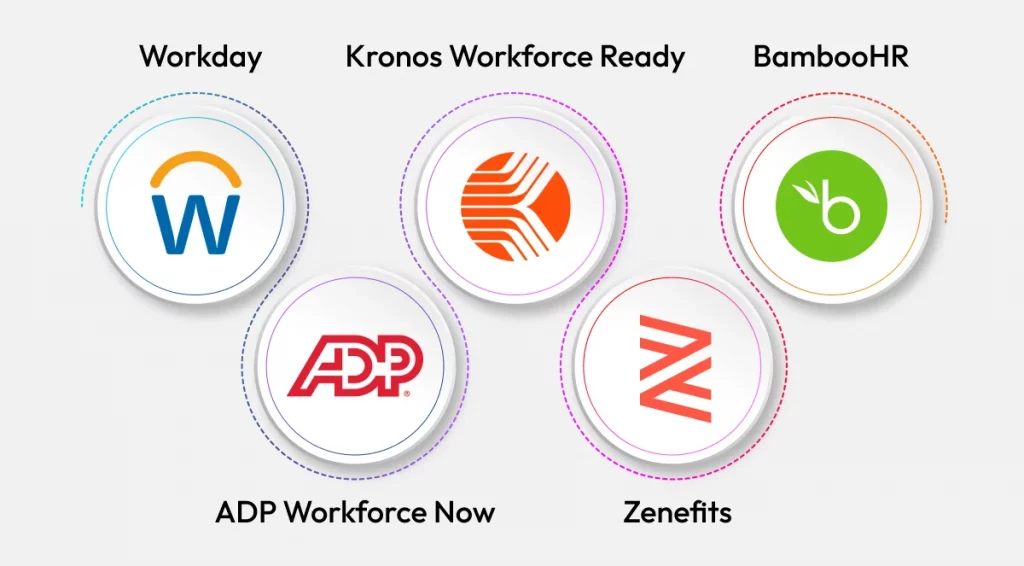
If you’re exploring other options for healthcare HR software, here are five alternatives that can serve similar needs in healthcare recruitment, compliance, and workforce management.
| HR Software | Key Features | Best For |
| Workday | Advanced analytics, global HR, talent management, payroll. | Large healthcare organizations looking for scalable solutions. |
| ADP Workforce Now | Payroll, tax compliance, benefits management, HRIS. | Healthcare organizations with a focus on payroll and benefits. |
| Kronos Workforce Ready | Time tracking, employee scheduling, compliance tracking. | Healthcare facilities require efficient shift management. |
| Zenefits | Benefits administration, payroll, compliance, onboarding. | Healthcare startups or mid-sized organizations. |
| BambooHR | Employee self-service, onboarding, performance management. | Small to mid-sized healthcare companies. |
Conclusion
When we develop healthcare HR software like Hireology in 2025, it involves focusing on automation, compliance, and user experience while ensuring that it addresses the unique challenges of the healthcare industry.
By incorporating the right features, technologies, and development practices, you can create a solution that helps healthcare organizations streamline HR processes and improve employee satisfaction.
For businesses looking to develop high-quality healthcare HR software, Octal IT Solution is a leading software development company known for delivering custom healthcare software development services that meet the highest standards of quality, security, and performance.
Also read: Healthcare CRM Software Development: Cost & Features
Frequently Asked Questions
What makes healthcare HR software different from traditional HR software?
The healthcare HR software market provides customized functionalities which support health organizations in maintaining compliance rules and performing shift scheduling systems while building staff networks specifically for healthcare providers.
How long does it take to develop healthcare HR software?
The deployment duration of a healthcare HR software solution ranges between 6 months and 18 months based on its complexity and implemented features.
Is it necessary to integrate third-party systems with healthcare HR software?
The integration of third-party systems including payroll providers EHR systems and recruitment boards strengthens both the operational efficiency and functional ability of human resources management.
Can healthcare HR software be accessed via mobile?
Yes, mobile compatibility is essential. The latest healthcare HR software systems contain mobile design features so staff members and HR professionals can handle schedule management as well as payroll tasks and employee performance tracking on their mobile devices.


 Get in Touch
 By
By September 25, 2026