




Key Highlights
- The complete mobile application development process requires understanding step-by-step.
- Learners want to know the complete process for mobile app development, which includes planning, designing, and launching an application in 2026.
- Investigate mobile application development techniques that enable businesses to expand their operations and achieve sustainable development.
- The study establishes optimal methods to implement the agile mobile application development method.
- This guide provides information about project schedules, necessary equipment, and expense elements.
Introduction
Have you ever wondered what is the mobile app development process and how top apps go from idea to millions of downloads?
Businesses today operate their companies through mobile applications that serve as their primary method to connect with customers, run their internal processes, and generate financial growth. The mobile application development process serves as an essential element that businesses require to achieve success with their startup MVP development and enterprise-scale applications.
The complete mobile apps development process requires multiple stages that include strategic planning and user interface design, system testing, application delivery, and ongoing system enhancement. The Android mobile applications development process and the iOS mobile app development process both implement structured development methods that guarantee system performance and operational capacity.
The following guide provides a complete overview of mobile application development that we will present through a detailed explanation of each development stage needed to create an effective application.
Massive Market Growth in Mobile Applications
According to Grand View Research, the global mobile application market was valued at $252.89 billion in 2023 and is expected to reach $626.39 billion by 2030, growing at a 14.3% CAGR.
Another report estimates the market will exceed $1.23 trillion by 2035, showing long-term expansion potential. (Source: Precedence Research)
Key Steps of Mobile App Development Process
The process of mobile app development covers 10 specific steps that will help you to build the perfect mobile app.
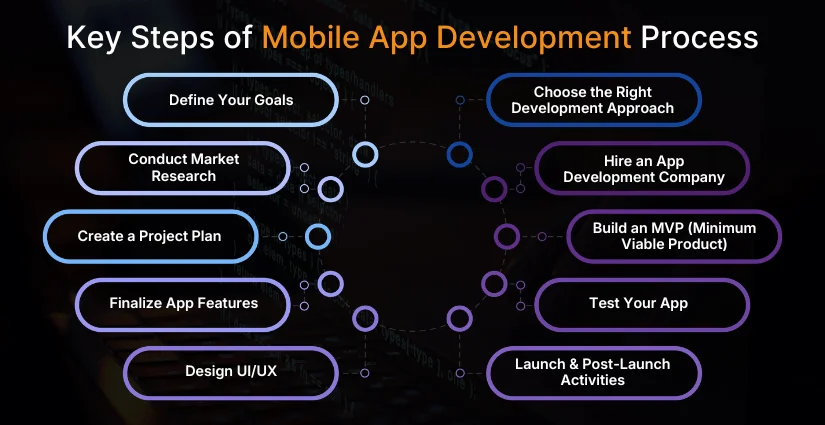
1. Define Your Goals
The mobile app development process steps begin with organizations setting specific targets to achieve. The app needs to have a clear purpose that outlines what it will accomplish and which problems it will address.
The project needs you to assess three elements that include your intended users, your company goals, and your desired results. The development of mobile applications begins with this stage, establishing basic elements needed to meet your business requirements.
Clear targets need to be defined because they help both startup products and enterprise mobile applications follow the development process, to avoid future misunderstandings. The vision you create for your mobile application development project needs to drive your entire development process and determine your future success.
- What problem will the app solve?
- Who is your target audience?
- What are your business objectives?
A successful enterprise mobile app development process starts with the establishment of a distinct vision.
2. Conduct Market Research
Market research serves as a vital component in the mobile application development process, which enables your app concept to receive confirmation through market research. You should assess your competitors by examining their activities, observing how users interact with their products, and discovering what needs their products do not meet.
The process lets you develop a distinctive product through the refinement of your mobile app development strategy. The development of Android mobile applications and iOS mobile applications requires knowledge of their respective current trends because it enables app development that meets platform requirements.
The research procedure identifies user preferences and monetization possibilities that enable your mobile application development process to become more efficient through data-driven methods.
- The market needs assessment to identify market gaps that require research about user expectations.
- The procedure of evaluating your business concept needs validation through testing.
The development of an effective mobile application development strategy needs strong research as its fundamental element.
3. Create a Project Plan
The process of creating a project plan establishes essential requirements that ensure that it progresses without interruptions. The procedure involves establishing project boundaries together with the estimated completion schedule, the financial resources needed, and the personnel requirements.
This assists companies in determining their mobile application development time frame while they distribute work among team members. The plan presents all essential technologies and tools that teams need to work together effectively.
The mobile application development process requires accurate planning because it affects both traditional and agile development methods. The process requires a blueprint which will guide your development project from beginning to end.
- Mobile app development timeline
- Budget estimation
- Technology stack
- Resource allocation
The current stage helps assess both the mobile application development schedule and the total project requirements.
4. Finalize App Features
The process requires this step to determine all features which an application will include. The mobile apps development process starts with you identifying main functions that will address user needs while supporting your business objectives.
The addition of multiple features in the beginning stage needs to be avoided because it will raise development expenses and postpone product introduction. The process needs to focus on essential features that generate the highest value.
The process defines all design elements that will shape the development of the mobile application. A well-planned feature list guarantees a smoother development journey and enables mobile app development strategies to allow future updates.
- The core features of the system must be present in the product.
- The system needs advanced features that users consider valuable but not essential for operation.
Your application should implement only essential functions at its initial stage because this approach will enhance system performance while reducing operational expenses.

5. Design UI/UX
UI/UX design plays a vital role in the mobile app design and development process as it directly impacts user engagement. A well-designed app should be intuitive, visually appealing, and easy to navigate.
The app designs structured all screens for consistent use and usability testing. Designers create wireframes, prototypes and user journeys to build better total user experiences.
Good design leads to better retention and satisfaction for users in both iOS app development and android mobile app development. UI/UX design investment at the beginning of the mobile application development process establishes better user retention and performance.
- This offers users simple navigation throughout their experience.
- The step presents users with visually attractive content.
- It grants users straightforward access to its features.
The application design guide ensures users experience better engagement with the application as they use it.
6. Choose the Right Development Approach
The correct development method selection stands as the most important decision which exists during mobile application creation. Businesses can choose between native, hybrid, or cross-platform development depending on their requirements.
Native apps provide superior performance whereas cross-platform applications deliver budget-friendly solutions. Many companies prefer the agile mobile app development process for flexibility and faster iterations.
This step also defines how your app will scale in the future. The correct method selection will improve your mobile application development process while supporting your business goals for AI-powered app development.
- The optimal performance of native applications exceeds all other application types.
- Cross-platform applications provide budget-friendly solutions.
- Hybrid applications enable developers to build applications more rapidly.
The modern agile mobile app development framework enables developers to create software through repeated cycles while delivering products to users at an accelerated pace.
7. Hire an App Development Company
The successful execution of your mobile app development roadmap requires proper team selection, through which you should establish your business partnership with a trustworthy mobile application development company that delivers access to competent experts, together with advanced technology solutions.
You can also Hire Mobile app developers based on your project needs, whether for iOS or Android platforms. The experienced developers possess skills to navigate through all stages of mobile application development, enabling them to produce exceptional results.
The development partner delivers development support, protects your project from potential risks while it accelerates development progress, and creates an application that fulfills both industry standards and user requirements.
- Your company should provide expert direction for your project.
- Your organization must develop high-quality software solutions.
- The project team will complete their work according to the established schedule.
You can also Hire Mobile app developers based on your project needs, whether for iOS or Android.
8. Build an MVP (Minimum Viable Product)
The mobile apps development process requires you to establish an MVP as your first development milestone. You need to develop a fundamental app version containing only the necessary elements to operate.
The process enables you to validate your concept through actual market testing while obtaining user feedback from the beginning. An MVP reduces risks, saves time, and controls the mobile app development cost.
The framework provides you with a foundation to test your mobile application development approach until your team completes product development. The process establishes the initial proof of concept both startups and enterprises use to create successful mobile applications that achieve market viability.
- The first step involves testing your idea in actual market conditions.
- The second step requires you to collect feedback from users.
- The third step focuses on finding ways to decrease the expenses of product development.
The mobile application development process requires this essential step because it helps to decrease potential project threats.
9. Test Your App
The mobile application development process needs testing as an essential stage, which guarantees your application functions properly without any defects. The assessment process involves testing three distinct elements, including functional testing, performance testing, security testing, and usability testing.
The testing process helps to discover problems during the initial stages and helps to save money on repairs that would occur at a later time. The advanced testing capabilities of modern mobile app development tools enable developers to streamline their testing operations through automated processes.
This phase helps to eliminate typical mobile app development mistakes that developers make, that leads to negative effects on how users experience the app. The testing process will confirm that your application operates correctly on various devices and platforms and will enhance the user experience throughout your mobile application development process. When testing mobile applications across different network environments, understanding what is a mobile proxy? can also help developers evaluate location-specific connectivity and access.
- Functional testing
- Performance testing
- Security testing
- Usability testing
All common mobile app development errors can be prevented through the company’s decision to conduct complete quality assurance.
10. Launch & Post-Launch Activities
The process of launching your application represents a significant achievement in mobile application development that continues beyond this point. The period after deployment requires constant tracking and continuous software improvements.
The system needs to monitor user activities, while developers should correct existing problems and implement new capabilities based on user evaluations. The process keeps your mobile app development plan on track while it helps to boost system efficiency through ongoing development.
The practice of regular updates brings two benefits, which are better security measures and higher user contentment. The process of developing a strong post-launch plan will create permanent success for your application throughout mobile app development while maintaining its market relevance.
- Monitor performance
- Fix bugs
- Release updates
- Add new features
Post-launch optimization exists as an essential component that makes up the process of developing mobile applications.

Future-Proof Your App with Built-In Security & Compliance
The mobile application development process requires security measures to be included from the beginning rather than applying them after development has finished.
To build a secure app:
- Implement end-to-end encryption
- Use secure APIs
- Ensure compliance with GDPR, HIPAA, etc.
- Apply role-based access control
The mobile application development process flow requires developers to implement security measures during all development stages instead of implementing them during the final development stage.
The mobile application development process needs security updates and security audits as essential components to achieve user data protection and continue to build user confidence.
Why Partner with Octal IT Solution for Your 2026 App?
The success of your application depends on selecting the appropriate development partner. Octal IT Solution has established itself as a reliable mobile application development company and has spent multiple years developing scalable solutions.

1. Expert Developers
You can easily hire android app developers or hire ios app developers who possess strong technical skills.
2. End-to-End Services
We handle every stage of mobile application development, starting from idea validation until we reach deployment.
3. Platform Expertise
Our experts provide excellent iOS app development services while we operate as a major iOS app development company.
4. Transparent Pricing
Get accurate estimates for your Mobile app development cost with no hidden charges.
6. Agile Approach
The mobile application development process flow of our organization uses agile methodologies to achieve faster delivery times and operational flexibility.
5. Advanced Tools & Technologies
Our team employs advanced mobile app development tools to deliver applications that meet performance and scalability requirements.
Explore Article: What is a Mobile App and How to Develop It?
To Wrap Up
The mobile app development process steps function as a systematic path which converts your concept into an operational software product. The development process requires proper execution of each phase from planning through design to development and launch because every phase contributes to the overall success of your application.
The creation of a roadmap to mobile app development enables businesses to decrease risks while they improve user experiences and achieve optimal cost efficiencies.
The success of your project depends on selecting an appropriate mobile app development pathway together with building your expert development team for both your MVP and your extensive project.


 By
By February 25, 2026


 Get in Touch