



Key Takeaways
- Logistics software development addresses issues like late shipments and operational chaos by automating and optimizing logistics processes.
- The logistics software market is projected to grow significantly, with a compound annual growth rate of 9.36% from 2023 to 2031, reaching $33.17 billion by 2031.
- Key benefits of logistics software development include lower operational costs, end-to-end visibility, and streamlined processes, enhancing overall efficiency.
- Must-have features for logistics software include smart dashboards, live tracking, instant alerts, and secure payment integration.
- Industries like e-commerce, healthcare, and manufacturing greatly benefit from logistics software, which improves efficiency and customer experience.
Do late shipments, lack of tracking, and chaos in operations ring a bell? They are just a few of the issues that businesses have to deal with while handling their logistics activities manually or with traditional means. Luckily, there’s a way out. Advanced logistics software development is created to get rid of all these bottlenecks once and for all. It’s capable of doing all that with the help of automation and optimization techniques.
But before starting the logistics software development process, there is something you should know about the creation of an efficient tool. From determining the project cost to defining the required features, each step is important. This article will tell you all about creating a strong logistics software application.
What is Logistics Management Software?
So, to understand the logistics and transportation software development, you have to know about logistics. Logistics is the process of managing how resources are acquired, stored, and transported to their final destination. Now, when all these processes are done, they contain a lot of data management to record everything, and manual errors can lead to significant issues.
Thus, logistics platforms such as Descartes transport software help businesses automate shipment tracking, manage transportation workflows, and improve supply chain visibility.
It revolutionized the process of managing all the data. The solution also automates and manages warehouse and transportation management system development tasks, allowing businesses to simplify operations, reduce costs, and gain many other benefits.
Mention below some of the statistics that show how logistics software development is performing in the market.
Logistics Management Software: Market Insights & Growth Trends
As companies strive to make their processes more efficient, accurate, and transparent, the need for logistics management software development has become increasingly popular. Below you will find some information about the market size, growth rate, and what makes the custom software development for logistics industry undergo such a transformation:
- The global logistics software market is estimated to be worth $14.83 billion in 2022, and the forecast predicts it will reach $33.17 billion by 2031 with a compound annual growth rate of 9.36% (2023-2031).
- Market segments are divided into applications such as transportation management systems, warehouse management systems, fleet management, and data management, demonstrating various areas where logistics software can be applied.
- Data management accounts for a huge share in the market and is predicted to expand at a CAGR of 10.32% due to the growing demand for logistics operations based on analytics and data.
- The logistics software market continues to expand owing to the growing need for real-time tracking, supply chain software development visibility, and operational efficiency within global logistics networks.
- Modern technologies including artificial intelligence, cloud computing, and Internet of Things have been contributing to increased market growth rates.
Key Benefits of Logistics Software Development
The use to develop logistics software revolutionizes the whole business cycle of the logistics process and has multiple positive effects on the bottom line.
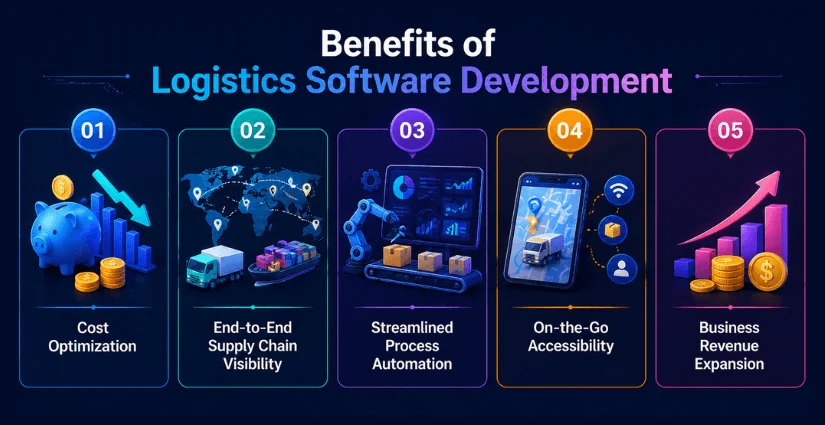
Lower Operational Costs
Using logistic app development, can save your business a lot of money. With the help of the software, many things can be analyzed, and each step can be taken care of. Businesses can also identify areas where money is spent more than is necessary.
End-to-End Supply Chain Visibility
Before, when there was no software, everything related to delivery and management needed to be confirmed and informed personally by the individual; however, with the help of supply chain management software, you can feed all the details, and customers and businesses are updated in a timely manner, making it a transparent and trustworthy process.
Streamlined & Automated Processes
All the logistics app development company paperwork, along with the necessary data, can be fed into the system, making it easy to manage. The machine learning algorithm in the system enables easier processes to manage and look for the required documents. It also helps reduce the manual chores and handles queries, payment tracking, and more.
On-the-Go Logistics Management
One of the crucial things that is very useful in logistics software development is that it can be accessed from anywhere in the world, thus making things easier for every individual.
Accelerated Business Growth
The software has multiple features that help businesses manage multiple things that are directly proportional to better revenue. So, it is necessary to make software that can benefit businesses and users, such as boosting retention rates.
Must-Have Features for Logistics Software Development
In this section, we have mentioned some features that should be considered at the time of development to facilitate the use of the software.
Smart Dashboard for Complete Visibility
This is one of the things without which managing tasks can be a bit difficult. The dashboards can be customized as per the business requirements and the things they want to manage simultaneously. All the required details are shown on the same platform.
Live Shipment Tracking System
This is necessary for the business and buyer to track the shipment movement in real-time. The features allow the business and customer to have a transparent view of the shipment at every step, whether it is on hold or moving, which builds trust among a larger number of people, making the project successful.
Instant Alerts & Push Notifications
This feature can help businesses get the details of every step and be aware of everything without logging into the software again and again. The feature also provides reminders to all members regarding valuable information, such as any major updates, pricing changes, or anything related to these.
Secure Access with MFA Protection
Integration of security features is not a choice but an essential factor that software must require. This feature prevents any personal or important information from getting leaked to an unwanted place. Thus, this needs to be taken care of very carefully.
Secure Digital Payment Integration
Add the option of online payment for customers’ benefit. This enables businesses to have all the data related to payment in a specific place online. On the other hand, customers can manage their payments online without worrying about changes or any issues with refunds when exchanges or difficulties occur.
Types of Logistics Management Software
In order to make different facets of the supply chain software development easier to manage, there are different kinds of logistics management systems that organizations use. These custom logistics software solutions are made in such a way that each handles certain operations more easily and improves productivity.
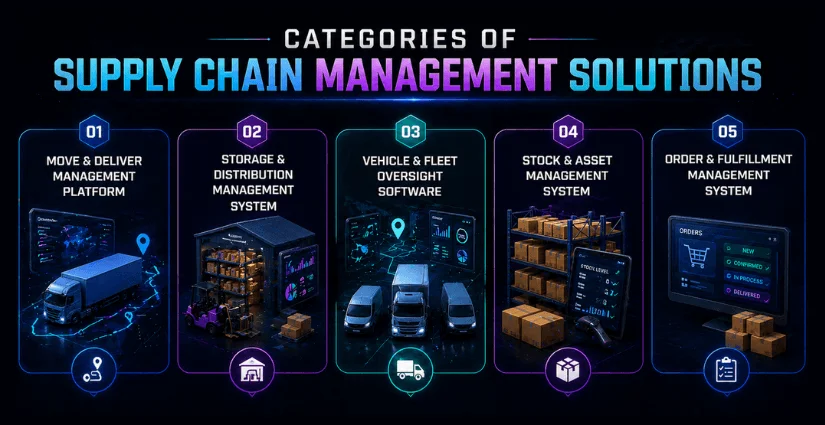
Transportation Management System (TMS)
The TMS software facilitates the management, planning, and optimizing of movements within the organization. Some of the services provided include route optimization, freight auditing, shipment tracking, and carrier management. It is important for those who want to cut down costs and improve delivery times.
Warehouse Management System (WMS)
A WMS system deals with managing operations within the organization’s warehouse. The operations include managing the storage, picking, packing, and shipping. A WMS is particularly beneficial to companies that have huge inventories.
Fleet Management Software
A Fleet management software is one that manages a company’s fleet of vehicles. The management includes GPS tracking, fuel management, driver behavior, and maintenance.
Inventory Management System
The Inventory Management System assists companies in monitoring their inventory levels, ordering goods, and avoiding overstocking and understocking. The system provides real-time tracking of inventory levels, automatic updating of inventory levels, and forecasting demand.
Order Management System
The Order Management System is responsible for managing the entire order process from order generation to delivery. It works alongside inventory management systems, warehousing, and shipping to facilitate accurate order processing and delivery.
Next-Gen Features of Advanced Logistics Software
In order to remain relevant in the current dynamic supply chain environment, companies need more than simple functionalities offered by developed logistics software. The advanced features available on modern logistics software leverage technologies like AI, IoT, and blockchain in supply chain.
AI-Powered Route Optimization
AI-based logistics software uses artificial intelligence to analyze various factors such as traffic and weather conditions to determine the best routes to use when delivering products. This results in lower fuel costs and faster deliveries.
Real-Time Data Analytics & Insights
With the help of real-time analytics, businesses gain important insights on the status of their logistics operations such as delivery times and shipment information. These analytics tools include interactive reports and dashboards.
IoT-Enabled Smart Tracking Systems
With the help of IoT logistics solutions, the status of shipments can be tracked at any time. For example, sensors can measure temperature and humidity levels to ensure that shipments of products requiring these conditions are kept safe.
Predictive Analytics for Demand Planning
Machine learning algorithms analyze past data and predictive analytics logistics to predict future demand in an attempt to assist organizations in inventory planning.
Blockchain-Enabled Supply Chain Transparency
Blockchain technology facilitates safe and transparent dealings along the supply chain software development. Blockchain provides an unchangeable record of all the shipments, thus minimizing fraudulent activity, building confidence among all parties, and increasing visibility.
Seamless Third-Party API Integrations
Effective integration with third-party applications such as ERP and CRM results in seamless data flow between various business processes.
Challenges in Logistics Software Development
Although logistics software provides numerous advantages to an organization’s operations, designing effective develop logistics software involves certain difficulties. Knowing about them will be helpful for future business planning.
Integration with Legacy Systems
Many organizations that work in the field of logistics use outdated software. Combining them with new software solutions may take more time and effort.
Real-time Data Synchronization
Logistics is based on various data sources including information on shipments and inventory. The process of synchronizing data from multiple systems poses certain technical difficulties.
Security Concerns
When working with different kinds of sensitive information such as customers’ personal data, payment details, or shipments, there is always a risk of compromising your software or losing important data.
Scalability Issues
With growth in the business, the system must also be designed to process increasing amounts of information, increasing user accounts, and more transactions. Creating a scalable architecture right from the start is imperative, though it will add to the development difficulty and expenses.
High Initial Investment
Developing a custom logistics software solution requires a significant upfront investment, especially when incorporating advanced technologies like AI, IoT, or blockchain. Budget planning becomes crucial for long-term success.
Industry Use Cases of Logistics Software
The logistics software is not restricted to one particular industry because its impact can be felt in several different industries by increasing efficiency, lowering logistics software development cost, and improving the quality of delivery. Some of the major industries where logistics software can be implemented are as follows:
E-commerce & Retail
In the e-commerce and retail industry, logistics software solutions development plays an essential role in managing orders and last-mile deliveries. The software helps in making the process of fulfilling orders and delivering goods more efficient.
Healthcare Logistics
The custom software development for logistics industry deals with the transport of highly sensitive materials such as medicines and equipment, requiring the highest degree of accuracy and compliance. Logistics software helps in ensuring that everything is delivered on time and in good condition.
Manufacturing
Manufacturing industries rely heavily on their supply chains for procuring raw materials and delivering finished products to customers. Logistics software helps in streamlining the process.
Food & Beverage
The food and beverages sector requires logistics software to ensure that products reach the desired destination in a safe and timely manner. Real-time monitoring features such as tracking and temperature monitoring play an important role in ensuring the quality of the product.
On-Demand Delivery Startups
On-demand delivery startups such as delivery of food or groceries and courier services require logistics software to track deliveries in real-time and optimize routes. This is especially true for local B2B delivery, where retailers and wholesalers need to coordinate frequent, time-sensitive drop-offs across a metro area. Rather than building this capability in-house, many of these businesses rely on multi-stop local courier services that draw from a network of local drivers instead of a fixed fleet.
Why Invest in Logistics Software in 2026?
The logistics sector has advanced at a remarkable pace because of emerging technologies and changes in consumer expectations. The use of logistics software solutions development in 2026 has become imperative for organizations looking to remain relevant in the future.
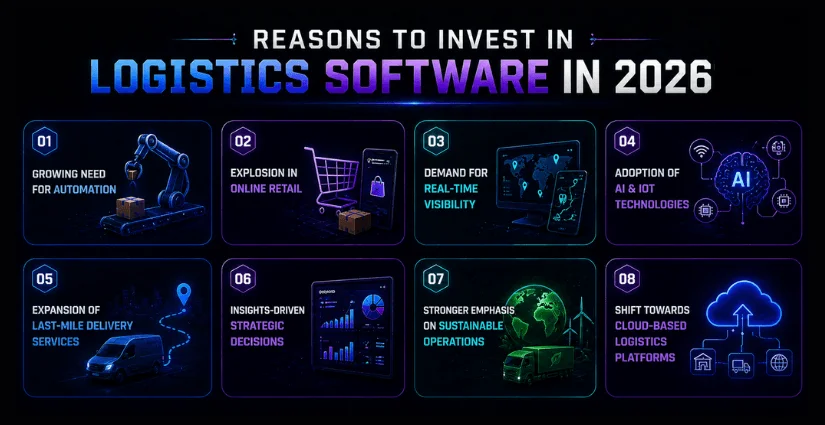
Rising Demand for Automation
In today’s dynamic world, most businesses are seeking to automate processes to save on labor costs and avoid mistakes. Logistics software makes it possible to automate many operations, such as order management and delivery.
Rapid Growth of eCommerce
The increasing popularity of eCommerce businesses has contributed to the growth of the logistics industry due to rising customer demand for speedy delivery services. This has led to businesses requiring software to help with their deliveries.
Need for Real-time Visibility
There is currently a great need for transparency along the supply chain. The use of logistics software helps organizations offer clients live information about orders.
AI & IoT Adoption
Logistics businesses can now rely on AI and IoT technologies to make decisions on deliveries. For example, businesses can use AI logistics software development outsourcing to plan optimal delivery routes and forecast demand.
Growth of Last-Mile Delivery Solutions
Last-mile delivery is increasingly becoming a distinguishing factor between competing customer experiences. There are smart logistics software that enable optimization of last mile delivery software development, decreasing delivery time, and increasing efficiency even in urban and remote environments.
Data-driven Decision Making
With advanced analytics and reporting tools, businesses can gain valuable insights into operations, identify inefficiencies, and make informed strategic decisions to improve performance.
Increasing Focus on Sustainability
In recent years, the importance of eco-friendly logistics activities cannot be overstated. The software allows for optimizing delivery routes and thus reducing CO2 emissions.
Cloud-based Logistics Solutions
Cloud technology enables scalable, flexible, and cost-effective logistics management. Businesses can access their systems from anywhere, ensure data security, and scale operations without heavy infrastructure investment.
Step-by-Step Process of Custom Logistics Software Development in the USA
In this section, we will look into the step-by-step process of logistics software development. So let’s get started.
Finding the Ideal Technology Partner
So, the first step in making such an app is selecting a custom software development company that can provide the best services and a team that can provide all the required results whenever needed at the point of development. Secondly, it suits the business budget as well.
Strategic Market Research & Planning
When the company is shortlisted, the team must start working. They will conduct market research to determine what needs to be done. Moreover, the information already provided by the business is utilized for the investigation. The team also needs to be aware of all the market trends and technologies used to distinguish their product from others.
Product Design and Development Phase
After all the data is collected, the team of designers and developers is utilized further in this process. Hire logistics software developers focuses on making the designs that are best suited for the particular project; the designs contain all the details that will work in the software. Then, the logistics software developer will start working on the coding part, making all the designs work.
Testing & Quality Assurance
Completing custom software solutions for transportation and logistics is not the last step. After the development is completed, the quality assurance team performs different types of software testing services on the end product. This ensures that no bugs or errors remain at the time of development and that everything is working properly. This is a two-way authentication method for removing all the issues from the software.
Launching Your Logistics Solution
When everything seems to be right, it’s time for the software to be deployed, launched for further benefits, and introduced to the target audience as well. This is very important to take care of and is the last step of development.
Post-Launch Maintenance & Upgrades
After the launch of the software, it is necessary to take care of it as well, so make sure to do post-maintenance and update it to keep up with the market trends.
Tech Stack Used in the Logistics Software Development
Here’s a basic example of a tech stack commonly used in logistics software development.
| Layer | Technology |
| Frontend | React.js, Angular, Vue.js |
| Backend | Node.js, Python (Django, Flask), Java (Spring Boot) |
| Database | PostgreSQL, MySQL, MongoDB |
| API | RESTful API (Express.js, Flask-RESTful), GraphQL |
| Containerization & Orchestration | Docker, Kubernetes |
| Messaging | RabbitMQ, Apache Kafka |
| Security | JWT (JSON Web Tokens), OAuth |
| Version Control | Git (GitHub, GitLab, Bitbucket) |
| Testing | Jest, Mocha/Chai, Selenium |
| Deployment | AWS, Google Cloud Platform, Microsoft Azure |
| Monitoring | Prometheus, Grafana, ELK Stack (Elasticsearch, Logstash, Kibana) |
| CI/CD | Jenkins, Travis CI, GitLab CI |
| Collaboration & Communication | Slack, Microsoft Teams |
This is a general overview and can vary based on specific project requirements, team preferences, and other factors.
How Much Does It Cost to Build Logistics Software?
Understand the estimated supply chain management software development cost based on project scope, customization level, and business requirements.
1. Cost Breakdown by Development Type
Understand how the cost of logistics software development varies based on the type of solution you choose, whether it’s a basic platform, a custom-built system, or an enterprise-grade solution.
| Development Type | Estimated Cost | Timeline |
| Basic MVP | $10,000 – $25,000 | 2 – 4 months |
| Mid-level Solution | $25,000 – $60,000 | 4 – 8 months |
| Advanced/Enterprise | $60,000 – $150,000+ | 8 – 12+ months |
2. Feature-wise Cost Estimation
Explore how individual features like GPS tracking, route optimization, dashboards, payment integration, and analytics contribute to the overall development cost.
| Feature | Estimated Cost Range |
| User Dashboard | $2,000 – $5,000 |
| GPS Tracking | $3,000 – $8,000 |
| Real-time Analytics | $5,000 – $12,000 |
| Payment Integration | $2,000 – $6,000 |
| AI-based Route Optimization | $8,000 – $20,000 |
| IoT Integration | $10,000 – $25,000 |
3. Region-wise Development Cost
Compare software development costs across different regions such as the USA, Europe, and Asia based on hourly rates, expertise, and project complexity.
| Region | Hourly Rate |
| India / Asia | $20 – $50 |
| Eastern Europe | $40 – $80 |
| USA / Western Europe | $80 – $150+ |
Why Opt Octal IT Solution for your Logistic Software Development Partner?
Selecting a development partner who understands your requirements is critical when working on logistics solutions that need to be scalable and performant. Octal IT Solution is your reliable tech partner in developing end-to-end logistics software development as per unique needs.
For over 18+ years, we have been developing tailor-made logistics solutions that help businesses improve operational efficiency and enhance route optimization capabilities and gain supply chain visibility. We develop scalable and secure logistics solutions with the use of advanced tech including artificial intelligence, Internet of Things, and cloud computing. Along with logistics platforms, our team also delivers CRM software development services that integrate seamlessly with transportation and supply chain systems, helping businesses manage customer interactions, automate workflows, and improve operational efficiency from a single platform
Our team follows the client-centric philosophy, which means that all development processes are done transparently and within deadlines and collaboration is smooth and consistent. We take care to ensure that from consultation till the launch of the final solution there is constant cooperation between us and the client.
We have successfully developed 1500+ projects across industries, bringing a proven track record of excellence to each project we do. We help startups and enterprises build next-generation logistics software through our reliable services.
The Wrapping Words
In logistics, there is currently a revolution happening, where fast, accurate, and real-time performance makes all the difference. The companies that lag behind with outdated processes and technologies face challenges of inefficiency, delays, and increasing expenses. The organizations that decide to adopt advanced logistics management software development, in turn, benefit from a competitive edge in efficiency and quality of customer experience.
By incorporating advanced automation capabilities, AI-driven analytics, flawless integrations, and scalability into your business process, you can create a groundbreaking logistics solution that will take your company to the next level. Yet, there are several factors that will determine the success of your project.
Are you ready to develop a unique logistics software solution for your business? Contact our team today for a complimentary consultation and quote!


 Get in Touch
 By
By September 29, 2026