


Is your old software slowing your business down while competitors move faster? You are not alone. Organizations have made legacy system modernization their primary business focus while generative AI technology speeds up software modernization through cost reduction and time acceleration.
According to GII Korea, the application modernization services market will expand from its 2025 value of USD 17.58 billion to reach USD 55.28 billion by 2033 through a 15.23% annual growth rate.
This blog explains how AI-powered legacy system modernization works, what it costs, and the practical steps to start your journey.
What Is Legacy System Modernization with Generative AI?
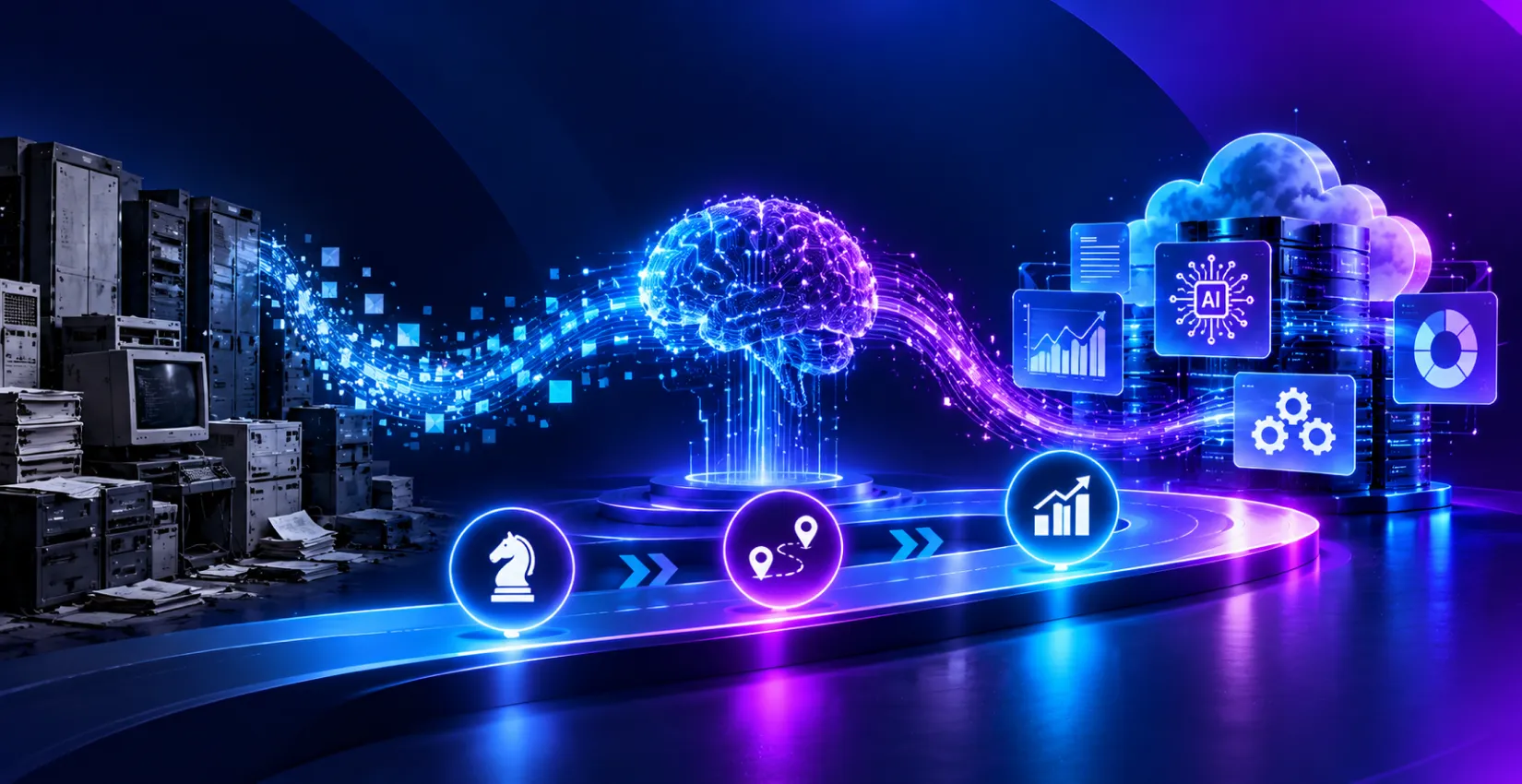
Organizations use generative AI for legacy system modernization through a process that transforms their obsolete software into modern systems by applying AI-based code analysis, documentation, language transformation, and test generation capabilities.
Software modernization teams apply generative AI to achieve better results than manual rewriting because they obtain better results in shorter timeframes while they decrease their operational expenses and lower their operational dangers.
The system produces a protected application that operates on cloud infrastructure and maintains proven business rules while enabling new feature development, system integration, and AI functionality enhancement.
Why Legacy Systems Hold Enterprises Back: Key Challenges
Outdated systems keep funds at low levels while they prevent businesses from making progress with their technological advancements. The present system contains multiple urgent modernization needs because it faces several critical barriers that need immediate attention. The guide presents different answers to each problem.
1. Rising Maintenance Costs & Technical Debt
The IT budget needs to cover all software fixes because programmers must maintain old codebases on a continuous basis. A good legacy application modernization guide solves this by using AI to find dead code and refactor modules, freeing more funds.
2. Lost Documentation Skill Gaps
The present workforce contains only a few engineers who know COBOL and mainframe code because all related documents have vanished. The business can solve this problem through legacy code modernization by using generative AI, which produces automated documentation and explains business logic structures.
3. Security Compliance Exposure
Unsupported software lacks modern patches and audit controls, raising breach risk. Organizations need to modernize their systems through AI-based vulnerability scanning, secure code generation, and automated compliance verification, which should become standard in every software release.
4. Poor Integration With Cloud with AI
The closed architecture systems operate independently because they lack the ability to connect with cloud services and AI tools. Organizations can modernize their existing applications through AI technology, which enables API and microservice generation to establish secure data access and achieve fast digital transformation.
7 Warning Signs Your Legacy Application Needs Modernization
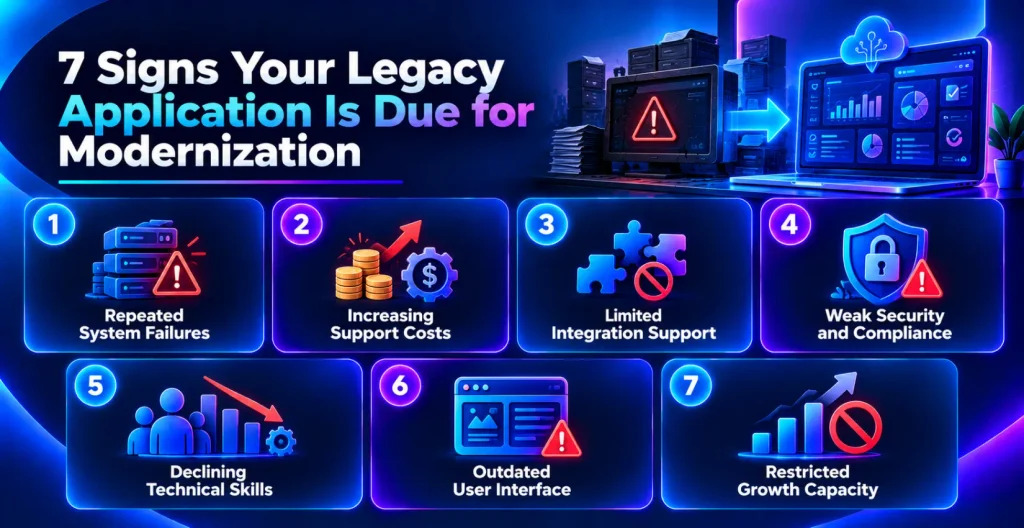
You need to find out if your system contains outdated components. The system shows seven distinct indicators that help you identify its outdated status. You need to identify these problems at their start because legacy software modernization will become costlier while creating more risks and customer issues.
1. Frequent Crashes and Downtime
The system encounters frequent crashes and downtime because its current traffic volume causes repeated outages and slow performance. AI-assisted code analysis identifies system bottlenecks, which developers can use to create solutions before users start departing.
2. Rising Maintenance Costs
The majority of your IT funds go to system maintenance, which blocks your ability to innovate. The system shows an obvious sign that indicates the need for AI-based modernization of legacy systems.
3. Hard-to-Integrate Architecture
The system architecture proves difficult to connect with other systems because it requires multiple months for cloud application, API, and AI tool integration. The generative AI technology produces connectors and modern user interfaces at a fast speed.
4. Security Gaps & Compliance Failures
The existence of unpatched components together with missing audit trails and failed compliance reviews creates a dangerous situation. The system modernization process establishes security by developing protected software, updating system frameworks, and running automated security tests.
5. Shrinking Skills Pool
The process of hiring COBOL and mainframe experts becomes more difficult and expensive because of the shrinking available workforce. AI systems translate old code into simple explanations, which lets modern developers handle it with confidence.
6. Poor User Experience
The user experience suffers because customers and staff members face clunky screens, no mobile support, and slow workflows, which create frustration. Your application modernization roadmap benefits from generative AI because it enables faster UI redesign and better omnichannel feature delivery.
7. Limited Scalability
The system fails to scale because it requires costly hardware upgrades and extensive code changes when users or features need to be added. Organizations can expand their business operations because the updated cloud-ready architecture eliminates previous restrictions.
Traditional Legacy Modernization vs AI-Powered Modernization: Comparison Table
The selection between manual operations and AI-driven systems produces changes in project schedules, financial resources, and danger levels. The quick comparison shows how decision-makers must choose between conventional techniques and AI-based legacy system modernization methods through their essential evaluation elements.
| Aspect | Traditional Modernization | AI-Powered Modernization |
| Time | Long manual cycles, often years for large systems | Faster discovery, conversion, and testing; shorter delivery cycles |
| Cost | High labor cost; overruns are common. | Less manual effort and tool and review costs, but better predictability |
| Risk | Missed logic and big-bang cutovers raise risk. | Automated analysis and incremental, tested migration lower risk. |
| Accuracy | Depends on individual expertise; human error is likely. | Consistent analysis; needs human review to catch hallucinations |
| Documentation | Manual, often incomplete or outdated | Auto-generated and refreshed as code changes |
| Testing | Manual test writing; limited coverage | AI-generated test cases; broader regression coverage |
| Skills Dependency | Relies on scarce legacy experts | AI explains old code to modern developers. |
| Scalability | Hard to repeat across many applications | Repeatable patterns across the portfolio |
| Business Continuity | Higher downtime risk | Phased rollout with parallel validation |
How Generative AI Is Transforming Legacy System Modernization
Generative AI performs multiple functions beyond its ability to generate computer code. It analyzes historical systems to understand their operations and performs fast reconstruction of these systems. The legacy system transformation process achieves its most important impact at this particular stage.
- Code understanding & business-logic extraction: AI extracts business logic from extensive codebases through their ability to identify concealed rules, which teams can use to understand system operations before making modifications, which decreases development risks for generative AI software projects.
- Auto-documentation & dependency mapping: AI technology produces understandable documents and visual representations of system operations and dependency relationships through automated processes, which eliminate the need for extended manual exploration and maintain vital information for upcoming development teams.
- Code translation: AI transforms COBOL programs into Java or .NET Framework applications while preserving the original business logic. The Expert Legacy Application Modernization Services combine their quick work with human experts who verify the results to achieve precise outcomes.
- Test case generation: AI creates unit and regression tests from existing behavior to validate new system operations with old system functions while detecting defects throughout every release cycle.
- API & UI/UX modernization: AI generates APIs, responsive screens, and automated workflows to provide modern omnichannel experiences for legacy systems without needing to rebuild their core business logic.
Legacy Code Modernization with Generative AI: Use Cases by Stage
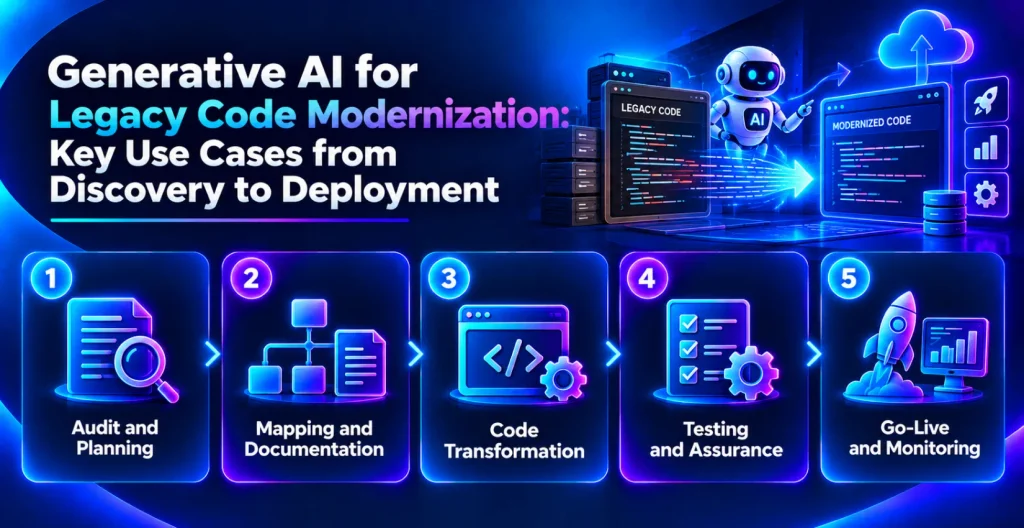
The modernization process achieves optimal results when AI technology operates to support every phase of the process. The document presents five essential phases that demonstrate how generative AI modernizes legacy code to achieve better performance, accuracy, and lower operational expenses for business organizations.
1. Discovery Assessment
AI scans all application assets while it identifies outdated components, assesses system risk, and values them to produce data-driven modernization priorities for organizational leaders.
2. Documentation Knowledge Capture
The AI system transforms unrecorded code into precise specifications, which include diagrams that enable all stakeholders to understand present system operations before modification work begins while safeguarding essential business rules from being forgotten.
3. Refactoring Code Conversion
The process of legacy system migration becomes faster through generative AI, which transforms monolithic structures into modular components and performs language conversions for outdated systems while maintaining their established operational capabilities.
4. Testing & Validation
AI systems create test cases, synthetic data, and automated checks that verify output changes between old & new versions to decrease manual quality assurance work and boost release trustworthiness for all system components.
5. Deployment and Optimization
AI monitoring systems identify post-launch performance problems and generate solution recommendations. The leading legacy application modernization companies base their system maintenance and cost management decisions on these operational insights, which support their modernized applications.
Legacy System Migration with AI: Choosing the Right Modernization Strategy
Different systems need their own specific paths to reach their objectives. Select the strategy that matches your objectives together with your financial resources and acceptable risk level, then use AI to speed up the delivery process of legacy system migration.
1. Rehost
Move the application to cloud infrastructure with minimal code changes. The method achieves the fastest results because AI systems identify dependent elements and potential configuration problems before executing the migration.
2. Replatform
Make small optimizations, like moving to a managed database, without changing core architecture. AI identifies compatibility issues and generates the configuration scripts required.
3. Refactor
The existing code needs a complete redesign to boost its quality and performance, but all its original functions must stay intact. Generative AI creates better code structures while it removes repeated logic and produces test cases to safeguard system operations.
4. Rearchitect
The system needs to change from its current monolithic structure to microservices and event-driven designs because these systems offer better scalability potential. AI systems identify domain boundaries, which allows them to create service contracts that reduce the amount of work needed for complex system redesigns.
5. Rebuild
Develop the application through a complete rewrite that employs contemporary technological solutions. AI systems extract business rules from existing systems to generate starting code, which prevents loss of essential system functions during new development.
6. Replace
The old system needs to be decommissioned so you can start using a commercial product or SaaS solution. Our legacy application modernization checklist provides options for evaluation while AI systems perform data field mapping and create migration scripts.
Decision table: when to use each approach
| Strategy | Choose When | Effort | Risk | Where AI Helps Most |
| Rehost | You need a fast move to the cloud. | Low | Low | Dependency mapping |
| Replatform | You want modest gains with little change. | Low–Medium | Low | Configuration scripts |
| Refactor | Code is sound but messy. | Medium | Medium | Cleanup and test generation |
| Rearchitect | You need scalability and agility. | High | Medium–High | Boundary mapping, service design |
| Rebuild | Code is unsalvageable, but business rules are valuable. | High | High | Rule extraction, code generation |
| Replace | A SaaS product fits a standard function. | Medium | Medium | Data mapping, migration scripts |
Where GenAI adds the most value: GenAI provides its highest value through the refactor, rearchitect, and rebuild strategies because these approaches require the most time in addition to financial resources for code comprehension, business rule extraction, and test creation.
How to Modernize Legacy Applications with AI: Step-by-Step Process
The modernization process achieves success through its implementation of a specified set of procedures. The six practical steps enable organizations to update their legacy applications through AI technology while they safeguard their operations and maintain acceptable levels of risk.
1. Assess and Audit the Portfolio
Create an inventory that shows all applications together with their age and their required dependencies and their associated costs. The auditing process becomes faster through AI-assisted scanning, which also detects all hidden system connections, identifies both technical debt and security vulnerabilities.
2. Prioritize by Business Value Risk
The systems need to be ranked based on their revenue generation potential and their probability of failure and their required modernization work. The process should begin by selecting valuable targets that remain within your handling capacity while AI analysis produces a correct complexity assessment.
3. Use AI for Code Analysis Documentation
The process of legacy application modernization through AI allows for code reading, business rule extraction, and documentation generation, which helps teams understand existing systems before they start making changes.
4. Pilot with One Module
Choose a low-risk module and modernize it end to end. The pilot process demonstrates the method while building trust among team members through its established application modernization plan.
5. Migrate Incrementally with AI-generated Tests
The strangler pattern requires organizations to transfer their modules through different stages of development. AI-generated tests check every stage of old and new system behavior, which helps you find defects at an early stage and prevents you from facing major system changes that would cause disruption.
6. Validate, Deploy, Decommission
The system needs to undergo performance testing, security checks, and user acceptance testing before it can be deployed in stages for final legacy system retirement. The AI monitoring system detects system anomalies during the launch phase, and it continues to improve through ongoing monitoring activities.
Building an Application Modernization Roadmap with GenAI
The process of application modernization becomes a managed program when organizations create a transparent modernization roadmap, which they need to complete their work. Here is a simple phased plan you can easily adapt to your organization and budget.
1. First 30 Days (Discover)
The process requires application auditing while establishing objectives and selecting initial test subjects. AI tools help organizations build modernization baselines through code scanning and dependency mapping, which produces fact-based results at high speed.
2. Days 31–60 (Plan)
Choose strategies for each application while establishing AI governance rules, finalizing tool selections, and team compositions. The organization needs to establish success metrics, budget limits, and security requirements, which will guide the pilot project.
3. Days 61–90 (Pilot)
Modernize one module through AI-generated documentation, code, and test creation. The measurement of speed, defect rates, and cost will show stakeholders how the process delivers value when compared to the baseline.
4. Months 4–6 (Scale)
The business needs to increase its operational activities by implementing established patterns that work for different modules and software applications. Standardize prompts, review checklists, and pipelines so teams repeat success. Add expert support if capacity is limited.
5. Months 7–12 (Optimize)
The process of system retirement requires organizations to track their performance indicators while they work on enhancing their management systems. The system uses AI monitoring to decrease operational expenses while it prepares for the upcoming legacy system transformation process.
AI for Legacy Application Modernization: Tools and Platforms Compared
Your selection of tools depends on your technology stack together with your cloud environment and your business objectives. The table presents a comparison between popular platforms that offer AI-based legacy application modernization through their best use cases, main features, and their operational boundaries.
| Tool / Platform | Best For | Key Capability | Limitation |
| GitHub Copilot | Developer-level refactoring, upgrades across mixed stacks | In-IDE code explanation, generation, test writing | Needs developer guidance; not a portfolio-level assessment tool |
| Amazon Q Developer | Java upgrades, .NET porting on AWS | Automated code transformation, security scanning | Strongest inside the AWS ecosystem |
| IBM watsonx Code Assistant for Z | COBOL mainframe to Java modernization | Code explanation, refactoring, translation for IBM Z | Focused on IBM Z; licensing cost |
| Microsoft Azure (Azure Migrate + Copilot) | .NET, Microsoft-heavy estates moving to Azure | Assessment, migration planning, code upgrade support | Azure-centric |
| Google Cloud (Gemini Code Assist + migration tools) | Google Cloud migrations, mainframe assessment | Code explanation, generation, portfolio assessment | GCP-centric; complex mainframe work needs service support. |
| OpenRewrite | Rule-based, repeatable framework version upgrades | Large-scale automated refactoring recipes | Rule-based, not generative; needs expertise to customize |
| Claude Code | Large-codebase analysis, refactoring, test generation | Agentic code understanding multi-file changes from the terminal | Needs clear guardrails, human review of changes |
Benefits of Generative AI in Legacy Software Modernization
Generative AI changes the economics of modernization. The five main advantages of generative AI development software modernization have made businesses switch from conventional code rewriting to using this technology for their modernization projects.
1. Faster Delivery
AI systems perform code analysis, documentation, and testing operations, which reduce project durations and enable teams to launch updated features at an accelerated pace. The quick delivery process leads to faster profit generation from legacy software modernization work.
2. Lower Costs
The automation of routine tasks decreases human work hours, prevents duplicate work, and reduces the need for specialized experts who have limited availability, which leads to extended budget resources and decreased post-migration maintenance expenses.
3. Fewer Defects
The AI-based testing system, together with automated review processes, detects regression problems at their initial stages, which leads to better code quality and fewer production issues that appear after major system updates.
4. Knowledge Retention
The AI system creates business rule documentation, which protects your organization from losing knowledge when experienced engineers leave their positions.
5. Lower Risk and Future Readiness
The migration process, which includes testing at each stage, helps organizations reduce their operational interruptions while modern system architectures prepare them for cloud and AI operations. A reliable legacy application modernization plan keeps every step controlled.
Cost and ROI of AI-Led Legacy Modernization
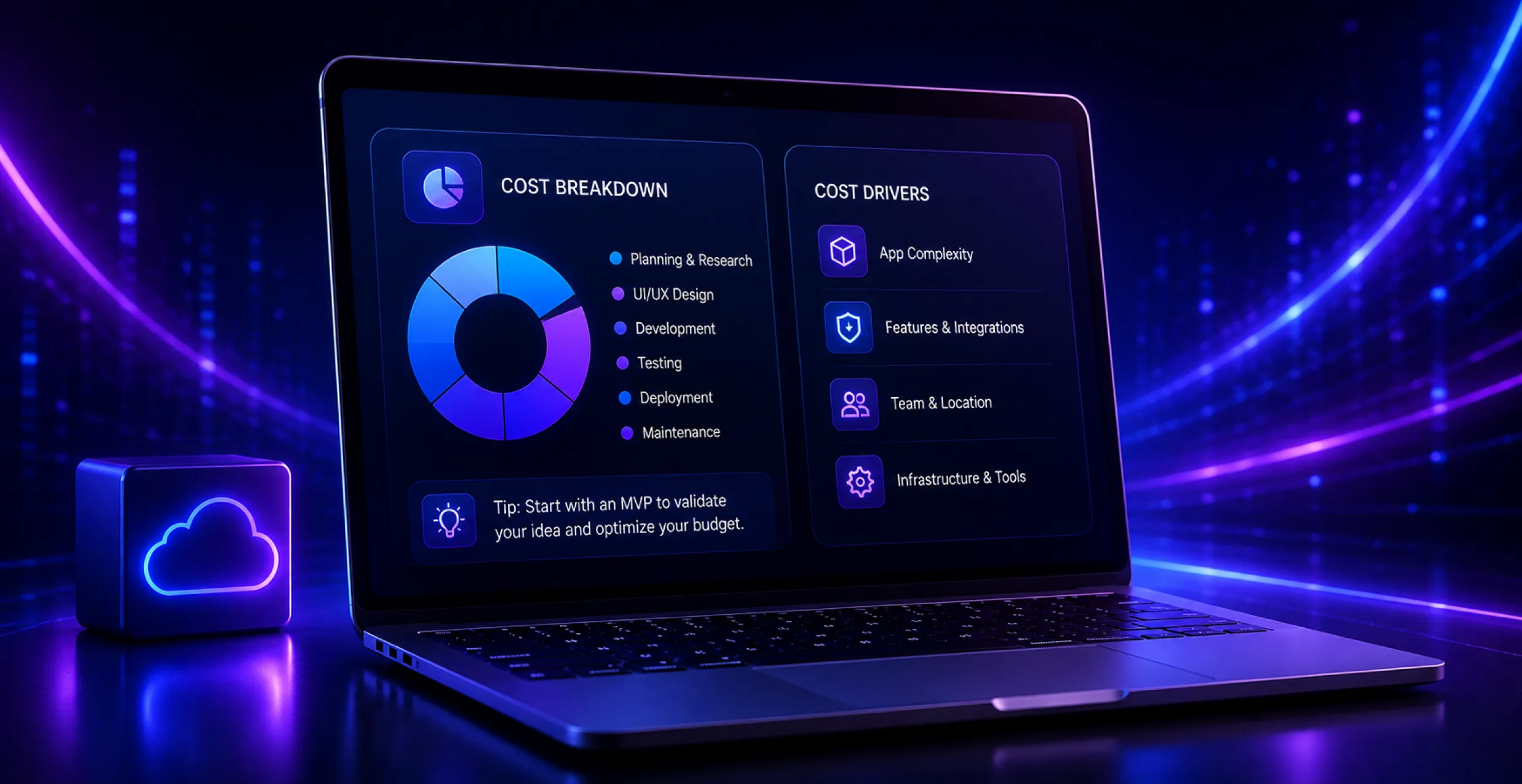
Modernization cost depends on the level of complexity that exists and which approach will be followed. AI helps people work more efficiently, but different organizations allocate different amounts of money for their operations. The table displays estimated legacy modernization expenses in US dollar values, which organizations can use to create their budget plans.
| System Size | Rehost / Replatform | Refactor / Rearchitect | Rebuild (AI-assisted) |
| Small (1–2 apps) | $20,000 – $75,000 | $50,000 – $150,000 | $100,000 – $250,000 |
| Medium (3–10 apps) | $75,000 – $250,000 | $150,000 – $500,000 | $300,000 – $900,000 |
| Large enterprise (10+ apps) | $250,000 – $1M | $500,000 – $2M | $1M – $5M+ |
Industry Use Cases: Generative AI in Legacy Modernization
Every industry faces its own set of difficult legacy problems, which follow a common solution approach. The present time shows five critical business areas that generative AI software development uses to create operational value through legacy modernization activities.
1. Banking & Insurance
The core banking and policy systems use COBOL as their operational programming language. The code receives translation through AI, which produces documentation that enables quick product launch while preserving total regulatory compliance and complete audit documentation.
2. Healthcare
Hospitals continue to operate their patient and billing systems, which have become outdated. AI helps modernize them with secure integrations, standards-based interfaces, and tested migrations that protect sensitive patient data.
3. Manufacturing
Plants operate their production systems through outdated ERP software and shop-floor management systems. The system converts code through AI, which builds APIs for IoT data and enables phased system upgrades that protect production operations from becoming inactive.
4. Retail and eCommerce
The existing order and inventory systems become unmanageable when peak seasons arrive. AI technology separates monolithic systems into scalable services while it modernizes digital storefronts to create an uninterrupted shopping experience through all sales channels.
5. Public Sector
The public sector continues to operate based on citizen service systems that date back more than twenty years. AI technology discovers concealed system operations, which allow for faster system migration processes. A phased application modernization roadmap keeps budgets predictable.
Risks, Governance, and Best Practices for GenAI Modernization
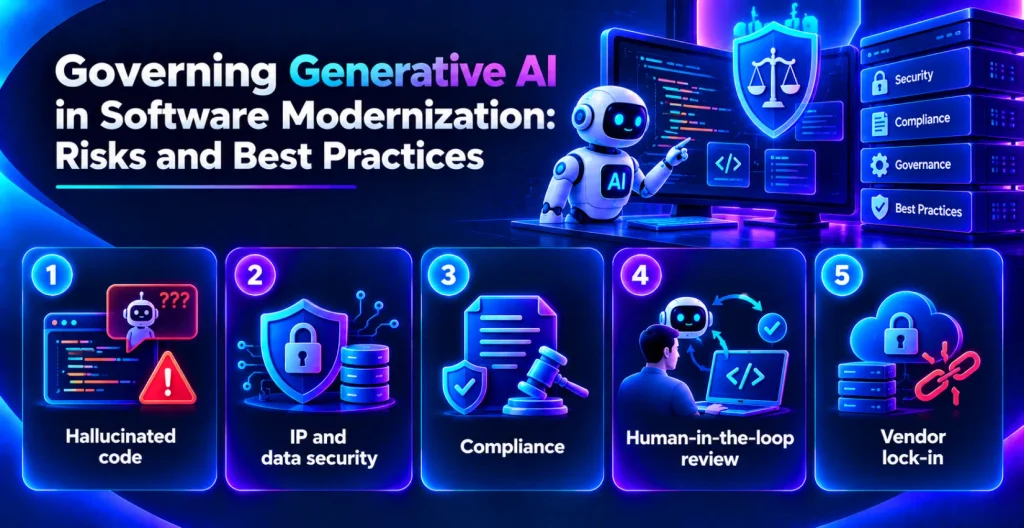
Generative AI technology helps businesses accelerate their legacy software modernization process, yet it introduces various new security threats. The project will remain protected, compliant, and under your complete management when you begin planning these five essential areas.
1. Hallucinated Code
AI can generate code that appears correct but produces incorrect operational results. Automated tests together with behavior comparison to previous systems and mandatory peer code reviews help organizations decrease this risk.
2. IP Data Security
Companies face trade secret exposure when they share their proprietary code with public artificial intelligence systems. This operates through enterprise-grade or private deployments, which combine strict access controls with established data sharing policies.
3. Compliance
Organizations operating under regulatory supervision need to provide evidence about their code modification procedures and their testing methods. Audit trails need to be kept, while organizations must document their AI operations, and their modernization efforts must follow the standards which include GDPR, HIPAA, and PCI DSS.
4. Human-in-the-Loop Review
AI systems need to work alongside engineers for their benefit instead of taking over their roles. The process requires architects and domain experts to check designs, business rules, and important modifications through all development phases before starting production.
5. Vendor Lock-in
Using a single AI platform for operations will block you from making changes while making your system more expensive to maintain throughout the years. This needs to support open standards through portable architectures and a multi-tool approach, which experts in legacy application modernization services should guide when necessary.
In-House vs Partner: How to Choose a Modernization Partner
The choice between using an internal team versus an external expert determines how much money will be spent and how quickly tasks will be completed and what quality standards will be achieved. The table shows two sets of options that you need to evaluate before selecting the best legacy application modernization companies for your legacy system transformation.
| Factor | In-House Team | Modernization Partner |
| Cost | Lower hourly cost, but hiring and training add up | Higher upfront fees, predictable project pricing |
| Speed to Start | Slow; hiring and upskilling take months. | Fast, ready teams, proven accelerators |
| AI Legacy Expertise | Limited unless you invest heavily | Deep, tested experience across stacks and industries |
| Tools Accelerators | Must buy and learn tools yourself | Pre-built AI toolchains and migration frameworks |
| Scalability | Constrained by team size | Scale up or down as the project needs. |
| Risk | Higher for first-time modernization | Lower, with proven methods of governance |
| Knowledge Retention | Strong; knowledge stays in-house. | Needs a documented handover plan |
| Control Governance | Full control over decisions | Shared control through clear contracts and reviews |
| Long-Term Support | Depends on retained staff | Available through maintenance and support agreements |
| Best For | Small, well-understood systems | Complex, large, or time-sensitive programs |
Why Choose Octal IT Solution for AI-Powered Legacy Modernization
Octal IT Solution’s Legacy Application Modernization Services enable businesses to transition their legacy systems into modern platforms that support AI through a safe and practical modernization process. Our team will deliver these exact things to you.
1. Assessment-First Approach
Our first step involves auditing your applications together with their dependencies and risk factors before we suggest the best modernization approach for each system based on its business worth, available funds, and scheduled completion date.
2. AI-Accelerated Delivery
We apply generative AI for code analysis, documentation, translation, and testing, which helps them deliver faster results while all outputs receive developer evaluation.
3. Security-First Governance
Our system protects your intellectual property and customer data through its combination of access controls, private AI environments, and ongoing compliance monitoring during the modernization process.
4. Incremental, Low-Risk Migration
We migrate in phases with automated regression testing, so critical operations keep running and your teams see value early instead of waiting for one risky cutover.
5. Cloud, Blockchain, AI-Ready Architecture
We build scalable API-first platforms that support cloud operations, AI, and blockchain technology integration to help your modernized systems expand in the future.
Final Words
Organizations now must update their existing systems because this process has become mandatory for their operations. Generative AI in software modernization enables businesses to achieve quick system updates which protect their data while reducing operational costs and preparing their systems for AI expansion.
The correct strategic approach leads to success through a focused pilot, which requires human operators to maintain command of all system decisions. You should use the provided roadmap together with tools and cost estimates to develop your strategy while following a proven legacy application modernization guide, which will help you maintain your direction.
AI modernization of legacy applications requires you to work with specialists who combine their knowledge with proper oversight to convert your existing system into a business advantage.
FAQs
1. What is legacy system modernization with generative AI?
The process of legacy system modernization with generative AI involves using AI technology to study, produce documentation, perform language translation, and perform software testing on outdated systems, which helps teams speed up their application modernization process while saving money and reducing potential risks.
2. How does generative AI help modernize legacy applications?
The system reads legacy code to explain business logic and produces documentation while translating programming languages, generating test cases, and API definitions, which helps teams accelerate their AI-based legacy application modernization through reduced error rates.
3. Can AI convert COBOL or legacy code automatically?
Yes, the process of automatic translation from legacy COBOL to Java and other languages depends on AI systems, which produce varying levels of translation accuracy. The converted code needs to undergo human evaluation and automated testing procedures before it becomes ready for production deployment.
4. How long does AI-powered legacy modernization take?
It depends on size and strategy. The duration of a pilot project ranges from 4 to 12 weeks, while small application projects require several months, and large enterprise portfolios need between 12-36 months to complete, with AI technology reducing the need for human work.
5. What are the risks of using GenAI for legacy migration?
The system faces multiple security threats because it generates fake code, which can lead to data and intellectual property leaks while breaking compliance rules and forcing users to depend on specific tools and vendors. The process of legacy system migration with AI requires governance, testing, and human evaluation to reduce the risks that occur during this process.
6. How much does legacy modernization cost?
The costs for these projects start around $20,000 for small applications, but they can exceed $1 million when developing large enterprise systems based on the project approach, system complexity, and AI automation levels.


 Get in Touch
 By
By September 30, 2026