


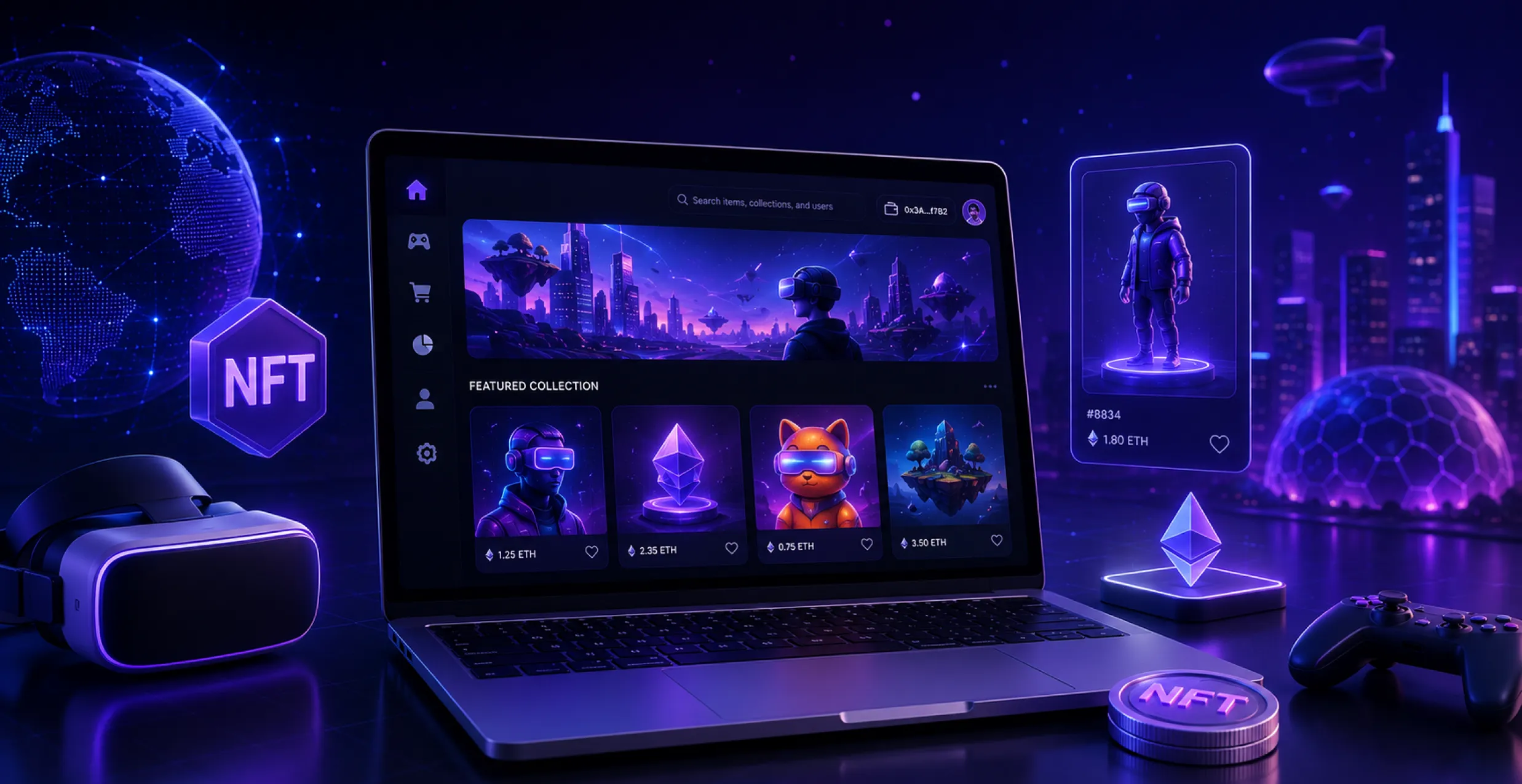
Ever wondered what happens when digital ownership collides with 3D virtual worlds? That’s where a Metaverse NFT Marketplace comes in. In those spaces, avatars, virtual land, and digital collectibles start behaving like ordinary assets, so businesses in gaming, real estate, fashion, and entertainment are racing to claim their slice of this space.
According to Market.us, the global metaverse NFT market size is expected to be around USD 3,078.7 million by 2033, starting from USD 335.9 million in 2023, and it should grow at a CAGR of 24.8% across the forecast period 2024 to 2033. In 2023, North America held that dominant market position, grabbing more than a 37% share, with about USD 124.2 million in revenue.
For brands looking at this shift, NFT marketplace development isn’t only something to “keep an eye on”; it’s quickly turning into the foundation of virtual commerce. So, this guide will sort of walk you through what you should really know before you build one.
- What is a Metaverse NFT Marketplace?
- Key Features of a Metaverse NFT Marketplace
- Types of Metaverse NFT Marketplaces
- How to Build a Metaverse NFT Marketplace (Step-by-Step)
- Must-Have Tech Stack for Metaverse Platform Development
- Custom vs White Label: Choosing Your Development Approach
- AI-Powered NFT Marketplace Development: What's Changing
- Metaverse NFT Marketplace Monetization Models
- Metaverse NFT Marketplace Development Cost: Complete Breakdown
- Metaverse Development Services We Offer
- Real-World Examples of Metaverse NFT Marketplaces
- Why Choose Octal IT Solution for Metaverse NFT Marketplace Development
- Final Thoughts
- FAQs
What is a Metaverse NFT Marketplace?
A metaverse NFT marketplace is basically a virtual stage where people can mint, buy, and resell digital things. As well as swap digital assets, like avatars, wearable items, and virtual parcels of land, inside an immersive 3D space.
Unlike typical platforms, it mixes blockchain ownership with live social interaction. So instead of just being a marketplace, it’s like a dedicated NFT hub for metaverse projects. Connecting digital buying and selling with virtual world experiences in a smooth, almost seamless way.
Key Features of a Metaverse NFT Marketplace
Building a marketplace that works inside a virtual economy needs more than the usual buying and selling of products. You want features that actually nudge user trust and speed up transactions. As well, hold up later as the platform grows, even when people bounce across devices and blockchains.
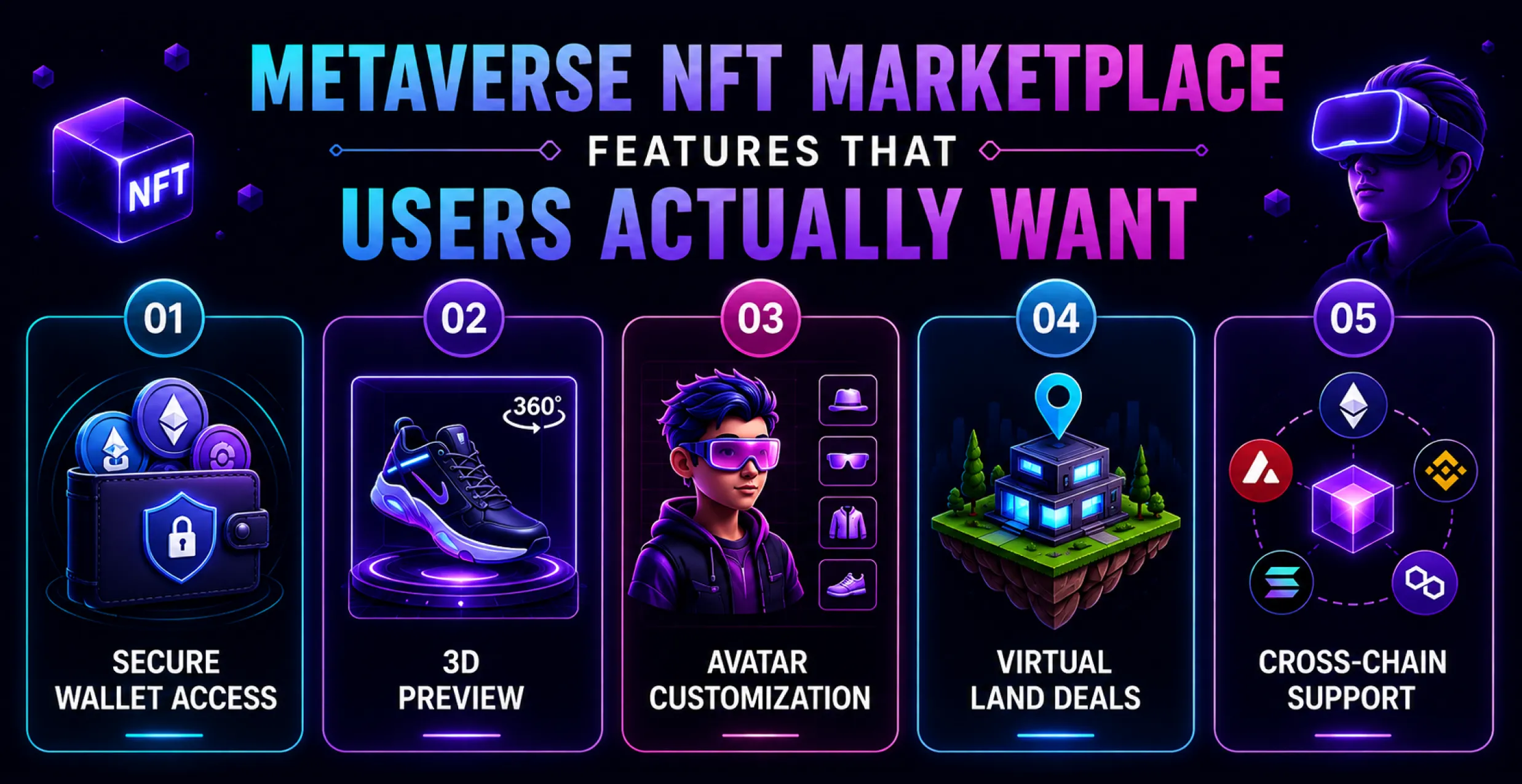
1. Wallet Integration
Wallet integration makes it easy for users to connect MetaMask, Coinbase Wallet, or WalletConnect right away. This setup helps with safe login, faster transactions, and an easier way to manage digital assets without leaving the marketplace interface.
2. 3D Asset Display
3D asset display gives buyers a sharp view, so they can rotate, zoom, and check the NFT preview before they lock in the purchase. Realistic rendering builds buyer confidence too, and it can reduce disputes because people see more or less exactly what they’re getting.
3. Avatar Support
Avatar support gives users a way to try on wearables, skins, and accessories directly on their digital identity. This personal touch adds a layer of meaning; it nudges repeat purchases. Furthermore, it builds emotional attachment to virtual assets.
4. Virtual Land Trading
Virtual land trading modules let people purchase parcels, subdivide them, and lease them. Or even resell them with boundaries that are verified. With smart contract development, ownership records stay tamper-resistant, more transparent, and easily checkable on-chain.
5. Multi-chain Compatibility
Multichain compatibility allows trading across Ethereum, Polygon, or Solana with less hassle. More chain coverage typically means a wider audience. In addition, it helps keep gas fees from becoming the main enemy for buyers.
Types of Metaverse NFT Marketplaces
Not every metaverse NFT marketplace is built for the same reason. Some are more into land swapping, others lean into game loops or the little virtual economy around them. The platforms are made with a specific use case in mind, even if the branding sounds general. Here’s a quick look at the common business types you choose to build today.
1. Metaverse Real Estate NFT Marketplace
This category is all about buying, selling, and sometimes leasing virtual land parcels. Decentraland helped popularize this idea, where scarcity and location steer the pricing, much like physical real estate.
2. Multi-chain NFT Marketplace Development
This approach lets users trade assets across multiple blockchains from a single dashboard, widening liquidity. Additionally, letting your platform reach buyers regardless of their preferred chain.
3. White Label NFT Marketplace Development
This is the “get moving sooner” option. A business starts with a ready-made marketplace that they can customize. It’s a suitable fit for brands that want to step into the space without stitching every infrastructure layer from scratch.
4. Gaming NFT Marketplace
Gaming-first marketplaces let players swap in-game items, skins, characters, and the whole “loot” vibe as NFTs. It also connects strongly to blockchain app development. Because the game logic and ownership details should align in real time.
5. Social & Fashion NFT Marketplace
These platforms center around digital wearables, avatar fashion, and identity-based collectibles. They help brands grow community interaction while still monetizing limited-edition virtual merchandise drops.
How to Build a Metaverse NFT Marketplace (Step-by-Step)
Turning an idea into a working platform takes structured planning. If you want to build a Metaverse NFT marketplace step-by-step. From early ideation all the way to full deployment and some post-launch support.
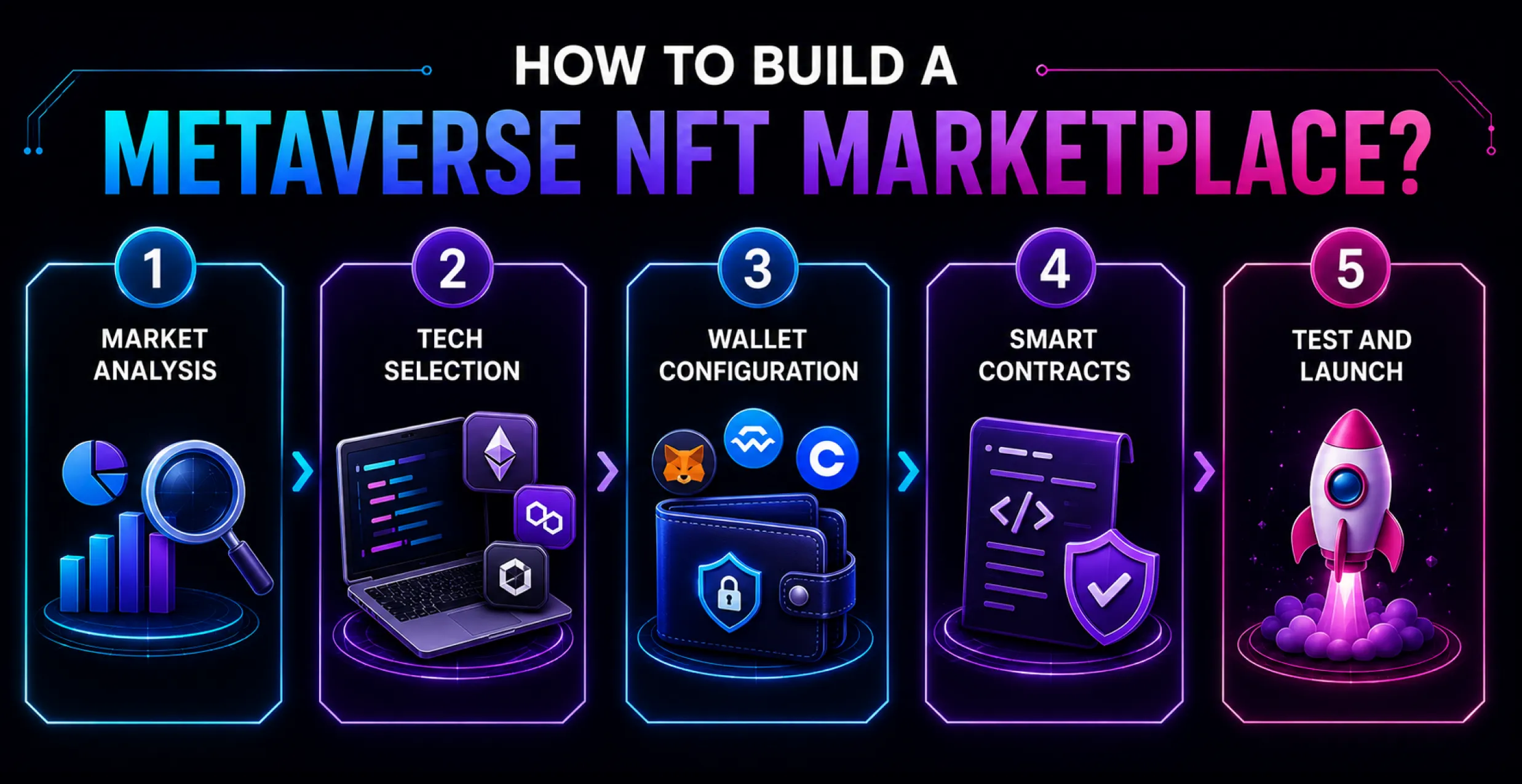
1. Ideation & Market Research
First, you need to pick your niche, which could be real estate, or gaming, or fashion. Then study competitor platforms and try to understand how your target audience actually behaves before you lock in a technical roadmap or even a budget.
2. Choosing the Tech Stack
Next, decide on blockchain protocols, 3D engines, and cloud infrastructure that fit the expected scale. The “right stack” is the one that keeps performance steady while also controlling costs. Furthermore, it still leaves room for future scaling once your users start showing up in larger numbers.
3. Wallet & Payment Setup
You’ll want reliable crypto wallet development so users can connect securely and store assets properly. As well as finish transactions with minimal friction. This is the trust signal that matters a lot during those first days of adoption.
4. Smart Contract Development
Smart contracts do the minting, ownership handover, and royalty payouts automatically. But if you skip the rigor a bit, you’re gambling, and vulnerabilities are exactly the things that can mess up users’ funds or even start damaging the platform’s reputation.
5. Testing & Deployment
Before you go live, run security audits, load checks, and UX reviews thoroughly. I’d also suggest a phased rollout, like beta users first, so small issues get found before full public launch.
Must-Have Tech Stack for Metaverse Platform Development
Choosing the right tech foundation is the backbone of thriving metaverse platform development. From blockchain protocols down to 3D engines, every layer changes both how fast things move and how secure everything stays. A lot of NFT marketplace development companies end up mixing several tools to balance performance with long-term scale.
| Layer | Technology Options |
| Blockchain Protocol | Ethereum, Polygon, Solana, BNB Chain |
| Smart Contracts | Solidity, Rust, Hardhat, Truffle |
| 3D / Rendering Engine | Unity, Unreal Engine, Three.js, Babylon.js |
| Wallet SDKs | MetaMask SDK, WalletConnect, Web3Modal |
| Storage | IPFS, Filecoin, Arweave |
| Backend | Node.js, Python (Django/FastAPI), GraphQL |
| Frontend | React.js, Next.js, Vue.js |
| Cloud Infrastructure | AWS, Google Cloud, Microsoft Azure |
Custom vs White Label: Choosing Your Development Approach
Deciding between custom NFT marketplace development and a white label solution lands on budget and timeline. Along with what you plan to do with it later. Both approaches can turn into a working platform. But they do seem different when it comes to flexibility, cost, and ownership.
| Aspect | Custom Development | White Label Development |
| Development Time | 4–8 months | 4–8 weeks |
| Cost | Higher upfront investment | Lower upfront investment |
| Customization | Fully tailored features | Limited to template options |
| Scalability | Built for long-term growth | May need rework later |
| Ownership | Full source code ownership | Shared or licensed codebase |
| Best For | Enterprises, unique use cases | Startups, quick market entry |
AI-Powered NFT Marketplace Development: What’s Changing
Artificial intelligence is shifting how digital marketplaces operate. AI-powered NFT marketplace development is bringing smarter automation and stronger fraud prevention. As well as more personalized user journeys, so platforms can move faster without giving up security or speed.
1. Smart Recommendations
AI looks at browsing patterns and purchase history to suggest relevant NFTs. This approach can lift engagement and conversion because users keep running into tailored collections.
2. Fraud Detection
Machine learning models flag suspicious wallet behavior, fake listings, and wash trading in real time. This helps create a steady sense of confidence over time in NFT Marketplace Development Solutions.
3. Dynamic Pricing
AI-based pricing models shift NFT values around demand, rarity, and market trends. So buyers get transparent valuation decisions, more data-backed ones, and less guesswork.
4. Automated Content Moderation
AI reviews uploaded assets for copyright conflicts and explicit material. Or policy breaks before anything is allowed to go live as a listing, reducing manual review time.
5. Chatbot Support
AI chatbots handle typical buyer questions, wallet troubleshooting, and onboarding doubts right away. It reduces the support workload around the clock.
Metaverse NFT Marketplace Monetization Models
A marketplace only works if it keeps generating steady, sustainable revenue. So if you’re looking at Metaverse NFT marketplace development, it helps to think about monetization early. Because revenue models sort of decide platform features, the pricing, and user incentives.
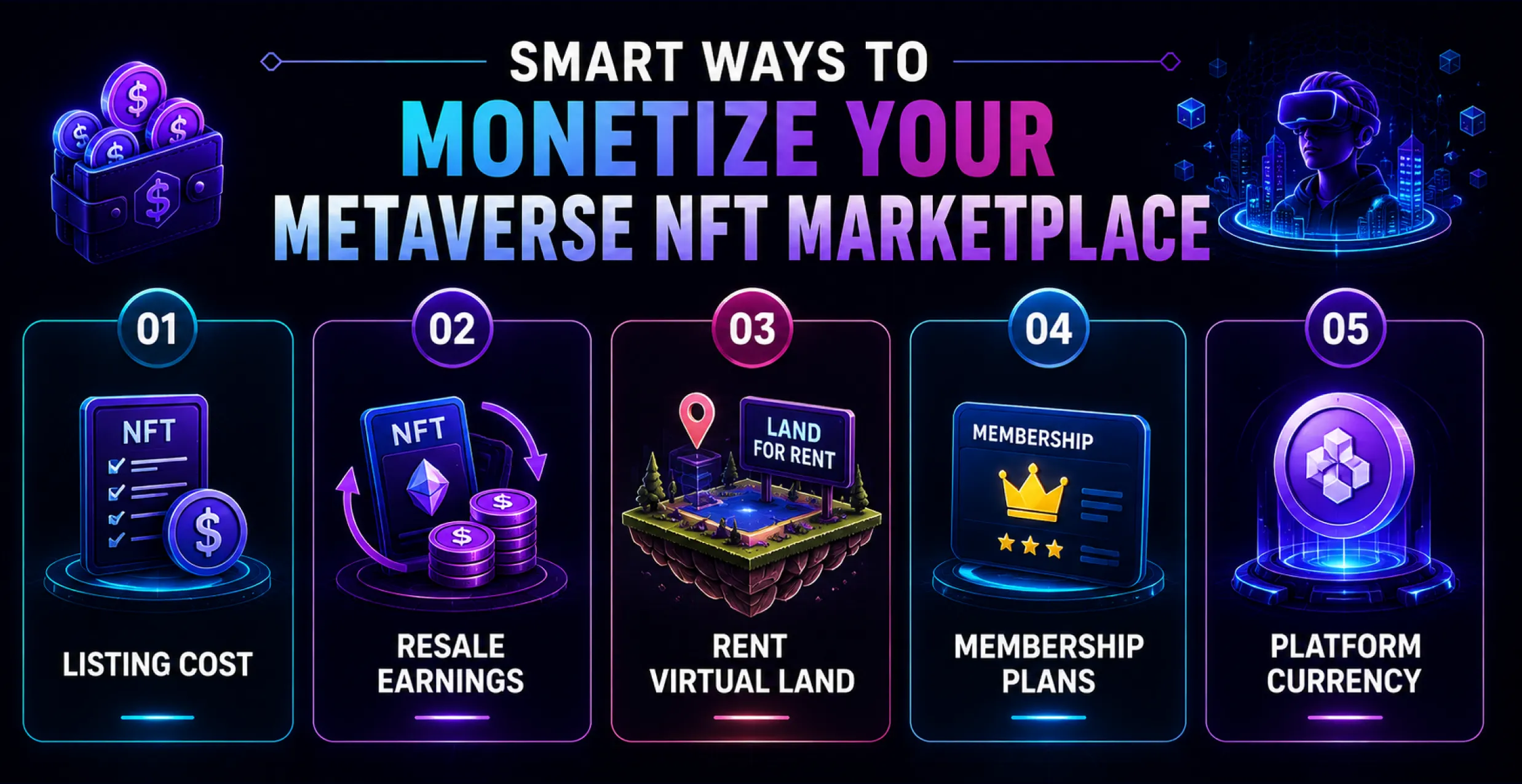
1. Listing & Minting Fees
If you charge a small amount each time someone lists or mints an NFT, you can get consistent revenue. This tends to work best for high-volume platforms with frequent asset creation.
2. Transaction & Resale Royalties
You earn a percentage on each sale and also on resales. This setup tends to reward both the marketplace and the original creators. It also nudges people toward exclusive listings.
3. Virtual Land Leasing
Instead of doing only one-time land sales, landowners can lease parcels for events, or even for advertising. That’s recurring income, and it fits well with enterprise NFT marketplace development aimed at brand partnerships.
4. Subscription Tiers
Premium membership tiers can unlock early access, reduce fees, or grant exclusive drops. In practice, this gives you a more predictable recurring revenue stream from your busiest users.
5. In-Platform Currency
Using a native token, or a credit system, lets users trade inside a closed economy. That tends to increase stickiness, and it gives businesses more governance over the transaction flow.
Metaverse NFT Marketplace Development Cost: Complete Breakdown
Understanding the Metaverse NFT Marketplace Development Cost is necessary if you want to plan a budget. The price can swing a lot depending on features, team size and composition, platform complexity, and region. So the overall development cost might look totally different for a basic MVP vs. a full-scale enterprise platform.
1. Cost by Development Phase
| Phase | Estimated Cost (USD) |
| Discovery & UI/UX Design | $3,000 – $8,000 |
| Frontend & Backend Development | $15,000 – $40,000 |
| Smart Contract Development | $8,000 – $20,000 |
| 3D / Metaverse Integration | $10,000 – $30,000 |
| Testing & QA | $3,000 – $7,000 |
| Deployment & Post-Launch Support | $2,000 – $6,000 |
2. Cost by Team Role (Hourly Rates)
| Role | Hourly Rate (USD) |
| Blockchain Developer | $40 – $90 |
| 3D / Unity Developer | $35 – $75 |
| UI/UX Designer | $25 – $50 |
| QA Engineer | $20 – $40 |
| Project Manager | $30 – $60 |
3. Cost by Region
| Region | Average Cost Range (USD) |
| North America | $60,000 – $150,000+ |
| Western Europe | $50,000 – $120,000 |
| Eastern Europe | $30,000 – $70,000 |
| India / South Asia | $20,000 – $50,000 |
4. Cost by Platform Complexity
| Complexity | Key Features | Cost Range (USD) |
| Basic MVP | Wallet, listing, basic trading | $15,000 – $30,000 |
| Mid-Level | + 3D assets, multi-chain support | $30,000 – $70,000 |
| Enterprise-Grade | + AI, custom contracts, high security | $70,000 – $150,000+ |
Metaverse Development Services We Offer
Every project needs the right partner behind it. Our Metaverse Development Services cover the whole lifecycle, from strategy and design all the way to deployment. As well as long-term platform maintenance across multiple blockchain ecosystems.
1. Platform Strategy & Consulting
We help you settle on the niche and the target audience, then decide on the monetization approach before any real development begins, preventing costly pivots and aligning with real market demand.
2. UI/UX & 3D Design
Our design crew creates immersive, intuitive interfaces that feel natural on desktop and on VR headsets too. We keep trying to strike a balance between visual appeal and usability for first-time users.
3. Full-Stack Development
We deliver end-to-end NFT marketplace development services, covering the front end and the back end. Furthermore, a blockchain integration under one roof, reducing coordination overhead.
4. Smart Contract & Security Audits
We write, test, and audit smart contracts to remove weaknesses before launch. Another layer of protection, not just for user funds.
5. Ongoing Maintenance & Support
After go-live, we manage updates, bug fixes, and further upgrades as your community and user base grow so the platform stays steady and still competitive.
Real-World Examples of Metaverse NFT Marketplaces
Many platforms have already demonstrated, in real life, what a successful metaverse NFT marketplace looks like. New businesses can dodge a bunch of typical missteps before picking a metaverse NFT marketplace development company.
1. Decentraland Marketplace
Decentraland lets users buy, resell, and develop virtual land parcels using its native MANA token. This means it remains one of the more referenced real estate platforms in the sector.
2. The Sandbox
The Sandbox blends gameplay with NFT ownership, so creators can generate income from voxel-based assets as well as full experiences. This, at the end of the day, helped attract notable brand partnerships along the way.
3. Other Side
Supported by Yuga Labs, Otherside ties avatar identity to land ownership and interactive gameplay, generating strong early community engagement.
4. Somnium Space
Somnium Space focuses on VR-first experiences, letting people craft and trade. Furthermore, they monetize immersive environments for a highly engaged VR-native audience.
5. OpenSea’s Metaverse Collections
Even though OpenSea is mainly a general marketplace, it carries lots of metaverse land listings. Along with wearables and collections showing strong demand for cross-platform NFT trading.
Why Choose Octal IT Solution for Metaverse NFT Marketplace Development
Choosing the right partner decides your platform outcome. Octal IT Solution is a trusted Metaverse NFT marketplace development company. We merge blockchain with delivery, which we have already proven across 2300+ projects worldwide.
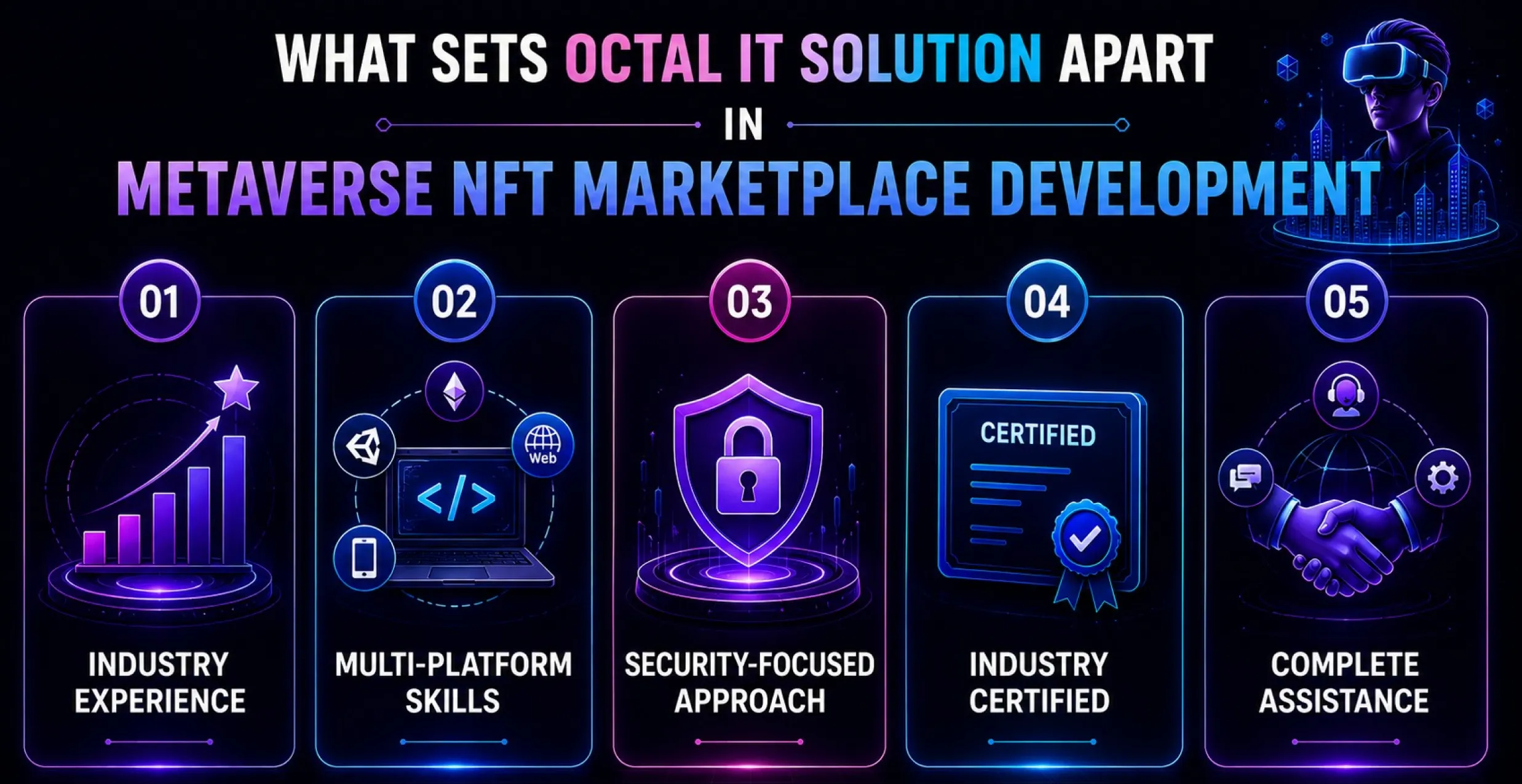
1. Proven Track Record
With more than 19 years in custom software development, Octal IT Solution brings real technical maturity to tough blockchain and metaverse builds, and it spans multiple industries.
2. Cross-Platform Expertise
Beyond blockchain development, companies can hire mobile app developers from Octal IT Solution to push the marketplace onto iOS and Android. That way, users can trade NFTs from any device.
3. Security-First Approach
Every smart contract and wallet integration goes through strict testing and audits to reduce vulnerabilities before launch and protect user assets.
4. Certified & Recognized
Octal IT Solution holds CMMI Level 3 and ISO 9001:2015 certifications, reflecting standardized processes and consistent quality across every engagement.
5. End-to-End Support
From ideation through post-launch maintenance. These are not just badges; they show standardized workflows and steady quality across each engagement.
Final Thoughts
The metaverse isn’t just some general idea anymore; it’s becoming a live and growing marketplace for digital ownership. Businesses that move early with metaverse NFT marketplace development tend to get ahead of an industry that’s expanding fast, be it via custom-made platforms or white-label solutions.
What makes it work is having the right capabilities and a sensible way to monetize. Also, a development partner who actually gets both blockchain mechanics and immersive design. So whether you’re planning to hire Metaverse developers or you want to run a quick feasibility check first, having expert input early helps cut down time, cost, and later rework. The chance is real, and the correct execution partner makes all the difference.
 By
By July 2, 2026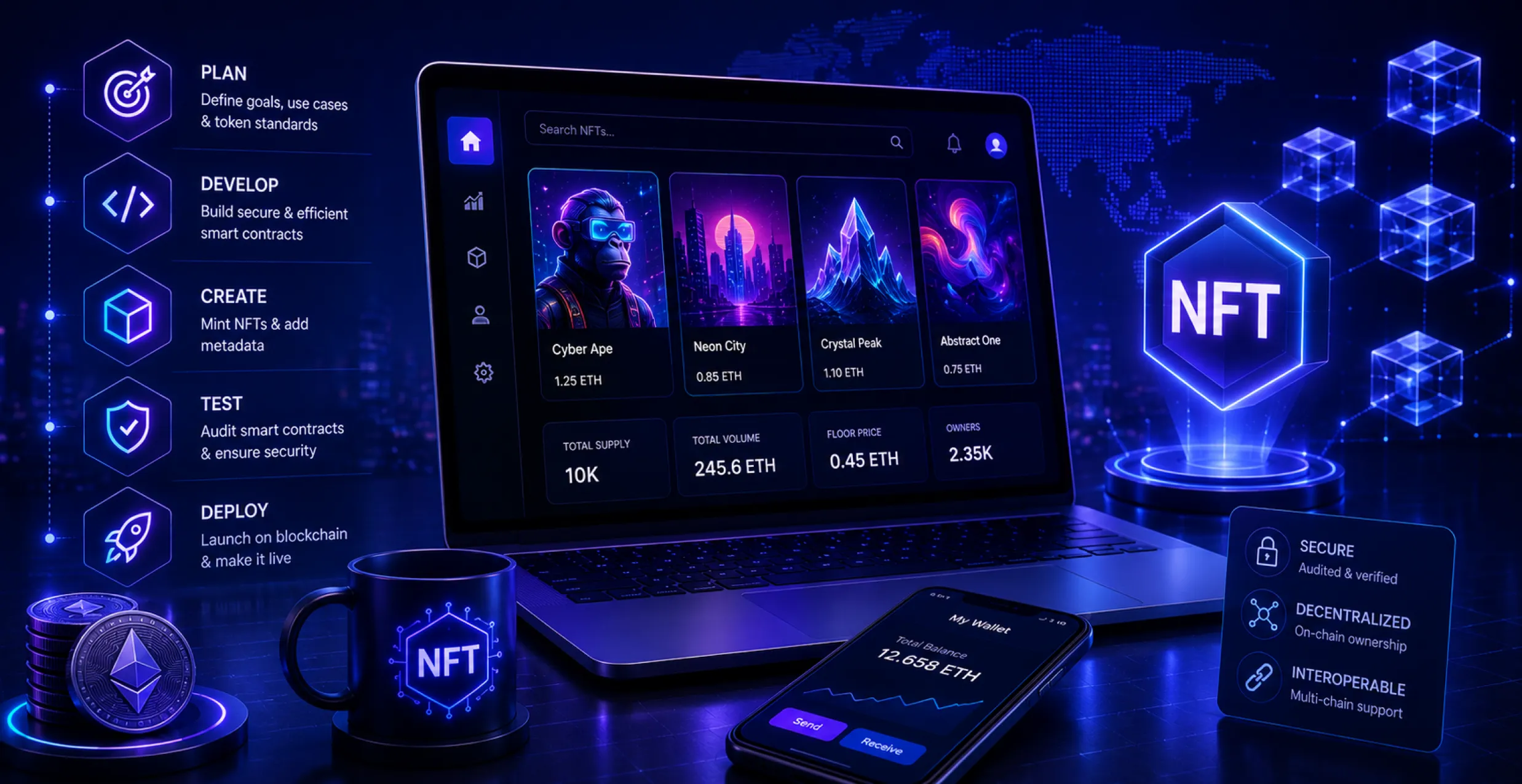


 Latest Stories
 Get in Touch