


“Storage businesses now compete through customer experience instead of only physical space.” says an expert Digital Storage Consultant.
Alex Straffin, owner of SpaceVault Self-Storage in Indiana, once ran his facility the old way. Today, an AI support rep handles his calls around the clock.
Ten years ago, this level of automation felt impossible for small operators. Now, self storage software solutions make it possible for facilities of every size.
So here is a fair question every entrepreneur should ask first. How much automation truly needs custom development, and how much can be bought?
This blog answers that question in clear, simple terms. It walks through features, real examples, costs, and honest comparisons, section by section.
What Is Self Storage Property Management Software (PMS)?
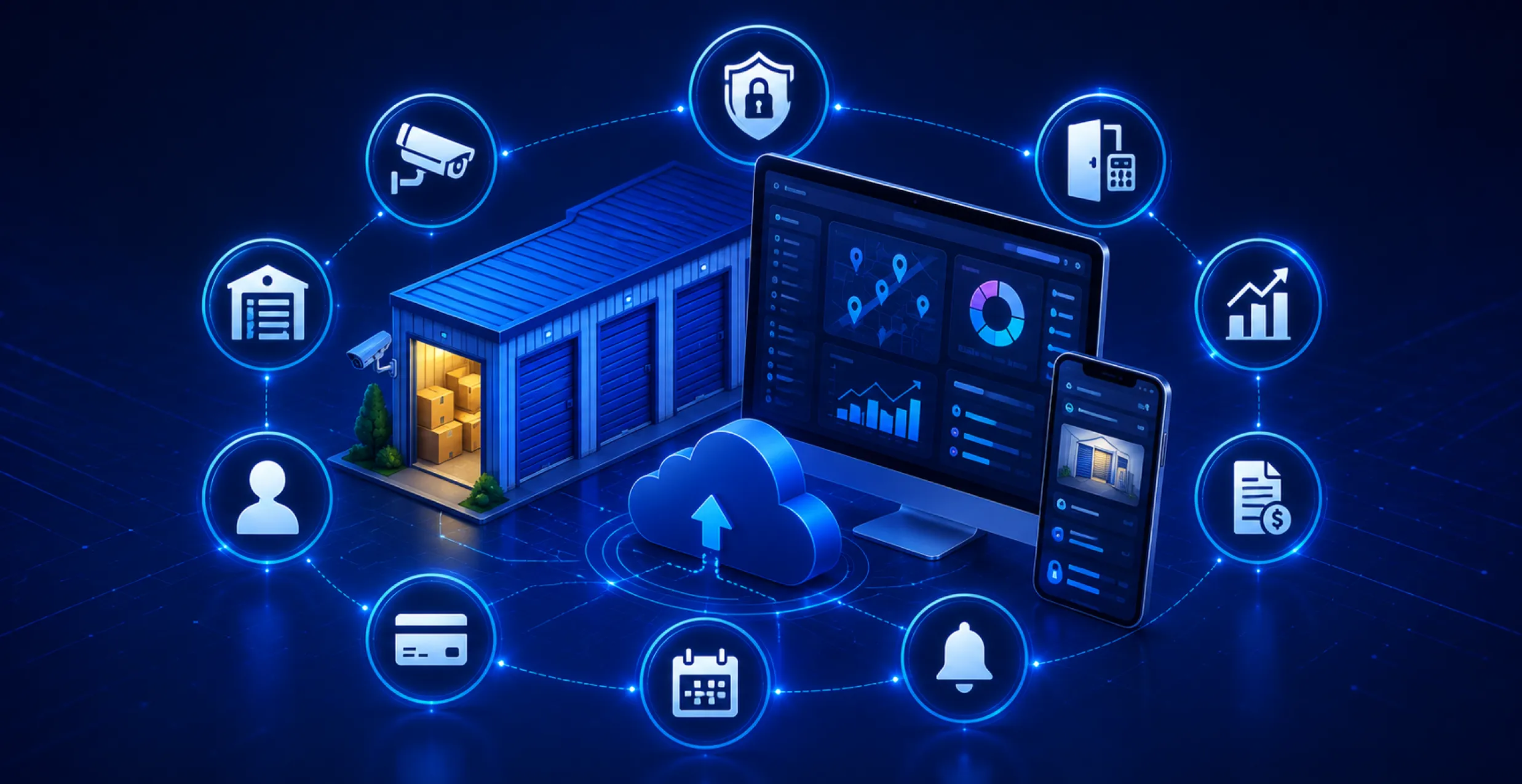
A property management system (PMS) streamlines storage operations by providing a single digital solution for managing facilities. Self storage property management software for the modern era manages all the processes. It includes reservations, billing, tenant communications, reporting, and everyday operations in one.
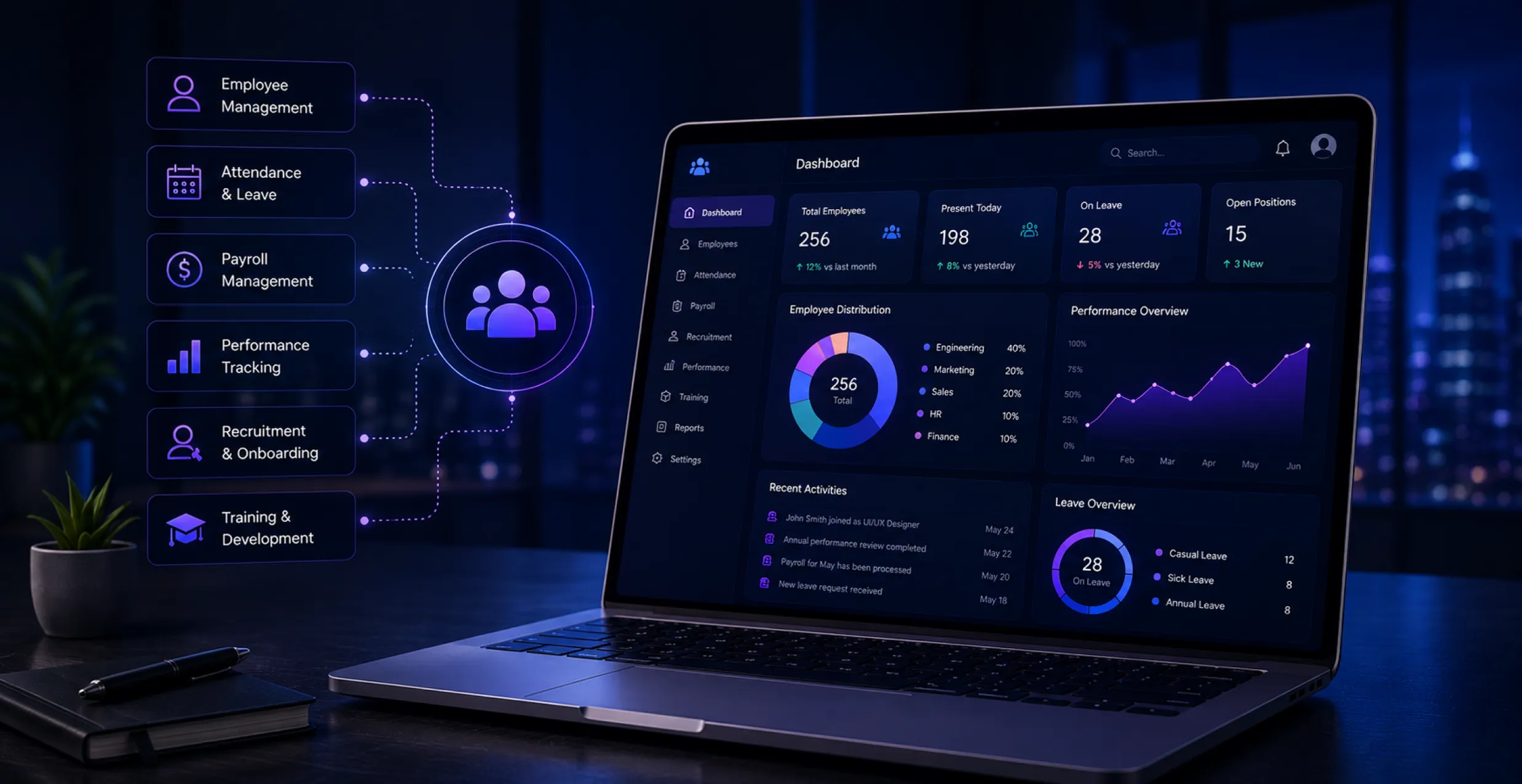
Staff are able to get a quick check on occupancy, payments, maintenance requests, customer history, and business performance dashboards. Customer units can also reserve units, full documentation, and make payments in a convenient online portal anytime.
Unlike traditional management tools, modern ones integrate access control with accounting and marketing solutions. They also enable automation, allowing repetitive tasks to be minimized and enhancing the accuracy of business across various departments.
Today, many providers favor AI-driven self storage software due to the considerable benefits it offers. Major advantages are in terms of predictive insights for occupancy planning and revenue forecasting. These platforms are also connected with businesses’ property management software development strategies for long-term digital transformation.
Smart Self Storage Property Management Software: Global Market Size
In the last few years, such digital software has seen tremendous growth. Various reports have also predicted the rise in its market share. Let’s have a look at those figures:
- As per the report of Fortune Business Insights, the global self storage software market will reach US$ 3.24 billion in 2026.
- The report has also predicted that it will reach US$ 8.56 billion by 2034.
- The CAGR between 2025-2034 will remain at 12.7%, according to Global Market Insights.
Why Does the Self Storage Industry Not Run on Spreadsheets Anymore?
Spreadsheets were useful when businesses were small, and their operations did not require a lot of specializations. Nowadays, online bookings are the norm, as are digital contracts, automated reminders, security integration, and customer expectations.
Manual systems consistently slow down customer service and business productivity and often make costly mistakes.
For this reason, it is a growing trend for businesses to implement self storage software solutions that streamline their day-to-day processes. It enhances the visibility of their operations. Many businesses also integrate these into real estate software development strategies for more robust portfolio management. Smart technology enhances the customer experience and enables quicker business growth in multiple storage sites.
Core Features Every Modern Platform Needs
All successful platforms should make the operation easier while providing superior customer experiences via intelligent automation.
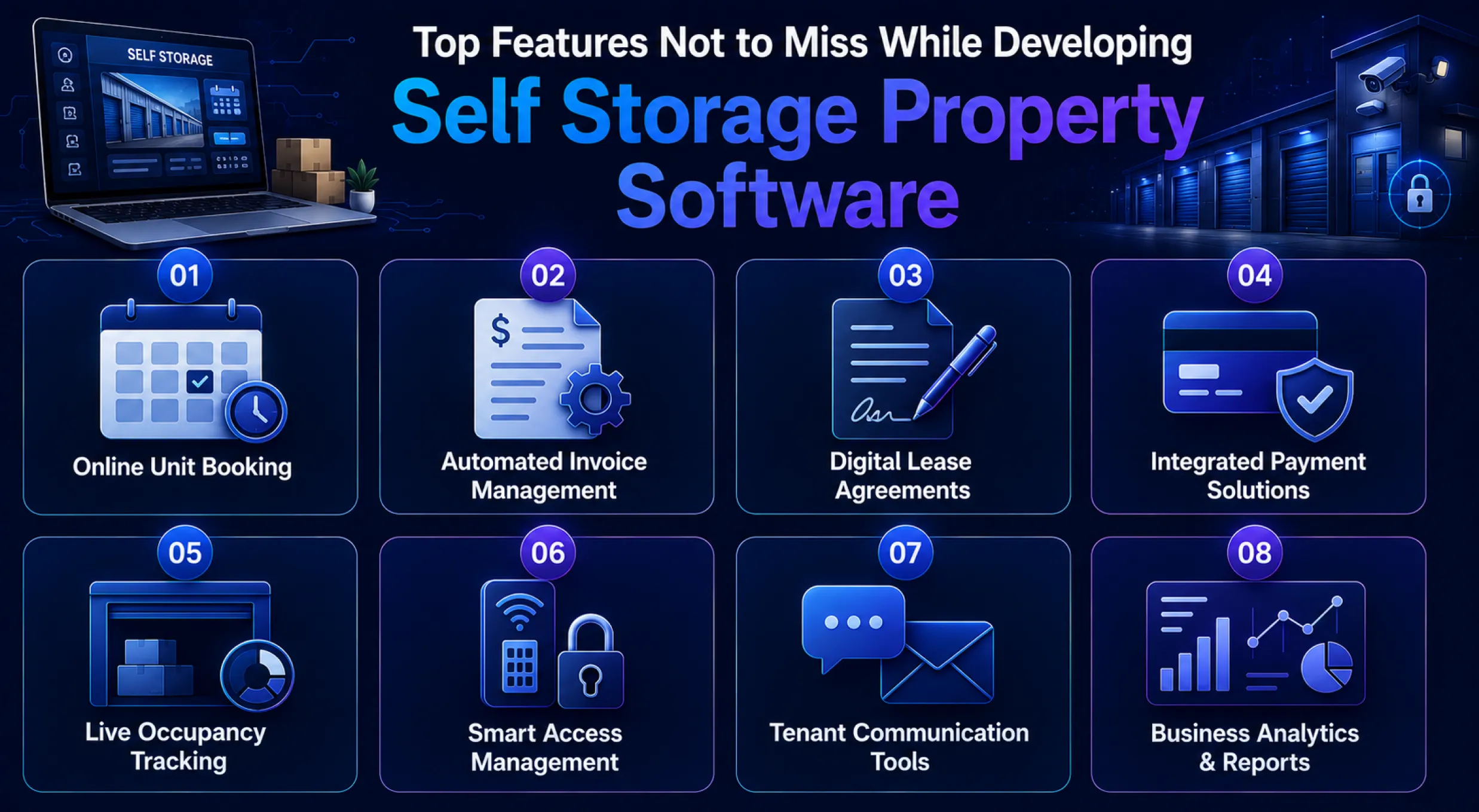
1. Online Reservations
Storage units are booked by customers without coming onto the premises. Digital booking not only offers convenience but also alleviates manual administrative burden to a great extent.
2. Automated Billing
Automatic invoices minimize missed payments and ensure consistent financial accuracy. Scheduled reminders and recurring billing options also help businesses decrease the amount of collection activities.
3. Digital Contracts
Electronic agreements offer a wealth of benefits, including reducing cumbersome paperwork and significantly streamlining the customer onboarding process. A secure document storage also makes the future compliance requirements easier to meet effectively.
4. Payment Gateway Integration
Reliable self storage software payment processing solutions make it easy to process secure transactions over a number of digital payment channels. It offers the convenience of payments for customers and better cash flow management for businesses.
5. Occupancy Dashboard
Centralized dashboards help managers track units available, current customers, revenue patterns, and business performance. Increased visibility means quicker operational decisions each day.
6. Access Control Integration
Customers can be automatically verified before gaining entry to the facility with smart access systems in a secure way. Businesses are made safer to operate, and manual supervision needs are consistently reduced.
7. Customer Communication
Automated emails and notifications enhance customer engagement at all stages of the rental process. This also saves a lot of support calls, as the information is current.
8. Reporting and Analytics
Advanced reports provide trends in occupancy and revenue, customer behavior, and efficiency of operations in a clear manner. These insights enables proper long-term business planning with confidence.
How Is AI Transforming Storage Operations?
Today, AI-powered self storage software is more than just by automating tasks. Modern platforms can use customer behavior and anticipate occupancy patterns in advance of seasonal demand fluctuations. These insights empower businesses to make informed pricing decisions for their future.
In addition, intelligent automation can save administrative tasks and enhance customer communication through various digital channels. Managers are warned in advance of payment defaults, maintenance problems or unusual operating activity that may impact performance. Predictive analytics also optimise inventory management and staffing needs for growing facilities.
Intelligent automation is making software solutions for self storage facility efficiency a high priority for businesses because it can save them a significant amount of money. Smart recommendations can boost customer retention and drive profitable business growth, regardless of the market.
Additionally, many also choose to develop cloud-based self storage software due to the scalability and the ability to manage remotely. Other well-experienced application development companies also build customer applications that allow for booking, payment, and access to facilities to work smoothly via mobile. These innovations reinforce the evolution towards digital transformation, while at the same time ensuring that every business day is more reliable.
Real World Adoption: How Global Storage in Different Industries Use Smart PMS?
Smart storage software is not limited to traditional self storage facilities. These six real-life examples show how different industries have adopted similar systems.
Iron Mountain
Iron Mountain maintains billions of records, both physical and digital, for clients across the globe. Its Digital Experience Platform combines document management with built-in AI agents. The tools assist organizations to automatically sort the data and apply retention rules. This demonstrates that record-keeping industries have a requirement for more than just storage software.
Americold: Cold Chain Logistics
Americold has hundreds of temperature-controlled warehouses in several continents worldwide. Its i-3PL portal provides customers with real time inventory and order visibility. The company also monitors hundreds of AI-driven use cases across the business. From predictive maintenance to automated labour scheduling on a day-to-day basis. No doubt about it, cold storage calls for software as sophisticated as any office suite.
PODS: Portable and Moving Storage
PODS was the first company to introduce portable storage containers made from steel and shipping style. Customers can now make their bookings, scheduling and re-scheduling of deliveries via an online portal. The platform automatically records the location of the container, storage costs, and pick-up schedule. Transforms the traditionally manual moving process into a seamless digital experience.
UOVO: Fine Art and Wine Storage
UOVO is a fine art, fashion, and wine collector’s shop for collectors across the country. All facilities include climate control and digital inventory/cataloging. Clients are able to monitor condition reports, viewing schedules, and transport online. Specialty storage now obviously requires the same level of rigor as other software.
ShipBob: eCommerce Fulfillment
ShipBob is a worldwide network of fulfillment centers for online brands. It has warehouse software that manages inventory, orders, and shipments through all channels. A brand claimed it reduced fulfillment times by 25 percent after it was implemented. The fastest software is now as important as the fastest shipping for fulfillment companies.
Neighbor: Peer-to-Peer Storage Marketplace
Neighbor matches homes with extra room with individuals looking to rent storage near their homes. It takes care of listing, identity verification, payments, and insurance online. Traditional operators now have a direct connection to Neighbor, enabling them to capture additional bookings. This marketplace concept is an example of how smart software is spreading beyond traditional storage environments.
Cloud Based vs Custom Platform: Choosing the Right Architecture
The right architecture is crucial for creating a scalable and reliable storage management ecosystem. Businesses should consider their growth plans, security requirements, and business goals before making a decision on the technology approach.
| Factor | Cloud Based Platform | Custom Platform |
| Infrastructure | Hosted on secure cloud servers with flexible resources | Built according to specific business infrastructure needs |
| Initial Investment | Lower setup cost with subscription based models | Higher investment due to complete development requirements |
| Deployment Speed | Faster launch with ready cloud environments | Requires more time for planning and development |
| Scalability | Easily expands with growing storage operations | Scales according to customized business requirements |
| Data Control | Managed through cloud provider policies | Complete ownership and control over data management |
| Security Approach | The provider manages security updates and protection | Business controls the security framework and compliance measures |
| Integrations | Supports common third-party integrations | Enables unlimited custom integrations |
| Maintenance | Managed through cloud service providers | Requires dedicated technical support and updates |
Cloud platforms enable enterprises to launch more quickly and decrease infrastructure obligations. There are certain companies, however, that require total control and opt for custom self storage software development. It facilitates achieving greater flexibility, ownership, and long-term operational benefits.
Ready Made Software vs Custom Self Storage Platform: Which One to Prefer?
Organizations need to evaluate their current needs and their future expansion plans to choose the right storage technology solution. The selection will be based on budget, workflow complexity, customer expectations, and competitive goals.
| Factor | Ready Made Software | Custom Self Storage Platform |
| Implementation | Quick setup with predefined features | Requires planning, design, and development |
| Cost Structure | Lower initial investment with recurring fees | Higher initial cost with long term ownership benefits |
| Business Alignment | Supports standard storage operations | Designed around unique business processes |
| Customization | Limited modification options | Complete feature customization |
| Ownership | Controlled by the software provider | Fully owned by the business |
| Updates | Provider decides feature improvements | Business controls future enhancements |
| Integrations | Supports available integrations | Allows customized system connections |
| Market Advantage | Similar features used by competitors | Creates unique customer experiences |
For businesses looking for simple operational support and solutions that can be implemented fast, ready-made solutions are suitable. But for those companies with specific workflows, self storage management software development has become the preferred option due to the platform’s customizability and control.
Those companies that intend to differentiate themselves for the long term invest in developing a self storage platform solution that reflects the company’s exact business vision. This helps storage operators create better customer experiences and be ready for future changes in the industry.
Step by Step Development Process: How to Develop PMS?
All digital products have a defined development lifecycle and all products that are successful go through the entire process in an orderly manner that is predictable and has clearly defined business outcomes.
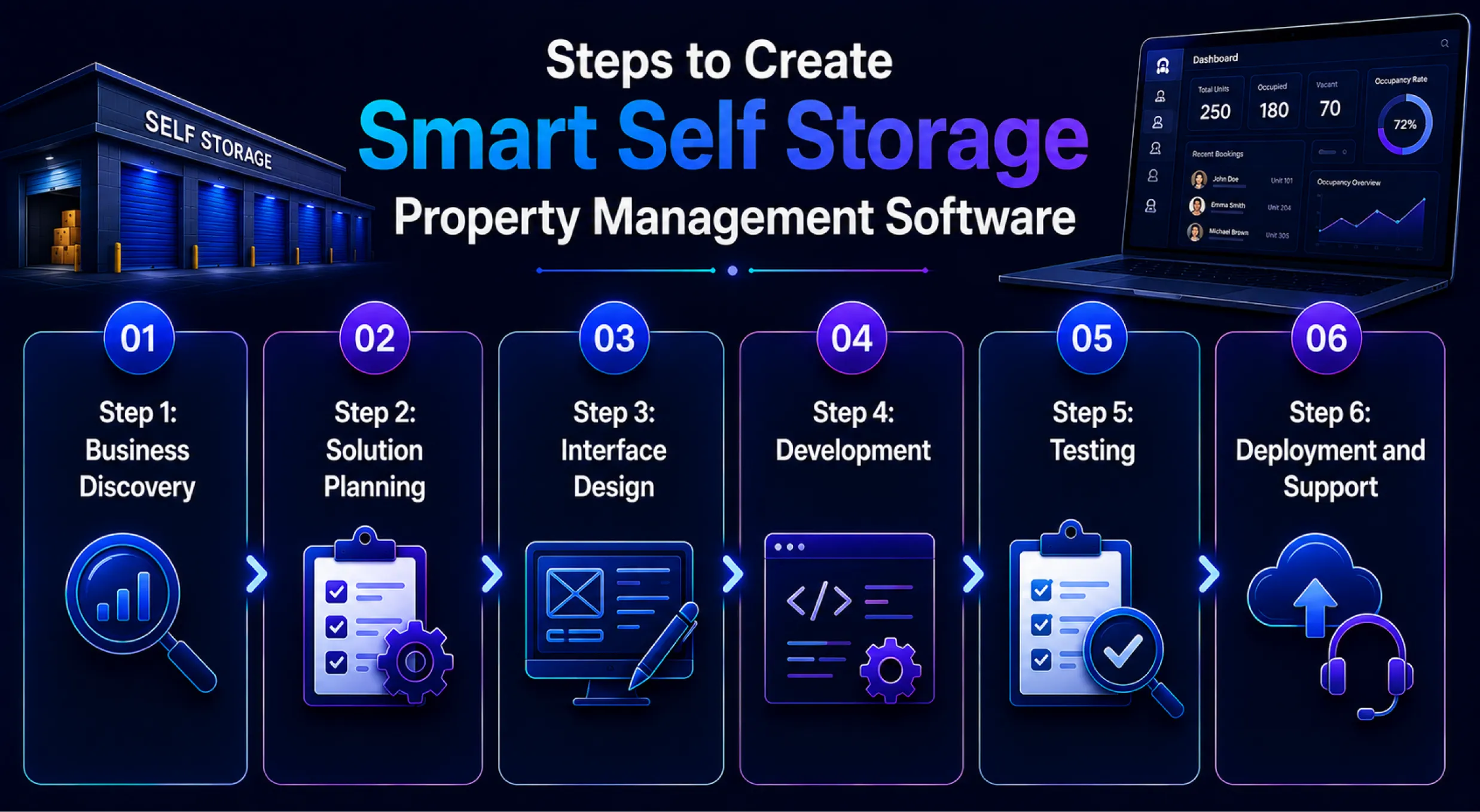
Step 1: Business Discovery
Business goals, customer expectations, and processes are known to the development teams before technical planning starts. Reducing requirements means lower development risks in the future.
Step 2: Solution Planning
Architects create the system architecture, workflow, the structure of the database, and the integration strategy carefully. Making plans sets realistic development timelines and budget expectations with confidence.
Step 3: Interface Design
Intuitive screens designed to make navigation across customer and administrator experiences easier. More intuitive use results in greater customer satisfaction and lower support needs.
Step 4: Development
Engineers create scalable modules to efficiently support reservations, billing, reporting, notifications, and security integrations. Self storage PMS development is delivered using professional practices and agile methodology to achieve faster releases.
Step 5: Testing
Before production deployment, quality engineers test integrations, usability, security, and performance. In-depth testing safeguards business activities from expensive software failures.
Step 6: Deployment and Support
Production environments are launched by the development teams, and monitoring and perpetual improvements are provided after the launch. Companies that choose trustworthy self storage SaaS development partners are able to get the enhancements of the product continuously.
Technology Stack and Integration Choices
Modern storage platforms require reliable technologies supporting security, scalability, and future innovation effectively.
Frontend
- React
- Angular
- Vue.js
Backend
- Node.js
- .NET
- Java
- Python
Mobile
- Flutter
- React Native
- Swift
- Kotlin
Database
- PostgreSQL
- MySQL
- MongoDB
Cloud
- AWS
- Microsoft Azure
- Google Cloud
Payment Integration
Businesses increasingly implement self storage software payment processing solutions supporting Stripe, Square, and PayPal securely.
Security
- OAuth
- Multi Factor Authentication
- SSL Encryption
- Role Based Access
Third Party Integrations
- QuickBooks
- Xero
- CRM Platforms
- SMS Gateways
- Access Control Systems
Many businesses partner with an experienced software development company for reliable integrations and long-term technical support.
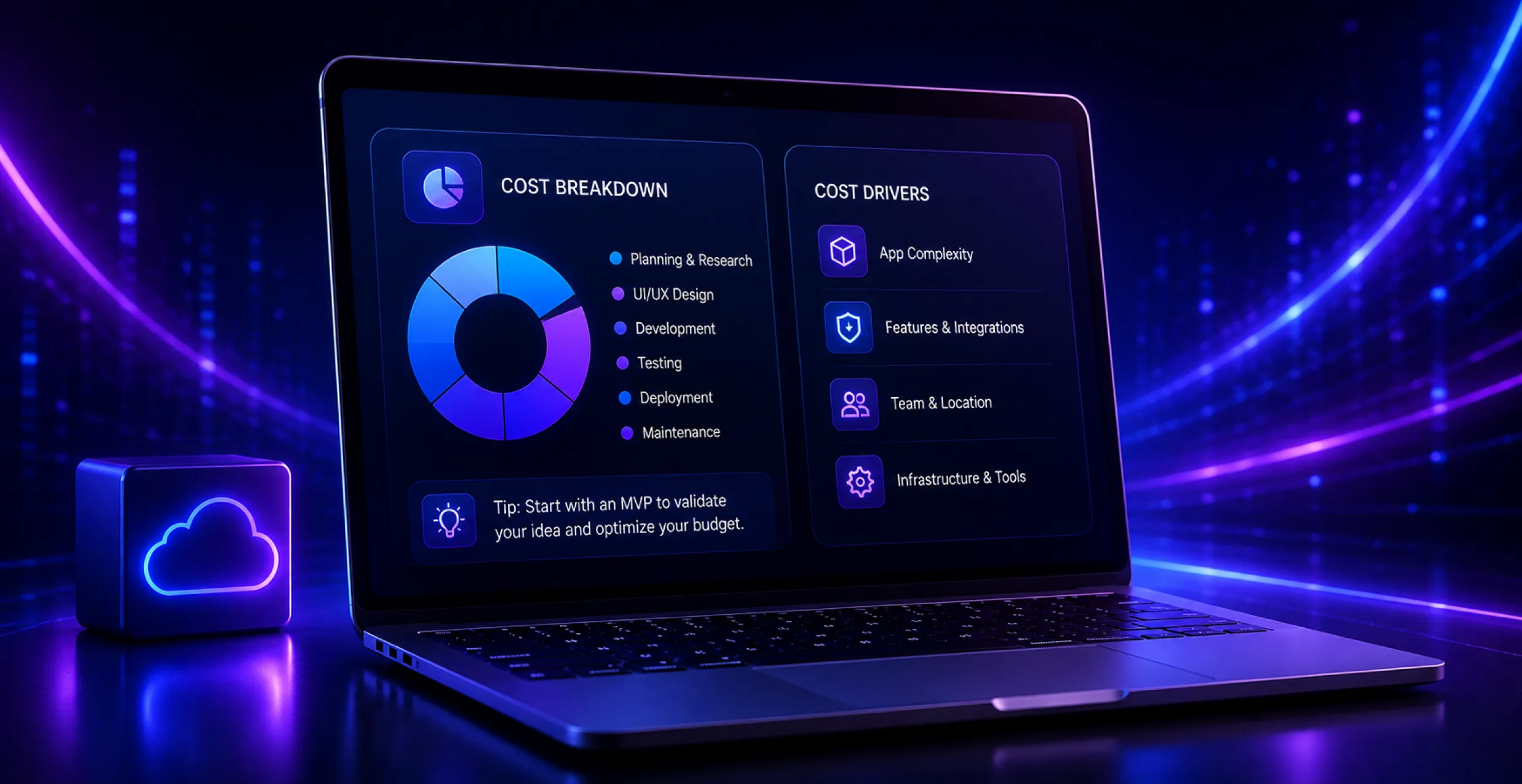
How Much Does Self Storage Management Software Cost?
The cost of the project will vary according to features, integration, deployment architecture, scalability, and business goals.
Cost by Project Size
| Project Type | Estimated Cost |
| Basic Platform | $20,000 to $40,000 |
| Medium Platform | $40,000 to $80,000 |
| Enterprise Platform | $80,000 to $180,000 |
Feature Wise Cost
| Feature | Estimated Cost |
| Online Booking | $5,000+ |
| Payment Integration | $4,000+ |
| Customer Portal | $6,000+ |
| Reporting Dashboard | $7,000+ |
| Mobile Application | $15,000+ |
Regional Development Cost
| Region | Hourly Cost |
| India | $25 to $50 |
| Eastern Europe | $40 to $80 |
| North America | $120 to $220 |
| Western Europe | $90 to $180 |
When considering budgets for businesses, they should consider total ownership rather than initial self storage management software cost. This knowledge of the overall cost of the software development also enhances the planning of investments and future scalability decisions.
Self Storage Booking Software Development: The Digital Rental Cycle
Today, modern customers demand 100% digital experiences before going to any of the physical storage facilities.
The first objective of successful self storage booking software development is to become discoverable and visible online, especially in terms of their unit availability. Digital interfaces let customers easily review storage options and choose preferred sizes.
Confirmed identity verification helps build trust and will effectively prevent businesses from being subjected to fraudulent account registrations. Automated contracts save paper, and speed onboarding for all customers each time.
Payment gateways that are integrated complete transactions without downtime and with reliable, self storage software payment processing solutions. Last but not least, automated notifications are effective in engaging customers throughout the entire rental journey.
How to Hire the Right Self Storage Software Developers?
When it comes to choosing the right professionals for your job, it is better to hire expert individuals who can provide a better experience for your project and lessen the amount of maintenance that will be required in the future.
1. Check Industry Experience
Look for developers who have had experience in various business settings with storage or property development. Their experience helps to save learning time and consistently improve development quality.
2. Review Technical Expertise
Carefully assess knowledge in any of the following domains: cloud platforms, security measures, mobile technology, and scalable software architecture. Good technical skills provide reliable products for the long-term growth and profitability of the business.
3. Verify Integration Experience
Payment gateways, CRM, accounting software, and smart access solutions are seamlessly integrated by experienced teams. This knowledge enables future expansion of the platform without unnecessary complications.
4. Assess Communication Process
By keeping the projects transparent and up to date, you can avoid misunderstandings at all stages of the development process. Project managers and communication are always expected at businesses.
5. Understand Development Approach
Agile development processes enable professional teams to continuously test, seek feedback from customers, and release faster. Reliable self storage software development company partners can offer post-launch enhancements with ease as well.
6. Evaluate Long Term Support
There is a need for regular updates once software is deployed, as technology is constantly changing. Therefore, it is imperative for businesses hire self storage software developers that provide reliable maintenance, monitoring and future improvement.
Many firms also hire software developers to help their additional business software whenever their requirements grow.
The development team at Octal IT Solution helps businesses in developing custom solutions. Our team is highly skilled and experienced in delivering solutions with trending tools and technologies.
Hire us now and become a market leader in your business domain with a fully-functional self storage property management solution.
Common Mistakes to Avoid During Smart Self Storage Software Development
Common mistakes can be avoided to safeguard investments and promote long-term platform success.
1. Ignoring Customer Experience
Difficult interfaces lead to customer dissatisfaction and to the unnecessary increase of support requests. Easy experiences often have a great impact on business performance.
2. Selecting Wrong Technology
Legacy technologies raise costs of maintenance and reduce future scalability options. Thus, it is important for companies to thoroughly consider technology at the outset of development.
3. Missing Security Planning
Weak security leaves customer information exposed and creates constant business risks. Always, strong authentication and encryption should be a development priority.
4. Forgetting Mobile Users
Nowadays, most customers opt to make reservations, payments and manage their account information with smartphones. Companies should also hire mobile app developers that can develop seamless customer experience on all devices.
5. Poor Integration Planning
Isolated systems result in an increase in duplicate work and a decrease in efficiencies in various departments. Planning for integration should occur prior to development.
6. Focusing Only on Initial Cost
If you select the more inexpensive solution, you may end up spending a lot more to maintain in the long run. Businesses need to evaluate the long term value as well as self storage software development cost.
Best Self Storage Software Solutions in the Market
“The future of storage technology belongs to platforms that combine automation, customer convenience, and flexible integrations.”, expert comment by a Self Storage Technology Consultant.
Self storage technology market consists of both old and new PMS providers. Depending on the facility size, automation requirements and growth plans, each solution will provide varying capabilities.
| Software | Best For | Key Features | Limitations |
| SiteLink Web Edition | Enterprise storage operators | Tenant management, accounting, reporting, payment integration, access control, and API support | Requires training because of its extensive feature ecosystem. |
| storEDGE | Growing and multi-location operators | Online rentals, CRM, marketing automation, websites, tenant communication, and analytics | Advanced capabilities may require higher investment. |
| Tenant Inc. | Modern storage businesses | Cloud PMS, digital leasing, automation, integrations, reporting, and customer experience tools | Businesses with highly unique workflows may need customization. |
| Cubbie | Small to mid size storage operators | Cloud based management, online rentals, tenant communication, automated billing, and facility operations | Better suited for businesses seeking simplicity over complex enterprise customization. |
| Easy Storage Solutions | Independent facility owners | Unit management, payments, tenant portals, invoicing, and reporting features | Limited advanced enterprise features compared with larger platforms. |
What’s Next: The Future of Self Storage Platform Development?
Technology continues transforming customer expectations and operational strategies across the storage industry rapidly.
1. Predictive Analytics
Artificial intelligence will forecast occupancy trends before demand changes affect business performance. Better forecasting improves revenue planning significantly.
2. Smart Pricing
Future platforms will automatically adjust rental prices according to occupancy and seasonal demand patterns. Businesses improve profitability through intelligent pricing strategies.
3. Voice Enabled Operations
Voice assistants will simplify administrative activities while improving employee productivity every working day. Daily operations become faster and more convenient.
4. IoT Integration
Connected devices continuously monitor facility conditions while improving operational safety significantly. Managers receive immediate alerts whenever unusual activities occur.
5. Contactless Customer Experience
Digital identity verification and remote access improve customer convenience throughout complete rental journeys. These innovations strengthen business competitiveness effectively.
6. Deeper Business Intelligence
Future software solutions for self-storage facility efficiency will combine automation with advanced forecasting capabilities successfully. Businesses investing in storage facility management software development will gain stronger competitive advantages.
Conclusion
The storage industry now depends upon intelligent technology instead of manual operational processes. Modern self storage software solutions simplify customer management, automate billing, improve reporting, and strengthen overall business performance. Growing companies increasingly adopt self-storage property management software because digital experiences improve customer satisfaction while reducing operational costs consistently.
Businesses seeking complete ownership should consider self storage property management software development instead of limited packaged solutions. Professional self storage software development ensures scalability, flexibility, and stronger long-term returns through customized digital products.
Organizations also benefit from self storage management system development, supporting future innovation across expanding storage businesses.
At Octal IT Solution, our experts deliver scalable platforms matching unique operational requirements successfully. We are a leading mobile app development service that offers trending digital solutions. Our self storage app development company delivers complete digital transformation support from planning through deployment confidently.
So what’s waiting for? Consult with our team now and get the best smart self storage property management software for your business!


 Get in Touch
 By
By October 8, 2026