


Have you ever asked yourself why it is so expensive to maintain software?
Today, businesses face multiple challenges because launching software is just the beginning. To maintain systems as secure, efficient, and competitive, businesses will need to constantly invest in updates, fixes, and improvements. This continuous process is called software maintenance process and it is very instrumental in delivering long-term success.
After deploying a software application, the process of ensuring its ongoing modification and updating is known as software maintenance. These updates typically include bug fixes, performance improvements, and new features. Even the most advanced systems could soon become obsolete or even susceptible without proper maintenance.
The cost of software maintenance is a key concept to know as it directly affects the overall IT budget as well as your ROI. This cost is usually underestimated by the companies yet it is a significant amount of total ownership.
Proactive maintenance is concerned with prevention of problems before they happen whereas reactive maintenance involves remedy of problems after they have happened. A proactive maintenance strategy helps reduce unplanned downtime and long-term costs..
Failure to pay attention to maintenance results in system crashes, attacks and reduced productivity. Neglect often leads to high maintenance cost of legacy software and therefore business has to pay higher cost in order to maintain old systems.
A significant source of TCO is maintenance. Actually, when comparing software maintenance cost and software development cost, the former can tend to be higher as time goes by than the initial development.
Below blog is a complete guide of software maintenance cost and process. Let us discuss types of software maintenance, factors influencing maintenance cost and process of software maintenance etc.
The 4 Key Types of Software Maintenance
Understanding the type of software maintenance assists businesses in resource allocation. Let’s proceed to the key 4 types of software maintenance.
Corrective Maintenance
Corrective maintenance is involved in the detection and the correction of bugs, errors or faults that occur after the software has been released to the field. It ensures smooth running of the system. As one of the most common software maintenance activities, it directly affects the reliability of the system, user satisfaction and stability of the overall performance.
Adaptive Maintenance
Adaptive maintenance will ensure that the software is adjusted to the changing technology which include new operating systems, browsers, hardware and other integrations with third parties. As it is the case with the dynamic digital environments, such software maintenance and support services makes business remain relevant, avoid disruption and maintain a smooth operation in the different platform and device platforms.
Perfective Maintenance
Perfective maintenance is geared towards improving the software performance and incorporating new features in accordance to the user feedback and business requirements. It increases usability, efficiency and scalability. This form of maintenance also makes organizations remain competitive as they keep improving the application and providing improved user experiences with time.
Preventive Maintenance
Preventive maintenance is the act of identifying and fixing the possible problems before they develop into significant problems. It includes the optimization of the code and the monitoring of the system, as well as the updates. This will decrease the cost of maintenance of the software in the long run and decrease the failures and risks hence offering uniform and reliable system performance.
| Type | Purpose | Key Activities / Examples | Cost Impact | Frequency / Timing | Benefits |
| Corrective | Fix errors and bugs after deployment | Bug fixing, patch releases, resolving system crashes | Medium | As needed when issues arise | Improves system reliability, reduces downtime, maintains user trust |
| Adaptive | Ensure software stays compatible with changing environments | OS updates, browser compatibility, database migrations, API updates | High | Periodically or when environments change | Keeps software functional across platforms, prevents compatibility failures |
| Perfective | Enhance performance, functionality, and usability | UI/UX improvements, feature additions, performance tuning | Medium | Based on user feedback or business needs | Boosts user satisfaction, increases efficiency, improves competitive advantage |
| Preventive | Minimize future risks and potential failures | Code refactoring, optimization, security updates, system audits | Low | Regularly or scheduled maintenance | Reduces long-term maintenance costs, prevents future issues, improves system stability |
The Standard Software Maintenance Process
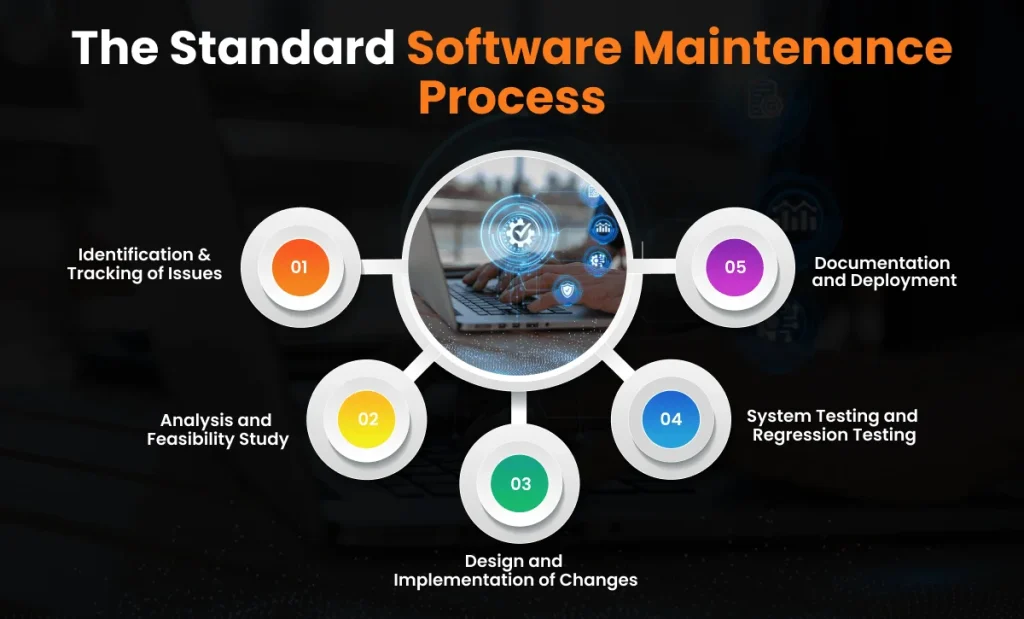
Several organized phases are involved in the software maintenance lifecycle and they guarantee efficiency and quality. Below are the major phases involved in Octal IT Solution’s software maintenance process.
Phase 1: Identification & Tracking of Issues
During this primary phase of software maintenance lifecycle, all bugs, errors, and improvement requests are recognized and are appropriately documented. Teams also prioritize issues in terms of severity and business impact. Effective tracking guarantees transparency, simplifies the workflows and assists in efficient resolution in the process of software maintenance in general.
Phase 2: Analysis and Feasibility Study
At this stage, teams analyze issues to determine their root cause and possible solutions. They evaluate technical feasibility, resources and timelines and risks. Software maintenance cost estimation techniques enable organizations to ascertain whether it is worth the change or not in order to identify whether it is within their budget and long term goals.
Phase 3: Design and Implementation of Changes
After the acceptance, developers prepare relevant solutions and make the needed changes in the codebase. This stage must be planned well to ensure that there is stability and compatibility of the system. Coding standards and version control practice are observed to have the effect of ensuring that updates are an easy integration with no disturbance to the current functionalities or performance.
Phase 4: System Testing and Regression Testing
The new system is fully tested once implemented to ensure quality and reliability. Regression testing is to make sure that new modifications will not damage the current features. This is a very important phase in the maintenance of software to guarantee that it works, has no bugs and delivers the user experience.
Phase 5: Documentation and Deployment
During the last stage, all the changes, updates and fixes are duly documented to be used in the future. The new software is then implemented in the production area. Continuous software support and maintenance are also well documented and the smooth deployment will ensure that there is as little downtime as possible and business will run continuously.
Developers at Octal IT Solution adopt a systematic approach while maintaining your software.
What is the Software Maintenance Cost
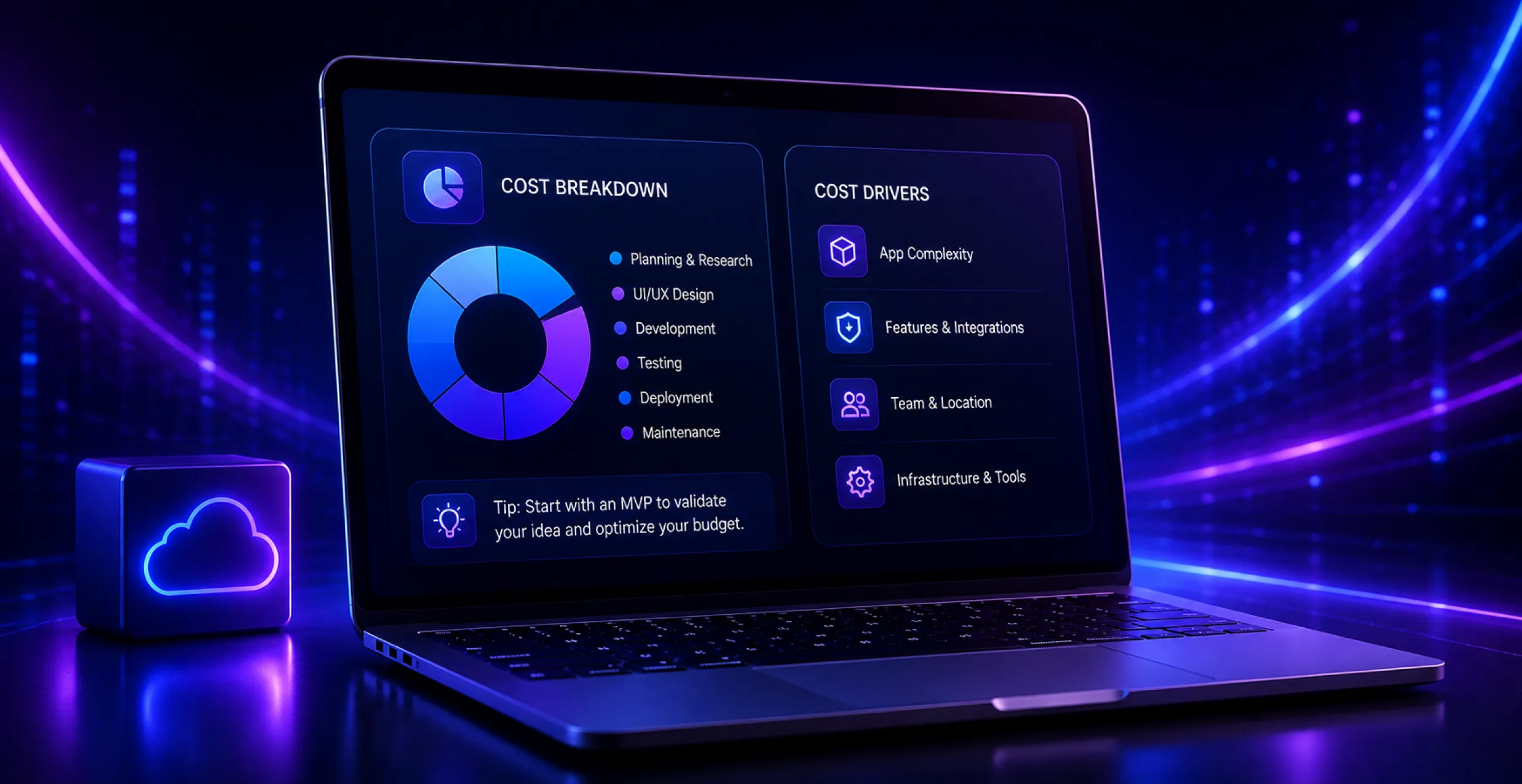
Software maintenance cost is not fixed as it depends on a number of factors such as complexity, size and business requirements. Companies are spending much of their IT budget on maintenance on average.
Software Maintenance Cost Breakdown
The average cost of software maintenance has been estimated in the below table.
| Type of Maintenance | Description | Estimated Monthly Cost | Key Cost Drivers |
| Corrective Maintenance | Bug fixing, errors fixing and fixing unanticipated system problems. | $1,000 – $9,000 | Issue severity, debugging time, testing effort, system downtime |
| Preventive Maintenance | Enhance the stability of the systems by updating them proactively and optimizing the code. | $600 – $7,500 | Code quality, complexity of architecture, level of documentation |
| Perfective Maintenance | Adding features and bettering user experience through feedback. | $2,500 – $18,000+ | Feature scope, UI/UX updates, integrations |
| Adaptive Maintenance | Modifying software to match new platforms and technologies. | $1,500 – $14,000 | Upgrades of OS, API, third-party tools |
| Security & Compliance | The application of security patches and regulatory standards. | $1,200 – $9,500 | Compliance requirements, threat level, frequency of updates |
| Performance Optimization | Enhancing speed, scalability and efficiency. | $900 – $7,000 | Traffic load, system bottlenecks, hosting infrastructure |
| UI/UX Improvements | Improving the interface and user experience across devices. | $1,000 – $8,500 | Design complexity, accessibility criteria, user feedback |
| Technical Debt Reduction | The refactoring of old code and better system maintainability. | $2,000 – $13,000 | Legacy systems, codebase size, developer expertise |
| Infrastructure Maintenance | Operation of servers, cloud and deployment environments. | $1,500 – $10,000 | Hosting provider, cloud usage, scalability requirements |
| Third-Party Integration | APIs and external services maintenance. | $1,000 – $8,000 | Number of integrations, API changes, vendor dependencies |
| Monitoring & Support | Constant monitoring, problem tracking, and support. | $800 – $6,000 | API changes, vendor dependencies, Support level (24/7 or limited), tools used, response time requirements |
Annual software maintenance cost is normally estimated as a percentage of the development cost.
What Influences Software Maintenance Costs?
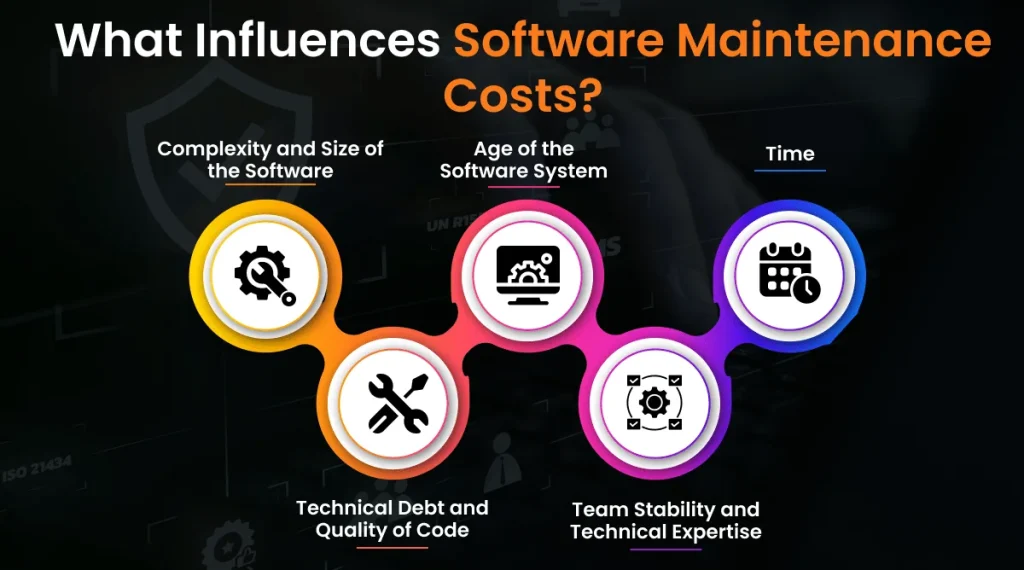
The maintenance cost of the software and the total cost is dependent on a number of factors.
Complexity and Size of the Software
The bigger and more intricate software systems cost more to maintain. Several modules, integrations and dependencies add to the workload which eventually adds to the overall cost of maintenance software and complicates updating the software to be efficient.
Technical Debt and Quality of Code
Inefficient code or improperly written code adds to the technical debt, which results in the occurrence of bugs and inefficiencies. This leads to the increase in the cost estimation of software maintenance because the developers have to spend more time on fixing the issues rather than working on improving the performance or implementing new features.
Age of the Software System
Old software systems can be using old technologies, thus it is more difficult to update and maintain them. This raises the cost of maintaining legacy software, where more effort is required to maintain compatibility, security and performance in current digital environments.
Team Stability and Technical Expertise
A mature and well trained development team will effectively handle updates and solve problems effectively. Through their expertise, they minimize errors, enhance productivity and maximize software support and maintenance efforts, which in the end cut down on long-term maintenance costs.
Time
The time required for ongoing updates, bug fixes, and enhancements significantly impacts the overall software maintenance cost. Longer maintenance cycles, delayed issue resolution, and inefficient workflows can increase expenses. Efficient time management, faster turnaround, and streamlined processes help reduce costs while ensuring consistent software performance and reliability.
Strategies to Reduce Software Maintenance Costs
Cost reduction of software maintenance cannot be achieved without planning and action.
Embrace Automation for Testing and Deployment
Testing and deployment automation lowers the rate of human errors, shortens the release cycles, and provides quality consistency. Organizations can reduce the manual interventions hence streamlin the software maintenance process and effectively reduce maintenance software cost in the long term.
Regular Code Refactoring and Documentation
Regularly refactoring the code and documenting it properly enhances the readability and minimizes the technical debt and eases the further updates. The practice reduces the estimation errors in software maintenance and makes sure that the teams are able to effectively deal with the enhancements, fixes as well as system improvements.
Implementing Agile Methodologies
Agile practices promote development in a cyclical manner, regular feedback, and improvement. It enables teams to keep up with rapid change and optimize workflow, minimize the difference between the cost of software maintenance and cost of software development, which eventually leads to improvements in software quality and business value.
Outsourcing Technical Support
By outsourcing software support and maintenance, users can get access to qualified personnel without having to grow in-house. This will cut operational expenses, speed of solving issues, and general costs of maintaining the software and still provide high-quality service and timely updates.
Comparing Offshore vs Onshore Software Maintenance Cost
The offshore maintenance solutions can save a lot of money as compared to onshore solutions. Small business or enterprise projects can be supported at reduced cost of software maintenance without compromising the quality of the final product and with the advantage of flexible staffing and specialized knowledge.
Monthly Software Maintenance Checklist (Backups, Security, & Bugs)
- Perform regular data backups
- Update security patches
- Monitor system performance
- Fix bugs and glitches
- Review system logs
- Optimize database performance
- Test integrations
This checklist helps control software maintenance cost percentage of development and ensures stability.
Conclusion
The optimization of performance and price is the key to the long-term success of any software system. The mean software maintenance cost will depend on effective planning, implementation, and continuous improvement strategies.
Lack of a systematic strategy may make a software more expensive to maintain each year, as unforeseen problems, system failure, and ineffective updates may cause the total business operations to be ineffective.
An effective software maintenance policy will make sure that the applications are scalable, secure and cost-effective in the long run.
Investing in professional software support and maintenance services is also crucial for both startups and businesses. Hire Octal IT Solution as your custom software development company as we are having a team of expert professionals who are experienced in developing as well as maintaining digital platforms.
Not only will these services remedy existing problems in the current system but will also place the software in a position to accommodate future upgrades thus lowering the risks in the long run.
Contact us today to get a customized maintenance plan and take control of your software performance and costs


 Get in Touch
 By
By October 8, 2026