

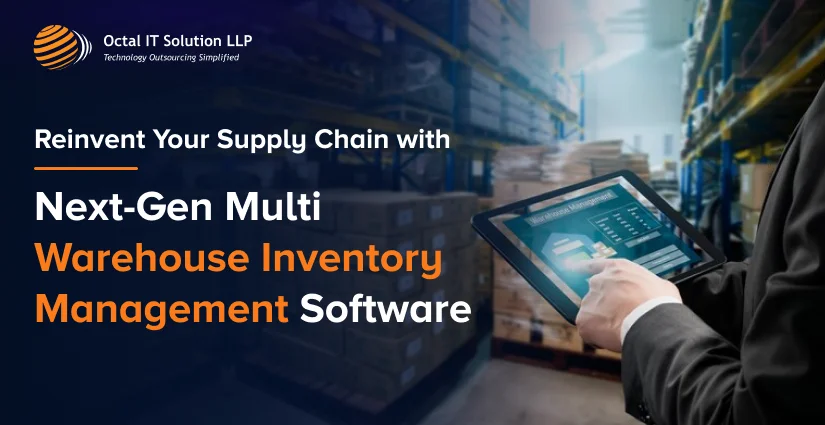
Modern supply chains are dynamic, and thus manual tracking, fragmented spreadsheets, and conventional warehouse tools are not sufficient for their management.
Customers are increasing in number and reducing in their fulfillment time, so the businesses should be able to implement mighty digital systems that will make everything visible, intelligent, and automated in real time. It is at this point that multi warehouse inventory management software comes in as a game-changer.
The global inventory management software market was valued at USD 2.31 billion in 2024, is expected to rise to USD 2.51 billion in 2025, and is projected to reach USD 4.79 billion by 2032, reflecting a CAGR of 9.6% over the forecast period. Due to such popularity, the demand for top digital transformation services providers like Octal IT Solution has increased considerably.
Modern businesses are spread across various locations, operate omnichannel markets, and rely on the accuracy of stock flows.
To remain competitive, organizations are currently resorting to next-gen inventory management systems that are meant to ease workflow, cut operational expenses, and increase the efficiency of supply chains to a great extent.
- Why Multi-Warehouse Inventory Management Is Essential Today?
- Key Features of Next-Gen Multi Warehouse Inventory Management Software
- How Cloud-Based Inventory Management Software Drives Digital Transformation
- Choosing the Right Warehouse Management Software Solutions
- Comparison Table: Multi-Warehouse vs. Traditional Inventory Management
- Conclusion
- FAQs
Why Multi-Warehouse Inventory Management Is Essential Today?
Below are some reasons why multi-warehouse inventory management has become essential today.
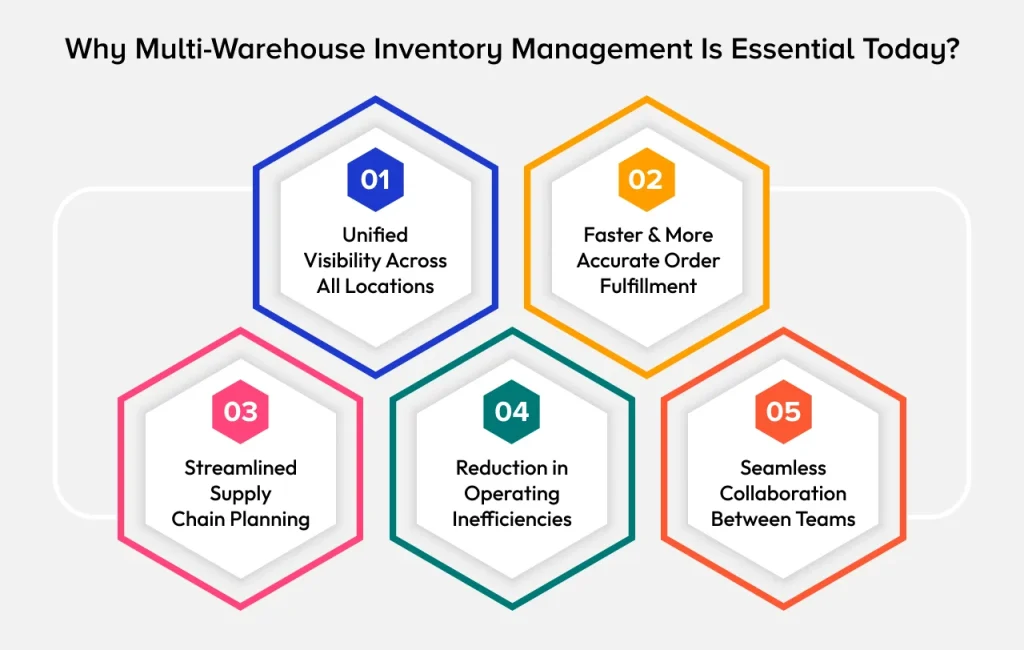
1. Unified Visibility Across All Locations
Centralized visibility enables organizations to monitor the amount of stock, incoming shipments, and outgoing orders at a number of warehouses in real time. This does away with any blind spots, minimizes discrepancies, and enhances replenishment, order routing, and demand forecasting decisions.
2. Faster & More Accurate Order Fulfillment
A multi-location system is helpful in smart order allocation. It can automatically select the most suitable warehouse to fulfill an order using available stock, distance, and delivery timeframes, thereby minimizing shipping delays and increasing customer satisfaction.
3. Streamlined Supply Chain Planning
Combinations of advanced analytics and supply chain management software aid in enabling the business to fit the distribution of inventory more effectively. It is possible to predict demand, seasonal changes, and the needs of a particular region, reducing the risks of stockouts and surpluses.
4. Reduction in Operating Inefficiencies
Manual errors are minimized by automating daily jobs in the warehouse, such as stock transfers, audits, reorder notifications, and shipping documents. This has a significant impact of saving labor expenses and at the same time bringing about increased consistency of operations in any distribution center.
5. Seamless Collaboration Between Teams
Because there is only one platform where all the data is sent, it is easy to coordinate the warehouse managers, the procurement team, and the logistics personnel. Live dashboard boards keep all the people in line with up-to-date stock knowledge and working priorities.
In the future, companies that seek innovation usually address a custom software development company to create unique applications to meet such complicated demands.

Key Features of Next-Gen Multi Warehouse Inventory Management Software
Let us go through the major features that should be included in multi warehouse inventory management software development.
1. Centralized Stock Database with Real-Time Sync
The system modernizes the stock levels immediately in all channels and warehouses. This will avoid overselling, facilitate omnichannel selling, and ensure customers are never misled when purchasing products.
2. Intelligent Inventory Routing Algorithms
The newest invention uses AI-driven logic to send an order to the most efficient warehouse. The metrics for decision-making can include customer location, stock status, and service level, enabling the fulfillment strategy to be optimized without human intervention.
3. Barcode, RFID & IoT Integration
The use of modern tracking devices will aid in automating the process of counting, picking, and replenishing. The RFID- and IoT-based sensors help increase precision, minimize losses, and provide detailed information on product flow across the supply chain.
4. Multi-Channel Sales & Marketplace Integration
The software is compatible with online shops, marketplaces, and POS systems. This keeps the inventory of diverse orders in check when orders are received through different channels, and this prevents discrepancies that cause delivery errors.
5. Role-Based Access & Enhanced Security
The cloud-based systems will provide secure access to the data available on any device with tight control of user access. The sensitive transactional information is safeguarded against unauthorized access through audit logs, encrypted communication, and permission layers.
In the other areas of the online space, businesses are adopting Custom software development services to make these features a part of their current working ecosystems.
How Cloud-Based Inventory Management Software Drives Digital Transformation
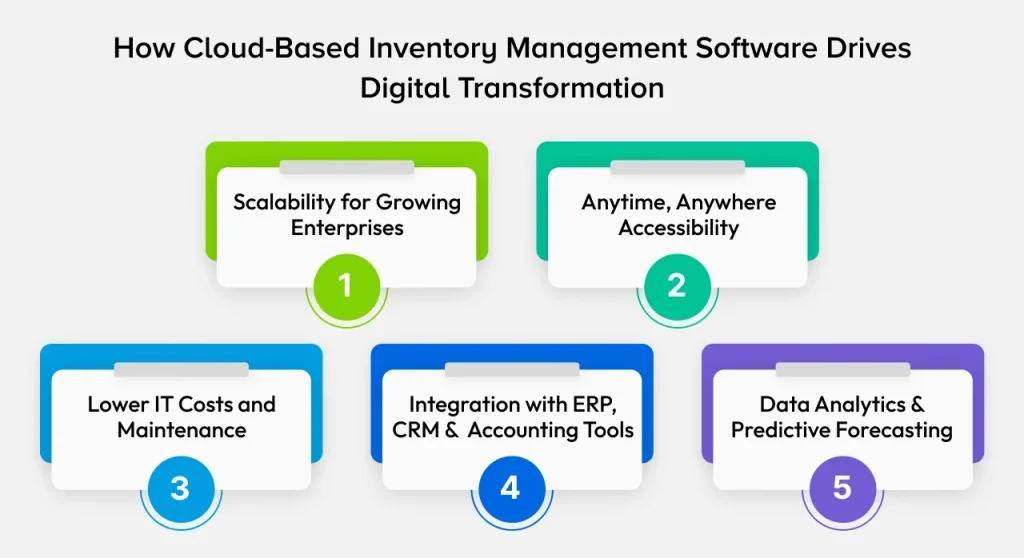
1. Scalability for Growing Enterprises
New warehouses, product categories, and user roles can be added to businesses with ease without limitation of the infrastructure. An inventory management software platform based on the cloud is expandable, hence allowing growth of the organization across geographical frontiers.
2. Anytime, Anywhere Accessibility
The implementation of the cloud enables teams to get insights on inventory remotely, an ideal scenario when a company has one or more warehouses distributed or even outsources logistics services. This contributes to timely decision-making and preparedness for disaster response.
3. Lower IT Costs and Maintenance
Cloud systems do not require costly on-site servers and frequent updates. Upgrades, security patches, and performance optimization are done by the service provider to minimize technical overhead and optimize system uptime.
4. Seamless Integration with ERP, CRM, and Accounting Tools
A fully networked system is in place to assist in the automation of purchase orders until shipping. Enterprise integration enhances financial precision, increases the synchronization of operations, and facilitates the integration of a unified digital environment.
5. Data Analytics & Predictive Forecasting
Complex analytics convert raw data to actionable information. By understanding the sales trends, businesses can also optimize their stock placement and predict future inventory needs, and this helps them keep their supply chain lean and profitable.
It is also worth mentioning that the organizations that have applied the mentioned transformations can also engage a CRM software development company to coordinate the sales and warehouse flows.
Choosing the Right Warehouse Management Software Solutions
1. Evaluate Industry-Specific Capabilities
The retail, manufacturing, pharma, and eCommerce sectors have dissimilar inventory problems. The most suitable warehouse management software solutions must support specialized operations such as batch tracking, cold storage, and kitting and assembly.
2. Check for Multi-Location Support & Stock Transfer Efficiency
A strong system allows the transfer of stock among warehouses within a short time and provides proper documentation. Routing and FIFO/FEFO controls can also be automated, which also contributes to the quality and consistency of products and operations.
3. Integration Flexibility with Existing Systems
Regardless of whether a company employs ERP, shipping tools, or procurement modules, it is vital to ensure that these are seamlessly integrated. It has APIs and third-party connectors, which are supported on a flexible platform to ensure that there is smooth movement of data through the business systems.
4. Customization and Workflow Automation
The solution chosen should be able to provide customizable workflows, automation via set rules, and custom dashboards. This flexibility enables the system to accommodate the operations of the firm, instead of requiring changes to the processes.
5. Scalability and Long-Term ROI
An enterprise inventory management system is not only future-proof but also designed to accommodate your present needs, and as you grow, it is ready to accompany you. Consider licensing, scalability of features, and support alternatives to achieve maximum long-term value.
A large-scale modernization of companies usually depends on the services of an enterprise app development company to develop extensive supply chain ecosystems aligned with each other.
Comparison Table: Multi-Warehouse vs. Traditional Inventory Management
| Feature / Capability | Traditional Systems | Multi Warehouse Inventory Management Software |
| Real-Time Updates | Limited, often manual | Instant updates across all locations |
| Order Routing | Manual decision-making | AI-driven intelligent routing |
| Multi-Channel Sync | Minimal support | Unified synchronization across platforms |
| Tracking Technology | Barcode-focused | RFID, IoT, and advanced automation |
| Scalability | Hard to expand | Easily scalable across warehouses |
| Data Analytics | Basic reporting | Predictive analytics & insights |
Conclusion
Modern commerce is developing at an extremely fast rate that requires agility, speed, and precision, which the old system of inventory cannot provide. Next-gen multi warehouse inventory management software will enable the business to have real-time visibility, streamline workflow, and powerful analytics.
These systems save costs of operation, minimize mistakes, and improve customer satisfaction through achieving effective delivery across destinations.
Digital transformation is a new experience or an upgrade of old systems; in any case, investing in a superior inventory technology will make your supply chain future-proof.
Having the appropriate inventory monitoring software across multiple sites, the enterprise is capable of maximizing every level of its operations and initiating long-term competitiveness in the ever-complicated marketplace.
When your organization wants to develop a flexible, scalable, and integrated system, an automation-based, cloud-based, real-time analytics supply chain management software platform will open the gateway to invincible operational efficiency.
FAQs
Next-gen systems use centralized cloud architectures, IoT integrations, and automated data syncing to provide instant visibility into stock levels, movements, and demand across every warehouse. This eliminates data silos and ensures all teams access the same accurate, real-time information.
Yes. Advanced multi-warehouse platforms can automatically recommend or initiate stock transfers based on preset rules, such as minimum stock thresholds, demand spikes, or regional sales trends. This helps prevent shortages and reduces excess inventory.
Most next-gen solutions offer seamless API-based integrations with popular ERP systems, online marketplaces, accounting software, and POS tools. This ensures smooth data flow across your operational ecosystem and prevents manual data entry errors.
These platforms are designed to scale easily, allowing businesses to add new warehouses, product lines, or sales channels without disrupting workflows. Automated planning, AI-driven forecasting, and flexible configuration options enable the system to adapt as operations expand.
 By
By August 13, 2026




 Latest Stories
 Get in Touch